
Autism Spectrum Disorder
Navigating life with autism spectrum disorder

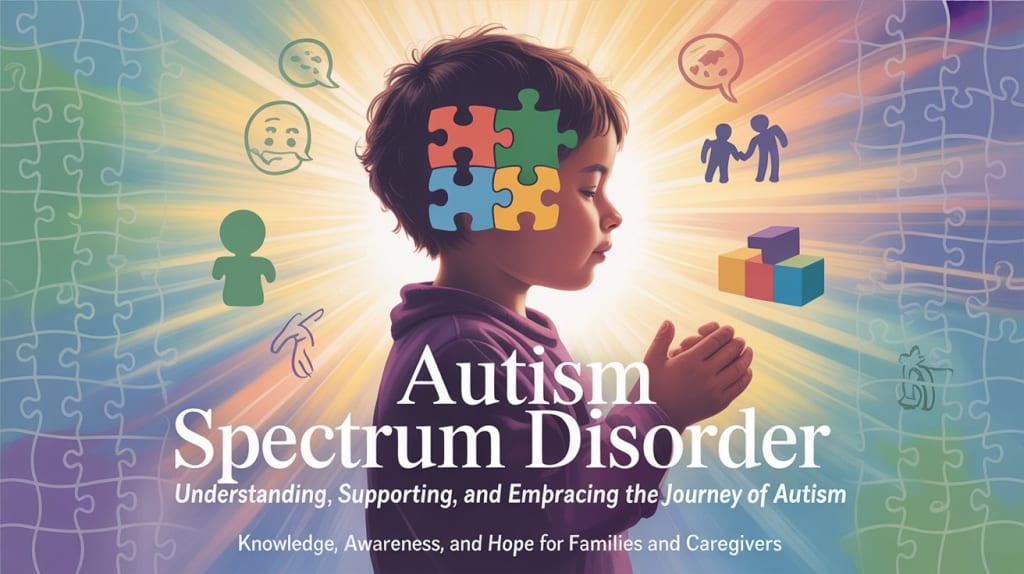
This disease is congenital, however, its effects begin to appear before the Autism Spectrum Disorder -ge of two.
Autism Spectrum Disorder is a neurological disorder, which is related to mental maturity and development. This disease is congenital, however, its effects begin to appear before the age of two. The following symptoms are found in autistic.
Communication Problems
Autistic people suffer from social communication (conversation) problems and social interaction problems.
They have difficulty understanding and explaining each other's words, feelings and emotions.
Restricted Or Repetitive Behavior
This symptom includes talking less, repeating a word, task or game over and over again, or participating in the same type of activity.
Learning Disability
Autistic people may face difficulties in the learning process.
Sometimes, hundreds of attempts are made to teach a simple action, after which they are able to learn. According to one theory, the sensory receptors of these people do not convey the message to the brain, due to which no timely reaction to any action is shown.
Common symptoms of autism include young children not making eye contact. They do not respond to their name until they are one year old.
Lack of attention, do not like talking, playing and sharing with other people. They prefer to be alone, do not like to be touched by others, get angry with themselves and others, get agitated, do not extend their hands to get up and walk. They keep moving, fixate on an object or activity with themselves, repeatedly perform a specific movement, such as flapping their hands, adopt a specific routine and get upset when it is interrupted, do not learn by copying, do not participate in games.
There is a lack of communication in the body parts, they like to eat things without nutrition. Older children do not respond to their name, do not make eye contact, do not give a friendly smile in return, speak less than other children, say the same thing repeatedly, strictly adhere to the same routine and are very worried about changes in routine, face difficulties in making friends, do not express their emotions, take too much interest in some things or activities and get upset very quickly when explaining something, etc.
Autism is more common in boys than girls and its severity is also relatively higher. The causes of autism are not yet clear. However, older parents, genetics, air pollution, maternal obesity, diabetes, weak immune system, use of certain drugs and chemicals by pregnant women, having one of the parents or siblings with autism, chromosomal abnormalities and having a very low birth weight of the child may be the cause.
Whatever the cause of autism, it should be treated. In any home where there is an autistic child, we can say that Allah Almighty has chosen this family for a very special purpose. Therefore, instead of panicking, consider it a test from Allah and brace yourself to deal with autism. First of all, contact a psychologist and get the child examined, so that a final diagnosis of the disease can be made.
Sometimes there can be problems in diagnosing the disease.
It should be noted that the treatment of autism is long-term. Therefore, it is extremely important for the child to reach the right place. There are rehab centers in every big city, facilities are available in government hospitals. Special schools also provide excellent guidance. In addition, the services of the private sector are also noteworthy. Families should play their full role in the treatment of autistic individuals. They should receive training. In addition, parents should attend therapy sessions for autistic individuals and learn the training method, because autistic individuals spend most of their time with their families. The involvement of the entire family significantly improves the symptoms of autistic individuals.
About the Creator
Echoes of Life
I’m a storyteller and lifelong learner who writes about history, human experiences, animals, and motivational lessons that spark change. Through true stories, thoughtful advice, and reflections on life.
Keep reading
More stories from Echoes of Life and writers in Lifehack and other communities.
Your Comprehensive Guide to the EB-5 Visa
The United States has long been a destination for individuals seeking new opportunities and a better quality of life. For foreign investors, the EB-5 Immigrant Investor Program offers a direct path to achieving this goal. This program stimulates the U.S. economy through capital investment and job creation, and in return, provides investors and their families a route to permanent residency. This guide will walk you through every aspect of the EB-5 visa, from eligibility to the application process, so you can understand if this path is right for you.
By Ahsan Qazi 4 days ago in Lifehack


Comments
There are no comments for this story
Be the first to respond and start the conversation.