
Antenna Connector Types: A Comprehensive Guide for E-Commerce Shoppers
The main antenna connector types include SMA, RP-SMA, BNC, TNC, N-Type, and MMCX. SMA and RP-SMA are used in Wi-Fi and RF devices. BNC is common in video and RF applications. N-Type is suitable for outdoor antennas. MMCX connectors are used in compact devices like GPS receivers.


Antenna connectors are small but essential components for anyone looking to set up or upgrade wireless communication systems. Whether you are shopping for a new Wi-Fi router, a radio, or a TV antenna, understanding the different types of antenna connectors is key to ensuring compatibility and performance. This article explains antenna connector types in a simple and clear way, making it easy for anyone to understand, even if you are new to the world of electronics. We will cover what antenna connectors are, why they matter, the most common types, and tips for choosing the right one for your needs.
What Are Antenna Connectors?
Antenna connectors are small metal components that link an antenna to a device, such as a router, radio, or television. They allow signals, like radio waves or Wi-Fi signals, to travel between the antenna and the device. Think of them as a bridge that ensures the signal gets from one place to another without getting lost or weakened. Each connector type is designed for specific uses, so picking the right one is important for your setup to work properly.
Connectors come in different shapes and sizes, and they are not all interchangeable. Using the wrong connector can lead to poor signal quality or even damage your equipment. For e-commerce shoppers, knowing the connector types helps you buy the right cables, adapters, or antennas for your project. Let’s explore why these connectors are so important.
Why Antenna Connectors Matter
Antenna connectors play a big role in how well your wireless system works. A good connector ensures a strong, stable connection, which leads to better signal quality. If the connector is loose or not the right type, you might experience weak signals, dropped connections, or interference. For example, if you are setting up a Wi-Fi router, the wrong connector could slow down your internet speed or cause your network to drop frequently.
In addition, connectors are designed for specific frequencies and power levels. Some connectors work better for high-frequency signals, like those used in 5G or satellite communication, while others are made for lower frequencies, like AM/FM radio. Choosing the right connector ensures your system runs smoothly and efficiently.
When shopping online, you will notice that antennas, cables, and devices often list the connector type in their descriptions. If you do not know what these terms mean, it can be confusing. This guide will break down the most common connector types so you can shop with confidence.
Common Antenna Connector Types
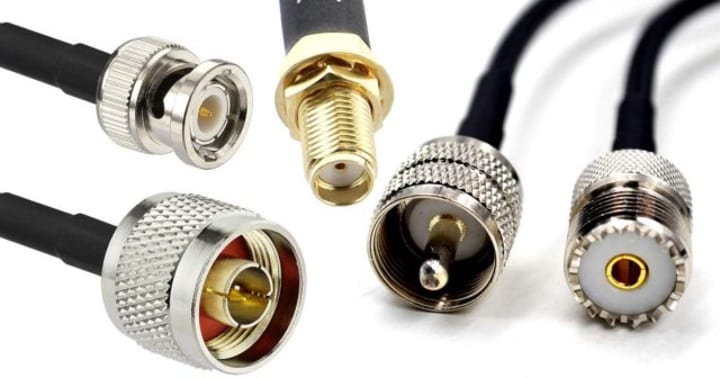
There are many types of antenna connectors, each with its own design and purpose. Below, we will describe the most popular ones you are likely to find when shopping for antennas or related equipment.
1. SMA Connector
The SMA (SubMiniature version A) connector is one of the most common types used in wireless devices. It is small, reliable, and works well for high-frequency signals, such as those used in Wi-Fi routers, GPS systems, and some radio equipment. SMA connectors come in two versions: male and female. The male version has a pin in the center, while the female version has a hole to accept the pin.
SMA connectors are popular because they are easy to use and provide a strong connection. They are often found on Wi-Fi antennas and amateur radio setups. There is also a variation called RP-SMA (Reverse Polarity SMA), which swaps the male and female parts to prevent accidental connections with standard SMA connectors. When shopping, check if your device uses SMA or RP-SMA to avoid buying the wrong one.
2. N-Type Connector
The N-type connector is larger than the SMA and is built for heavy-duty use. It is designed to handle higher power levels and works well with thicker cables, making it ideal for outdoor antennas, such as those used in cellular base stations or long-range Wi-Fi systems. N-type connectors are durable and weather-resistant, so they are great for setups exposed to rain or wind.
These connectors are common in professional setups, like radio towers or large-scale wireless networks. They are not as common in home devices, but if you are buying an outdoor antenna for a strong Wi-Fi signal, you might come across N-type connectors. They also come in male and female versions, so make sure to match them correctly.
3. BNC Connector
The BNC (Bayonet Neill-Concelman) connector is named after its bayonet-style locking mechanism, which makes it easy to connect and disconnect. You simply push and twist to lock it in place. BNC connectors are often used in older radio equipment, video systems, and some test equipment. They are not as common in modern Wi-Fi or cellular systems but are still found in amateur radio and some TV antennas.
BNC connectors are reliable and easy to use, but they are not designed for very high frequencies. If you are working with older equipment or need a connector for a specific radio setup, you might need a BNC connector. Check your device’s manual to see if it uses this type.
4. TNC Connector
The TNC (Threaded Neill-Concelman) connector is similar to the BNC but uses a threaded design instead of a bayonet lock. This makes it more secure and better suited for environments where the connection might be bumped or moved. TNC connectors are used in some radio systems, GPS devices, and older mobile phone antennas.
Like the SMA, there is also an RP-TNC (Reverse Polarity TNC) version, which is sometimes used in Wi-Fi equipment to prevent mismatched connections. TNC connectors are not as common as SMA or N-type, but they are still worth knowing about if you are working with specific types of antennas.
5. F-Type Connector
The F-type connector is one you might recognize from cable TV or satellite dishes. It is widely used for connecting coaxial cables to TVs, cable modems, and satellite receivers. F-type connectors are simple to install, as they screw onto the device, and they work well for signals in the VHF and UHF frequency ranges.
If you are setting up a TV antenna or upgrading your cable modem, you will likely need an F-type connector. They are affordable and easy to find, making them a popular choice for home entertainment systems.
6. UHF Connector
The UHF connector, also known as the PL-259 or SO-239, is an older type of connector used in amateur radio and some CB (Citizens Band) radio systems. It is larger than most modern connectors and is designed for lower frequencies, such as those used in shortwave radio. While UHF connectors are not as common today, they are still used in certain radio setups.
If you are buying equipment for amateur radio, you might need a UHF connector. However, for modern high-frequency systems like Wi-Fi or 5G, other connectors like SMA or N-type are better choices.
7. MCX and MMCX Connectors
MCX (Micro Coaxial) and MMCX (Micro-Miniature Coaxial) connectors are very small and used in compact devices, such as GPS modules, wireless earbuds, and small antennas. They are designed for high-frequency signals but are not meant for high-power applications. MCX connectors are often found in portable devices, while MMCX connectors are common in audio equipment, like wireless headphones.
These connectors are great for small, lightweight setups, but they are not as durable as larger connectors like the N-type. If you are shopping for accessories for a small device, check if it uses MCX or MMCX connectors.
Choosing the Right Connector for Your Needs
When shopping for antenna connectors, there are a few things to keep in mind to make sure you get the right one:
Check Your Device’s Specifications: Always look at the manual or product description for your device to see which connector type it uses. For example, a Wi-Fi router might use an RP-SMA connector, while a TV antenna might need an F-type connector.
Match Male and Female Connectors: Connectors come in male and female versions. Make sure the cable or antenna you buy has the opposite gender of the connector on your device. For example, if your router has a female SMA connector, you need a male SMA connector on the antenna.
Consider the Frequency and Power: Different connectors are designed for different frequencies and power levels. For high-frequency systems like 5G or Wi-Fi, SMA or N-type connectors are better. For lower frequencies, like AM/FM radio, a UHF or BNC connector might work.
Think About the Environment: If your antenna will be outdoors, choose a durable, weather-resistant connector like the N-type. For indoor setups, smaller connectors like SMA or MCX are usually fine.
Buy Adapters if Needed: If you have mismatched connectors, you can buy adapters to make them compatible. For example, an SMA-to-N-type adapter can connect an SMA cable to an N-type device. Just be aware that adapters can slightly reduce signal quality, so use them only when necessary.
Read Reviews and Check Compatibility: When shopping online, read customer reviews to see if the connector works well with your device. Some e-commerce listings may not clearly state the connector type, so double-check with the seller if you are unsure.
Tips for E-Commerce Shoppers
Shopping for antenna connectors online can be overwhelming because of the variety of options. Here are some tips to make the process easier:
Use Filters: Most e-commerce websites let you filter products by connector type, frequency, or device compatibility. Use these filters to narrow down your choices.
Look for Bundles: Some sellers offer antenna kits that include cables, connectors, and adapters. These can save you time and money.
Check Return Policies: If you buy the wrong connector, you will want to return it. Make sure the seller has a good return policy.
Buy from Reputable Sellers: Stick to well-known e-commerce platforms or sellers with good ratings to ensure you get quality products.
Ask Questions: If a product listing is unclear about the connector type, contact the seller for clarification before buying.
Conclusion
Antenna connectors may seem like small parts, but they are critical to the performance of your wireless systems. By understanding the different types, such as SMA, N-type, BNC, TNC, F-type, UHF, MCX, and MMCX, you can make informed decisions when shopping online. Always check your device’s specifications, match male and female connectors, and consider the frequency and environment of your setup. With this knowledge, you can confidently choose the right antenna connector for your needs, whether you are setting up a Wi-Fi router, a radio, or a TV antenna. Happy shopping!
About the Creator
Akaeid al akib
I am very passionate about SEO, Web design and digital marketing. I am always up to date with the latest and most advanced SEO strategies. whatsapp: +8801773821395
Keep reading
More stories from Akaeid al akib and writers in Lifehack and other communities.
How to find Perfect Dirt Bike For You
Are you ready to saddle up and conquer the trails? Whether you’re just starting your dirt biking journey or looking to upgrade your recent ride, finding the perfect dirt bike can sometimes feel like searching for a needle in a haystack. Thankfully, dirt bike finder is here to transform that task into a smooth ride.
By Akaeid al akibabout a year ago in Lifehack




Comments
There are no comments for this story
Be the first to respond and start the conversation.