
America’s Next Pandemic? Top Virologists Warn of Imminent Bird Flu Threat”
As H5N1 spreads across U.S. farms and infects a human, scientists urge immediate action to prevent a crisis worse than COVID-19.

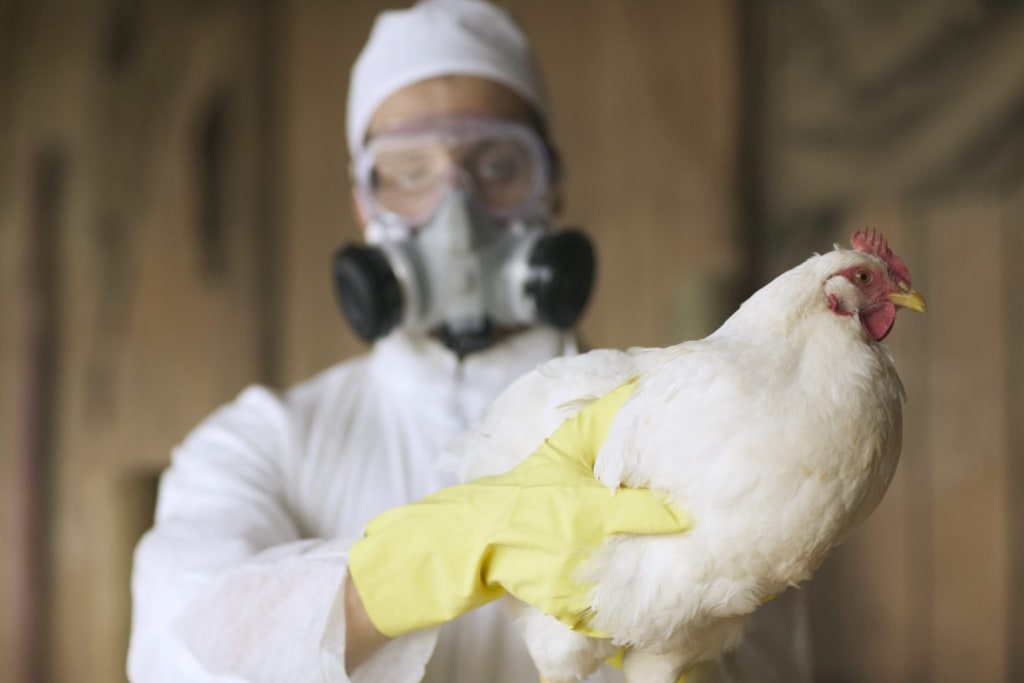
Top Virologists Issue Warning: US Must Prepare Now for Bird Flu Pandemic Danger
During the past few months, top virologists and global health officials have been issuing early warnings about increasing risks of the H5N1 avian flu virus. With its extensive bird-to-bird, mammal-to-mammal, and even small groups of human transmission, heightened fears exist that the virus can mutate to become the source of a new pandemic. For America, the message is plain: Act now, or risk re-capturing COVID-19 chaos.
Bird Flu in the U.S.: A Lethal New Chapter
Having been restricted to bird species, H5N1 then made a startling leap. In 2024 and early 2025, the virus not only occurred in wild birds and poultry but also in mammals, including sea lions, red foxes, and for the first time in Texas, dairy cows. More ominously, a Texas dairy farm worker became infected with the virus—a rare but serious case of zoonotic transmission in the United States.
This incident was not an isolated case—it was a wake-up call. The Centers for Disease Control and Prevention (CDC) and Department of Agriculture (USDA) have since increased livestock and wildlife surveillance. Many, however, fear that this response is not severe enough.
World Health Organization Chief Scientist Dr. Jeremy Farrar warned in April 2024 that the virus is "increasingly adapting to mammals." That's a critical step towards its potential evolution into a human-to-human transmissible virus. "The concern is that with enough opportunities, H5N1 will mutate in a way that allows efficient human transmission," Farrar said.
High Mortality, Low Preparedness
Most hazardous about H5N1 is its virulence. Since 2003, nearly 900 human cases have been reported across the world with a mortality rate of more than 50%. While human infection remains uncommon, transmission to mammals increases the prospect of future mutations that would precipitate a global outbreak.
In the U.S., the CDC maintains that the current public health risk is low. But many virologists argue that this assessment is overly optimistic. According to Dr. Richard Webby, a leading virologist at St. Jude Children's Research Hospital in Memphis, “The virus is more active now than we’ve ever seen it, and it’s infecting more species.”
This wide host range could be a viral incubator, causing genetic alterations that make the virus more suited to infecting humans. "The clock is ticking," Webby emphasized. "We should be acting as if the next pandemic could start any day."
Cost: ~$9.99/month or ~$99/year (prices may vary slightly).
U.S. Response: Moving, But Not Fast Enough
To its credit, the U.S. government has done some. The Biomedical Advanced Research and Development Authority (BARDA) is working with vaccine manufacturers to alter existing flu vaccines to be directed against H5N1. In addition, the CDC keeps a limited stock of antiviral medication and a surveillance program to monitor emerging influenza strains.
These measures might not be enough, however. The U.S. does not currently have a bulk stock of H5N1-specific vaccines on hand, and production capacity would be limited in the early stages of a pandemic. Unlike COVID-19 vaccines, which were produced relatively rapidly using mRNA platforms, flu vaccines are produced and distributed more slowly.
Besides, coordination among federal and state agencies is absent in the farm outbreak response. Biosecurity enforcement is extremely inconsistent in Texas and surrounding states, exposing the country to spread in livestock.
The Stakes for Public Health and the Economy
Not only would an H5N1 pandemic be a public health catastrophe—it could be a disaster for food production. The poultry and dairy industries, both critical to the U.S. economy, are in the direct crosshairs. Egg prices already spiked in early 2024 when millions of chickens were killed because they had come into contact with H5N1.
In addition to food, the health care system, recovering from the impact of COVID-19, can face another hammer blow. Hospitals, particularly in rural settings, are not equipped to handle the flood of flu patients with a 50% mortality rate.
Virologists Plead: Act Now or Pay Later
Leading scientists across the country are unanimous on one thing: now is the time to get ready. That means rapidly ramping up vaccine research and stockpiles, improving coordination between animal and human health agencies, and investing in broad-based biosecurity upgrades at farms across the country.
"The virus is not waiting for us to prepare," according to Dr. Amesh Adalja, a senior fellow at Johns Hopkins Center for Health Security. "We must think ahead—not only about current cases but about the risk that this virus evolves in a way that endangers millions.
The warning signs are out there. There is a highly pathogenic virus that exists in birds, spreading more and more into mammals, and has already penetrated the human population in the U.S. The world's top virologists are ringing alarm bells, and the message is clear: move fast and forcefully, or risk an even worse pandemic than the last.
For a nation that suffered the worst of COVID-19, to ignore these auguries would be more than short-sighted—it would be catastrophic.
About the Creator
MD NAZIM UDDIN
Writer on tech, culture, and life. Crafting stories that inspire, inform, and connect. Follow for thoughtful and creative content.
Keep reading
More stories from MD NAZIM UDDIN and writers in Lifehack and other communities.
Mitolyn: The Ultimate Mitochondrial Support Supplement for Sustained Energy and Wellness
Mitolyn: A Game-Changer for Your Energy and Wellness Routine In a world of wellness filled with so many energy enhancers, detox supplements, and complex formulas, it's hard to come across a product that truly stands out from the crowd. That is, until Mitolyn—a breakthrough supplement that promises to elevate your health to the next level by enhancing mitochondrial function, the core of your body's energy production. Whereas most health products have their moment and then fizzle out, Mitolyn has captured the imagination of the wellness enthusiasts for the most part because of its distinctive strategy in complementing the health of vitality, focus, and all that falls in between. But what's different about Mitolyn? My two cents on whether the supplement is worth the hype, after weeks of incorporating it into my regimen.
By MD NAZIM UDDIN 11 months ago in Lifehack
Top 10 Luxury Shower Systems for Modern Bathrooms
Introduction Modern bathrooms have evolved far beyond simple functionality. Today, homeowners are focusing on comfort, relaxation, and sophisticated design. One of the most popular upgrades in contemporary homes is installing luxury shower systems that provide spa-like comfort combined with advanced technology.
By FontanaShowersabout 8 hours ago in Lifehack



Comments
There are no comments for this story
Be the first to respond and start the conversation.