
AI Future Jobs: Skills That Will Define Tomorrow's Careers
AI Future Jobs

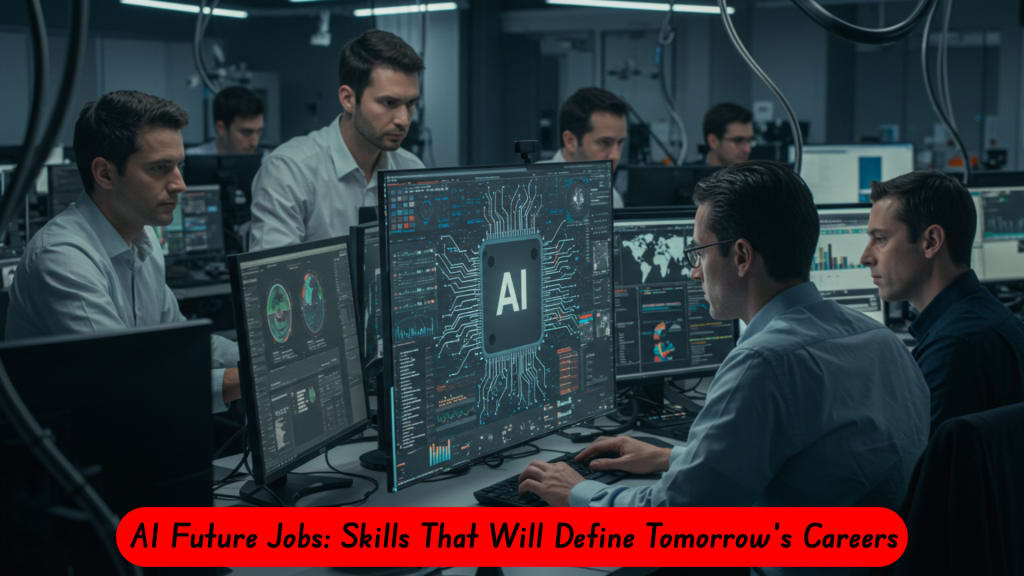
A quiet revolution is unfolding in the modern workplace.
You can feel it in conversations, job listings, and even the tone of career advice online. Artificial Intelligence isn't coming to take every job - it's coming to change them.
But that doesn't mean you're powerless. In fact, this is one of the most exciting times to be alive professionally. We're standing at a crossroads where technology meets creativity, and those who know how to bridge the two will define the next era of work.
To learn more, visit us at ZoneTechAi
AI Is Redefining Work - Not Replacing It
We often imagine AI as a competitor, but it's more like a collaborator. It doesn't eliminate humans; it elevates them.
Automation handles the repetitive and predictable, freeing people to focus on the imaginative, the empathetic, and the strategic.
Healthcare, finance, education, logistics, marketing - every sector is feeling AI's pulse. A hospital might use machine learning to detect early-stage illnesses, while a teacher uses AI to personalize student lessons. Even artists and writers now co-create with algorithms.
The World Economic Forum predicts that while 85 million jobs may be displaced by automation, 97 million new ones will emerge. The question isn't "Will AI take my job?" It's "Am I learning fast enough to work with it?"
The Skills That Will Shape AI Future Jobs
1. Learning the Language of Data
You don't need to be a coder to speak AI's language - just data-literate.
Python, SQL, and visualization tools like Tableau are the building blocks of this new economy. Understanding how data works helps you see patterns and make smarter decisions.
But it's not just about tools. It's about asking the right questions before writing a single line of code. Data skills give you a new kind of intuition - one that lets you see opportunities others miss.
2. Machine Learning and AI Literacy
Machine learning is the brain behind every intelligent system. It's what helps your phone recognize your face and your favorite streaming app guess your next obsession.
If you can grasp the basics - how models learn from data and why bias matters - you'll stand out in almost any field. Even if you never train a neural network, understanding how one works gives you credibility and confidence in an AI-driven workplace.
3. Human-Centric Skills That Technology Can't Replace
Here's the part we often overlook: AI still needs us to stay human.
Creativity, empathy, and critical thinking are irreplaceable. A machine can write, but only a human can tell a story that moves someone.
A chatbot can answer questions, but only a human can sense when someone's truly struggling.
These soft skills - listening, innovating, questioning - will become your greatest assets. They make you adaptable in a world where technology never stops changing.
4. Prompt Engineering and Tool Literacy
The rise of ChatGPT, DALL·E, and other generative tools created a brand-new skill: prompt engineering.
It's not coding; it's communication - knowing how to guide an AI system to produce something meaningful.
Crafting precise, structured prompts will soon be as fundamental as knowing how to search Google. It's a blend of language, logic, and creativity - and it's already turning into a full-time career path.
From Degrees to Skills: How Hiring Is Changing
If you've ever felt held back because you don't have a computer science degree, here's good news: employers care more about what you can do than where you studied.
Tech giants like Google and IBM have dropped formal degree requirements for many roles. What matters now is proof of skill and a portfolio of projects.
A GitHub profile, Kaggle competition, or well-documented project on Medium can speak louder than a diploma.
This new culture of skill-based hiring is leveling the playing field. Career changers, freelancers, and lifelong learners all have a fair shot - as long as they keep learning.
The Ethical Dimension: Keeping Humanity in the Loop
The power of AI comes with responsibility.
Bias in algorithms, data privacy, and job displacement are real issues that demand human oversight. That's why companies are now hiring AI ethicists and responsible-AI consultants - professionals who can balance innovation with integrity.
The future of AI isn't just about smarter machines. It's about ethical collaboration - building systems that are fair, transparent, and accountable. If you can combine tech fluency with moral clarity, you'll be among the most valuable professionals of the decade.
How to Prepare for AI Future Jobs
Start where you are. Pick one AI-related topic - data visualization, automation, or AI communication - and explore it for an hour a week.
Use free resources like Coursera, edX, and YouTube to build momentum.
Then, apply what you learn. Build a chatbot. Analyze a public dataset. Create content with AI tools. Publish your results.
When you combine curiosity with consistency, opportunities start finding you.
And remember: learning never stops.
AI evolves daily - but so can you.
The Human Advantage
We talk about AI as if it's something separate, but it's a mirror - reflecting our creativity, our ambition, and our limits.
Technology may amplify intelligence, but only we can give it purpose.
The best jobs of the future won't belong to those who compete with AI, but to those who collaborate with it - turning machines into partners, not rivals.
So don't fear the future. Learn from it. Lead it. Shape it.
About the Creator
ZoneTechAi
Discover cutting-edge tech & and AI insights at ZoneTechAi. Expert articles on artificial intelligence, machine learning, robotics, IoT, and cybersecurity.
Keep reading
More stories from ZoneTechAi and writers in Lifehack and other communities.
Unlocking Opportunities: AI Future Jobs You Should Know
Artificial intelligence has moved from science fiction into everyday reality. We use it when we ask a smart assistant about the weather, when banks flag suspicious activity, and when streaming platforms recommend what to watch next. But beyond convenience, AI is quietly reshaping the job market.
By ZoneTechAi3 months ago in Lifehack
The AI Ecosystem in 2026
By 2026, the ecosystem of artificial intelligence will have matured beyond experimentation and early adoption. It is now a complex, interconnected infrastructure shaping industries, markets, institutions, and everyday life. AI is no longer a niche technology: it is a foundational layer of the digital economy, much like the internet itself. Understanding this ecosystem requires looking beyond models and algorithms to the roles, relationships, and platforms that make AI an essential and sustainable force.
By Sathish Kumar about 5 hours ago in Lifehack



Comments
There are no comments for this story
Be the first to respond and start the conversation.