
A detailed explanation of concrete secretion and segregation!
Causes And Solutions Of Concrete

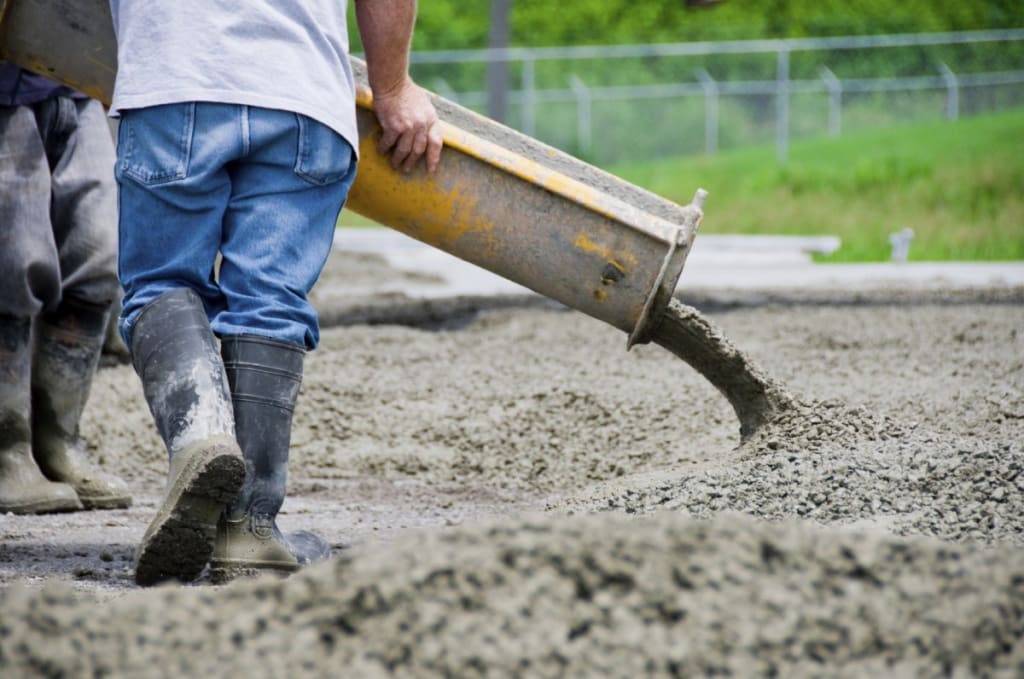
Overview
Simply put, concrete is a mixture of cement, coarse aggregate, fine aggregate and water, in these components, the proportion of water is the smallest, so during the pouring of concrete, as the other components settle, water continues to migrate upward, some can reach the surface of the concrete and overflow, some can not reach the surface, this is water secretion. This process will continue until the concrete is no longer settling.
Second, the impact of secretion on the quality of concrete
If the rate of water secretion is the same as the rate of water evaporation from the concrete surface, the secretion is harmless. Concrete water content for the guarantee and ease of improving the constructability is very necessary, if the excess water in the concrete after pouring can overflow through the secretory, can reduce the water-cement ratio, improve the compactness of the concrete. The early secretion of water does not harm the concrete when it is still in the plastic phase, when the concrete is still in the settling and tamping phase. If the concrete has lost plasticity and began to set, at this time the secretion of water will have a negative impact on the performance of concrete.
The total water secretion is closely related to the concrete ratio, in particular to the amount of water used, the content of fine particles (cement, fly ash and other mineral overmixes, fine aggregates, etc.). The greater the amount of water used, the greater the secretion of water; fine particle content, the smaller the secretion of water. Water secretion is also related to the thickness of concrete pouring, the thicker the thickness, the more water secretion.
In general, the secretion of water evenly across the surface of the concrete. But in some special circumstances, if there are vertical channels of secretion inside the concrete, water in these channels upward migration speed is very fast, it is possible to bring out some fine particles, leaving "worm's eye" in the interior, forming "sand bars" on the surface. These secretion channels are usually caused by excessive water secretion. The secretion channels leave open paths on the concrete surface, so that corrosive substances such as glacial salts can easily enter the concrete, leading to concrete corrosion, durability and other diseases.
In the secretion process, water may be flat or sheet-shaped aggregate and reinforcing steel retention, in these aggregates or reinforcing steel below the formation of water, the formation of the so-called "internal secretion". This internal secretion may also eventually secrete from the surface, forming ponding on the concrete surface. Be retained in the aggregate or reinforcing steel below the secretion of water will make the local water-cement ratio increase, affect the cement stone and aggregate and reinforcing steel bonding strength, the formation of a fragile bonding surface, in the heat of hydration, dry shrinkage and other factors caused by the tensile stress, easy to micro-cracking. Under the influence of loads during the service of the structure, these micro-cracks will gradually intensify and directly affect the safety and durability of the concrete structure.
Surface water secretion will result in a decrease in the compactness and friction resistance of the concrete surface. If the surface secretion has not completely evaporated on the smoothing and lightening, the secretion will be back to the concrete surface, increasing the surface water-cement ratio, so that the surface strength decreased, easily induced plastic cracking, shrinkage cracking, affecting the durability of concrete, but also may cause the concrete surface bubbles, peeling, sand and other phenomena. Therefore, it is necessary to flatten the concrete surface roughly before the appearance of secretion, until the secretion completely evaporated and then finish.
If you want to know how to choose a high quality concrete power trowel, please refer to the following article:
The secretion will also make the horizontal construction joints accumulate a large amount of cement slurry, in the construction joints appear very low strength bonding layer.
Third, the concrete components on the impact of water secretion
1, water-cement ratio: the greater the water-cement ratio, the more water secretion, water consumption increased by 20%, the secretion of water may increase by 2 to 3 times.
2, cement: the type, fineness and amount of cement will affect the secretion of water. The finer the cement, the less water secretion; the greater the amount of cement, the less water secretion. Therefore, increasing the amount of cement used and reducing the water-cement ratio can reduce water secretion.
3, mineral admixtures: fly ash, slag, silica fume and natural volcanic ash and other mineral admixtures can reduce water secretion, especially silica fume, for the reduction of water secretion effect is very obvious. Therefore, it is necessary to strengthen the early maintenance of silica fume concrete, to prevent plastic dry shrinkage and cracking.
4, aggregate: the higher the mud content of the aggregate, the less water secretion. But high mud content will have a negative impact on the other properties of concrete, such as increased water demand, increased shrinkage and so on.
5, chemical admixture: air-entraining agent can reduce water secretion. Water-reducing agent will also reduce water secretion.
About the Creator
Kim Li
Hi, I am Kim Li, I help the concrete flooring and also concrete equipment. I'm in China, where I've been working with concrete for 8 years currently, and also this internet site...
Keep reading
More stories from writers in Lifehack and other communities.
The Nutrient Gap No One Talks About When It Comes to Focus and Attention
Key Takeaways Taking the proper nutrients helps maintain optimal body function. The vagus nerve is a vital component in the connection between the brain and the gut. The right supplements, such as Neupril Pure Methylfolate, play a key role in helping clear brain fog.
By Tess DiNapoli2 days ago in Lifehack
Why Film Studios Are Desperate to Win Back Gen Z Audiences
When Barbie crossed $1.4 billion at the global box office in 2023, Hollywood finally stopped blaming Gen Z for “killing cinema” and started asking a harder question: what did this film get right that so many others didn’t?
By Quite Brilliant7 days ago in Lifehack




Comments
There are no comments for this story
Be the first to respond and start the conversation.