
A Deeper Look into Dreamland
Understanding the Impact of Sleep on Your Mental Health


A Deeper Look into Dreamland: Understanding the Impact of Sleep on Your Mental Health
Ever wondered why you feel so rejuvenated after a good night's sleep or so grumpy when you haven't caught enough zzz's? There's more to it than just feeling well-rested or not. Sleep, that wonderful state of unconsciousness we all love to dive into, plays a starring role in our mental health. Let's take an exciting and easy-to-read journey into the fascinating world of sleep and its deep-seated impact on our mental well-being.
The Stages of Sleep and Your Mind
First off, sleep isn't a one-and-done kind of deal. It's a complex process that can be broken down into several stages. Imagine sleep as a drama series with multiple seasons, each one crucial to the storyline. We've got the lighter stages of sleep, deep sleep, and the dramatic grand finale - the rapid eye movement (REM) sleep.
Now, each of these 'seasons' of sleep does its own thing. During deep sleep, for instance, your brain is busy tidying up. It's like spring cleaning, but instead of getting rid of old clothes, the brain is flushing out waste from cells. It's also the time when the brain backs up your 'data' or consolidates memories. So, when we miss out on deep sleep, it's like forgetting to hit 'save' on a document - we might face cognitive issues such as memory problems and difficulty concentrating.

REM sleep, on the other hand, is when we dream. It's like the special effects section of our sleep series, filled with complex emotions and storylines. This stage is thought to play a role in managing our emotions. Any disturbance in REM sleep might make us less adept at handling our feelings, increasing the risk of anxiety and depression.
Sleep Disorders: The Unwanted Plot Twists
Our sleep drama series, like any good story, has its villains. Enter sleep disorders. They're like those plot twists we didn't see coming and didn't really want. Insomnia, where you have a hard time falling or staying asleep, has been found to be a 'partner-in-crime' with depression and anxiety. In fact, people with insomnia are more likely to develop these mental health issues. Quite the baddie, right?

Sleep apnea, where you briefly stop breathing while asleep, is another villain in the mix. People with sleep apnea often feel tired during the day and have trouble focusing - imagine feeling like you're in a constant state of jet lag! If left untreated, it can contribute to mood swings and even more serious mental health issues.
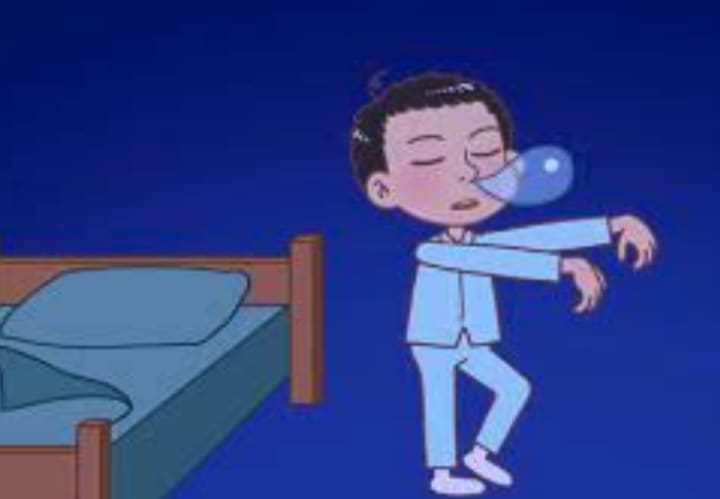
Then we have the oddball characters, the parasomnias, including sleepwalking and night terrors. Though they might seem harmless, they can indicate underlying mental health disorders. Think of them as the side characters who end up having a significant role in the plot.
Getting Good Sleep: The Happy Ending We Need
With all these plot twists and turns, we need a good ending. That's where sleep hygiene comes into the picture. Good sleep hygiene involves having a regular sleep schedule, creating a comfy sleep environment (think cozy blankets and dimmed lights), and avoiding things that can keep you awake, like caffeine or scrolling through social media right before bed.

If you're dealing with insomnia, cognitive-behavioral therapy (CBT-I) can come to the rescue. It's like a superhero that swoops in to help you change the thoughts and behaviors that are messing with your sleep. And voila, you're on your way to better sleep and better mental health!
Wrapping Up Our Sleep Series
There's no doubt that sleep plays a leading role in our mental health. But like any good drama series, the world of sleep is complex and constantly evolving. Every day, we're learning more about how crucial it is to catch those quality zzz's.

So, the next time you hit the hay, remember - you're not just resting your body, you're also taking care of your mind. And if you're finding it hard to get good sleep or if you're feeling mentally drained, don't hesitate to reach out to a healthcare professional. After all, everyone deserves a good night's sleep and a mind at peace.
About the Creator
Keep reading
More stories from kelvin yuen and writers in Lifehack and other communities.
The Science of Stress and How to Manage It
In today's fast-paced, always-on world, stress seems to have become a constant companion for many of us. But what is stress exactly? And more importantly, how can we manage it? Welcome to a journey into the fascinating science of stress, complete with handy strategies for keeping stress levels in check. Ready? Let's dive in!
By kelvin yuen3 years ago in Lifehack
Choosing Moving Companies in Palm Beach Gardens, Florida
Moving in Palm Beach Gardens, Florida, can feel exciting, but it also requires careful planning. While the city is known for its clean layout, green spaces, and residential communities, relocating here involves details that are easy to underestimate. Understanding local conditions and planning ahead can make the moving process far more organized and less stressful.
By House Doctora day ago in Lifehack
The Last Train from Nowhere
At exactly 2:17 a.m., the abandoned Platform 13 was never supposed to be used. In a forgotten corner of a London underground station, behind a rusted metal gate and a faded “Out of Service” sign, there was a platform that didn’t appear on any public map. Commuters from the UK, USA, and Australia had passed through this station thousands of times, never realizing that if you stood near the far wall at precisely the right moment, the wall would… breathe.
By Iazaz hussain7 days ago in Lifehack




Comments
There are no comments for this story
Be the first to respond and start the conversation.