
A Complete Guide on the History and Analysis of Different Types of "Saws". (Automatic & Manual)
From Hand Tools to Power Giants: The Evolution and Impact of Saws Through Time

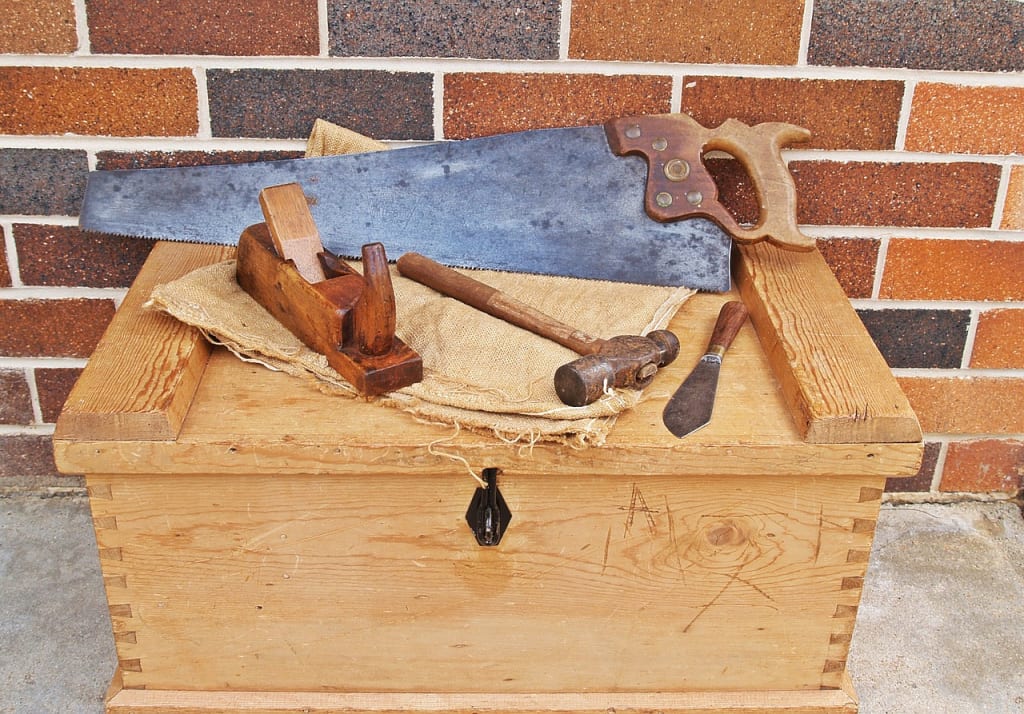
History of Saws
The invention and development of the saw followed soon after the discovery of copper in the near east about four thousand years ago. The early Egyptians used copper hand saws up to 500mm long, with a pistol-shaped handle lashed to the tang. Cretan carpenters about 1600 BC had large bronze saws for crosscutting and ripping.
The first iron saws were no stronger than the bronze ones they replaced. The only advantage was that the iron saws were more readily available. Later on, the Greeks and Romans made many important improvements to the iron hand saws, including various types of wooden frames for straining the blade and setting the teeth alternatively so that the saw kerf could be cut slightly wider than the thickness of the saw. The cutting edge could then be made straight and the teeth shaped to cut on the push stroke, giving a more accurate and efficient action. During the middle ages, improvements to the tools were confined to the design of the wooden frames and handles and various methods of cutting and setting the teeth.
About the middle of the seventeenth century the development of the process of rolling wide steel strip, mainly at Sheffield in England and in Holland, ushered in significant changes in the design of hand saws. The wider plates thus obtained were strong enough to dispense with wooden frames for straining the blades and the main problem became the shape and method of fixing the handles.
The Dutch and Scandinavian saw makers used a pistol-shaped handle with a ferrule fixed to a tang on the upper part of the blade. The English makers, however, preferred a handle as nearly as wide as the heel of the saw, cut from a flat plank about 25mm thick, with an oval handhole and angled grip, riveted or screwed to the blade.
With further refinements in detail, this became the standard pattern for hand saws for all types almost everywhere. For accurate work on the bench, carpenters, cabinet makers, and the like in the early eighteenth century also used sash, tenon and dovetail saws with fine teeth on a thinner blade, which was strengthened by a steel or brass back. These "backed" saws were also fitted with the new type of handle.
Although the traditional framed saws with narrow blades are still widely used in Europe for all types of bench work, ripping and cross-cutting, their use in English-speaking countries is confined to compassed or curved work. These "bow" saws or turning saws have changed very little since medieval times.
Mounting the File (for sharpening the saw)
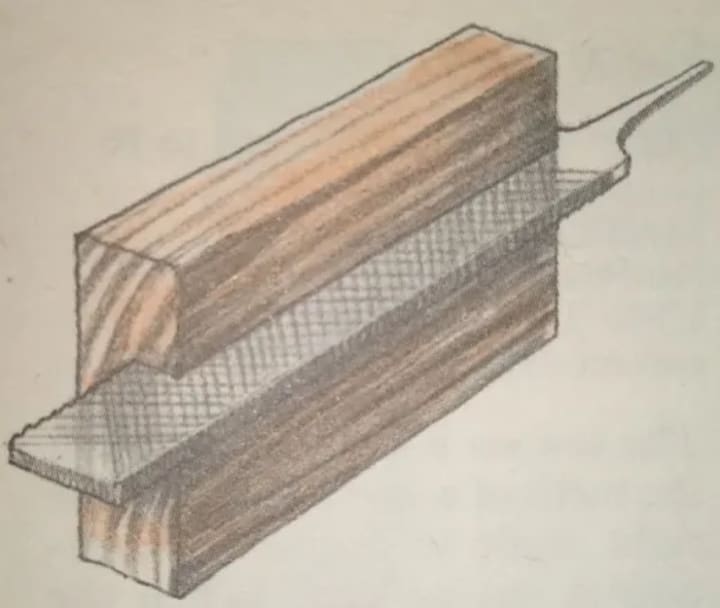
Mounting the Saw (for sharpening the saw)
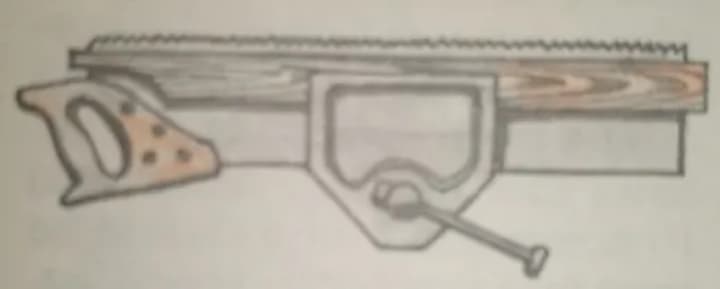
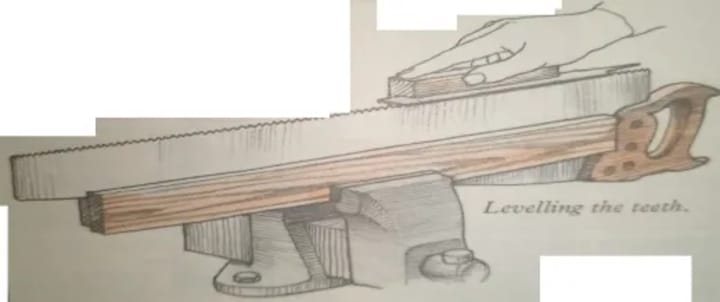
Levelling the Teeth and Then Sharpening it
Saw Set
Size: to set saws from 4 to 16 points per 25mm
Material: cast metal, reinforced nylon
Use: to set saw teeth to the correct angle
The saw set is designed to bend the teeth of a saw to exactly the right angle to produce the required cut or kerf. When the handles are squeezed together a plunger presses the tooth against an anvil (a wheel with a graduated angle on the face). Which corresponds to the correct settings for saws with teeth from 4 to 16 points per 25mm. Saws that measure more than 16 points per 25mm should be reset by a saw repair specialist.
Saw Set
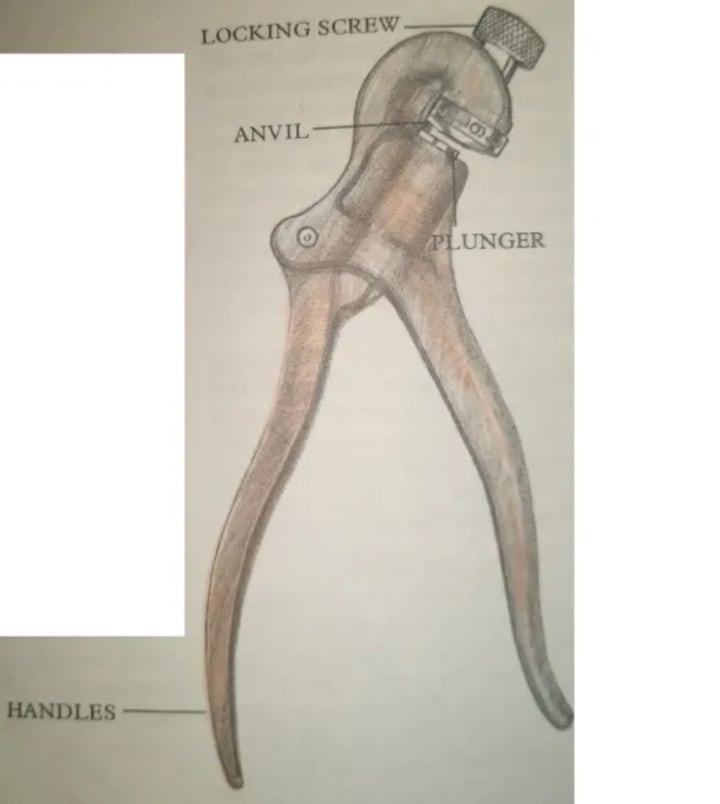
Saw Plunger Pressed Against the Anvil
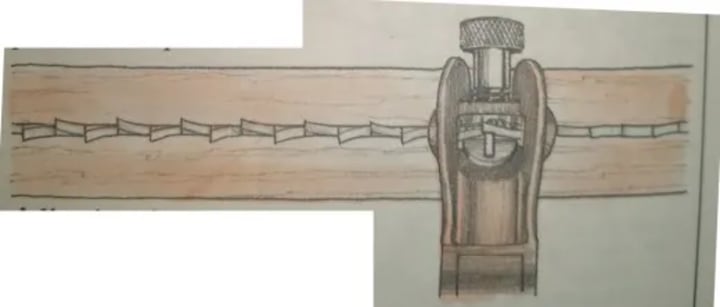
Adjusting the Saw
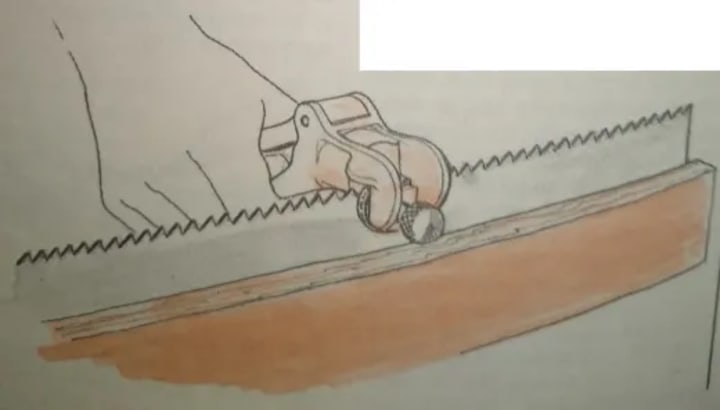
Two-Man Cross Cut Saw
Size: 1.2m to 2.1m
Material: blade- steel, handle- hardwood
Use: to fell trees and cut logs
The two-handed crosscut saw is one of the oldest styles of saws surviving in modern catalogs. It consists of a long flat blade with cutting teeth on the underside and an upright handle at each end. The shape of the blade seems to have been originally determined by local tradition and does not affect the cut in any obvious way. The shape of the teeth, on the other hand, is very important.
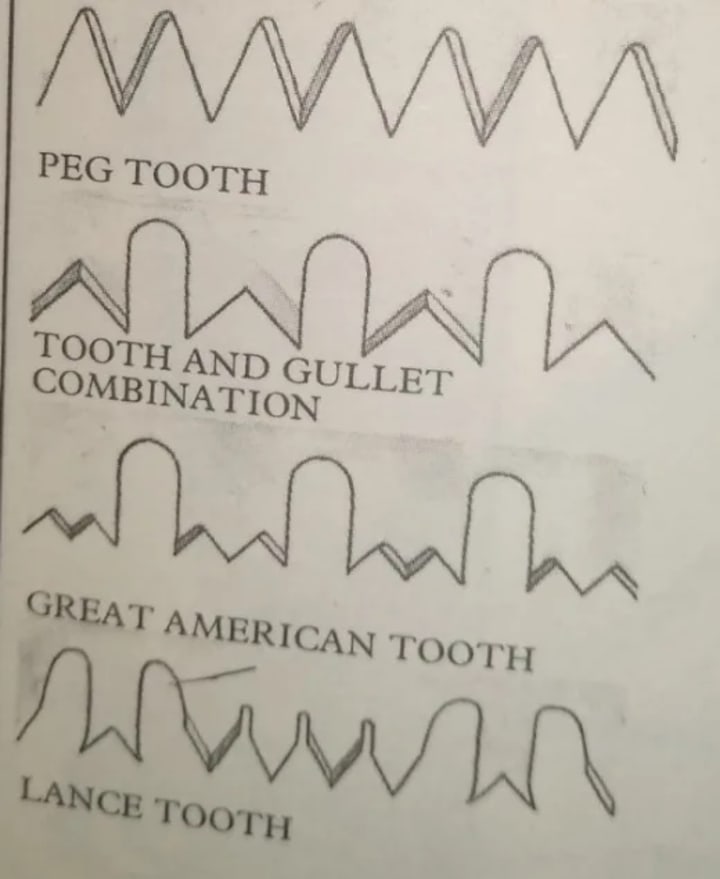
The simplest crosscut design, known as the "peg" tooth, is an evenly spaced row of "V" shaped teeth. Each tooth is filed on both edges so that it cuts in both directions. Another shape has a deep gullet between each tooth. While the teeth do the cutting, the sawdust is carried out of the cut in the gullets. This prevents the saw jamming in the cut and is especially important for cutting unseasoned wood.
The other design for crosscut saws has rows of cutting teeth interspersed by unsharpened "raker" teeth, designed to rake the sawdust clear of the kerf. The "lance" tooth saw has a group of four cutting teeth and a pair of rakers separated by deep gullets.
Two-Man Cross Cut Saw
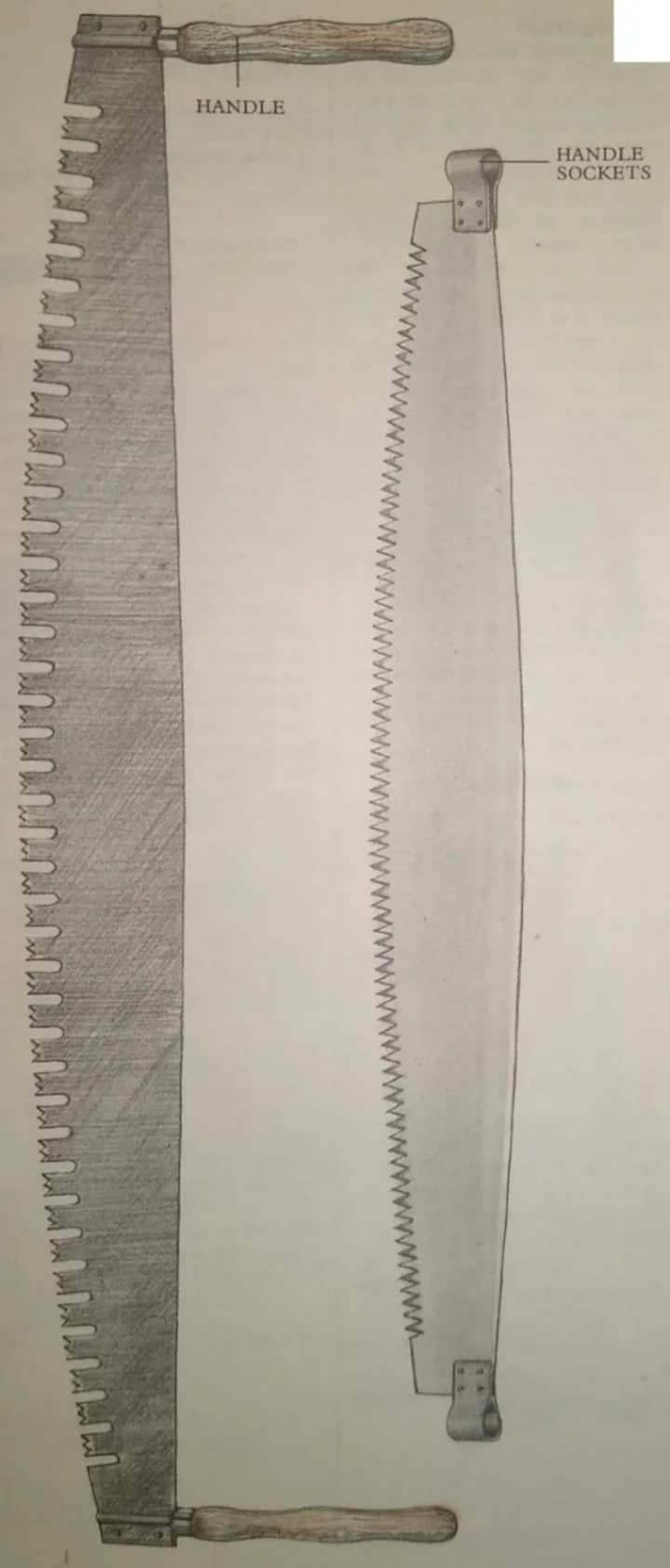
Different Types of Teeth Set for the Two-Man Cross Cut Saw
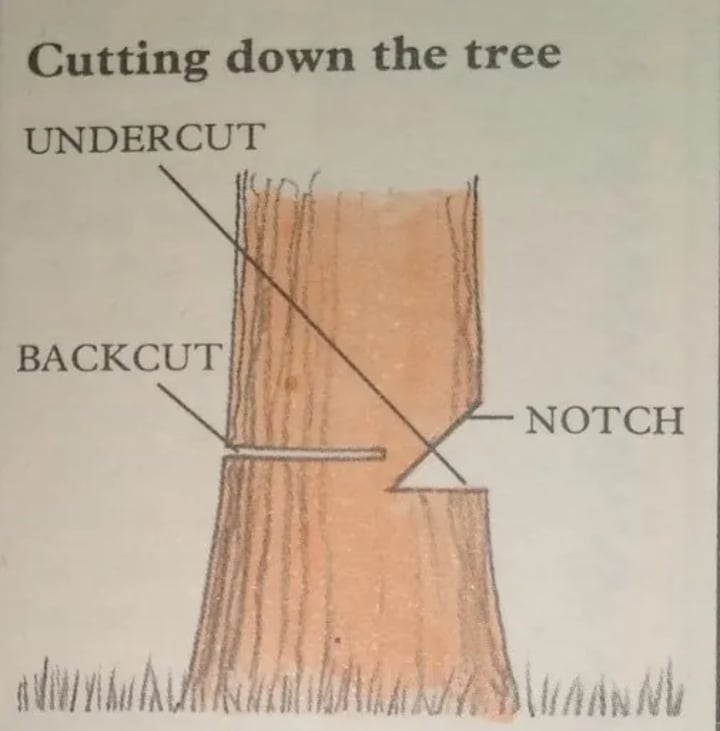
Cutting Down the Tree
One-Man Cross Cut Saw
Size: (750mm to 1.5m)
Material: blade- steel, handle- hardwood
Use: to feel trees and to cut logs to length
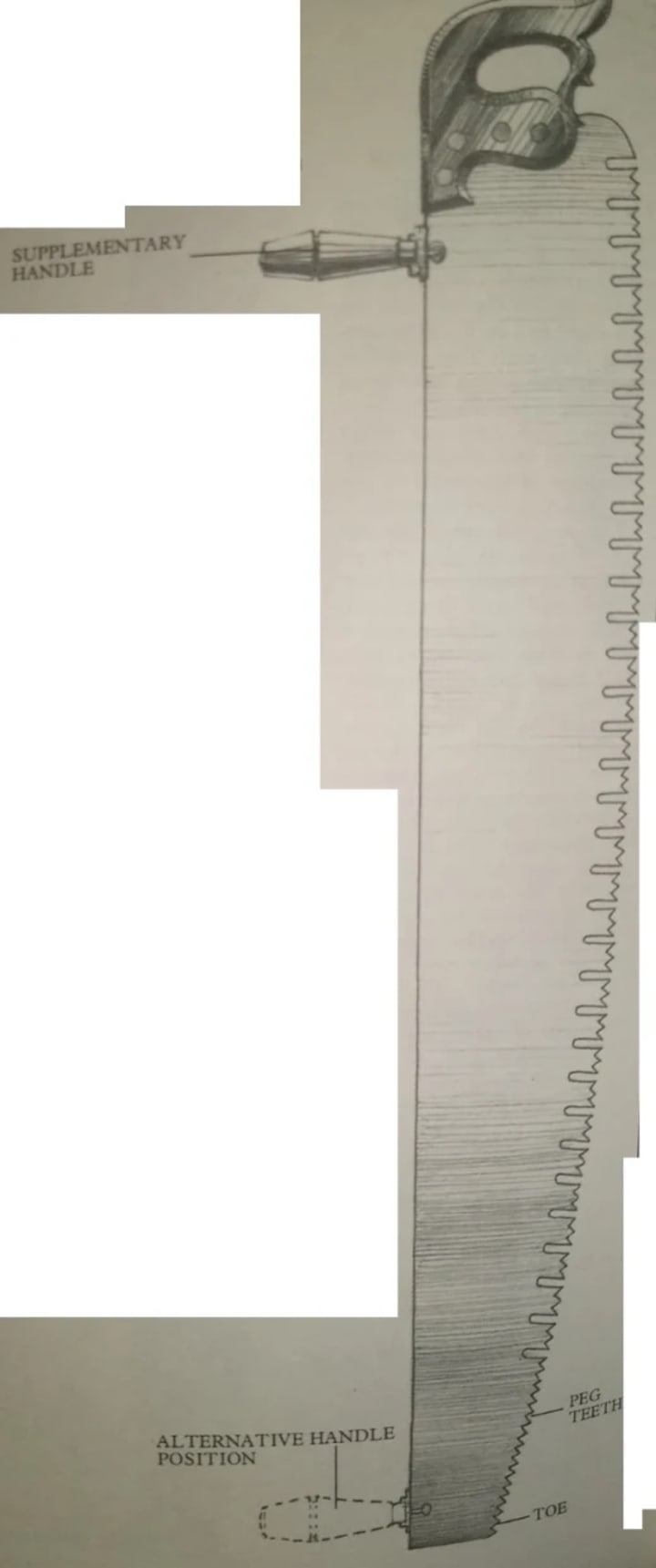
One-Man crosscut saws have a hand saw style handle and a supplementary upright handle, which can be fitted anywhere along the upper edge of the blade as a secondary hand grip. It is normally positioned immediately in front of the main handle but can be fitted at the toe of the blade to convert the tool into a two-man saw.
One-man crosscut blades normally retain their full depth for most of their length, tapering rather abruptly at the toe. All the styles of teeth described for two-man saws are available for the one-man, but whatever the design there is usually a short length of peg teeth to correspond with the taper.
One-Man Cross Cut Saw
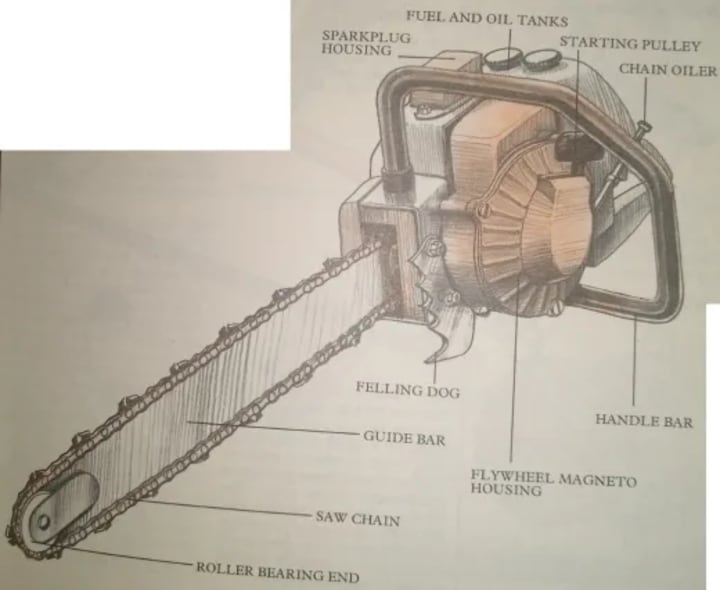
Chain Saw
Size: bar length- (250mm to 500mm), power- electric (1100 to 1200 watts), petrol engine- (3.5 to 5.5hp)
Material: various
Use: to fell trees and cut logs to length
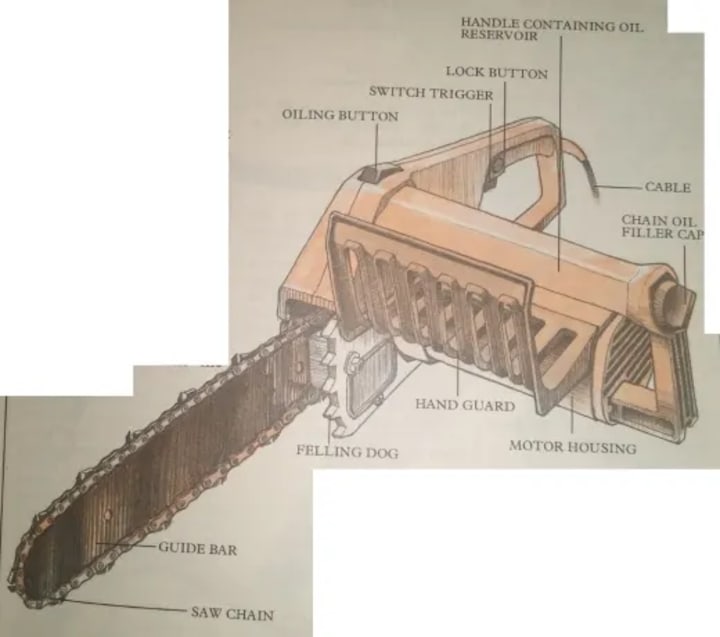
A modern chain saw cuts fast and efficiently even through unseasoned timber. A petrol engine or electric motor drives a continuous toothed chain which is supported and guided by a metal blade which is known as the guide bar.
Safety features are incorporated to prevent accidental starting of the tool. Electric saws are fitted with a "lock-off" button, and engine-driven saws have a centrifugal clutch, which disengages when the engine is idling.
Industrial Chain Saw
Modern Chain Saw (Household Use)
Folding Saw
Size: 1.2m
Material: steel
Use: to cut off branches
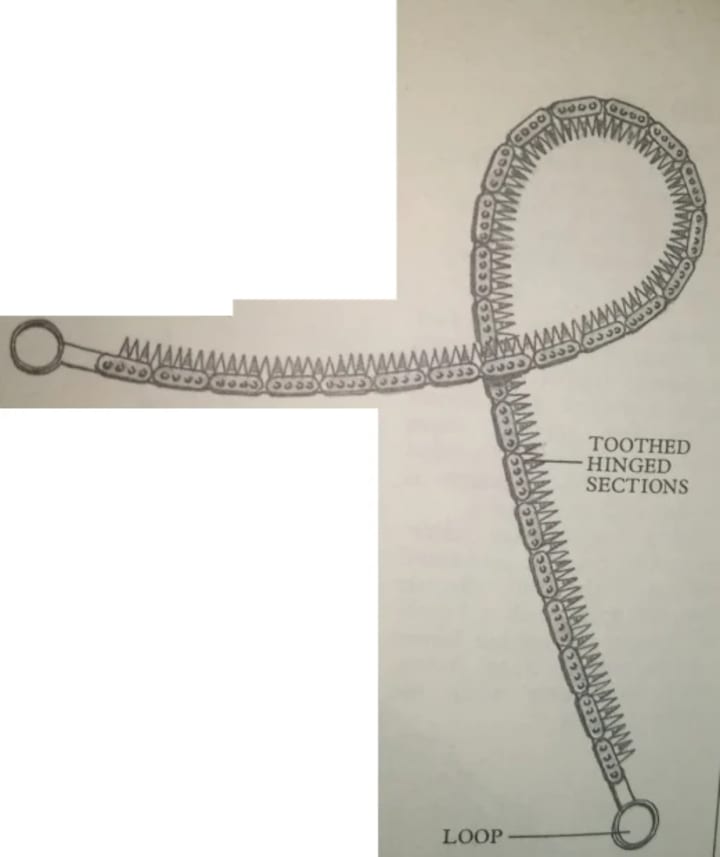
The folding saw is a length of flexible, toothed steel with a loop at either end. A rope is attached by the loop to each end so that the saw can be pulled in both directions. One end of the rope is thrown over the branch and the folding saw hauled up. One person takes either end of the rope and, standing well clear of the branch, they pull in alternate directions until the branch is severed. It is dangerous to cut a branch from below unaided, as both the branch and the saw itself could fall.
Folding Saw
Log Saw
Size: 600mm to 900mm
Material: blade- steel, frame- tubular steel
Use: To cut logs to length and prune trees
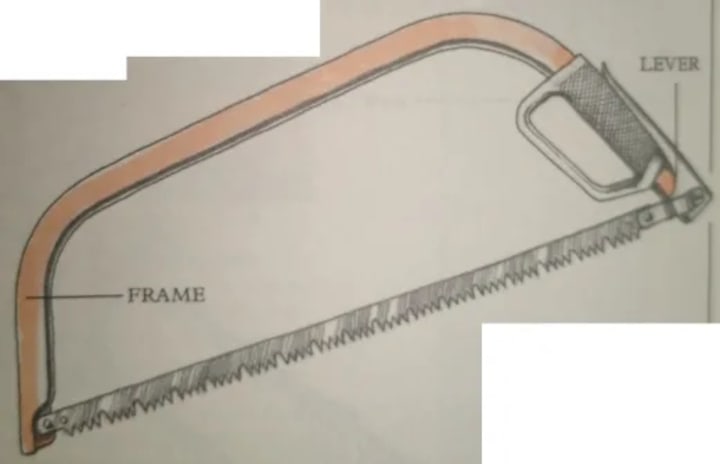
The blade is held under tension in a tubular steel frame. In modern versions, tension is applied by a quick-release lever. The lever combined with an oval sectioned frame provides a comfortable handgrip. The blades, which are replaceable, are made up of pegged teeth or a combination of pegged teeth and gullets to provide cutting action in both direction.
Log Saw
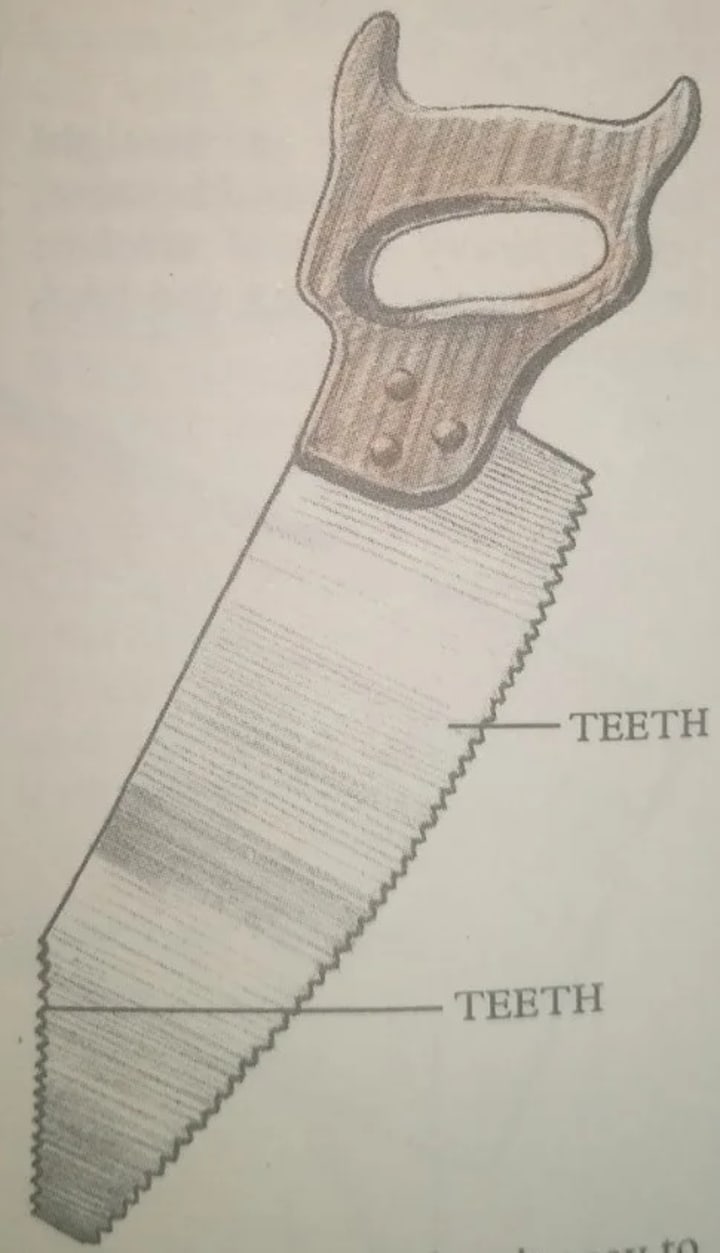
Hand Saw
Size: rip saw- length- 650mm, , cross cut length- 600mm to 650mm, , panel length- 500mm to 550mm
Material: blade- steel, , handle- beech, plastic
Use: to cut large planks or panels
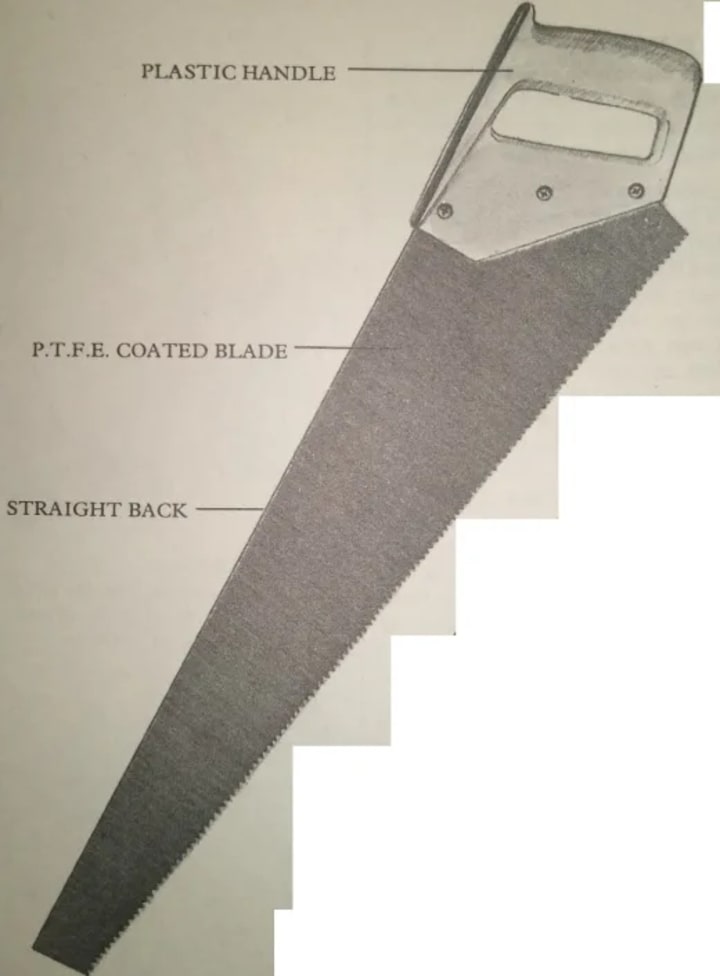
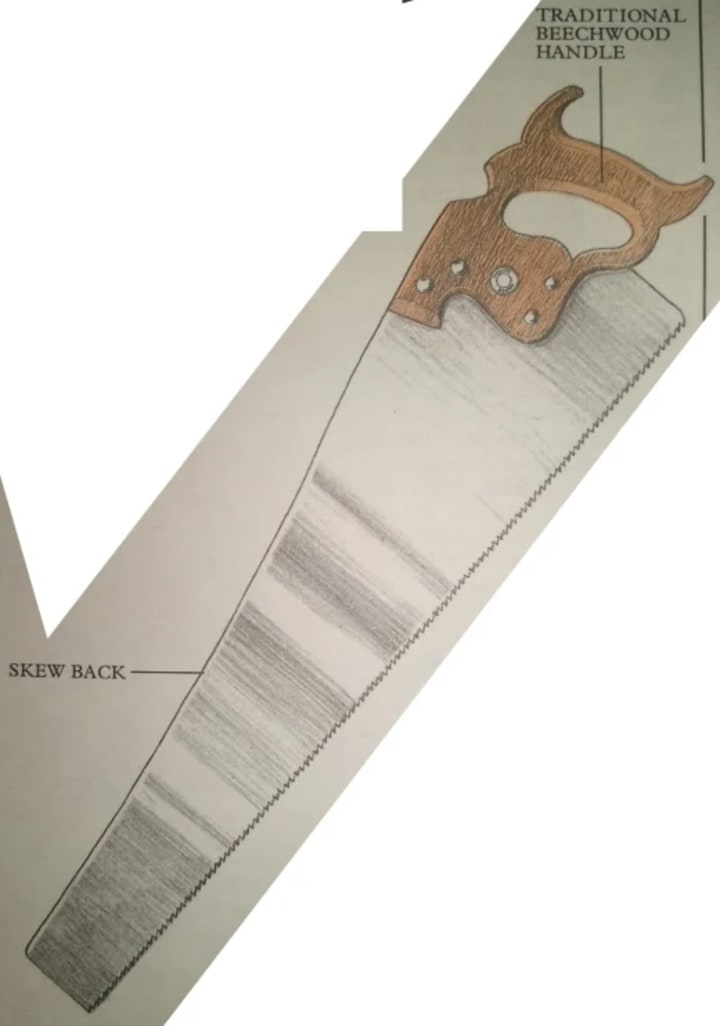
Hand saws as a group have long, untapering, unsupported blades fitted with a closed handle. Although they vary in length, the main difference lies in the number and shape of the cutting teeth. The shape of the blades varies with the quality of the saw. A lot of modern saws, and some more cheaply produced traditional style saws, have a straight back and a blade of uniform thickness throughout.
The better traditional saw has a pronounced dipping curved back, known as a "skew" back. This is to reduce the weight at the toe, thus improving the balance of the tool. They are also "taper-ground", that is, ground on both sides of the blade to taper from the handle to the toe on the back of the saw while remaining a constant thickness just above the teeth. This improves the clearance of the saw in the kerf, even with a minimum set, which makes the saw easier to drive and wastes less wood.
The traditional hand saw handle is cut from a close grain hardwood, usually beech. In some ways, it is a curious design, for it is impossible to cut a handle from solid wood without leaving short-grain somewhere, and it is puzzling that the cross grain strength of plywood was never used for saw handles. Modern saws are often fitted with moulded plastic handles of a less elaborate design. In either case, a well designed handle should be set low on the back of the blade for correct balance and it should be angled to produce maximum thrust approximately halfway along the cutting edge.
Modern Saw
Traditional Saw
Back Saw
Size: length- 200mm to 350mm
Material: blade-steel, handle- beech or plastic
Use: to cut joints
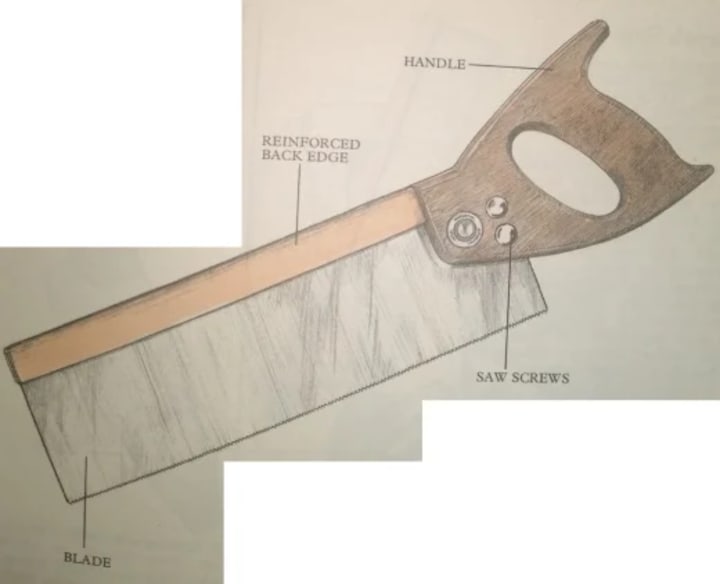
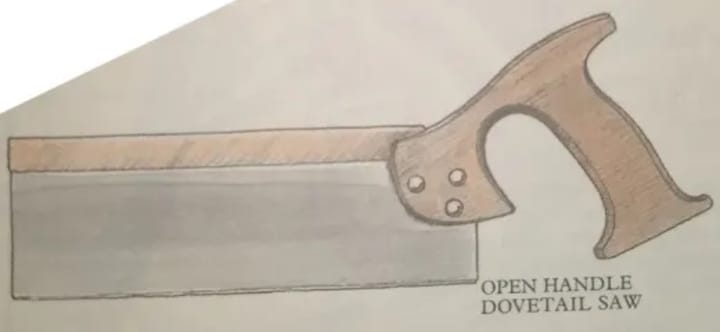
Back saws have a straight blade, parallel top, and bottom, with a heavy strip of steel or brass wrapped along the back to provide rigidity. The handles are similar in shape to those on hand saws except that they are generally mounted higher. Smaller back saws are often fitted with an open handle. They are known as dovetail saws in Britain.
Back saws typically have cross-cut teeth for general bench work, such as cutting smaller sections of timber to length. Smaller back saws, used to cut dovetails by working mainly in line with the grain, are sharpened with fine rip saw type teeth.
When starting the cut, back saws are presented to the work at an angle in a way similar to that described for cross cut and rip saws. Once the cut is established, these saws are used more square to the work than hand saws are.
Back Saw
Dovetail Saw
Gent's Saw
Size: length- 100mm to 250mm
Material: blade- steel, handle- beechwood
Use: to cut very fine joints
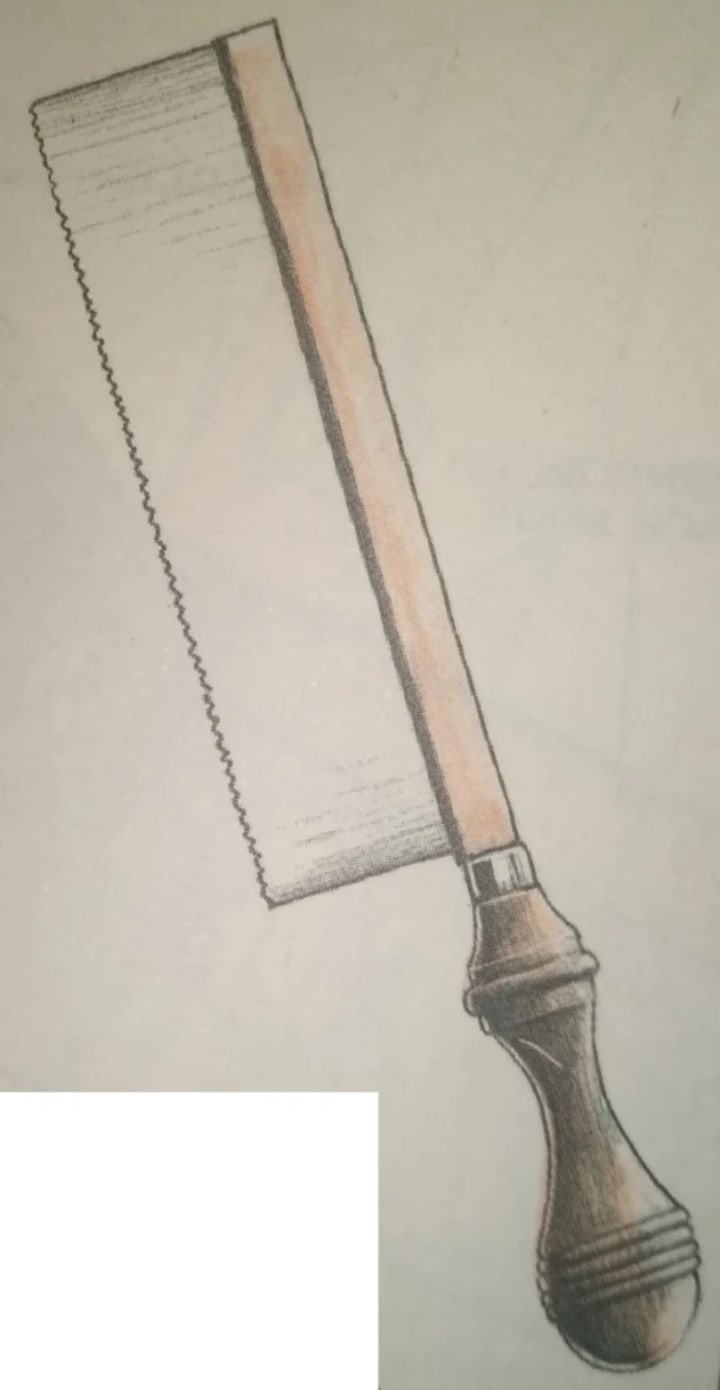
The gent's saw is a small back saw with a straight chisel type handle. The small teeth are finely set to cut a very narrow kerf required for fine joints. The term "gent's" refers to the smaller, delicate tools given to "gentlemen" of an earlier date who enjoyed woodworking as a hobby. Saws with very fine teeth and narrow blades are called "bead" and "jewelers" saws.
Vaneer Saw
Size: blade length- 75mm
Material: blade- steel, handle- hardwood
Use: to cut thick veneers
The vaneer saw has two curved serrated edges. One set of teeth is sharpened for cross cutting, the other for cutting vaneers with the grain.
Vaneer Saw
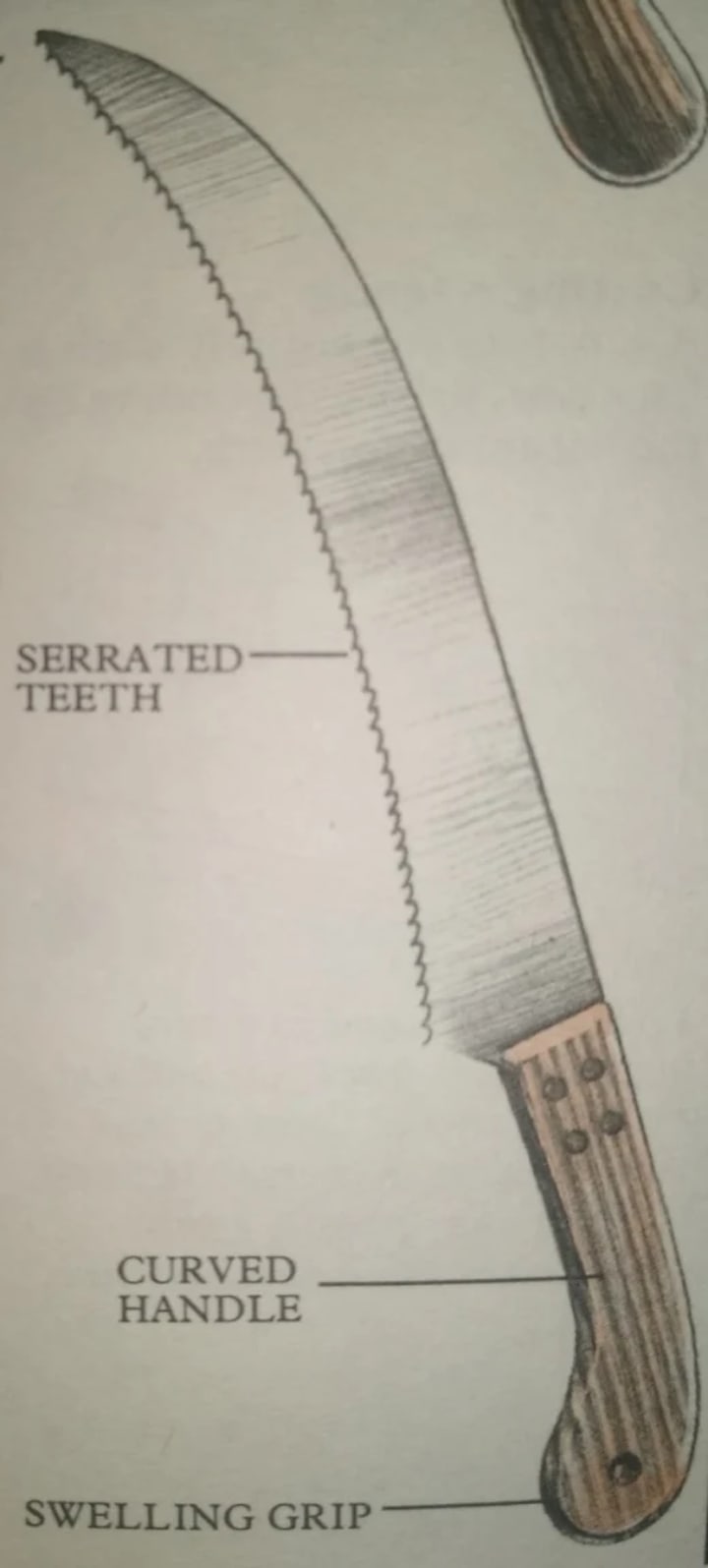
Pruning Saw
Size: 300mm to 500mm
Material: blade- steel, handle- hardwood
Use: to prune trees
The simplest form of pruning saw, a descendent of one of the earliest forms of saw, is known in modern catalogues as the "Grecian" pattern. The curved, knife-like blade is serrated on the underside with regular teeth facing backwards, which cut on the pull stroke. The curve of the blade automatically progresses the cut.
The folding pruning saw has a handle the same length as or a little longer than the blades which folds into the handle for storage and safety. A double edged pruning saw is also available. It normally has fine peg teeth on one side of the blade and a coarser peg tooth and gullet combination on the other side.
Pruning Saw
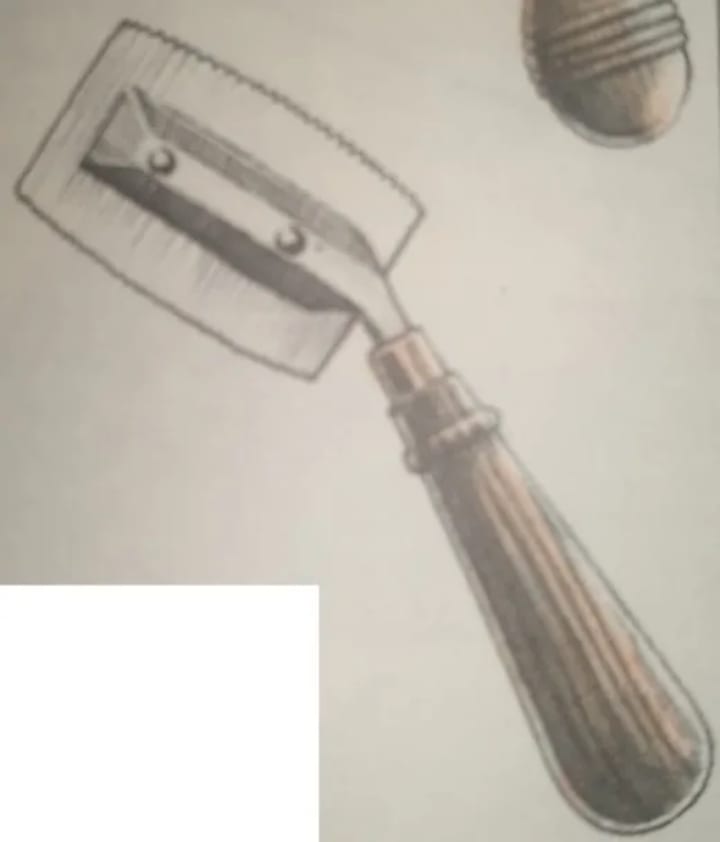
Flooring Saw
Size: length- 312mm
Material: blade- steel, handle- beechwood
Use: to cut through floor boards
A flooring saw makes it easy to lift floor boards to check plumbing or electrical wiring. The saw has a curving blade with teeth on the underside and an angled section. The curved blade of the flooring saw lets you cut into a board without having to start with a drill or keyhole saw, and the curved cutting edge is less likely to damage boards on either side. The teeth on the back edge let you cut up to a skirting board while keeping the handle clear of the wall.
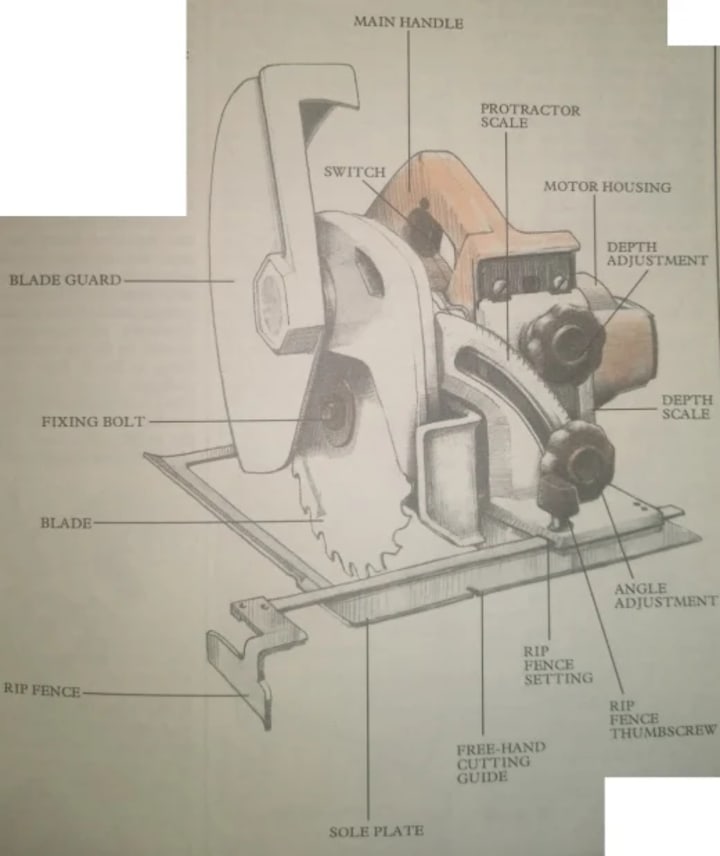
Portable Circular Saw
Size: unloaded blade speed- 3000 to 3500 rpm, weight- 3.4 to 6.35kg
Material: various
Accessories: saw blades, guide fence, saw bench
Use: to cut solid timber and board to size
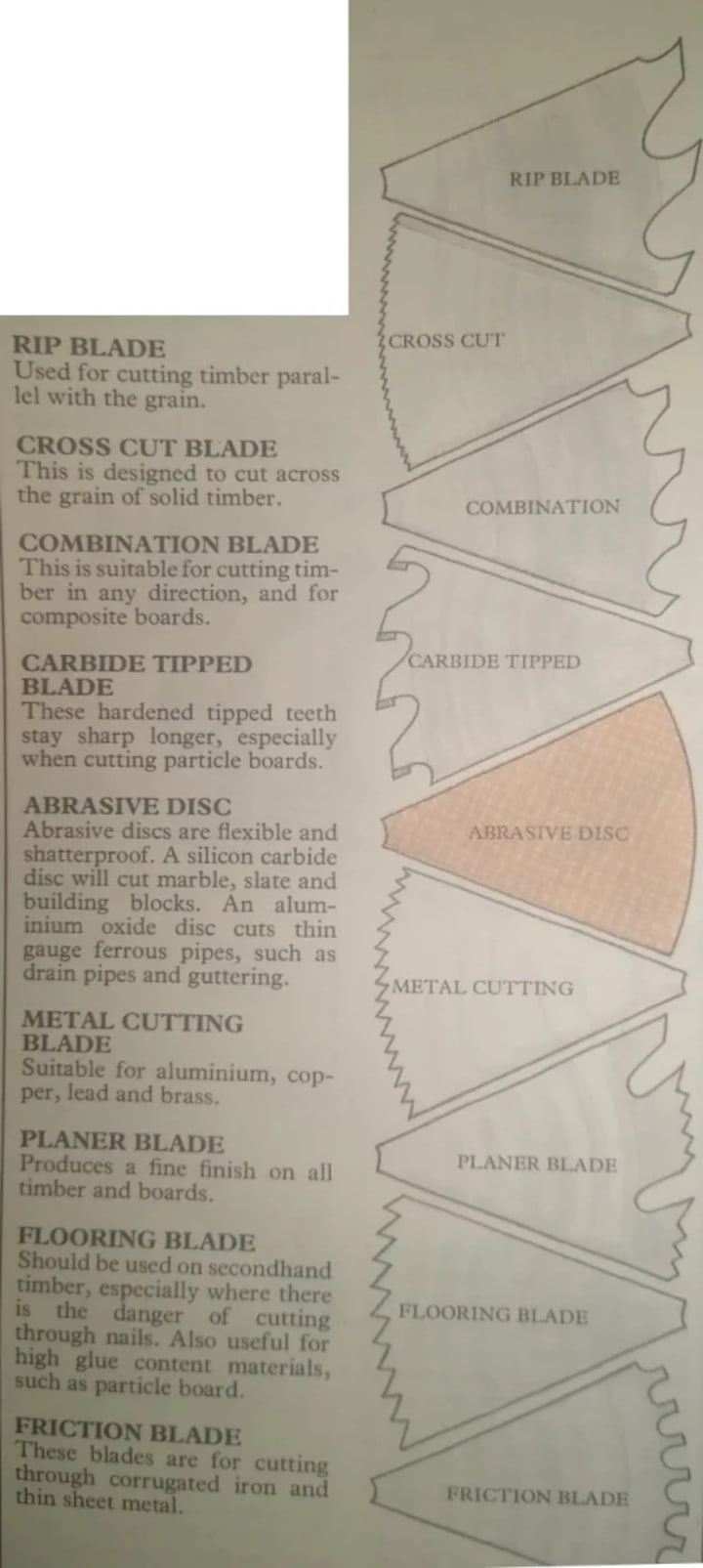
The portable circular saw is an invaluable power tool. It is primarily a woodworking tool, but with special blades fitted, it can cut a number of materials with equal ease. Saw are manufactured as a purpose-made tool or as an attachment to a power drill; the latter may be underpowered for some jobs, but it is much cheaper. Larger industrial saws are available, but a saw which takes a 125mm or 187mm diameter blade is normally sufficient.
All portable circular saws should be fitted with a fixed upper blade guard and a lower blade guard which is pushed back as the saw passes through the work. The lower guard is spring-loaded to return automatically as the blade clears the work. Check that the guard is working efficiently before using the saw and never fix it in an open position when the saw is running. Choose the right blade for the job and disconnect the saw before fitting it.
Portable Circular Saw
Portable Circular Saw (Blade Types)
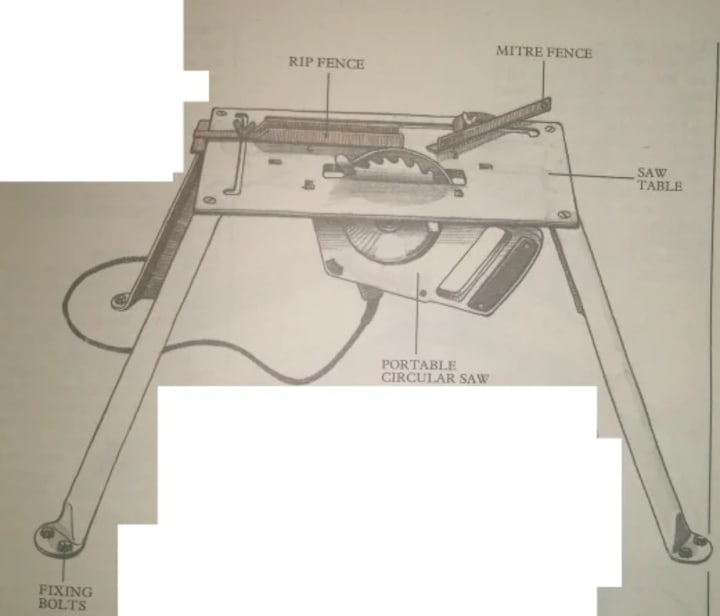
Saw Bench Attachment
Size: table size- 368mm x 250mm to 500mm to 400mm
Material: steel
Accessories: portable circular saw
Use: to convert a portable saw to a table saw
Some manufacturers supply a saw bench attachment, designed to convert their portable circular saw into a saw table. These are small, lightweight tables and normally will not take other makes of saw. If you are thinking of using this attachment, it may influence your choice of saw.
The saw is fitted upside down to the underside of the table with the blade and guard protruding above the surface. It must be fixed securely and accurately aligned with the bench guides. The saw bench has four legs, which must be securely bolted to a work bench. Alternatively, it could be fixed to a composite board base, which could be clamped to a bench when required. This has the advantage of portability and clears the work surface when the saw bench is not required. The angle and depth of the blade is adjusted by the portable saw controls.
Saw Bench Attachment
Frame Saw
Size: length- 200mm to 700mm, , width- 3mm to 87mm
Material: blade- steel, ,frame- beechwood
Use: to rip, cross cut, and cut curves in timber
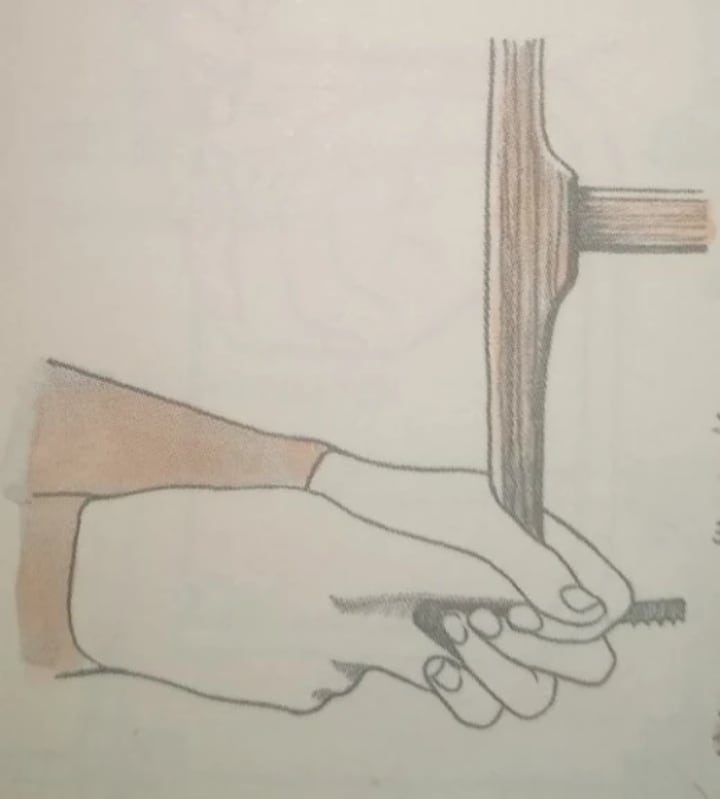
The modern frame saw is based on centuries-old construction. A relatively narrow blade is held in tension by the side pieces or "cheeks" of the frame, pivoting about their centers on the ends of a stretcher rail. The top ends of the cheeks are pulled towards each other, either by a twisted cord and toggle stick or a cable, tensioned by wing nuts. The stretcher rail and cheeks are either joined by a dry stub mortise and tenon or a bridle joint.
'the traditional two-handed method of holding the frame saw controls the direction of the blade and supports the frame. Grip the handle with one hand, the index finger extended in the direction of the blade. Take the blade fixing between the index and second finger of the other hand, wrap the thumb around the cheek and clasp the other fingers around the other hand. On some European models the blades are fixed in a vertical position for cross-cutting, but with a swivel blade for ripping. The British type of frame saw, the bow saw, has a smaller frame and is used for curves.
Frame Saw
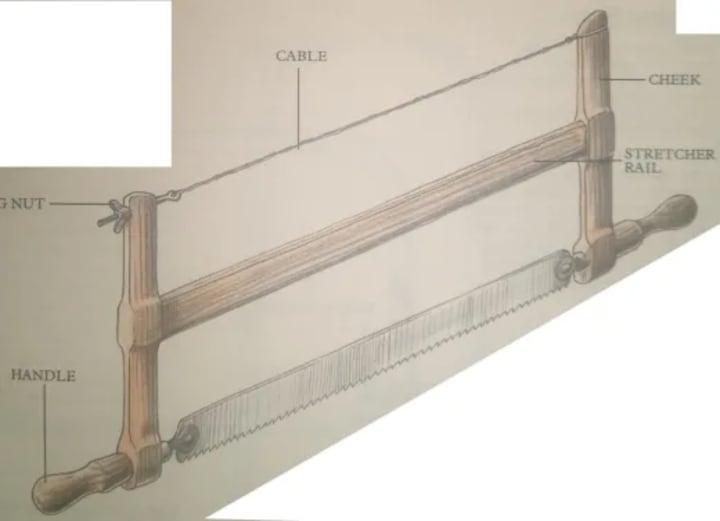
Frame Saw (side view)
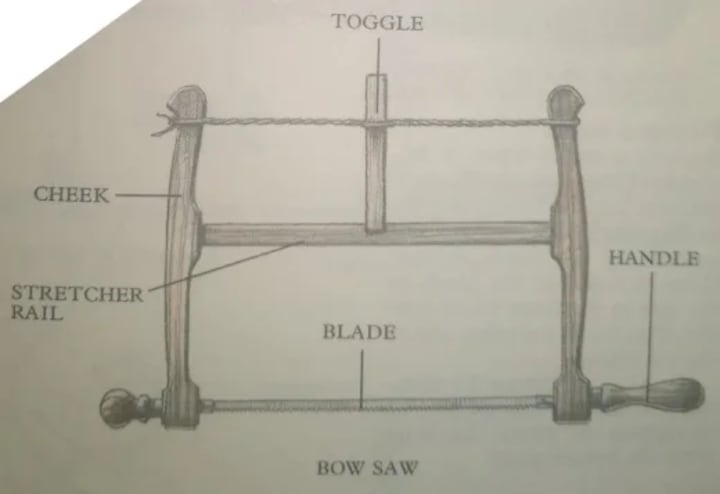
Holding the Frame Saw
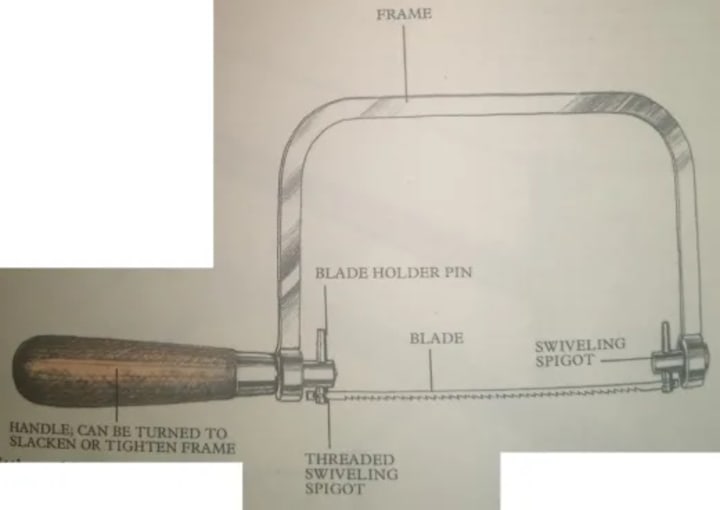
Coping Saw
Size: length- 159mm, , bow- depth- 118mm to 168mm
Material: blade/frame- steel, ,handle- hardwood
Use: to make curved cuts in wood or plastic
The blade of the coping saw is very narrow and has fine teeth grouped at 14 per 25mm. It is held under tension by the spring of the frame. It can be angled to cut in any direction, by twisting the pins extending from the blade holders.
Coping Saw
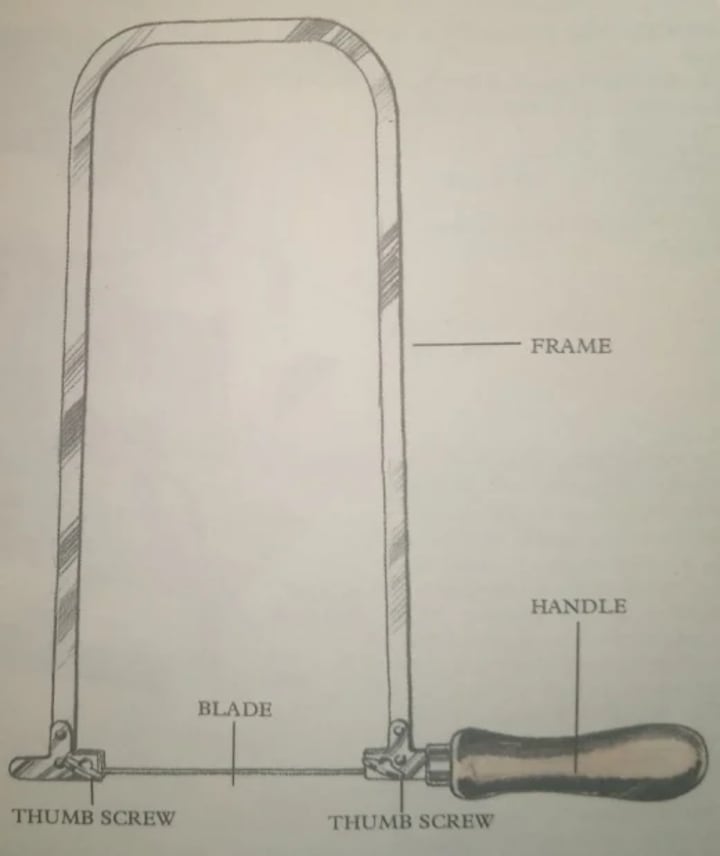
Fret Saw
Size: length- 125mm, , bow depth- 287mm
Material: blade/frame- steel, , handle- hardwood
Use: to cut tight curves in wood and plastic
The fret saw is used to work thin sheet materials. It is very similar to the coping saw, but has a much deeper bow to the frame and can, therefore, be used to cut shapes well inboard from the edge of a panel. The blade is so fine, up to 32 teeth per 25mm, that it can cut curves without being angled. The blade is held at each end by a simple, thumb screw operated clamp. It is fitted like the blade of a coping saw, but the operation is much simpler as the spring of the frame itself is sufficient to tension the blade without further help.
To use the saw, hold the work flat on a bench over-hanging the edge. With the saw teeth set to face the handle, saw from below using a pull stroke. The bench backs up the work as it cuts.
Fret Saw
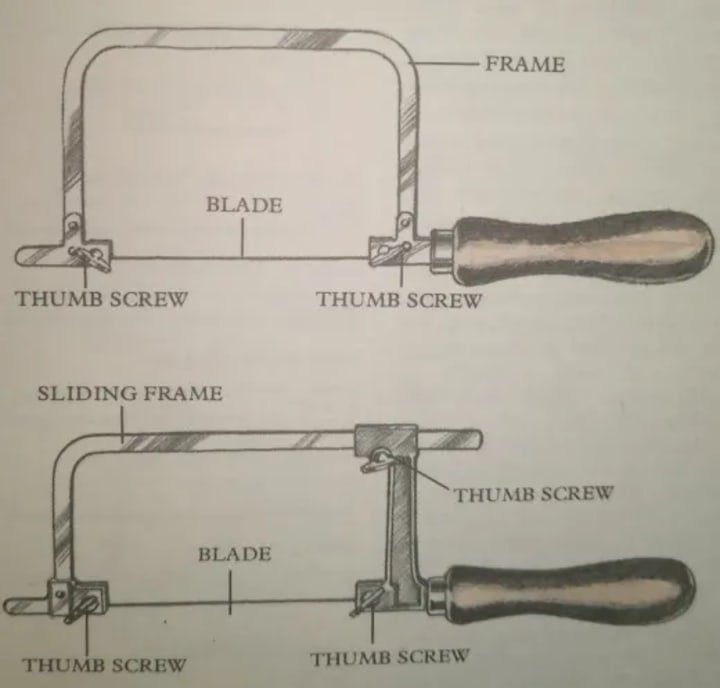
Piercing Saw
Size: length- 125mm to 150mm, , bow depth- 68mm to 84mm
Material: blade/frame- steel, , handle- hardwood
Use: to cut tight curves in thin sheet metal
The piercing saw is constructed in exactly the same way as a fret saw, but its extremely fine blade, up to 80 teeth per 25mm, is specifically designed for cutting thin sheet metals, such as steel, copper, brass, and aluminium. Jewelers and silversmiths use the saw to cut gold and silver sheet.
The blade is fitted and used as a fret saw. Some frames adjust to take blades of different lengths, which is a useful and economic way to re-use broken but otherwise functioning blades.
Piercing Saw
Sabre Saw
Size: unloaded speed- 2700 to 3300 strokes per minute, weight- 1.7 to 2.72 kg
Material: various
Accessories: saw blade, guide fence
Use: to cut curves in various materials
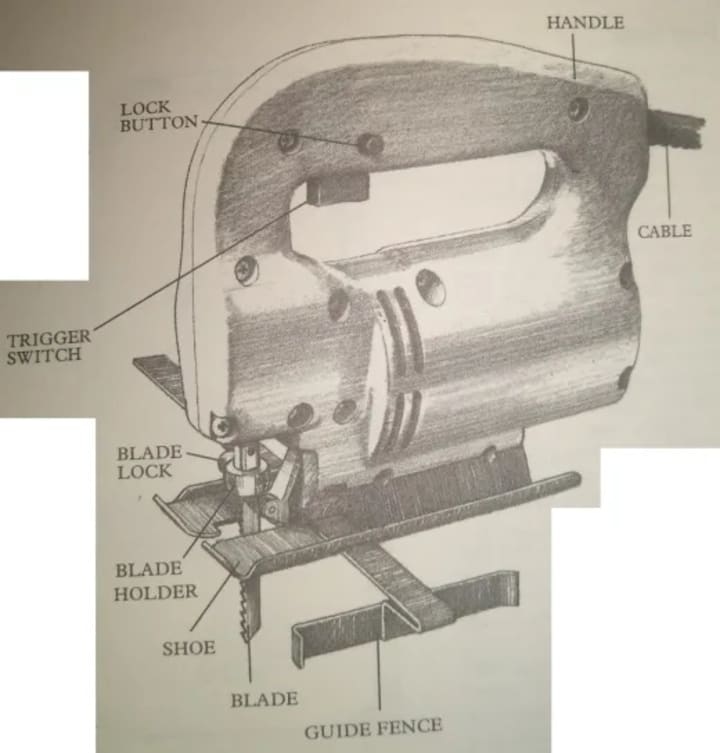
The sabre saw, which is designed as a power drill attachment as well as a special purpose saw, is a useful tool in the home workshop. It does not have the power and accuracy of larger saws for cutting large panels or thick sections of timber, but its versatility is a great advantage.
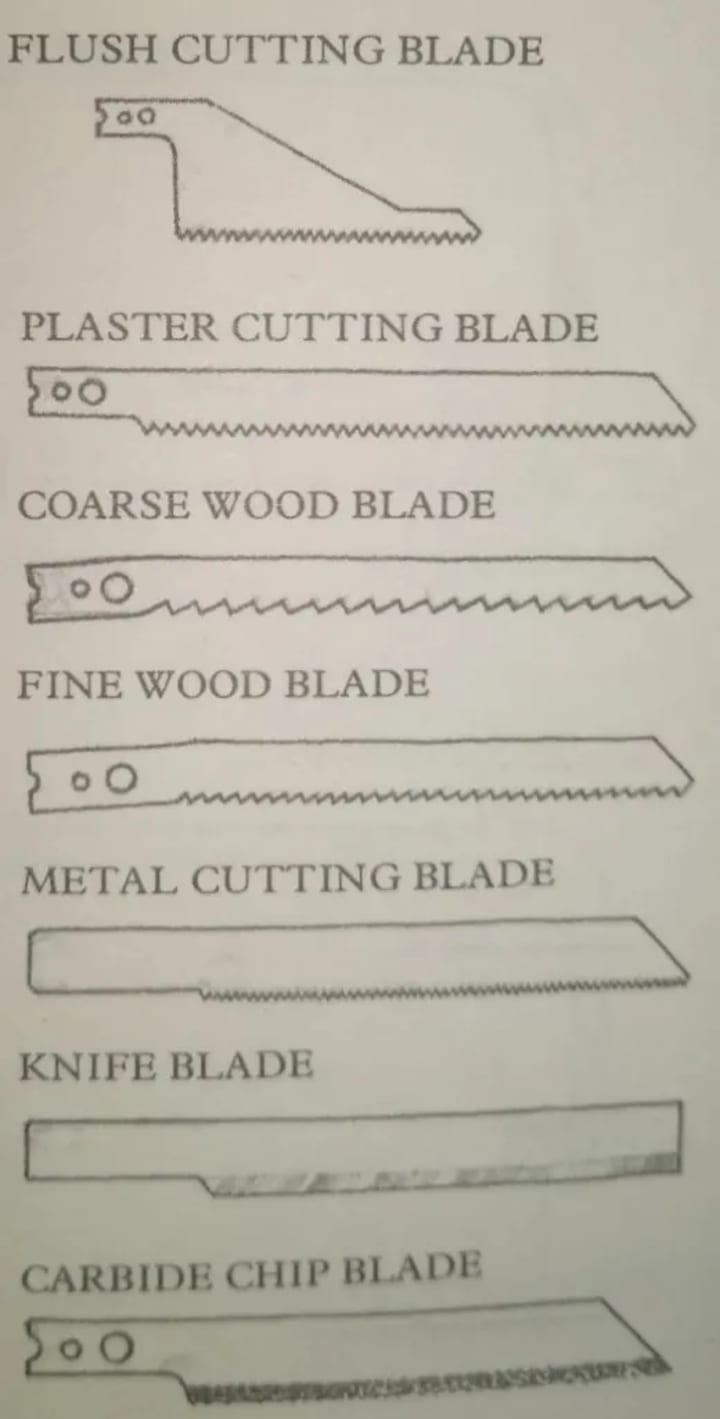
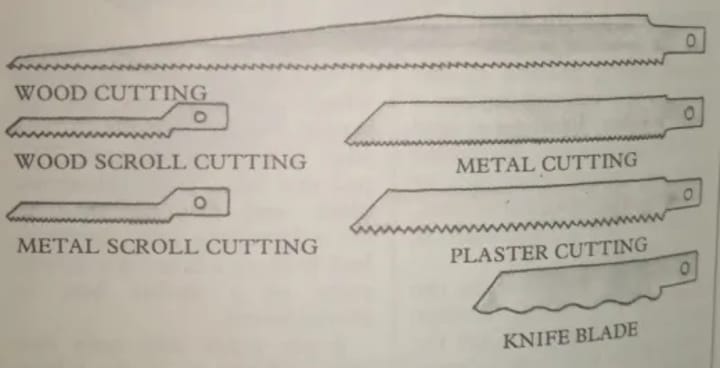
It can not only perform a variety of cuts but, fitted with the appropriate blades, can also saw a large section of materials. There are extra long coarse blades for cutting large sections of timber; shorter blades with different grades of teeth for finer cutting of softwoods, hardwoods, and composite boards; hack saw-like blades for cutting metal; and special blades for cutting plastic, masonry, plasterboard, leather, rubber, and cardboard.
A superior blade is available with carbide tipped teeth and there are also blades edged with tungsten carbide chips of different grades. They cut slower than many blades and are a little more expensive, but lasts longer and produce a very clean cut with virtually no splintering. They will also tackle ceramics.
Blades should be fitted according to the makers instructions. Make sure they are securely held and aligned as accurately as possible. Not all manufacturers produce the same range of blades, but some makers are interchangeable. Check that the fitting is identical by comparing a blade from your own machine with any prospective purchase.
Sabre Saw
Sabre Saw Blade Types
Hack Saw
Size: to take 300mm, 250mm, 300mm blades
Material: frame/blade- steel, , handle- zinc, alloy, hardwood
Use: to cut metal
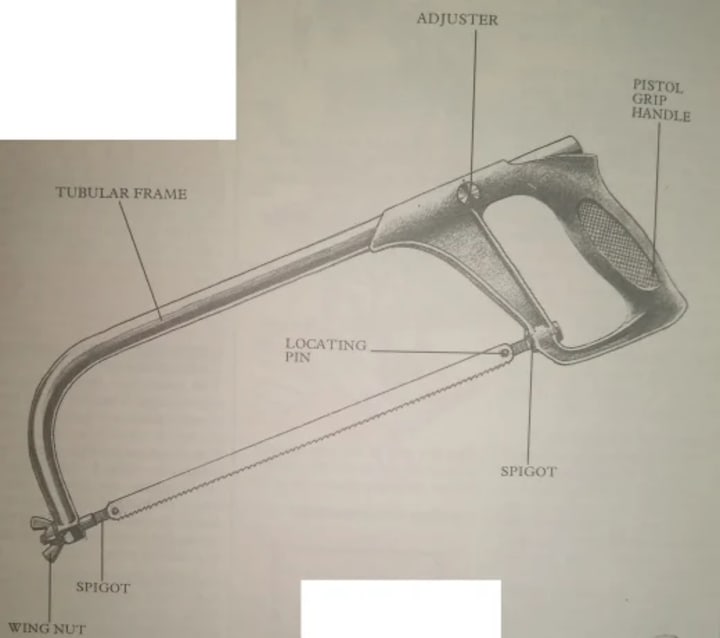
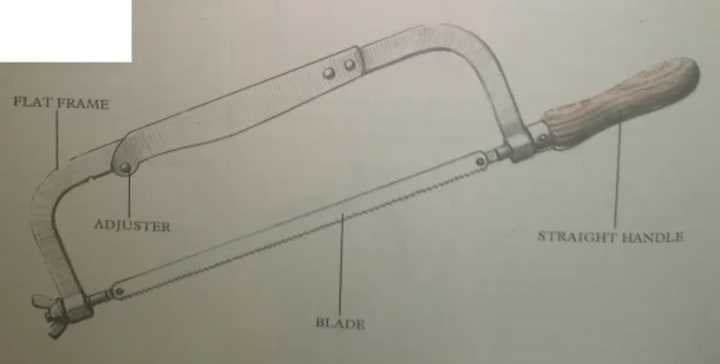
Hack saws are used to cut most metals. The bow frame is adjustable to take different lengths of the blade and may be fitted with a pistol grip handle or a straight hardwood grip. The pistol grip is much more comfortable to use and is less likely to twist in your hand.
Hack Saw Type 1
Hack Saw Type 2
Junior Hack Saw
Size: blade length- 150mm
Material: frame- steel, , handle- nylon, zinc or aluminium alloy
Use: fine metal work
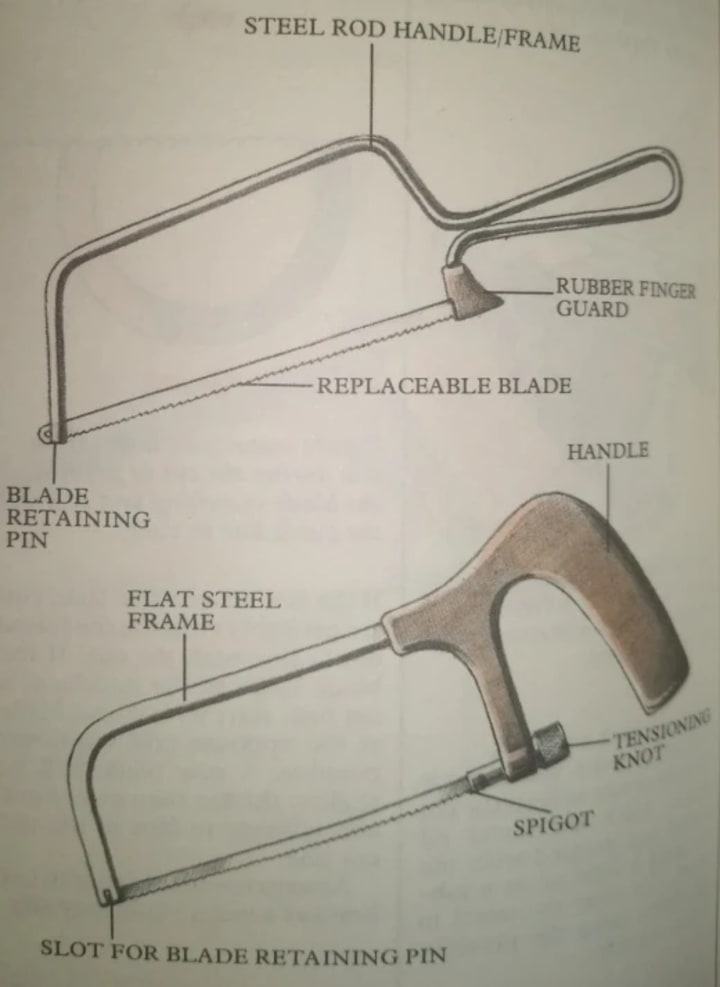
The junior hack saw is more convenient to use in confined spaces but must be used to make fine cuts only. The frame and handle of the simplest junior hack saw is made in one piece from a bent steel rod. The blade, which has 32 teeth per 25mm, is held under tension by the natural spring of the frame and held in place by slots. The pins which project from each side of the blade, hold it in position once it is inserted in the slots.
Another version of the saw has a pistol grip. The blade is located in the slot at the front end of the frame but fits into a tensioning device at the rear.
Junior Hack Saw
Mini Hack Saw
Size: length- 200mm
Material: plastic
Accessory: hack saw blade
Use: to use where a standard hack saw is unsuitable
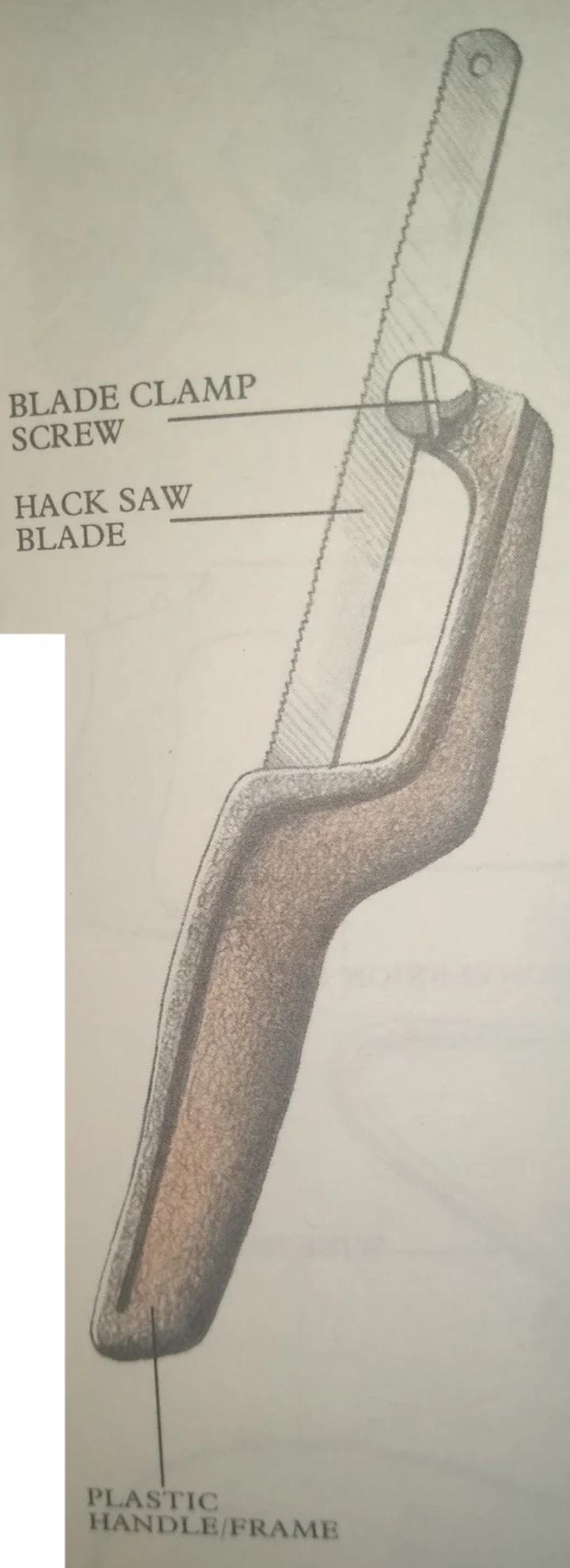
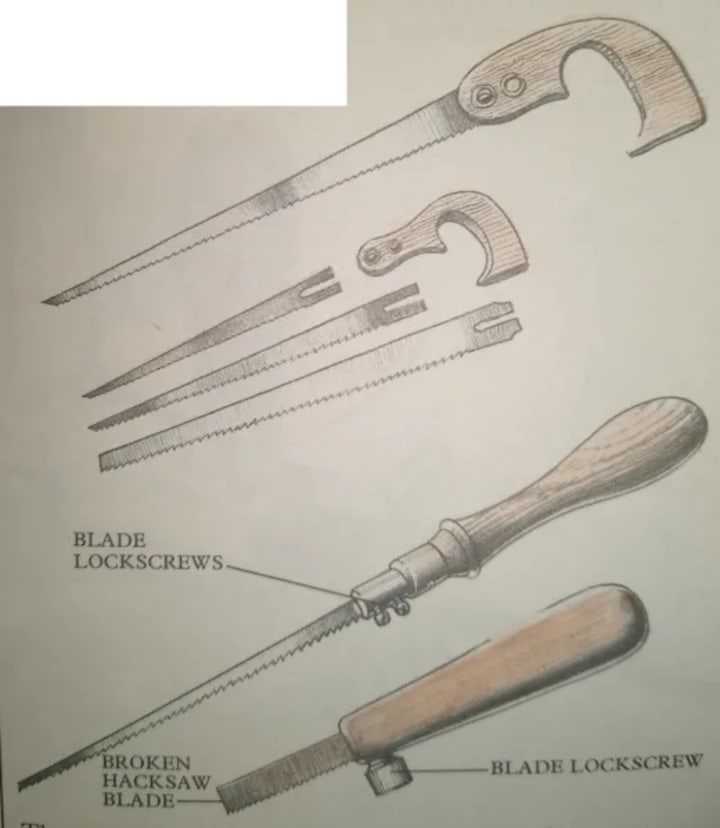
The mini hack saw is a one piece handle and frame which accommodates a hack saw blade. It will hold broken blades as well as new ones. It is used to cut metal in confined spaces which would be inaccessible to a standard hack saw. The blade slides into the handle and is secured by a screw clamp at the front end.
Mini Hack Saw
Sheet Saw
Size: length- 300mm to 400mm
Material: blade- steel, handle- zinc alloy
Use: to cut sheet materials
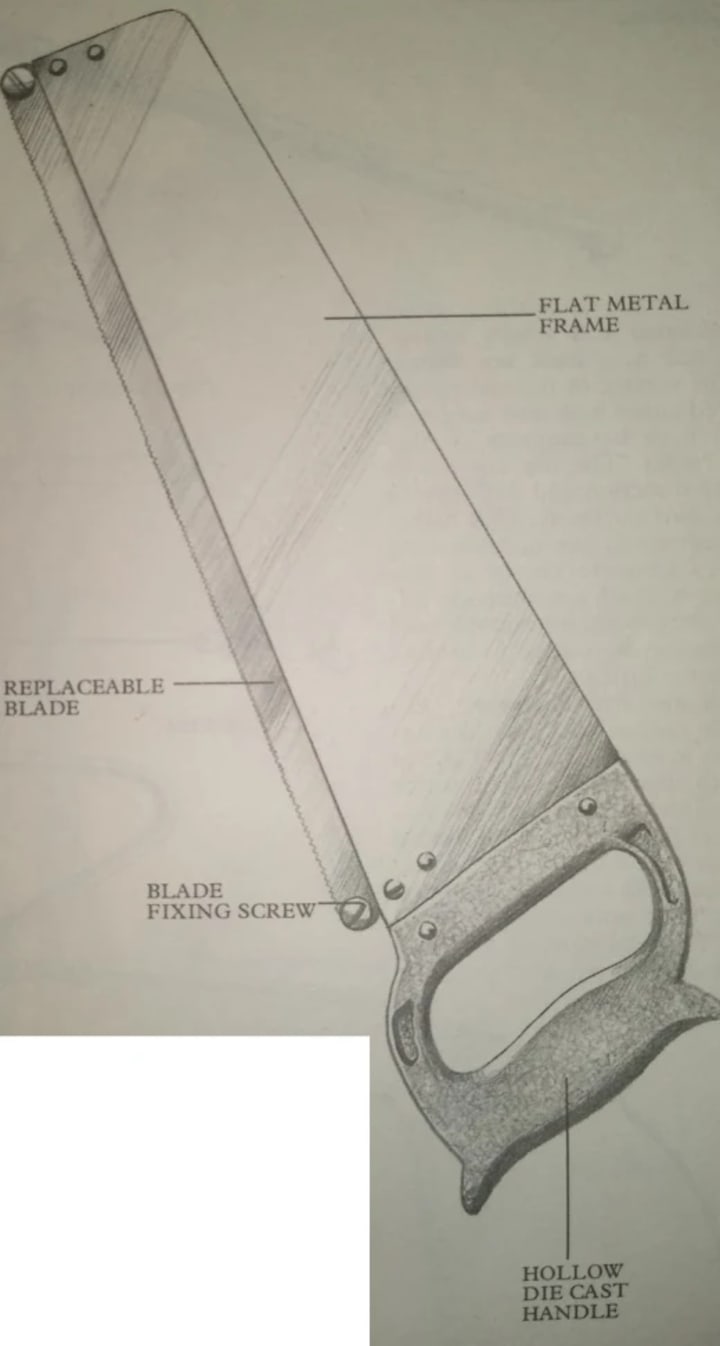
A standard hack saw cannot be used to cut large sheets of material because the depth of the frame limits its reach. A sheet saw has a hack saw blade fitted to a flat metal blade which can pass through the material like a hand saw.
The smaller version has a standard 300mm blade and is used to cut flat or corrugated steel, brass, copper, and so on. It will also cut asbestos, plastic and slate. The larger saw takes a special 400mm blade with 6 or 10 teeth per 25mm. This saw will cut thicker sheet material, thermo-plastic bricks and metal-covered plywood.
Sheet Saw
Saw File
Size: 150mm to 200mm
Material: steel
Use: to cut metal, ceramics and plastics
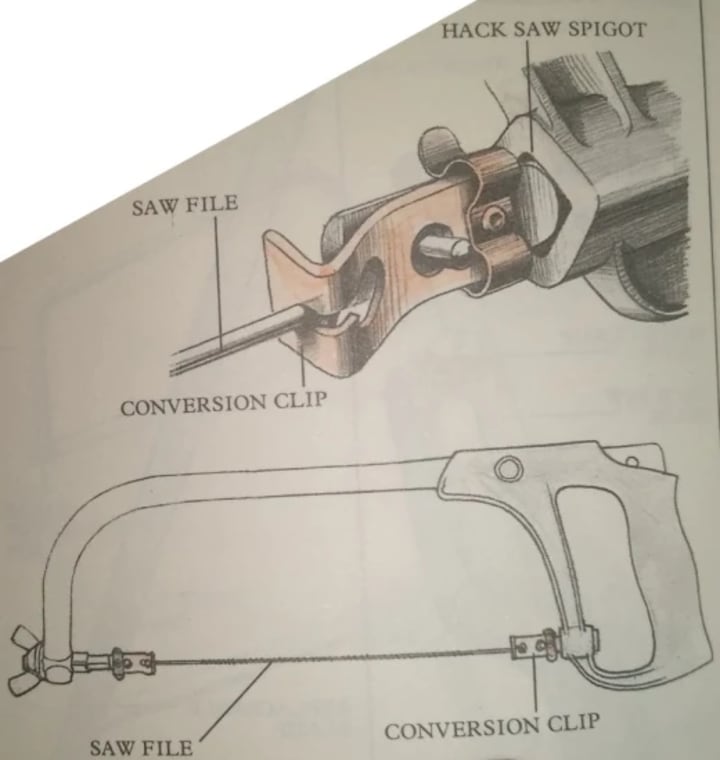
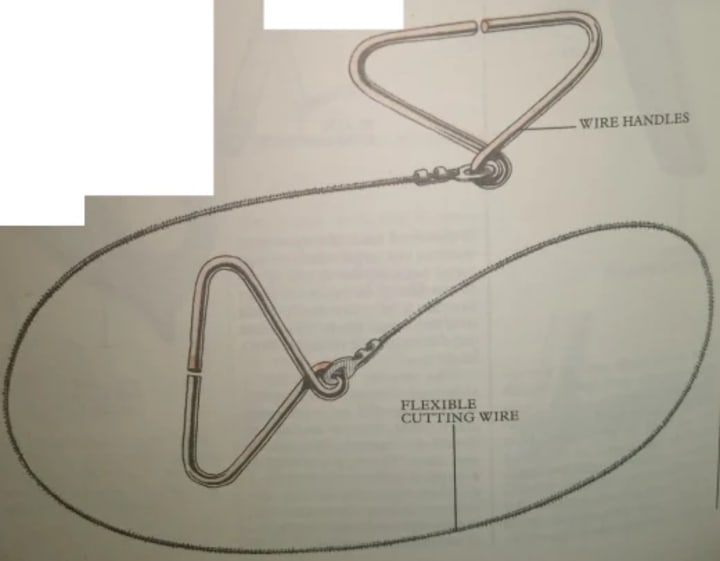
A saw file is a thin, round sectioned rod which is tensioned in a hack saw frame. The surface of the rod is covered either with tiny hardened teeth or by tungsten carbide particles. The file can cut in any direction and will turn in its own thickness. This makes it extremely useful for cutting very intricate curves in materials which are normally difficult to work, for example, wall tiles can be cut to fit around shower fittings.
Some manufacturers provide special hack saw-like frames to tension the saw file, but with special clips, they can be used in standard hack saw frames. Files are also produced with wire handles at each end to be used without a frame at all. They are extremely useful in confined spaces where a standard frame saw would be unsuitable.
Saw File Type 1
Saw File Type 2
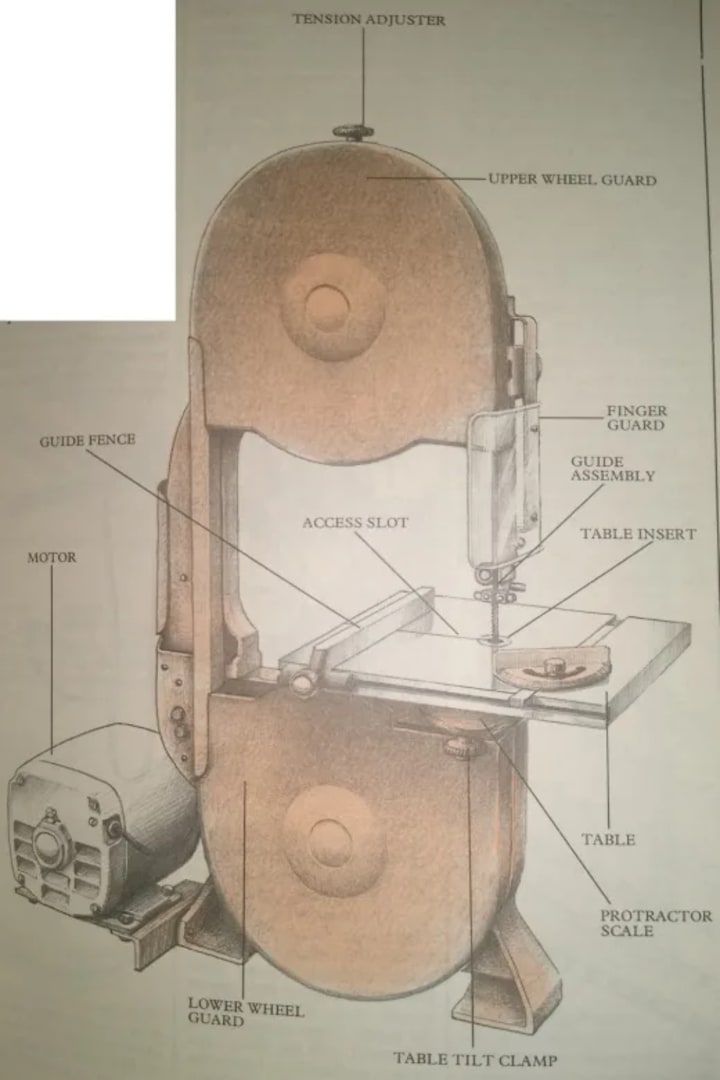
Band Saw
Size: depth of throat- 237mm to 362mm, , table- 175mm x 175mm to 450mm x 450mm
Material: various
Accessories: blades
Use: to convert large sections of lumber to size and to cut curves
A band saw is a power tool which is widely used in industry to cut timber to size, particularly where curves are involved. Smaller versions are available for the home work-shop. The blade is a steel loop which is driven around two wheels inside the casing to give a continuous cutting edge. Depending on the model, home workshop band saws will cut wood up to 150mm thick.
Band Saw
Masonry Saw
Size: 300mm to 1m
Material: blade- steel, , handle- hardwood
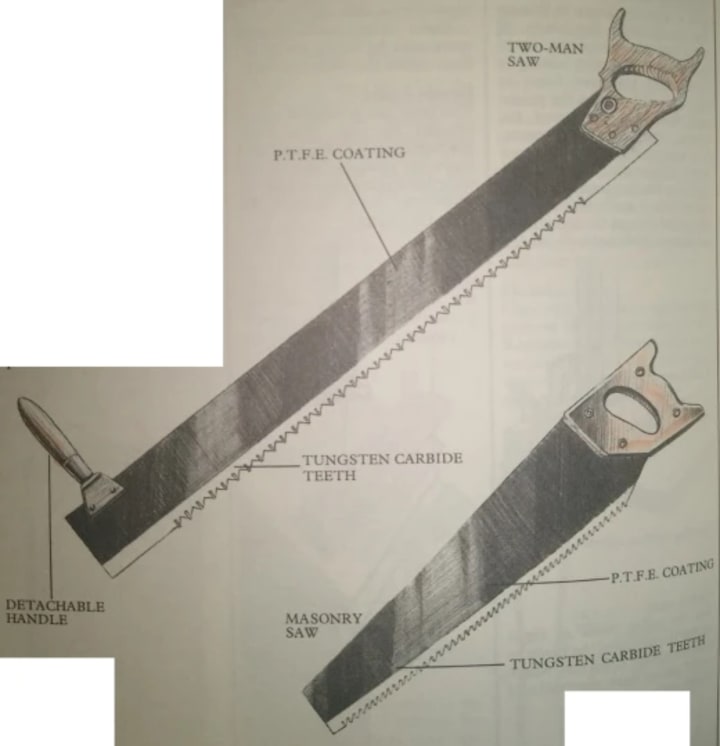
Use: to saw through masonry
Masonry saws have carbide tipped teeth for sawing through bricks, stone, cement and building blocks. The two-man wall saw will cut a whole section from a masonry wall to insert a door or window, or can be used to cut between brick courses to insert waterproofing in an older house. The smallest version, known as a chasing saw, is used by electricians and plumbers to channel out masonry for the insertion of cable, conduit or pipework.
Masonry Saw
Hole Saw
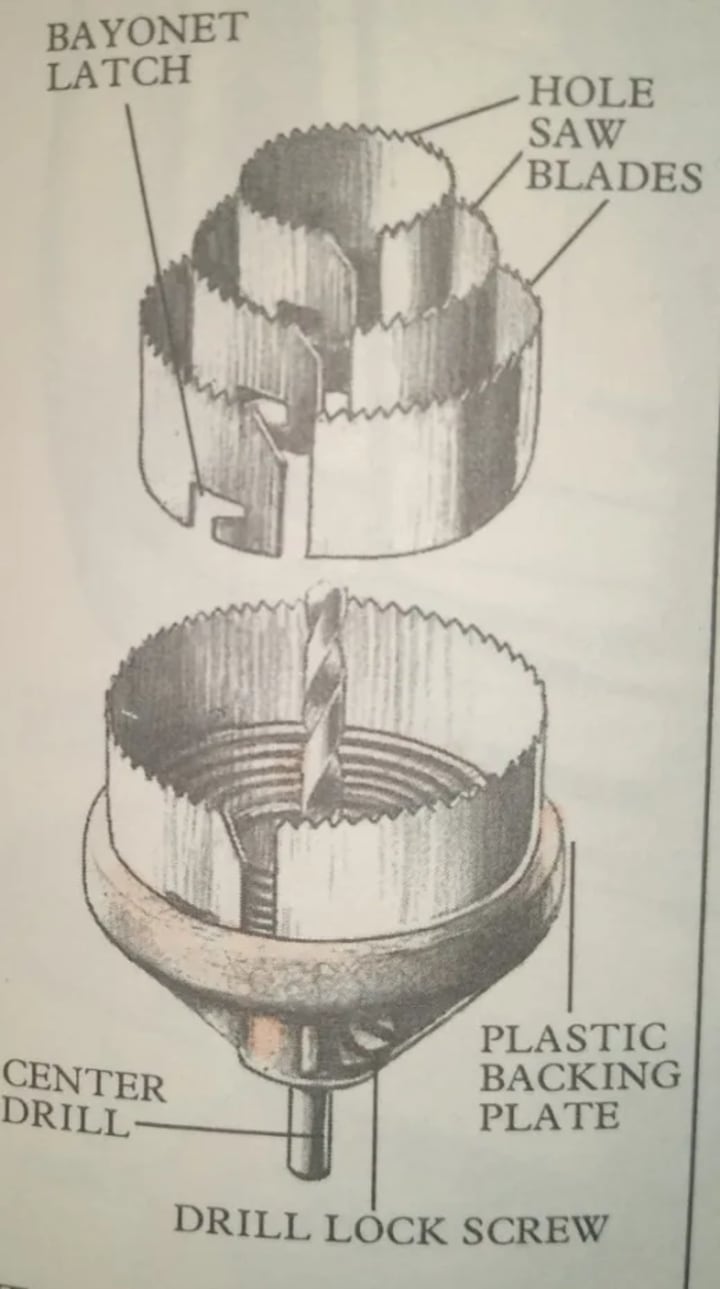
Size: diameter- 12mm to 100mm
Material: blade/drill bit- steel, , backing plate- plastic, zinc or aluminium alloy
Use: to cut large holes in various materials
The hole saw has a drill bit centered on a cylindrical saw blade. The blade is either cup-shaped, being pressed in one piece, or curved, and fits into a backing plate. Each set is sold with a range of sizes. Blades are made in various materials to cut wood, cast iron, sheet steel, stainless steel, aluminium, brass and plastic.
Secure the hole saw in a chuck of a portable electric drill or a drill press. Mark the center of the hole with a center punch, and locate the point of the drill bit. Select a slower speed than normal as the blade itself will be moving much faster than the central drill bit. Feed the saw into the work at a steady rate.
To cut a ring, set up the saw in a drill press and clamp the work to the table with a backing sheet. Drill out the center of the ring, fit the larger blade of the set and cut the circumference of the ring without moving the clamped work.
Hole Saw
Pad Saw
Size: blade length- 125mm to 375mm
Material: blade- steel, , handle- zinc alloy, hardwood
Use: to cut holes in a panel
The pad saw has no frame, so it can be used in places where a coping saw, for instance, would be limited to the edge of a board or panel. The pad saw has tapered narrow blade and can be used to cut a letterbox hole, keyhole, lock hole, or a hole for a switch plate or a socket box in plasterboard.
Some types take only one type and size of blade; others take a small range of interchangeable blades of different sizes, usually small, medium and large. There are also pad saws that will take whole or broken hack saw blades, which make them a useful general purpose short stroke saw.
For small diameter holes, use a saw with a pointed blade; for cutting thin wood such as plywood or hardboard use a saw with fine teeth; for cutting through fairly thick panels of timber use the wider blades.
Pad Saw
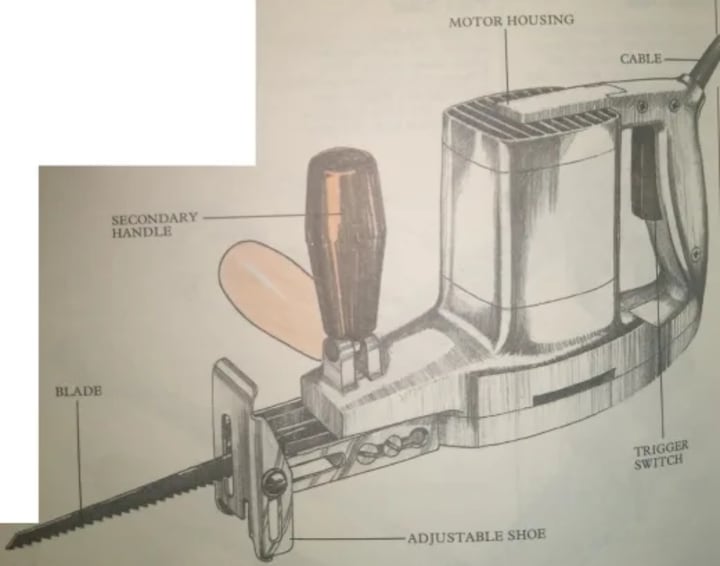
Reciprocating Saw
Size: unloaded speed- 1600 to 3000 strokes per minute, , weight- 2.72 to 4kg
Material: various
Use: to cut various materials
The reciprocating saw is a portable heavy duty version of the sabre saw except that the blade moves backward and forward rather than up and down. It is a two-handed tool with both a fixed and a secondary handle. The blades which can extend up to 300mm long can saw through large logs or through a wood wall to install windows or pipework. The blades can also be turned to cut in different directions, and fitted to cut flush with the surface.
With the appropriate blade, the reciprocating saw will cut equally well through wood, metal, plastic and composite boards. Some various incorporate variable speeds to work all the different materials efficiently.
Reciprocating Saw
Reciprocating Saw Blade Types
Bench Jigsaw
Size: depth of throat- 400mm to 625mm
Material: various
Accessories: jewelers blade, sabre saw blades
Use: to cut scroll work
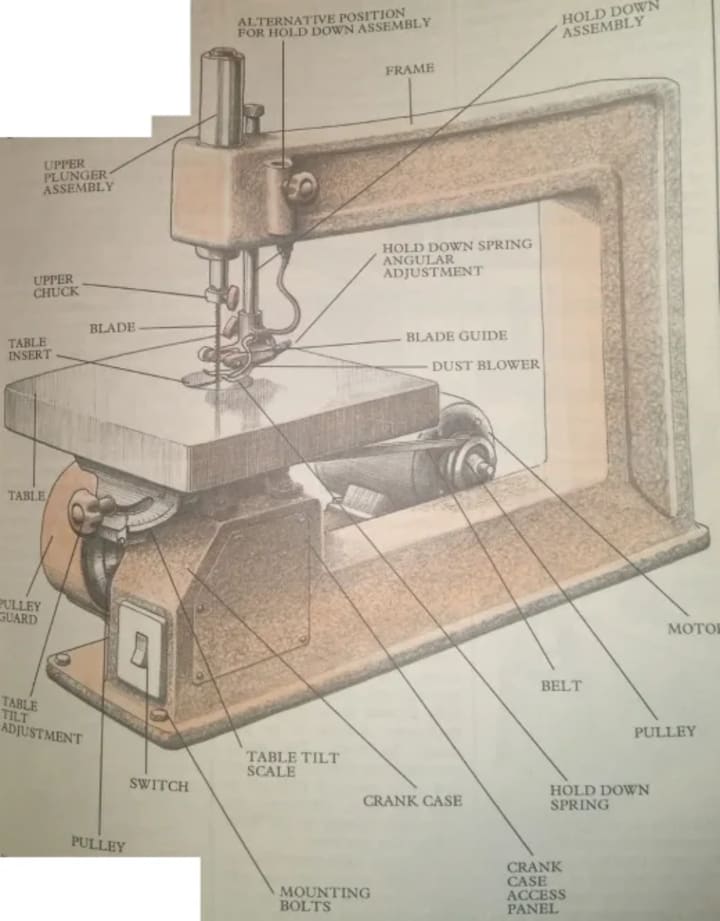
The bench jigsaw is an ideal machine for the small work-shop, its main advantage being the ability to make even, tight curved cuts while leaving both hands free to guide the work. Fitted with the correct blade it can handle straight cuts in work up to approximately 50mm thick. It will also cut a variety of materials.
Bench Jigsaw
Radial Arm Saw
Size: cross cut capacity- 350 to 400mm, , rip cut capacity- 325 to 662mm, , horsepower- 1.35 to 4.5
Material: various
Accessories: saw blades
Attachments: dado head, shaping and jointing head, drum sander, disc sander, drill chuck, router chuck, tool guard
Use: multi-purpose bench saw
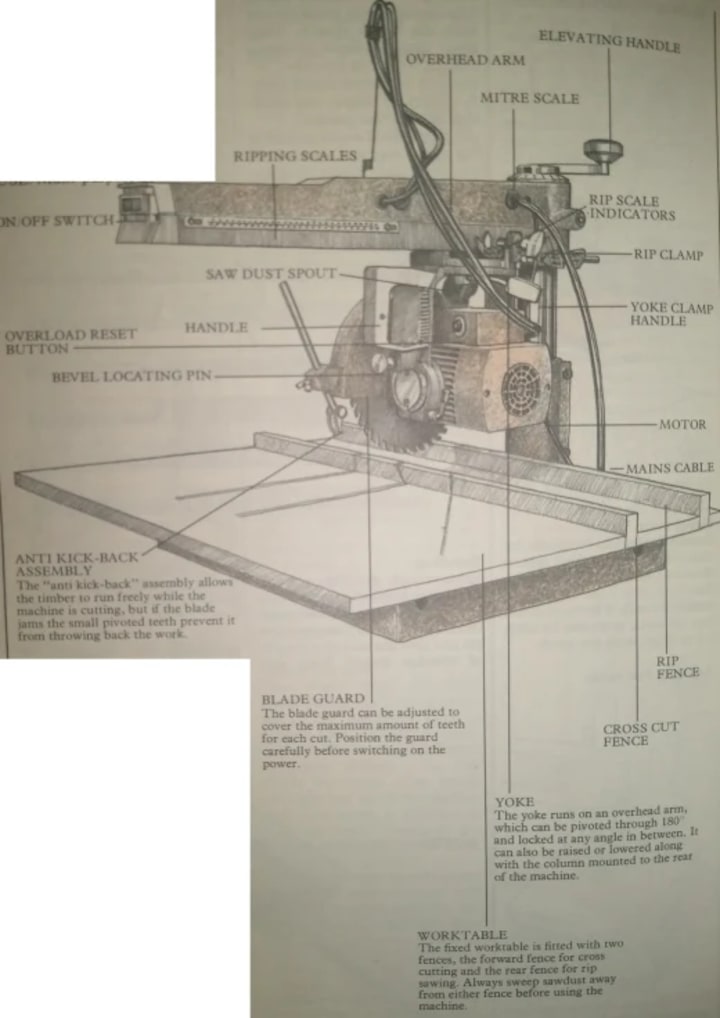
The radial arm saw is one of the most versatile power tools available for the home work-shop. It not only provides a variety of saw cuts, in metal, timber and composite boards but fitted with various attachments, it will cut housings, grooves, rebates, joints and mouldings. It can also be converted to a drilling machine and a drum or disc sander.
All radial arm saws share certain features. The motor and blade are hung in a yoke which allows the blade to be pivoted and tilted to any angle in both the vertical and the horizontal planes.
The blade actually cuts into the work table itself when in use, consequently it is advisable to cover the surface of the table with a sheet of thin, easily replaceable plywood.
Radial Arm Saw
About the Creator
Temoor Dar
💡Topic: Entrepreneur and Writer💡
♟️Hobbies: Traveling, Poems, Playing Chess and Solving Puzzles♟️
🎂Born: July 7, 1991🎂
📍Born in Stockholm, Sweden, and now a Londoner since 1996📍
📚Lifelong Learner📚
🌟Wisdom from Mentors🌟
Keep reading
More stories from Temoor Dar and writers in Lifehack and other communities.
How to Recover Your Instagram Account: The Complete 2026 Guide
Losing access to your Instagram account can feel like being locked out of a digital life. With billions of users and accounts increasingly targeted by hackers, knowing exactly how to react is crucial. Whether you’ve been hacked, forgotten your password, or had your account disabled, this comprehensive guide walks you through every official recovery method. We base our advice on Instagram's official help resources and cybersecurity experts to ensure you can regain access quickly and secure your profile for the future.
By Alexander Hoffmann3 days ago in Lifehack
My First Time Skiing and I Got Lost, Alone, in the French Alps
Looking back, I can trace some of my life’s biggest adventures to a simple action from my sister. She’d introduced me to Tommy (a very long time ago), a colleague of hers, who had overshared his penchant for Italian-looking women, and I ticked that box.
By Chantal Christie Weiss3 days ago in Humans



Comments
There are no comments for this story
Be the first to respond and start the conversation.