
A Book Review of Morgan Housel's "The Psychology of Money".
Learning Money.
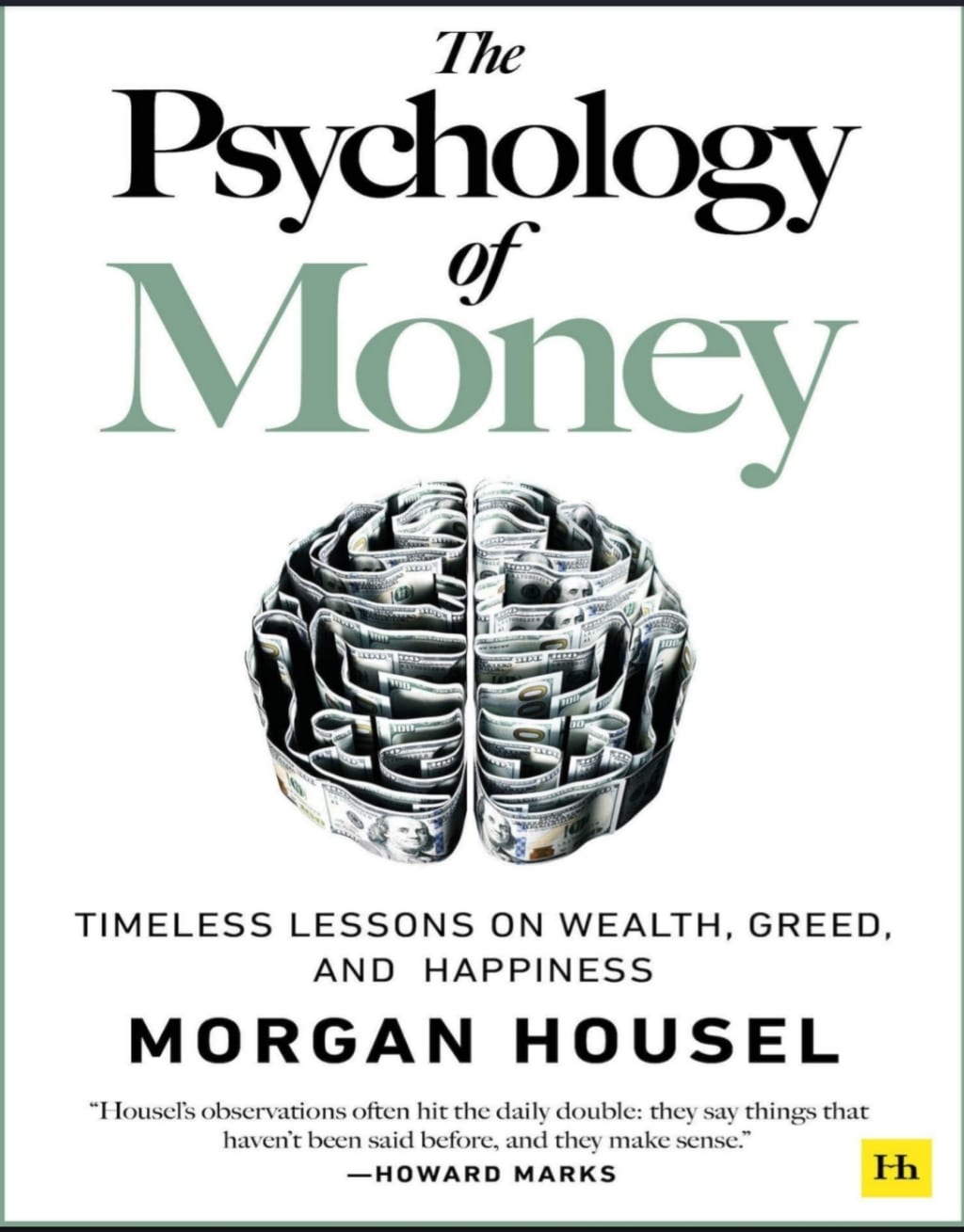
I sat down with Morgan Housel’s The Psychology of Money the way a cat approaches a vacuum cleaner. Cautiously. Money has always seemed like one of those things other people “get.” They open spreadsheets, talk about bonds, and argue about crypto while I nod politely and wonder whether buying the fancy cheese counts as an investment. My thought was this: maybe I do not need to master formulas or predict stock charts like a wizard. Maybe if I can just understand the mindset of money, I might stop feeling like I am trying to read Greek upside down.
Housel’s book is not a textbook about money. It is more like storytime for adults who are secretly kids trying to figure out why some people can skip gold coins into the ocean and others quietly save until their janitor paycheck grows into a fortune. The big idea is simple but almost embarrassingly overlooked: being good with money has less to do with your IQ and more to do with how you behave. In other words, you can be a financial genius and still go broke if your emotions are running the show, while someone who never took an economics class can end up rich just by being patient and consistent.
The book is made up of short chapters, each telling a story or exploring a quirky truth. For example, Housel introduces Ronald Read, a janitor who quietly saved and invested over decades until he left millions to his local library. In the opposite corner of the ring stands Richard Fuscone, a Harvard-educated financial hotshot who once had more bathrooms than some hotels but ended up bankrupt. It is the tortoise and the hare retold with stock portfolios.
One lesson that hit me like a pie to the face is the idea of “enough.” Housel tells the story of billionaires who risked everything because they wanted to move from the hundreds-of-millions club to the billions club. Spoiler: it did not end well. He points out that if you cannot stop moving the goalpost, i.e if more is never enough, then you will eventually gamble away what you actually need. It is a little like eating until you feel sick just because you saw a bigger piece of cake on someone else’s plate.
Another gem is about luck and risk. Bill Gates became Bill Gates partly because his high school just happened to have one of the only computers available in the late 1960s. That is luck. His equally talented classmate Kent Evans died in a freak mountaineering accident before he could join in the tech revolution. That is risk. Both were brilliant, both worked hard, but life rolled the dice differently for them. Housel’s point: money stories are never as simple as “this person worked hard, so they won.” Behind every fortune there is a tangled braid of discipline, timing, and forces outside anyone’s control.
What I liked most is that the book constantly reminds you that money is not math, it is psychology. Spreadsheets cannot capture the panic of watching your savings shrink during a market crash or the joy of knowing you have enough tucked away to cover an emergency. People buy lottery tickets not because they are “stupid” but because for a few minutes, holding that ticket is the cheapest vacation they will ever get. That insight makes the book oddly compassionate. It does not scold you for financial mistakes, it just says, “Yeah, that was human. Now let us try to be a little wiser.”
And then there is compounding, the snowball effect that makes time your best investment buddy. Housel points out that Warren Buffett’s real magic was not just his skill, but the fact that he started investing as a child and never stopped. Nearly all of his staggering wealth came after he was already retirement age. That is compounding in action: ordinary returns, stretched out over an extraordinary length of time, turn into something jaw-dropping. It makes you wonder if the most valuable financial strategy might just be patience dressed in sweatpants.
The book also nails the difference between getting rich and staying rich. You can strike gold once by being bold or lucky, but keeping it requires paranoia and humility. It is like catching a squirrel: one crazy leap might land it in your hands, but keeping it there without getting clawed to pieces is the real challenge.
I came away from The Psychology of Money not with a list of financial hacks, but with a sense of relief. I do not have to understand every chart or predict the next Bitcoin surge. I just need to build habits like saving consistently, respecting risk, and knowing when to say “enough.” Money is not about being the smartest person in the room, it is about being the most reasonable person in your own skin.
Reading this book felt like someone finally took the complicated, intimidating world of finance and translated it into bedtime stories, jokes, and life lessons. It made me laugh, nod, and sometimes wince when I recognized my own silly money habits hiding in the pages. More importantly, it made me believe that financial wisdom is not out of reach. If a janitor can leave millions to a library, maybe I can figure out how to stop treating money like an enemy and start treating it like a slightly quirky friend.
And if you don't like to read, this animated summary of the book might convince you:
About the Creator
Baton Twirling has mental and physical health benefits for seniors
Baton twirling offers many benefits I had not thought about twirling a baton in many years until today. This morning, I was walking in my backyard when I noticed a small black metal pole. I had walked past this item for many days, but this time, I picked it up.
By Cheryl E Preston6 days ago in Lifehack
Hottest in the Office
Dear Rafi, You’re very distracting to work around. For the first second I saw you the other day, I thought you were some type of executive. It took a moment to realize no, you were just the new guy, dressed up for the job he wants. Be still, my heart.
By Gabriel Shames6 days ago in Pride




Comments (3)