
7 Tips To Mouse Proof Your House
A mouse-free home is a safer, cleaner, and more comfortable place for you and your family. Start implementing these strategies today, and keep those unwanted furry guests out for good.
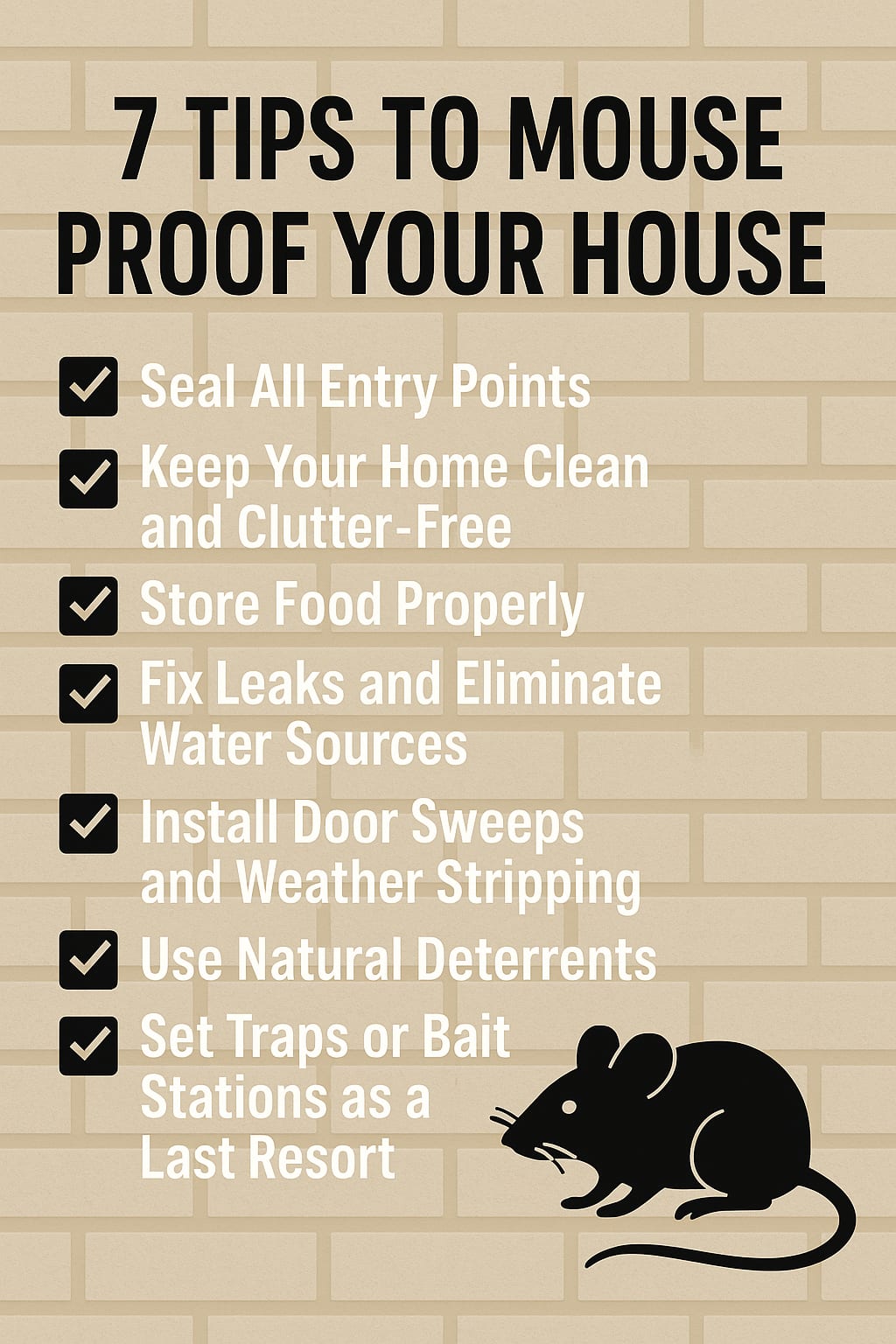
Mice may look small and harmless, but they can create big problems when they invade your home. From chewing through electrical wires to contaminating food and spreading diseases, mice are more than just an annoyance—they're a serious health and safety risk. The good news? You can take simple yet highly effective steps to prevent these pests from ever becoming a problem.
In this guide, we’ll cover 7 practical tips to mouse proof your house and keep your living space rodent-free for good.
Why Mouse-Proofing Is Essential
Before jumping into the tips, let’s understand the dangers mice pose:
Health Risks: Mice can carry diseases like hantavirus, leptospirosis, and salmonella.
Property Damage: Their sharp teeth can chew through wood, drywall, insulation, and even electrical wiring—creating fire hazards.
Rapid Infestation: A single pair of mice can produce dozens of offspring in just a few months.
Prevention is far easier (and cheaper) than dealing with a full-blown infestation. Let’s dive into the seven tips that will help you protect your home.
1. Seal All Entry Points
Why It Matters:
Mice can squeeze through openings as small as a dime (about 1/4 inch). That means even the tiniest crack or hole can be an open invitation for them to move in.
What to Do:
Inspect your home’s exterior thoroughly. Focus on areas around windows, doors, utility pipes, vents, and the foundation.
Seal gaps using a combination of steel wool and caulk. Mice can’t chew through steel wool, and the caulk holds it in place.
For larger holes, consider using metal flashing, hardware cloth, or cement.
Check weather stripping and thresholds on all exterior doors. If you can see light under the door, mice can probably get in.
🛠 Pro Tip: Don’t forget the roofline—gaps in eaves, attic vents, and chimneys are prime access points for rodents.
2. Keep Your Home Clean and Clutter-Free
Why It Matters:
Mice are always looking for food and shelter. A cluttered, dirty environment offers both. The more mess, the more hiding places they have.
What to Do:
Vacuum and mop floors regularly to eliminate crumbs and spills.
Wipe down kitchen counters and clean up food prep areas immediately after use.
Store garbage in sealed bins and take it out frequently.
Declutter your storage areas like basements, attics, and garages. Mice love nesting in piles of cardboard, fabric, and paper.
📦 Pro Tip: Avoid storing items directly on the floor. Use plastic bins instead of cardboard boxes whenever possible.
3. Store Food Properly
Why It Matters:
Food is the biggest attraction for mice. If they find an easy source of nutrition in your home, they’ll stick around—and invite their friends.
What to Do:
Keep all food in airtight containers, especially grains, cereal, pasta, and pet food.
Don’t leave pet food out overnight.
Clean up pantry shelves regularly to remove spills or crumbs.
Use glass, metal, or heavy-duty plastic containers that rodents can’t chew through.
Avoid leaving fruit out on counters for extended periods.
🐾 Pro Tip: Don’t forget birdseed, livestock feed, and compost bins—they’re often overlooked but highly attractive to mice.
4. Fix Leaks and Eliminate Water Sources
Why It Matters:
Like all creatures, mice need water to survive. A dripping pipe or standing water can provide them with the hydration they need to thrive.
What to Do:
Check under sinks, around water heaters, and near your washing machine for leaks.
Fix dripping faucets and leaking pipes immediately.
Use a dehumidifier in damp areas like basements and crawlspaces.
Empty and dry pet water bowls at night.
💧 Pro Tip: Even condensation on pipes or appliances can be a water source for mice. Wrap pipes in insulation to prevent this.
5. Install Door Sweeps and Weather Stripping
Why It Matters:
Doors and windows are common entry points, especially when there's a visible gap. Mice can easily slip in unnoticed.
What to Do:
Add door sweeps to all exterior doors, especially garage and basement entries.
Install or replace weather stripping around windows and door frames.
Check sliding doors for gaps and use foam or rubber seals as needed.
Make sure screen doors are free of tears or holes.
🚪 Pro Tip: Pay special attention to the garage—it's often a neglected access point that leads directly into your home.
6. Use Natural Mouse Deterrents
Why It Matters:
Natural repellents can help discourage mice from entering or staying in your home—especially when used alongside other strategies.
What to Do:
Peppermint oil is one of the most popular natural repellents. Soak cotton balls and place them in corners, cabinets, or entry points.
Other scents mice dislike include:
- Cloves
- Ammonia
- Vinegar
- Cayenne pepper
Consider planting peppermint around the perimeter of your home for an extra layer of defense.
Use essential oil sprays in high-risk areas.
🌿 Pro Tip: Replace scent-based repellents weekly for maximum effectiveness.
7. Set Traps or Bait Stations as a Last Resort
Why It Matters:
Even with all preventive measures, an occasional mouse might still sneak in. When that happens, it’s crucial to act fast before it multiplies.
What to Do:
Snap traps are one of the most effective solutions.
Electronic traps provide a clean, no-touch method.
Live traps are ideal if you prefer humane removal (just be sure to release far from your home).
Mouse Bait stations are useful in garages, attics, and sheds but should be used with caution around kids and pets.
🐭 Pro Tip: Place traps along walls and behind appliances—mice tend to travel along edges rather than open spaces.
Bonus Tip: Consider Getting a Cat
Why It Matters:
Cats are natural predators of mice and can act as both a deterrent and a control method.
What to Know:
Just the scent of a cat can be enough to scare mice away.
Not all cats are avid hunters, but some breeds (like the Maine Coon or American Shorthair) are particularly good mousers.
Even if your cat doesn’t catch mice, it may help you spot rodent activity sooner.
🐱 Pro Tip: If you don’t want a pet, some people use used cat litter near suspected entry points as a deterrent.
Signs You Might Already Have Mice
Even if you haven't seen a mouse, here are some red flags:
Droppings (usually around 1/4 inch long, black, and pellet-shaped)
Scratching or gnawing sounds in walls or ceilings
Chewed food packaging
Nests made of shredded paper, fabric, or insulation
A musky, ammonia-like odor
If you spot any of these signs, it's time to take immediate action.
Final Thoughts: Keep Mice Out for Good
Mouse-proofing your home is not a one-time task—it requires ongoing attention. But by following these 7 tips consistently, you can greatly reduce the chances of a rodent infestation:
Seal all possible entry points
Keep your home clean and clutter-free
Store food in airtight containers
Eliminate water sources
Install door sweeps and weather stripping
Use natural deterrents
Set traps as a last resort
Remember: A mouse-free home is a safer, cleaner, and more comfortable place for you and your family. Start implementing these strategies today, and keep those unwanted furry guests out for good.
About the Creator
Keep reading
More stories from writers in Lifehack and other communities.
Respecting The Law
One of the more interesting relationships you’re going to have is the one with local law enforcement. You’re going to want to establish some sort of relationship with the local constabulary for a number of reasons, even if it’s pure self-interest. Local law enforcement will sometimes offer free self-defense classes, security checks, and other services, all keyed to making sure that you’re protected. On top of that, being a known quantity may help reduce response times and give the police an excuse to be lenient.
By Jamais Jochima day ago in Lifehack




Comments
There are no comments for this story
Be the first to respond and start the conversation.