
7 Everyday Habits That Quietly Destroy Your Brain — and How to Stop Them
Your brain isn’t getting older — it’s getting sabotaged. And the worst part? You’re probably doing it to yourself without even realizing. Here are seven everyday habits that quietly chip away at your memory, focus, and mental clarity — plus simple fixes to keep your brain sharp for years.

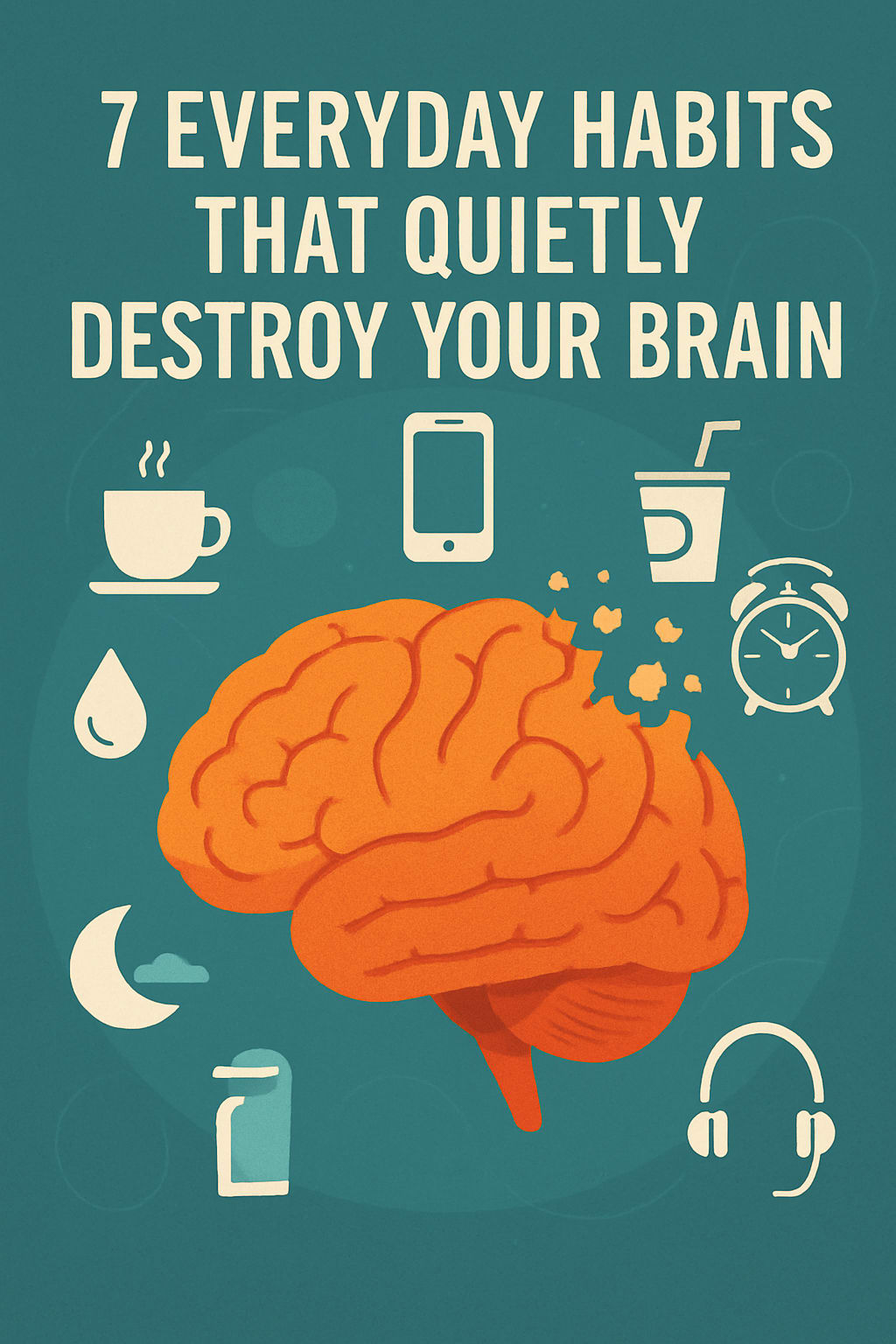
Your brain isn’t getting older — it’s getting sabotaged. And the worst part? You’re probably doing it to yourself without even realizing it. Every day, small habits chip away at your cognitive function, focus, and memory — not with a bang, but with a whisper. You don’t feel the damage right away, but over time, it accumulates.
Here are seven everyday habits that quietly destroy your brain, along with simple, science-backed ways to stop them and protect your mental sharpness for years to come.
1. Skipping Sleep Like It’s Optional
Sleep is not a luxury — it’s a necessity. During deep sleep, your brain’s “cleaning crew” kicks into gear, flushing out toxins, including beta-amyloid, which is linked to Alzheimer’s disease. Skipping sleep regularly means these harmful substances stay in your brain, increasing the risk of memory loss, mood disorders, and long-term cognitive decline. It’s not just about feeling tired the next day — it’s about long-term brain health.
Fix: Start treating sleep like a non-negotiable appointment. Aim for 7–9 hours of quality rest every night and try to keep a consistent bedtime and wake-up time — even on weekends. Avoid screens before bed, keep your room dark and cool, and wind down with a calming routine.
2. Living in Scroll Mode
If you find yourself reaching for your phone the moment there’s a pause — in line, in bed, or during meals — you’re not alone. Social media apps are designed to be addictive, delivering endless dopamine hits that hijack your brain’s reward system. Over time, this constant stimulation can rewire your brain, making it harder to focus, remember information, and enjoy real-world experiences.
Fix: Create scroll-free zones in your day. Avoid social media for at least the first hour after waking and the last hour before bed. Turn off non-essential notifications and consider setting app time limits. Protect your attention — it’s a finite resource.
3. Multitasking Everything
It may feel efficient, but multitasking is a myth. What you’re really doing is task-switching — and each switch costs your brain valuable energy and attention. According to Stanford researchers, multitasking makes you up to 40% less productive and significantly impairs your ability to retain information.
Fix: Use the 25–5 rule, also known as the Pomodoro Technique. Focus on one task for 25 minutes, then take a 5-minute break. After four cycles, take a longer break. This boosts productivity while giving your brain the recovery time it needs to stay sharp.
4. Forgetting Water
Your brain is made up of about 75% water, so even mild dehydration can take a toll. When you’re not drinking enough water, you might experience brain fog, poor concentration, headaches, and slower cognitive performance. The effects can be subtle, but over time, they add up.
Fix: Keep a reusable water bottle nearby at all times and aim to drink at least two liters (about eight 8-ounce glasses) a day. Set a reminder every hour to take a few sips — especially if you’re working indoors or in air-conditioned environments that can increase fluid loss.
5. Avoiding the Sun
Many people spend most of their days indoors, unaware that they’re slowly developing a vitamin D deficiency. Vitamin D plays a crucial role in mood regulation and brain function. Low levels are linked to depression, fatigue, and cognitive decline. You don’t need to sunbathe for hours, but a lack of exposure can harm your mental clarity and emotional balance.
Fix: Try to get at least 15 minutes of natural sunlight every day — preferably in the morning. A short walk outside without sunglasses or sunscreen (on arms and face) can help boost vitamin D naturally. In colder or darker months, consider getting your vitamin D levels tested and talking to your doctor about supplements.
6. Eating Brain-Dull Food
Ultra-processed foods — think chips, sugary snacks, sodas, and ready-made meals — may be convenient, but they’re loaded with additives, sugar, and unhealthy fats. These foods can cause blood sugar spikes, leading to inflammation in the brain and damage to brain cells. Over time, this can impair memory, slow down thinking, and even raise your risk of dementia.
Fix: Start replacing processed foods with brain-healthy alternatives. Snack on walnuts, almonds, blueberries, and dark chocolate (in moderation). Incorporate leafy greens, fatty fish like salmon, and whole grains into your meals. Food is fuel — give your brain what it needs to perform at its best.
7. Never Letting Your Mind Rest
In our hyperconnected world, we’re bombarded with constant noise — podcasts, emails, group chats, notifications, news alerts. This endless input keeps your brain in overdrive, never giving it time to reset or process information. Without mental rest, your ability to think deeply, reflect, and problem-solve deteriorates.
Fix: Schedule intentional “mental white space” in your day. This could be a quiet walk without headphones, taking a shower without any background noise, or simply sitting in silence for five minutes. These pauses are not wasted time — they’re essential for clarity, creativity, and emotional balance.
Your brain is your most valuable asset. It controls how you think, feel, work, and connect with others. Yet many of us treat it worse than our smartphones — pushing it to the limit, depriving it of rest, and feeding it junk. But the good news is, with small, consistent changes, you can protect and even improve your brain function. Start today by picking one habit to change — your future self will thank you.
And if you found this helpful, consider sharing it with someone who could use a mental boost. Because better brains make better lives.
About the Creator
Kyle Butler
Sharing fascinating facts and insights from every category, with a special passion for longevity and healthy living. Join me on a journey to discover the secrets of a longer, better life.
Keep reading
More stories from Kyle Butler and writers in Lifehack and other communities.
Digital Minimalism: Reclaiming Your Focus in the Age of Distraction
In today’s hyper-connected world, it’s almost impossible to go an hour—let alone a day—without checking our phones, refreshing social media, or replying to a barrage of notifications. Technology has given us unprecedented access to information and communication, but it has also created an environment of constant distraction. As a result, many people are finding it increasingly difficult to focus, reflect, and truly connect with the world around them. Enter digital minimalism—a philosophy that encourages a more intentional use of technology to help individuals reclaim their time, focus, and peace of mind.
By Kyle Butler7 months ago in Psyche
You're alone, because you're lost
Being alone is a fear that one in three adults face WORLDWIDE. Why? Are we scared to be alone because we are faced with all of our thoughts we once tried to suppress? Or are we scared because we feel uncomfortable? Uncomfortable with the idea of being in a room with just you. You and your nasty thoughts. Thoughts like “Damn I should've apologized”, or “Why hasn't he texted me back?” or “I am a failure”. Yea. those thoughts. The forbidden thoughts that come sneak by the midnight hour, ...if you're lucky. You see loneliness doesn't have to be this way. It all starts with you.
By C⃣ h⃣ a⃣ n⃣ e⃣ l⃣5 days ago in Lifehack
Silken Chains
Silhouettes of the female form were given flesh and bone. Silken skin glistened under the spotlight. Dry ice rose around our Icons as they danced atop their podiums in the Square. Heralded for their beauty, their movements were slight, powerful, and sensual.
By Paul Stewart6 days ago in Fiction




Comments
There are no comments for this story
Be the first to respond and start the conversation.