Latest Stories
Most recently published stories on Vocal.
The World’s Largest Cruise Ship Sets Sail for the First Time, Marking a Historic New Milestone for the Global Cruise Industry. AI-Generated.
The world’s largest cruise ship has officially set sail for the first time, marking a landmark moment for the global cruise industry and signaling renewed confidence in large-scale tourism after years of disruption. The colossal vessel, built to redefine modern cruising, departed from its home port amid international attention, representing both an engineering achievement and a bold statement about the future of leisure travel. Towering over traditional ships and rivaling small cities in size, the vessel carries thousands of passengers and crew and features a wide array of entertainment, dining, and sustainability technologies. Industry leaders describe the launch as a turning point for cruise tourism, combining innovation, economic opportunity, and evolving traveler expectations. A Floating City Takes to the Sea The ship’s maiden voyage followed more than five years of planning, construction, and testing. Shipbuilders worked across multiple countries to assemble its massive structure, integrating advanced navigation systems and next-generation propulsion technology. With capacity for more than 7,000 passengers and over 2,000 crew members, the ship includes multiple neighborhoods, water parks, theaters, shopping promenades, and green spaces. It also boasts the tallest water slide ever installed at sea and a central open-air plaza designed to bring natural light into the heart of the vessel. Cruise executives say the ship represents the next phase of experiential travel. “This is not just a cruise ship—it’s a destination in itself,” said the company’s chief executive at the launch ceremony. “We wanted to create something that blends adventure, comfort, and community while raising the standard for what a vacation at sea can be.” Engineering and Environmental Advances Beyond its size, the ship introduces new environmental features aimed at reducing its ecological footprint. It is powered in part by liquefied natural gas (LNG), which emits fewer pollutants than traditional marine fuels. Advanced waste management systems and energy-efficient technologies were installed to align with stricter international maritime regulations. The cruise industry has faced criticism over environmental impact, particularly concerning emissions and port congestion. In response, the company emphasized that the ship includes shore power capabilities, allowing it to plug into local electrical grids while docked instead of running engines. Environmental groups remain cautious, acknowledging improvements while urging continued progress. “Cleaner fuel is a step forward, but sustainability must be central to future ship design,” said one maritime climate researcher. Economic Boost for Ports and Tourism The launch of the world’s largest cruise ship is expected to generate significant economic benefits for port cities along its itinerary. Hotels, restaurants, tour operators, and local businesses anticipate a surge in visitors, particularly in destinations that have invested heavily in cruise infrastructure. Tourism officials in the ship’s first ports of call welcomed the milestone. “This vessel brings thousands of visitors at once, which can have a powerful effect on local economies,” said a Caribbean tourism minister. “It also highlights our role in the global travel network.” Cruise industry analysts note that the ship’s debut comes at a time when travel demand has rebounded strongly following pandemic-era shutdowns. Bookings for its inaugural season reportedly sold out within days, reflecting pent-up demand for large-scale leisure experiences. Safety and Passenger Experience Safety has remained a top concern for cruise operators since the pandemic. The ship is equipped with advanced air filtration systems, expanded medical facilities, and upgraded sanitation protocols. Digital check-in and crowd management tools have also been introduced to reduce congestion in busy areas. Passengers on the maiden voyage described a mix of excitement and curiosity. “It feels like stepping into the future,” said one traveler. “There’s so much space and so many things to do that it doesn’t feel crowded at all.” The ship offers experiences for all age groups, from family-friendly attractions to luxury suites with private pools and exclusive dining areas. Entertainment ranges from Broadway-style shows to immersive virtual reality experiences. Symbol of Industry Transformation The launch comes amid ongoing transformation in the cruise sector. Companies are investing heavily in larger ships, smarter technology, and personalized travel experiences. At the same time, they face pressure from regulators and communities to address environmental and social concerns. Industry experts say the ship’s first voyage is symbolic. “It demonstrates confidence in the future of cruising,” said a maritime economist. “But it also puts the spotlight on how the industry balances growth with responsibility.” Smaller boutique cruise lines are taking a different approach, focusing on low-impact travel and remote destinations. The contrast highlights a growing diversity in cruise offerings, from mega-ships to eco-focused expeditions. Public Reaction and Cultural Impact The ship’s departure quickly went viral on social media, with videos showing crowds gathered along the harbor and drones capturing its immense scale. For many, it represents human ingenuity and the enduring appeal of exploration. However, critics argue that the era of mega-ships raises questions about overcrowding in popular ports and the strain on local resources. Several European cities have already imposed limits on cruise traffic, and similar debates are emerging elsewhere. Conclusion As the world’s largest cruise ship embarks on its first journey, it marks a historic milestone for the cruise industry and a statement about the future of global tourism. The vessel showcases advances in engineering, entertainment, and environmental design while highlighting ongoing challenges around sustainability and community impact. Whether viewed as a triumph of innovation or a test of responsible travel, the ship’s maiden voyage symbolizes a new chapter for cruising—one shaped by ambition, recovery, and the evolving expectations of travelers worldwide.
By Fiaz Ahmed 9 days ago in Journal
David Littleproud Remains National Party Leader After Spill Motion by Colin Boyce Fails. AI-Generated.
David Littleproud has retained his position as leader of Australia’s National Party after a leadership spill motion brought by backbencher Colin Boyce failed to gain sufficient support within the party room. The challenge, which unfolded during a closed-door meeting of Nationals MPs, exposed simmering divisions over the party’s direction but ultimately reaffirmed Littleproud’s authority for the time being. The attempted spill followed weeks of internal tension over policy priorities, electoral strategy, and the party’s relationship with its Liberal coalition partner. While Boyce’s motion was defeated decisively, the episode underscored broader debates about how the Nationals should position themselves in a changing political landscape. A Challenge From Within Colin Boyce, the federal MP for Flynn, formally moved the spill motion citing concerns over leadership style and policy clarity. Sources within the party said Boyce argued the Nationals needed a stronger voice on regional issues, particularly in relation to cost-of-living pressures, energy policy, and agricultural reform. Boyce reportedly questioned whether the current leadership had done enough to differentiate the Nationals from the Liberal Party and present a distinct agenda to rural and regional voters. However, when the motion was put to a vote, it failed to attract majority backing. Most MPs opted for stability rather than further internal disruption, particularly with key legislative negotiations and election planning underway. Following the meeting, Littleproud thanked colleagues for their support and emphasized the need to move forward together. “This party is strongest when we are united and focused on delivering for regional Australia,” he said in a brief statement. “We’ve had a robust discussion, but now it’s time to get on with the job.” Divisions Over Direction The leadership challenge highlighted differences within the Nationals over how aggressively the party should push its agenda within the coalition framework. Some MPs believe the party has become too closely aligned with Liberal Party priorities, diluting its traditional focus on farmers, regional communities, and infrastructure investment. Others argue that unity with the Liberals is essential to maintaining political influence and avoiding voter confusion. Political analysts say the spill motion reflects anxiety about the party’s long-term relevance as rural electorates face demographic and economic change. “The Nationals are grappling with how to remain distinct while still being part of a coalition government,” said one senior political commentator. “That tension often surfaces through leadership disputes.” Littleproud, who became leader in 2022, has attempted to balance these pressures by supporting coalition policies while also championing regional development programs and agricultural interests. His supporters argue that destabilizing leadership would only weaken the party’s negotiating position. Response From Party Figures Several senior Nationals figures quickly closed ranks behind Littleproud after the failed motion. Deputy leader Perin Davey described the challenge as “an internal matter that has now been resolved.” “We’ve had our discussion, and the outcome is clear,” she said. “The focus must be on serving the people who elected us.” Treasurer and coalition partner representatives also downplayed the significance of the spill, framing it as part of healthy internal democracy rather than a sign of crisis. Opposition figures, however, seized on the episode as evidence of division within the coalition. “This shows a party struggling to agree on what it stands for,” said one Labor spokesperson. “Australians deserve stability and clarity, not infighting.” Policy Disputes at the Core At the heart of the leadership challenge were disagreements over energy policy and climate commitments. Some Nationals MPs have expressed concern that climate targets and renewable energy investments could harm farming communities and regional industries. Boyce is understood to have argued that the party must take a firmer stance against policies perceived to threaten jobs in mining and agriculture-heavy electorates. Littleproud has sought a more measured approach, supporting climate action while pushing for compensation and transition support for regional communities. “We can protect the environment and protect regional jobs,” he has said previously. “These goals are not mutually exclusive.” This balancing act has proven difficult, particularly as regional voters express frustration over rising fuel prices, housing shortages, and access to services. Implications for the Coalition While the spill motion failed, it may have lasting consequences for the Nationals’ internal cohesion. Leadership challenges, even unsuccessful ones, often weaken authority and encourage further dissent if underlying issues remain unresolved. Coalition politics experts note that any perception of instability in the Nationals can affect the broader Liberal-National partnership, especially during negotiations over key legislation and election strategies. “The Nationals hold critical leverage in marginal regional seats,” said a university politics lecturer. “A divided party risks losing that influence.” Littleproud is expected to hold further meetings with colleagues to address concerns raised during the spill attempt. Party insiders say efforts will focus on improving communication and sharpening policy messaging ahead of future campaigns. Looking Ahead For now, Littleproud remains firmly in control, but the challenge has served as a warning sign. The Nationals face growing competition from independents and minor parties in regional electorates, making unity and clear policy positioning more important than ever. In his closing remarks to colleagues, Littleproud stressed that the party must refocus on its core mission. “We are here to fight for regional Australia,” he said. “That’s what our voters expect, and that’s what we must deliver.” Conclusion The failed spill motion brought by Colin Boyce has left David Littleproud in the leadership of the National Party, but it has also revealed internal tensions over strategy and identity. While unity has been publicly restored, debates over policy direction and coalition relationships remain unresolved. As the party moves forward, its ability to reconcile these differences will determine not only Littleproud’s political future but also the Nationals’ relevance in an evolving Australian political landscape. Stability may have won this round, but the questions raised by the challenge are far from settled.
By Fiaz Ahmed 9 days ago in The Swamp
The Net Worth of the Golden River: Measuring the Value of History’s Greatest Myth
So what is the net worth of the Golden River? While it cannot be calculated like a bank account or a gold reserve, its value can be estimated through economic loss, potential mineral wealth, cultural impact, and historical influence. When all these dimensions are considered, the Golden River may be worth more than any physical treasure ever discovered.
By Say the truth 9 days ago in History
Former CNN Journalist Don Lemon Attends 2026 Grammys Following Arrest Over Minnesota Protest. AI-Generated.
Former CNN anchor and journalist Don Lemon made a high-profile public appearance at the 2026 Grammy Awards, just weeks after his arrest during a protest in Minnesota drew national attention and sparked debate about celebrity activism and freedom of expression. Lemon, who left CNN in 2023 and has since pursued independent media projects, was photographed walking the red carpet alongside prominent figures from the entertainment industry. His appearance marked his first major public event since authorities confirmed he had been briefly detained at a demonstration opposing new federal immigration enforcement measures in Minneapolis earlier this year. The incident and his presence at the Grammys have placed Lemon once again at the center of a polarized conversation about the role of journalists and public figures in political protests. The Minnesota Protest and Arrest According to police statements, Lemon was arrested during a large protest that formed near a federal building in downtown Minneapolis. Law enforcement officials said demonstrators had blocked traffic and refused repeated orders to disperse. Lemon was cited for failure to comply with lawful orders and released later the same day without serious charges. Witnesses said Lemon had joined a group of activists advocating for immigrant rights and police accountability. Video circulating on social media shows him standing near the front of the crowd and speaking with officers before being escorted away. Lemon later addressed the arrest on his social media platforms, describing it as peaceful and emphasizing that he had not engaged in violence or property damage. “I was exercising my right to protest alongside people who believe in justice and reform,” Lemon wrote. “This moment is not about me—it’s about the voices being heard.” His legal team confirmed that the matter remains under review by local authorities and that Lemon intends to contest any citation issued during the incident. Grammys Appearance Sends a Message Lemon’s attendance at the Grammys immediately became a talking point across political and entertainment media. Some supporters praised his willingness to continue public life despite controversy, viewing his appearance as a statement of resilience and commitment to free expression. Others questioned whether the Grammys stage was an appropriate venue for someone recently involved in a protest-related arrest. “He’s blurring the line between activism and celebrity spectacle,” said one media analyst. “It raises questions about whether social movements are being amplified or diluted by star power.” Lemon did not speak publicly on the red carpet about the protest but told one interviewer that art and social responsibility are deeply connected. “Music has always reflected struggle, hope, and truth,” he said. “Tonight is about honoring voices that move culture forward.” A Complicated Relationship With the Public Since his departure from CNN, Lemon has sought to redefine himself as an independent commentator and podcast host, often engaging with controversial political and social topics. His outspoken style has continued to draw both praise and criticism. For some, his arrest in Minnesota reinforced his image as a journalist willing to put himself on the front lines of social conflict. For others, it raised concerns about whether former mainstream journalists risk undermining professional neutrality when they take part in street demonstrations. Media ethicists note that Lemon no longer represents a major news organization and therefore operates under different expectations. “As a private citizen, he has the right to protest,” said a professor of journalism ethics. “But public trust is fragile. High-profile figures must be aware of how their actions shape perception.” Protest, Policing, and National Debate The Minnesota demonstration occurred amid a wave of nationwide protests related to immigration policy and law enforcement practices. Activist groups have organized rallies in several states, calling for changes to detention procedures and increased transparency in federal operations. Authorities in Minneapolis defended their handling of the protest, stating that arrests were made only after demonstrators blocked emergency vehicle routes and ignored repeated warnings. “Our priority was public safety,” a police spokesperson said. “We respect the right to protest, but that right does not extend to disrupting critical services.” Civil liberties organizations have criticized what they describe as aggressive enforcement tactics, arguing that arrests of nonviolent demonstrators risk chilling lawful expression. Lemon’s involvement has amplified attention to these debates, transforming a local protest into a national media story. Reaction From the Entertainment Industry Within the music and entertainment world, reactions to Lemon’s Grammys appearance were mixed. Some artists expressed solidarity with his activism, while others avoided commenting altogether. One Grammy attendee, speaking anonymously, said, “The night is supposed to celebrate music, not politics. But politics is everywhere now. You can’t separate the two.” The Recording Academy declined to comment directly on Lemon’s attendance, stating only that the Grammys welcome a wide range of guests from media, culture, and advocacy communities. Looking Ahead Lemon’s legal situation remains unresolved, and further proceedings could shape how the public interprets both his protest and his Grammy appearance. His supporters argue that the arrest demonstrates courage and moral conviction. Critics say it reflects a pattern of controversy that distracts from serious policy discussion. For Lemon himself, the moment appears to represent a turning point in his post-network career. “We’re living in a time when silence feels like consent,” he said in a recent online broadcast. “I choose to speak and stand, even when it’s uncomfortable.” Conclusion Don Lemon’s appearance at the 2026 Grammy Awards following his arrest at a Minnesota protest underscores the increasingly blurred line between journalism, activism, and celebrity. The episode highlights broader tensions in American society over protest rights, media influence, and political expression in cultural spaces. Whether viewed as a principled stand or a provocative gesture, Lemon’s actions have reignited debate about how public figures navigate moments of controversy. As both his legal case and his independent media career continue to unfold, the intersection of protest and performance will remain a defining chapter in his evolving public story.
By Fiaz Ahmed 9 days ago in The Swamp
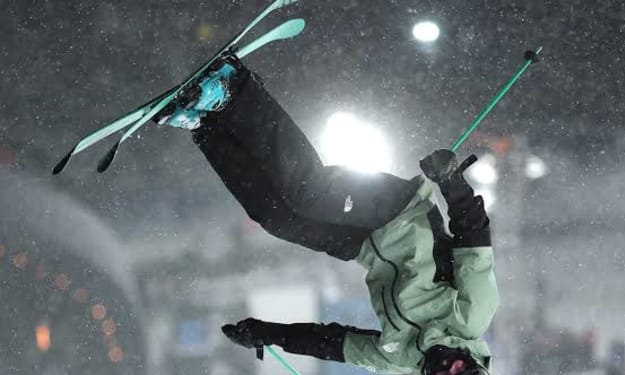
Australia’s Youngest Winter Olympian Indra Brown: ‘I Just Love the Feeling of Flying’. AI-Generated.
When Indra Brown launched off the icy ramp at her first Olympic training run, she felt something few teenagers ever experience: the sensation of defying gravity on the world’s biggest sporting stage. At just 15 years old, Brown became Australia’s youngest-ever Winter Olympian, a milestone that reflects not only extraordinary talent but also an uncommon maturity and dedication. “I just love the feeling of flying,” Brown said in a recent interview. “When you’re in the air, everything else disappears. It’s just you and the moment.” Brown competes in freestyle skiing, a discipline that demands fearless precision, explosive strength, and technical finesse. Her journey from a curious child on the slopes to an Olympic athlete has been shaped by early passion, family support, and relentless training in a sport still growing in Australia. From Local Slopes to Global Stage Born and raised in Victoria, Brown was introduced to skiing almost as soon as she could walk. Family holidays to alpine regions sparked her interest, but it wasn’t long before casual skiing turned into structured training. By the age of nine, she was already competing in junior freestyle events, showing a natural aptitude for aerial tricks and jumps. Coaches quickly noticed her balance and spatial awareness. “She had an instinct for movement in the air,” said one of her early trainers. “That’s something you can’t really teach.” Australia is not traditionally known for producing Winter Olympic athletes at scale, but recent investment in snow sports programs has helped young talents like Brown access elite coaching and facilities. Much of her development took place overseas, particularly in North America and Europe, where she trained alongside more experienced competitors. “It was intimidating at first,” Brown admitted. “Everyone was older and stronger. But I learned so much just by watching and trying to keep up.” Balancing School and Sport Behind the glamour of Olympic competition lies a demanding daily routine. Brown balances schoolwork with hours of physical conditioning, technical drills, and travel. Her education has shifted to a flexible learning program to accommodate training camps and international competitions. “There are days when I train in the morning and study on planes or in hotel rooms,” she said. “It’s not easy, but I really enjoy learning and I don’t want to give that up.” Her parents have played a critical role in helping her manage pressure and expectations. They insist on maintaining structure and normalcy, ensuring she remains connected to friends and family despite her growing public profile. “She’s still a teenager,” her mother said. “We want her to enjoy this experience, not feel like everything depends on results.” The Mental Challenge of Flight Freestyle skiing is as much a mental test as a physical one. Athletes launch themselves into the air at high speed, performing spins and flips that leave little margin for error. For a 15-year-old, managing fear is part of the learning process. Brown admits she still feels nervous before big jumps. “If you’re not scared at all, something’s wrong,” she laughed. “But I trust my training. Once I’m in the air, it feels natural.” Sports psychologists working with young Olympians emphasize the importance of emotional resilience. They focus on visualization techniques, breathing exercises, and routines that help athletes stay grounded amid intense competition. “Indra has shown remarkable composure,” said a team official. “She listens, adapts, and learns quickly. That’s rare at her age.” Representing a New Generation Brown’s Olympic appearance has already made her a role model for young athletes across Australia. Social media has amplified her story, inspiring children who might not have considered winter sports a realistic path. “I get messages from kids saying they want to ski like me,” Brown said. “That’s really cool. I hope they just have fun with it first.” She is careful not to frame her success as the end goal but as part of a longer journey. Her immediate focus is improving technique and gaining experience rather than chasing medals. “I’m here to learn,” she said. “If I do my best run, I’m happy.” Looking Ahead While the Olympics mark a historic moment in her career, Brown sees them as the beginning rather than the peak. Her long-term ambitions include competing in multiple Olympic cycles and helping raise the profile of freestyle skiing in Australia. “I want to keep pushing myself and see what I can do,” she said. “There’s so much more to learn.” Coaches caution against rushing development. Physical growth, injury prevention, and emotional well-being remain priorities. “We want her to have a long career,” said her head coach. “Not burn out too early.” More Than Medals What sets Brown apart is not just her age or her technical ability, but her joy in the sport. She speaks about skiing with enthusiasm rather than pressure, framing competition as an opportunity rather than a burden. “When I jump, it feels like freedom,” she said. “That’s why I love it.” In a sporting world often defined by results and rankings, Indra Brown’s story stands out as one of curiosity, courage, and youthful wonder. As Australia’s youngest Winter Olympian, she represents both the future of her sport and the timeless thrill of pushing boundaries. Whether she finishes on the podium or not, her message is simple and powerful: sometimes success is not about winning, but about daring to fly.
By Fiaz Ahmed 9 days ago in Unbalanced
The Golden River: History’s Greatest Lost Mystery of Wealth and Wonder. AI-Generated.
Origins of the Golden River Legend The story of the Golden River originates in South America, among indigenous civilizations long before European contact. Native tribes of the Andes and Amazon basin spoke of sacred rivers where gold dust shimmered beneath the water, believed to be gifts from the gods. Gold, for these cultures, was not currency—it was divine.
By Say the truth 9 days ago in History
What If Reality Runs Deeper Than What We Can See
Most of us are trained, often without realizing it, to treat what is visible as what is most real. Actions, outcomes, results, behavior. These are the things that can be measured, discussed, praised, or corrected. They are concrete, undeniable, and easy to point to. When something goes wrong, attention naturally moves toward what can be seen. When something goes right, credit is assigned to what just happened. This way of seeing feels practical, even obvious. But what if it quietly reverses how reality actually works.
By Peter Thwing - Host of the FST Podcast9 days ago in Motivation
Distracting and Sad’: Olympics Chief Laments ICE Protests and Epstein Fallout. AI-Generated.
The president of the International Olympic Committee (IOC) has voiced concern over what he described as “distracting and sad” controversies surrounding global sport, pointing to protests linked to U.S. immigration enforcement and the renewed fallout from the Jeffrey Epstein case as issues that risk overshadowing preparations for upcoming Olympic Games. In remarks delivered at an international sports forum this week, the IOC chief said the Olympic movement is facing challenges not only from logistical and financial pressures but also from political and social tensions that increasingly intersect with sport. “The Olympic Games should be about unity, respect, and excellence,” he said. “But we are living in a time when outside conflicts and scandals easily intrude into that space. It is distracting and, frankly, sad.” Protests and Immigration Politics One of the flashpoints highlighted by the IOC president involves demonstrations targeting U.S. Immigration and Customs Enforcement (ICE), which have expanded in several cities and occasionally spilled into sporting events and Olympic-related activities. Activists have used major sports venues and sponsorship events as platforms to protest immigration policies, arguing that sport should not remain neutral in the face of human rights concerns. Some athletes have also expressed solidarity with protest movements, posting messages on social media and calling for greater accountability from governments and international institutions. The IOC chief acknowledged that athletes have the right to personal opinions but warned that protests during Olympic competitions could undermine the spirit of the Games. “We respect freedom of expression, but the Olympic stage must remain a place where nations come together peacefully,” he said. “Turning competition into a battleground for political conflict risks dividing people rather than bringing them together.” Critics argue that the IOC’s stance reflects an outdated belief that sport can be separated from politics. Human rights organizations say international sporting bodies should take stronger positions on issues such as migration, labor rights, and civil liberties, particularly when host countries or sponsors are involved in controversial policies. Epstein Fallout Reaches Sports Institutions The second issue weighing on Olympic leadership is the renewed attention surrounding Jeffrey Epstein’s connections to powerful individuals and institutions. Recent document releases and media investigations have revived scrutiny of figures in business, politics, and philanthropy—some of whom have ties to sports organizations through sponsorships or charitable foundations. While no senior IOC officials have been accused of wrongdoing, the Epstein revelations have heightened sensitivity around governance, ethics, and transparency across global sport. “Every time another name surfaces, it damages trust,” the IOC president said. “Sport depends on credibility. Any association with scandal, even indirect, weakens that trust.” Several national Olympic committees have already begun reviewing sponsorship agreements and donor relationships to ensure they meet stricter ethical standards. Some have called for an independent review mechanism to examine financial ties between sports bodies and wealthy benefactors. A Delicate Balancing Act The IOC has long insisted on political neutrality, a principle embedded in the Olympic Charter. However, that position is becoming harder to maintain as athletes, fans, and sponsors demand that sport reflect broader social values. In recent years, the Olympics have faced controversies related to human rights in host nations, allegations of corruption within sporting federations, and protests tied to climate change and racial justice. The addition of immigration-related activism and renewed scandal over elite misconduct further complicates an already fragile environment. Sports governance experts say the IOC is walking a tightrope. “On one hand, they want to protect the Games from becoming politicized,” said a professor of sports law at a European university. “On the other hand, ignoring social issues can make them look disconnected from reality.” Athlete Voices Grow Louder Athletes themselves are increasingly unwilling to stay silent. Several high-profile competitors have spoken publicly about immigration issues and have criticized powerful institutions for failing to take moral positions. One Olympic hopeful from the United States said the protests reflect a generation that expects sport to engage with society rather than stand apart from it. “We’re not robots,” the athlete said. “We live in the same world as everyone else. If something feels unjust, it’s hard to pretend it doesn’t exist just because we’re wearing a uniform.” At the same time, other athletes worry that political activism could overshadow their years of preparation and distract from competition. “I trained my whole life for this,” said a European swimmer. “I want the focus to be on sport, not scandals and protests.” Preparing for the Next Games With the next Olympic Games approaching, organizers are under pressure to ensure security, manage demonstrations, and protect the event’s image. Host city officials have already begun coordinating with law enforcement and civil society groups to prevent disruptions while respecting legal protest rights. The IOC president emphasized that dialogue is essential. “We must listen to concerns without allowing the Olympic Games to become a stage for every conflict in the world,” he said. “Our responsibility is to protect the athletes and the meaning of the Games.” Conclusion The Olympics chief’s remarks highlight a growing tension between sport’s traditional claim to neutrality and the realities of a politically charged world. Protests linked to immigration enforcement and the ongoing Epstein fallout have become symbols of a broader struggle over ethics, accountability, and expression in global sport. While he described the situation as “distracting and sad,” the controversy also reflects deeper questions about what the Olympics represent in the modern era. As athletes and fans demand greater transparency and social engagement, the IOC faces a defining challenge: preserving unity while confronting the pressures of a divided world. Whether the Olympic movement can strike that balance may shape not only the next Games, but the future identity of international sport itself.
By Fiaz Ahmed 9 days ago in Unbalanced
Inside the World of Celebrity Lighting and Brand Productions
Inside the world of celebrity lighting and brand productions, visual design becomes a powerful creative force that shapes emotion, atmosphere, and public perception. High-profile events depend on lighting to create unforgettable moments, elevate brand identity, and craft immersive environments that reflect prestige and artistry.
By Brian Casella9 days ago in Education
Ecclesiastes and the Weight of Meaninglessness
Have you ever noticed how unsettling Ecclesiastes feels compared to most of Scripture. It does not rush to reassure. It does not soften its conclusions. It returns again and again to the same observation: everything fades, everything repeats, and nothing under the sun seems capable of holding still long enough to become permanent. Wisdom fails to secure lasting satisfaction. Pleasure loses its edge. Work outlives the worker. Even moral effort appears unable to guarantee stability. For many readers, this tone feels almost dissonant, as if the book is saying out loud what faith is supposed to quiet.
By Peter Thwing - Host of the FST Podcast9 days ago in Longevity
The Role of Clear Communication in Strengthening Financial Client Relationships
In the world of finance, clear communication is not just helpful; it is essential. Whether discussing investment options, setting future goals, or explaining financial risks, professionals must convey information in a way that clients understand and trust. The strength of any long-term financial relationship depends heavily on how well both parties can communicate expectations, progress, and concerns.
By Michael Christopher Venturino9 days ago in Education