Latest Stories
Most recently published stories on Vocal.
Family Dynamics in 20th Century China
Over the course of the twentieth century, China went through many changes that resulted in shifting family dynamics. While in the past, marriage was decided by the parents, it later became possible for their children to choose their own husband or wife.
By Jesse Perez4 days ago in History
Why Infrastructure Is Becoming the Backbone of the Crypto Industry?. AI-Generated.
As the cryptocurrency market matures, attention is gradually shifting away from surface-level innovation toward the systems that quietly support everything underneath. Just as roads, power grids, and data centers enabled the growth of the internet, blockchain infrastructure is becoming the foundation for the next stage of digital finance.
By Muhammad Talha Ahmad4 days ago in Futurism
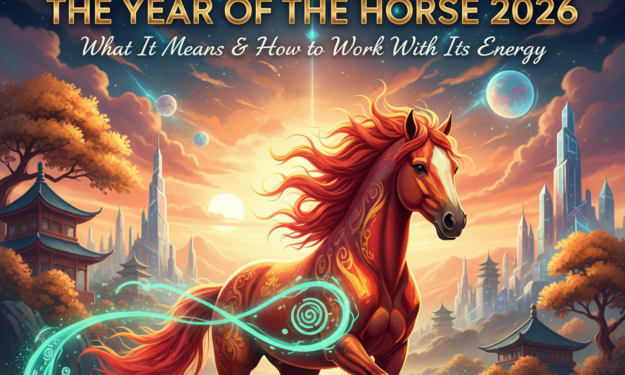
The Year of the Horse 2026
The next Year of the Horse begins on February 17, 2026, and ends on February 6, 2027. In the Chinese zodiac cycle, Horse years are associated with speed, momentum, and movement. 2026 adds another layer: it’s a Fire Horse year, which brings extra heat, volatility, and intensity—both promising and demanding at the same time.
By abualyaanart4 days ago in Motivation
The Growing Importance of Data Accuracy in the Crypto Ecosystem. AI-Generated.
As blockchain technology matures, the conversation around cryptocurrencies is shifting beyond speed and scalability toward data accuracy and trust. Decentralized systems rely on correct information to function effectively, whether it involves transactions, smart contracts, or real-world integrations.
By Muhammad Talha Ahmad4 days ago in Futurism
The Weight of Security: What Moving a Gun Safe Reveals About Home and Responsibility in Houston. AI-Generated.
A home is made not only of walls and furniture, but of invisible feelings that live within it. Comfort, routine, and safety quietly shape how we experience the spaces around us. Some objects contribute to this sense of stability more than others. Among them, few carry as much symbolic and physical weight as a gun safe.
By House Doctor4 days ago in Lifehack
The Role of Artificial Intelligence in News
Artificial Intelligence (AI) is rapidly transforming industries across the globe, and journalism is no exception. From automated news reports to advanced data analysis and fact-checking tools, AI has begun reshaping how information is gathered, produced, and distributed. As digital media evolves, one key question continues to emerge: Is AI in journalism a threat to traditional reporting, or is it a powerful opportunity for innovation?
By Kunal Chouhan4 days ago in Education
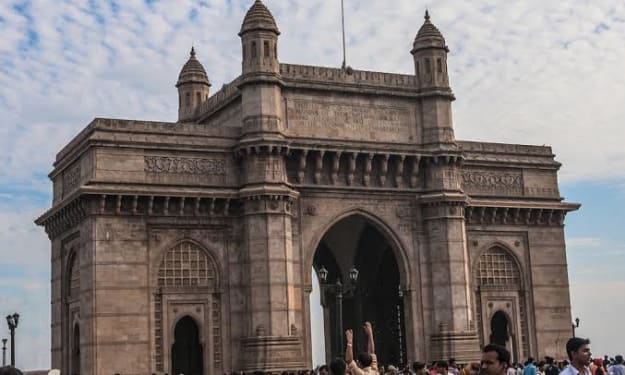
Bombay. AI-Generated.
For many people around the world, Bombay is more than a place. It is an idea—of ambition, cinema, sea breeze, crowded trains, and relentless energy. Officially renamed Mumbai in 1995, the city still carries the memory of “Bombay” in its architecture, literature, and everyday speech. To understand Bombay is to understand one of the most layered urban stories in South Asia. From Seven Islands to a Metropolis Bombay’s origins trace back to a cluster of seven islands along India’s western coast. Over centuries, these islands were gradually reclaimed and merged through ambitious engineering projects under colonial rule. The Portuguese first controlled the area in the 16th century before it was handed to the British as part of a royal dowry in 1661. Under British administration, Bombay grew rapidly into a strategic port city. Its natural harbor made it vital for trade between Europe and Asia. Cotton exports flourished during the American Civil War, bringing wealth and migration. By the late 19th century, Bombay had become one of the most important cities in British India, known for its grand Gothic and Indo-Saracenic architecture. Landmarks such as the Gateway of India and the Chhatrapati Shivaji Maharaj Terminus reflect this layered history. They stand as reminders of colonial ambition and local craftsmanship, woven together into the city’s identity. A City of Migration and Dreams Bombay has always attracted newcomers. Traders from Gujarat, textile workers from Maharashtra, entrepreneurs from Rajasthan, and professionals from across India have all found opportunity here. The city’s population growth has been driven by this constant movement of people seeking work and possibility. This migration shaped Bombay into a cultural mosaic. Multiple languages are spoken daily—Marathi, Hindi, Gujarati, Urdu, English, and more. Street food reflects this diversity, from vada pav and pav bhaji to kebabs and seafood curries. The city’s suburban train network, often described as its lifeline, carries millions of passengers every day. It represents both the struggle and solidarity of urban life: crowded compartments, shared conversations, and the quiet resilience of commuters. Bombay and the Birth of Bollywood No discussion of Bombay is complete without its film industry. The city is home to Hindi cinema, commonly known as Bollywood. Since the early 20th century, filmmakers have used Bombay’s studios and streets to tell stories that reach audiences across India and beyond. Classic films of the 1950s portrayed the city as a place of hope and hardship. Later decades highlighted crime dramas, romantic musicals, and social commentaries set against Bombay’s skyline. The industry not only entertains but also shapes fashion, music, and public imagination. For aspiring actors, writers, and directors, arriving in Bombay is often the first step toward a dream. While only a few achieve stardom, the city continues to symbolize opportunity in creative arts. Commerce, Finance, and Industry Bombay is also India’s financial capital. It houses the Reserve Bank of India and the Bombay Stock Exchange, one of Asia’s oldest stock exchanges. Major corporations, banks, and multinational companies operate from its business districts. The city’s economy extends beyond finance. Ports, manufacturing, media, and technology all contribute to its economic strength. This concentration of opportunity has made it one of the wealthiest urban centers in India. Yet prosperity exists alongside visible inequality. High-rise luxury apartments overlook densely populated informal settlements. The contrast is stark but also part of the city’s complex reality. The Renaming: Bombay to Mumbai In 1995, the government of Maharashtra officially changed the city’s name from Bombay to Mumbai, reflecting a desire to honor the local goddess Mumbadevi and emphasize Marathi heritage. The change sparked debate. For some, “Mumbai” represented cultural pride and post-colonial identity. For others, “Bombay” carried historical and emotional resonance. Even today, both names coexist. Government documents use Mumbai, while many residents and writers still refer to Bombay in conversation or literature. The duality reflects how cities can hold multiple identities at once. Literature and Urban Memory Bombay has inspired countless writers. Novels, essays, and poems capture its contradictions—wealth and poverty, glamour and grit, tradition and change. The city’s monsoon rains, sea-facing promenades like Marine Drive, and historic neighborhoods such as Colaba and Dadar appear repeatedly in fiction. Writers often describe Bombay as a character rather than a backdrop. Its unpredictable rhythm influences the people who live there. Power cuts, traffic jams, festivals, and political rallies all become part of daily narrative. Resilience Through Adversity Bombay has faced serious challenges, including communal tensions, floods, and terror attacks. Each time, the city’s residents have displayed a capacity for resilience. The phrase “the spirit of Bombay” emerged to describe how quickly daily life resumes after disruption. This resilience is not romantic; it is practical. In a city where millions depend on daily wages, stopping is rarely an option. Shops reopen, trains run, and people return to work. The Sea and the Skyline Geography shapes Bombay’s personality. The Arabian Sea borders the city, offering open horizons in a crowded urban landscape. Evening walks along Marine Drive or Juhu Beach provide a pause from the city’s intensity. Meanwhile, the skyline continues to change. New towers rise where textile mills once stood. Infrastructure projects—metro lines, sea links, and coastal roads—aim to ease congestion and modernize transport. Despite constant construction, Bombay’s older neighborhoods preserve a sense of continuity. Irani cafés, colonial-era buildings, and local markets remind residents that history remains close. A City in Motion Bombay is not static. It reinvents itself with each generation. Startups operate alongside traditional family businesses. Independent filmmakers challenge mainstream narratives. Artists transform warehouse spaces into galleries. The name may officially be Mumbai, but “Bombay” endures in memory, art, and speech. It represents a particular mood—restless, ambitious, and unfiltered. Ultimately, Bombay is defined by its people. Millions wake before sunrise, board trains, open shops, and pursue dreams. Some succeed spectacularly. Others survive quietly. Together, they sustain a city that has never stopped moving. Whether called Bombay or Mumbai, it remains one of the world’s most compelling urban stories—a place where history, commerce, creativity, and resilience converge along the edge of the sea.
By Saboor Brohi 4 days ago in History
How Speculation and Utility Intersect in the Crypto Market. AI-Generated.
The cryptocurrency market operates at the intersection of innovation and speculation. While blockchain technology introduces new financial models and infrastructure, market behavior is still heavily influenced by attention, narratives, and investor psychology. Understanding how these elements interact is essential for navigating a space that evolves faster than traditional financial markets.
By Muhammad Talha Ahmad4 days ago in Futurism