
World Leaders Convene in Brazil to Address Climate Crisis
Global summit in Brazil seeks urgent solutions as climate change accelerates worldwide.

---
A Global Call to Action
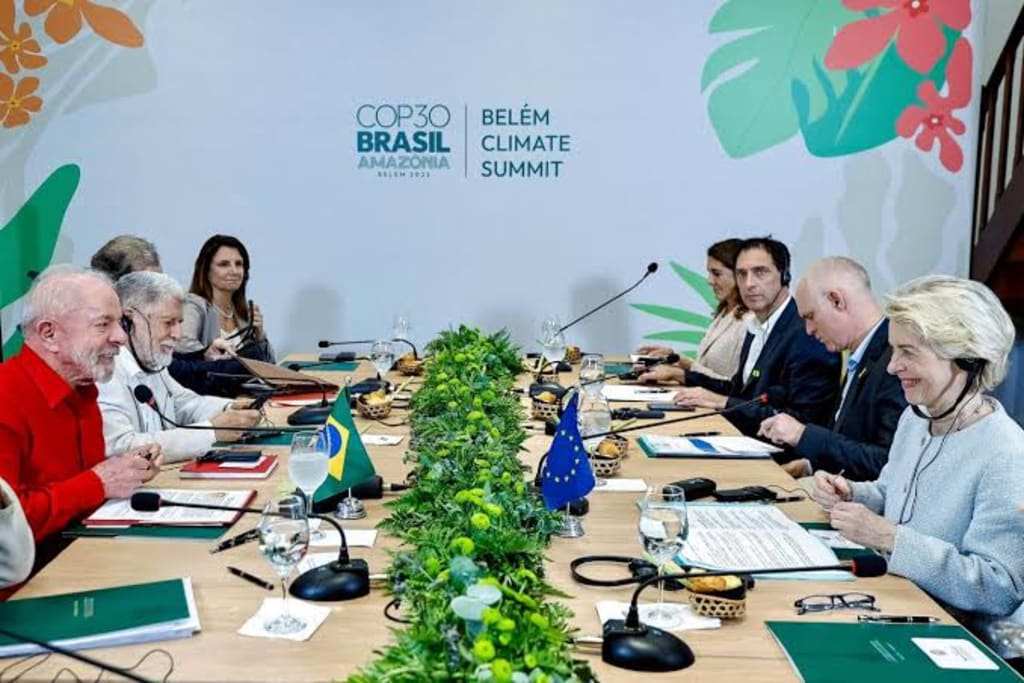
World leaders from over 100 nations gathered in Brazil this week to confront the escalating climate crisis. The summit, hosted in the Amazonian city of Manaus, emphasizes the urgent need for collective action to combat deforestation, rising temperatures, and extreme weather events that threaten communities worldwide.
The conference brings together political leaders, environmental scientists, and activists, all united in the goal of advancing climate solutions. Key topics include carbon emission reductions, renewable energy investments, sustainable agriculture, and protection of critical ecosystems.
> “The climate crisis is not a future threat—it is a present reality,” said Brazilian President Luiz Inácio Lula da Silva. “We must act together, boldly and urgently, to protect our planet and our children’s future.”
---
Why Brazil is at the Center of the Conversation
Brazil, home to the Amazon rainforest, plays a pivotal role in the global climate system. The Amazon acts as the “lungs of the Earth,” absorbing massive amounts of carbon dioxide and producing oxygen. However, recent years have seen alarming rates of deforestation, driven by agriculture, logging, and illegal mining.
The summit aims to address these challenges by promoting sustainable development in Brazil and beyond. Leaders hope to establish international partnerships that balance economic growth with environmental protection.
> “Protecting the Amazon is not just a Brazilian responsibility—it’s a global one,” said UN Secretary-General António Guterres. “Every tree that falls affects all of humanity.”
---
Key Goals and Agreements
The Brazil summit focuses on several ambitious objectives:
1. Reducing Carbon Emissions – Nations are being urged to commit to more aggressive net-zero targets by 2050.
2. Preserving Forests – Initiatives include funding for forest conservation, stricter anti-deforestation policies, and support for indigenous communities.
3. Investing in Renewable Energy – Governments and corporations are exploring solar, wind, and hydroelectric projects to reduce reliance on fossil fuels.
4. Addressing Climate Justice – Discussions highlight the need to support vulnerable nations disproportionately affected by climate change, including small island states and low-income countries.
Experts emphasize that these agreements must be actionable and measurable, with clear timelines and accountability mechanisms to ensure real progress.
---
The Role of Indigenous Communities
Indigenous communities in the Amazon are central to the conversation. These groups have historically protected forests through traditional knowledge and sustainable practices. Summit organizers are ensuring that indigenous voices are included in policy-making discussions.
> “Our forests are our life,” said Chief Raoni Metuktire, an indigenous leader. “We need the world to respect our lands and our ways. Protecting the Amazon protects everyone.”
International observers note that integrating indigenous leadership into climate initiatives not only safeguards the environment but also strengthens social justice.
---
Challenges Facing the Summit
Despite optimism, the summit faces significant challenges. Many countries struggle with conflicting economic interests, particularly those dependent on fossil fuels or deforestation-driven agriculture. Political disagreements could hinder consensus on binding climate commitments.
Additionally, experts caution that funding gaps for climate action remain a major obstacle. Developing nations, often the most vulnerable to climate impacts, require substantial financial and technological support to implement solutions effectively.
> “Commitments are not enough—we need concrete investments and enforcement,” said Dr. Maria Santos, a climate policy researcher. “Without follow-through, the talks risk being symbolic rather than transformative.”
---
Global Reactions and Public Engagement
Environmental activists and civil society organizations have welcomed the summit but continue to press for bold action. Youth movements, inspired by figures like Greta Thunberg, are staging demonstrations calling for urgent climate measures.
Meanwhile, scientists attending the summit have presented alarming data: global temperatures are rising faster than predicted, glaciers are melting, and extreme weather events are becoming more frequent. The message is clear—delayed action has real consequences for ecosystems, economies, and human lives.
> “This is a pivotal moment,” said Dr. Santos. “World leaders have the opportunity to make decisions that will define the planet’s future. The time for debate is over—the time for action is now.”
---
Looking Ahead
The summit is expected to conclude with a joint declaration outlining commitments to reduce emissions, preserve forests, and support vulnerable nations. Observers hope that Brazil’s leadership and the international community’s attention will translate ambitious promises into concrete policies.
The outcome could set the stage for future international climate agreements, including updates to the Paris Agreement and new strategies for sustainable development.
> “Every country, every community, and every individual has a role to play,” said President Lula. “The climate crisis respects no borders. Our actions today determine our survival tomorrow.”
---
Conclusion
As world leaders convene in Brazil, the stakes could not be higher. The summit highlights the urgency of climate action, the importance of global cooperation, and the need to balance economic growth with environmental preservation.
While challenges abound—political disagreements, economic pressures, and funding gaps—the conference represents a critical opportunity for bold, transformative action. How leaders respond could shape the trajectory of climate change and determine whether future generations inherit a thriving planet or a world in crisis.
---
About the Creator
Fiaz Ahmed
I am Fiaz Ahmed. I am a passionate writer. I love covering trending topics and breaking news. With a sharp eye for what’s happening around the world, and crafts timely and engaging stories that keep readers informed and updated.
Keep reading
More stories from Fiaz Ahmed and writers in Journal and other communities.
Mediators Propose Deal to Get Hamas Fighters Out of Rafah
--- A New Proposal Amid Escalating Tensions International mediators have proposed a deal to extract Hamas fighters from Rafah, a city in southern Gaza, in an effort to reduce violence and prevent further civilian casualties. The plan, which involves negotiations between Hamas, Egyptian officials, and representatives from the United Nations, aims to create a corridor for fighters to leave the city safely, while minimizing the risk of retaliatory strikes.
By Fiaz Ahmed 2 months ago in Journal
The goals I did not achieve
Every writing goal I made for the year is a wash. It has been this way for a while, but I think it's important to be open about my failures and the reality of how life can get in the way. This is especially true considering the several times I have posted on Vocal about my writing goals, how I was changing my approach, and where I was hoping to be for the upcoming year. I will probably do that again in a couple months, but for now, it is time to acknowledge where I am today.
By Kay Husnick23 days ago in Journal



Comments
There are no comments for this story
Be the first to respond and start the conversation.