
Working as an Electrician in Belgium: A Practical Guide for Foreigners
Working as an Electrician in Belgium

Electricians are in steady demand across Belgium, especially as construction, renovation, and infrastructure projects continue to expand. For foreigners looking to settle in the country and find stable employment, the electrician trade can be a solid and rewarding choice. In this article, we’ll walk through what it takes to work as an electrician in Belgium — from qualifications and salaries to job search strategies and legal requirements.
What Does an Electrician Do in Belgium?
In Belgium, electricians perform a range of tasks depending on the sector. Some work in residential buildings, others in commercial or industrial settings. Typical responsibilities include:
- Installing, maintaining, and repairing electrical wiring and systems
- Reading and interpreting blueprints and technical diagrams
- Ensuring installations comply with Belgian safety regulations
- Diagnosing electrical faults and performing necessary repairs
- Installing lighting, security systems, and energy-efficient solutions like solar panels
Electricians can also specialize in high-voltage networks, automation systems, or smart home technologies.
Qualifications and Training
To work legally as an electrician in Belgium, you need proper qualifications. If you trained abroad, your diploma may need to be recognized in Belgium. Depending on the region (Flanders, Wallonia, or Brussels), the recognition process can differ slightly, but generally includes:
- Having your foreign diploma officially recognized by the relevant community authority
- Possibly passing an equivalency exam
- Demonstrating relevant professional experience
Many employers prefer candidates who’ve completed an apprenticeship or hold a vocational diploma (e.g. Certificat de Qualification Professionnelle or a diploma from a technical school). Belgian electricians often undergo dual training — a mix of classroom instruction and hands-on work.
If you want to work independently (i.e. as a self-employed electrician), you must prove your professional knowledge to get a business license. This involves either recognized education or significant work experience.
Do You Need to Speak the Local Language?
Language requirements depend on where you want to work. In Flanders, Dutch is essential. In Wallonia, you’ll need French, while in Brussels, both French and Dutch are commonly used. Although you might find employers in international companies or on large construction sites who accept English speakers, learning the local language will significantly improve your job prospects and integration.
Several regions offer free or subsidized language courses to help newcomers adapt more quickly.
Job Market and Salary Expectations
Belgium’s shortage of skilled electricians makes it easier for qualified foreign workers to find jobs. Positions are often available through construction companies, electrical contractors, real estate developers, and maintenance firms.
According to various job platforms, the average monthly salary for an electrician in Belgium ranges from €2,300 to €3,500 gross, depending on your experience, specialization, and the region. Overtime pay, bonuses, and benefits such as meal vouchers or transportation reimbursements are often included in the compensation package.
Self-employed electricians can earn significantly more but are responsible for their own taxes, insurance, and client acquisition.
Where to Find Electrician Jobs in Belgium
You can find electrician vacancies through:
- Online job platforms (Indeed, VDAB, Le Forem, Actiris)
- Local staffing agencies
- Company websites
- LinkedIn and other professional networks
- Regional employment offices
If you're not sure where to start, this dedicated guide on electrician jobs in Belgium offers more detailed steps on how to apply and what employers expect.
It’s also worth contacting Belgian trade unions or industry organizations, which sometimes offer job boards or advice for foreign professionals.
Legal Requirements for Foreign Workers
EU/EEA citizens can live and work in Belgium without a work permit. However, you must register at your local commune and apply for a residence certificate if you plan to stay longer than 90 days.
Non-EU citizens usually need a job offer before applying for a work permit and residence authorization. The employer typically initiates the process. Belgium uses a single permit system for stays longer than 90 days, which combines both work and residence authorization.
Make sure your qualifications are in order, and gather any necessary documents — translated and legalized if needed — before applying for jobs.
Can You Work as a Self-Employed Electrician?
Yes, but it requires extra steps. First, you must register as a self-employed worker and apply for a business number with a Belgian enterprise counter (guichet d’entreprise / ondernemingsloket). You’ll also need:
- Proof of professional qualifications
- A business bank account
- Registration with a social insurance fund
- VAT registration (if applicable)
- You may also need a professional card (carte professionnelle / beroepskaart) if you're a non-EU citizen.
Running your own business in Belgium has its perks — more independence, flexible hours, and potentially higher earnings — but also more responsibility in terms of taxes, client management, and legal compliance.
Tips for Foreign Electricians Moving to Belgium
Start with recognition: Don’t wait until you arrive to begin the diploma recognition process.
Learn the local language: Even basic proficiency can be a game-changer.
Stay updated on safety regulations: Belgian laws are strict and constantly evolving.
Network with professionals: Join forums or attend events related to construction and electrical work.
Be patient: It may take time to secure your first job, especially if you’re new to the country.
Conclusion
Belgium offers good job prospects for electricians, especially those with qualifications and experience. The country’s housing market, focus on green energy, and aging infrastructure keep the demand high. Whether you’re planning to work for a company or start your own business, the path is open — as long as you take the time to prepare properly.
If you're ready to explore more job options, check out our main WelcomeBelgium job section for useful tools, resources, and step-by-step guides tailored for newcomers.
Quick Fact
Some Belgian electricians are now specializing in electric vehicle (EV) charging stations — a booming niche worth exploring if you're interested in future-proofing your career.
About the Creator
Keep reading
More stories from Ретро Мания and writers in Journal and other communities.
Hiring an Architect in Belgium: When It's Required, What They Do, and How to Choose One
Planning to build, renovate, or expand a property in Belgium? Then chances are, you’ll need to work with a certified architect. This isn't just a matter of preference — in many cases, it’s a legal obligation. Belgian law is very clear when it comes to construction and renovation work: an architect must be involved when certain conditions are met.
By Ретро Мания10 months ago in Journal
Time for China to Move From ‘Product Export’ to ‘System Export’ in Aviation Arms Trade: NPC Deputy
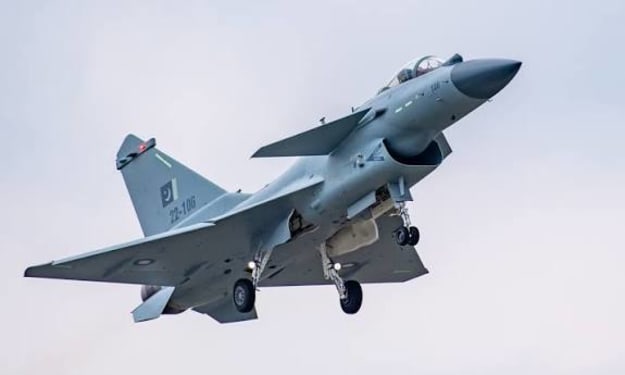
China is increasingly pushing for a strategic shift in its defence industry — moving beyond simply exporting military products to becoming a global exporter of fully integrated defence systems. That was the message delivered this week by NPC Deputy Zhang Wei, a member of the National People’s Congress, during a high‑profile defence industry forum in Beijing. Zhang’s comments underscore China’s ambitions to compete more directly with the United States and other major arms exporters in the global aviation and military hardware market. “The era in which we are content to sell standalone products — fighters, missiles, radars — must give way to a pursuit of complete systems that integrate across air, space, and cyberspace,” Zhang told delegates. “This is not just an industrial upgrade, but a strategic imperative if China is to deepen partnerships with foreign militaries and contribute to international security.” From “Product” to “System” Export For decades, Chinese defence exports have primarily consisted of “products”: individual platforms such as aircraft, helicopters, surface‑to‑air missiles, and naval vessels. Many of these offerings — notably the Chengdu J‑10, Hongdu L‑15, and various drone types — have found buyers in Africa, Southeast Asia, and the Middle East, particularly among countries seeking more affordable alternatives to Western hardware. However, the global arms trade has increasingly shifted toward integrated systems — packages that include not just the hardware itself but command‑and‑control infrastructure, logistics support, training, and ongoing upgrades. Western defence firms, particularly those in the United States and Europe, now sell such systems to allied militaries, bolstered by long‑term service contracts and interoperability with existing Western military networks. Zhang emphasised that China must position itself to offer not just platforms, but “complete solutions” for prospective buyers. “Our emphasis must move from what the hardware can do on its own to what it can achieve in the context of a broader defence ecosystem,” he said, echoing similar calls from senior equipment designers and People’s Liberation Army (PLA) strategists. Strategic Rationale and Global Context China’s defence industry has made impressive strides in recent decades. Its jets, UAVs, and missiles now rival many Western designs on performance metrics, and Beijing has steadily improved its ability to produce advanced microelectronics, sensors, and propulsion systems. Yet its share of the international arms market remains significantly smaller than that of the United States Department of Defense and European exporters such as France’s Dassault Aviation and the United Kingdom’s BAE Systems. According to SIPRI arms transfer data, China accounted for roughly 5 per cent of global major arms exports in recent years, compared with about 37 per cent for the United States. European exporters together held another large share. China’s market presence is strongest in nations that often face sanctions or restrictions on Western equipment, including Pakistan, Myanmar, and some African states. By promoting system exports, China hopes to expand beyond these traditional markets and appeal to countries seeking high‑end, interoperable defence solutions without political restrictions tied to Western alliances. This could include emerging aviation systems tied to integrated air‑defence networks, logistics‑management suites, and even cyber‑enabled maintenance systems that increase uptime and reduce lifecycle costs. Aviation and the Arms Trade Aviation remains at the centre of this strategic shift. Integrated solutions in the aviation domain now include not just the aircraft themselves but weapons payloads, datalinks, sensor fusion packages, and training simulators that allow air forces to operate effectively as part of multi‑domain battle networks. Zhang cited recent advances by China’s defence conglomerates — including Aviation Industry Corporation of China (AVIC) and China Aerospace Science and Industry Corporation (CASIC) — as evidence that China now has the industrial base to pursue integrated offerings. “We have matured to the point where we can offer not just discrete aircraft but entire aerial ecosystems that include surveillance, strike, and defensive capabilities working in concert,” he said. Challenges and Skepticism Despite the ambition, analysts warn that China faces several obstacles in making the leap from product to system exporter. These include questions about interoperability with existing military frameworks in buyer countries, intellectual property concerns, and political apprehension — particularly among nations wary of close ties with Beijing. There are also internal challenges. China’s defence industry has historically focused on producing equipment for its own PLA needs, which do not always translate directly to export markets. Building robust after‑sales support networks — critical for system exports — requires investment in foreign infrastructure and long‑term commitments that many Chinese firms have historically been reluctant to make. What This Means for the Global Arms Market If China succeeds, the implications for the global arms trade could be significant. Western exporters, which have long dominated the market for integrated defence systems, could face increased competition in regions where cost, neutrality, and fewer political strings are attractive to buyers. Additionally, a more competitive Chinese offer could encourage buyers to demand better terms and interoperability regardless of source, potentially raising capabilities across multiple regions. Zhang’s comments signal a strategic recalibration within China: an effort to redefine its role not just as a producer of defence hardware, but as a provider of complex, sustained defence solutions. Whether that shift takes hold will depend on China’s ability to build trust with buyers, invest in global support infrastructure, and continue improving the technological sophistication of its offerings.
By Fiaz Ahmed 2 days ago in Journal



Comments (1)
This article is really useful. It clearly outlines what electricians do in Belgium. I'm curious, though. How does the pay compare between working in residential, commercial, and industrial settings? Also, for those trained abroad, what's the best way to start the diploma recognition process? It seems a bit complex, but having the right qualifications is crucial to land a stable job in this in-demand field.