
Women’s Sports: A New Era
How Data, Brand Investments, and Public Sentiment Are Reshaping the Future of Women’s Sports in Pakistan and Beyond
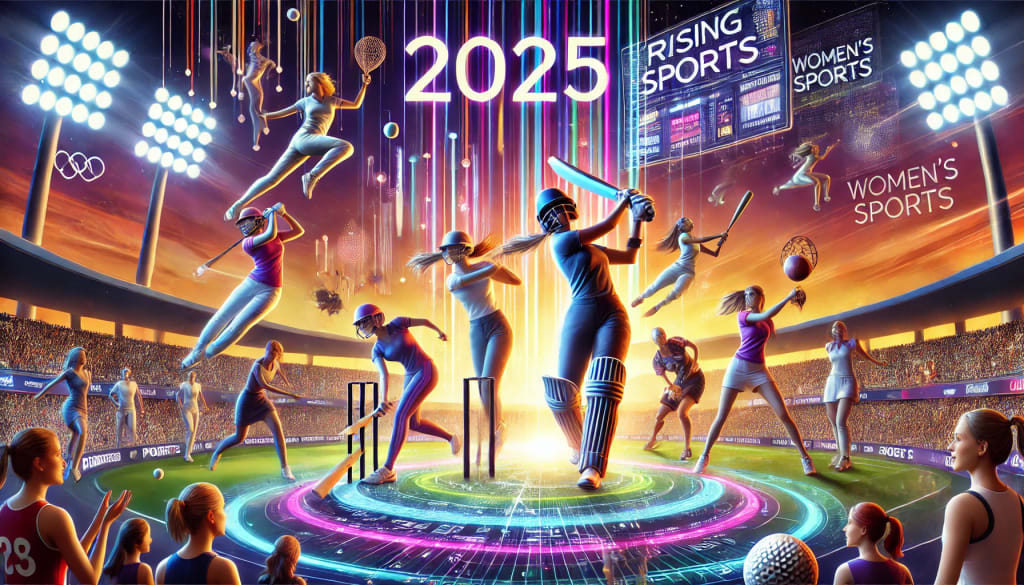
In the aftermath of announcing that our streaming company had purchased the rights for the Ladies Professional Golf Association games, sceptics shared that women’s sports is decades away from taking off and that advertisers are hesitant to support it.
However, data and evolving public sentiment suggest otherwise.
In late 2023, Deloitte predicted that women’s sports revenues in 2024 would exceed $1 billion. By early 2024, GroupM pledged to double its annual media investment in women’s sports and launched a dedicated marketplace for this purpose. Deloitte followed by becoming a founding member of the Athena Pledge in October, an initiative aimed at advancing media visibility, athlete development, and fan engagement for women’s sports.
Momentum continued as GroupM announced it had surpassed its pledge, and in November, Whoopi Goldberg launched the All-Women’s Sports Network. This network is now a hub for live broadcasts of women’s sports, ranging from cricket to basketball, tennis, and beyond.
Women’s Sports Ratings in Pakistan
While these global developments are impressive, Pakistan offers a unique case study in the rising popularity of women’s sports, particularly cricket.
Kantar’s television audience measurement (TAM) data for the 2023 and 2024 ICC Women’s T20 World Cup showed steady growth in viewership. In 2023, the average audience rating for ten matches was 1.81%, which increased to 1.97% in 2024.
Pakistan’s matches in these tournaments were standout moments. The India-Pakistan match in 2023 garnered a 6.5% audience share, while the clash with Ireland saw a 2.59% share. By 2024, viewership for Pakistan’s matches grew significantly, with ratings of 3.82% (India), 4.07% (New Zealand), 2.98% (Sri Lanka), and 2.04% (Australia).
This retention spike has been attributed to the growing popularity of the women’s cricket team on social media. According to Ask Walee, the top women cricketers’ Instagram followings doubled, with some increasing fivefold since 2023.
“The upward trajectory of these cricketers' followings reflects a rising tide of excitement for women's cricket,” said QuratulAin Fatima Rashid, VP of creator media at Walee. “These athletes aren’t just gaining followers; they’re building a movement and inspiring a generation.”
Meaningful Brand Involvement
Globally, women’s sports represent a fraction of sponsorship dollars and media coverage compared to men’s sports. However, brands have begun to recognize the potential for authentic engagement.
Ross Benes, senior analyst at eMarketer, highlights the growing audience: “More than double the number of people watched women’s sports monthly in 2024 compared to 2022. However, women’s sports still represent just 2.5% of total live sports viewers, leaving significant room for growth.”
For brands, the women’s sports ecosystem presents a vast opportunity to empower athletes and build long-term equity. Investments in grassroots initiatives, infrastructure, and media partnerships can secure first-mover advantages while fostering inclusivity.
In 2023, Cadbury Pakistan challenged norms by becoming a major sponsor of women’s cricket. The company’s #GetInTheGame campaign aimed to normalize women’s participation in cricket. Through the Cadbury Cricket Scholarship program, open trials were held nationwide, and 123 scholarships were awarded to aspiring athletes. Seventeen recipients now represent the Under-19 Women’s National Team across seven cities.
Cadbury’s decision to invest in women’s cricket reflects a bold experiment grounded in its generosity-driven brand purpose. Gohar Syed, Marketing Lead for Pakistan at Mondelēz International, explains the vision: “Our goal is to bridge gaps in media visibility, athlete development, and fan engagement while creating a lasting impact. We are focused on where the world will be, not where it is today.”
Cadbury Dairy Milk's #BackHerDream campaign, launched with the 2024 Women's T20 World Cup, aimed to change the perception of girls in cricket by highlighting the impact of simple family support. The campaign introduced AI-driven user-generated content (UGC), allowing families to upload photos via QR codes on Cadbury Dairy Milk packs. These images were transformed into personalized posters depicting their loved ones as cricket heroes, demonstrating how small acts of encouragement could create a powerful ripple effect. The campaign was a massive success and garnered millions of views across conventional and digital platforms.
Other brands are also beginning to see the value in supporting women’s sports. For example, Jazz has teamed up with Pakistan’s women’s cricket team to promote women’s empowerment and support the growth of women’s cricket through training programs and talent development. The company also live-streamed the ICC Women’s T20 World Cup 2024 on its platform, Tamasha, reaching over 15 million active users, boosting the visibility of women’s sports in Pakistan. On the other hand Gym Armour is sponsoring the kits for the Pakistan Women’s Football Team, reinforcing its commitment to empowering female athletes and supporting the growth of women’s football in Pakistan. These efforts, while still in their early stages, point to an evolving landscape where women’s sports are gradually being recognized as a viable avenue for investment.
Looking Ahead
Ignoring women’s sports in Pakistan is no longer an option for marketers who aim to stay relevant. The data is clear: viewership is growing, social media engagement is skyrocketing, and societal attitudes are shifting. The question now is not whether women’s sports are worth investing in, but how brands can do so effectively and meaningfully. As Cadbury’s campaigns have shown, the key lies in combining innovative marketing strategies with actionable initiatives that address the unique challenges faced by female athletes in Pakistan.
For brands willing to take this leap, the rewards are manifold. Beyond immediate commercial gains, investing in women’s sports contributes to a more inclusive society, inspires a new generation of athletes, and positions the brand as a pioneer in championing gender equality. The stakes are high, but so is the potential for impact. As Pakistan’s women athletes continue to break barriers, the opportunity for brands to be part of this transformative journey is one that should not be missed.
Hazik Ali is a director at Z2C Limited (a seed-funding accelerator for tech companies), a corporate trainer, and a casual stand-up comedian on the weekends. He can be reached at [email protected].
About the Creator
Author’s Advice
If you would’ve asked me 20 years ago did I know I’d become a writer and an author, I would’ve said “nope, ain’t happening”. As fate would have it I did become an author and I can honestly say I’m loving it so far. It really does feel good to be a writer. I’ve learned a lot on this journey and I feel like with even me being as new to this world as I am, there’s some wisdom I need to share with every other aspiring author.
By Joe Patterson2 days ago in Journal



Comments
There are no comments for this story
Be the first to respond and start the conversation.