
Why There Is No “Ovie of Warri”! The Singular Kingship of the Olu of Warri Recognized by Court, History, and Law
The Singular Kingship of the Olu of Warri Recognized by Court, History, and Law

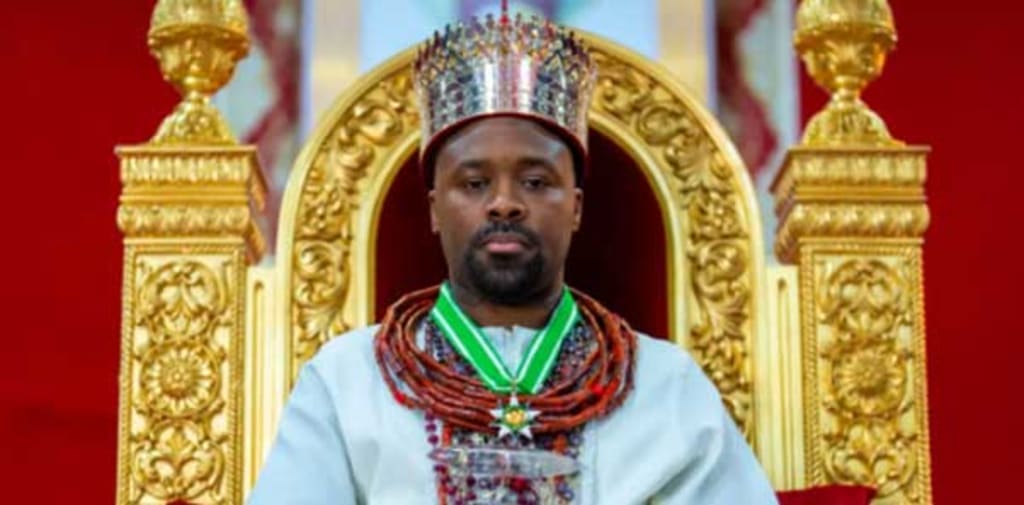
Warri is one of the most historic, multi-ethnic regions in Nigeria’s Niger Delta. It is home to the Itsekiri, Ijaw, and Urhobo peoples — groups with rich traditions, distinct languages, and strong cultural pride. But in the debate about who truly holds authority in Warri, one fact remains indisputable: there is only one king in Warri — the Olu of Warri.
In recent times, some nefarious elements among the Urhobo have tried to distort history by wrongfully styling their local clan heads as “Ovie of Warri.” This claim is not only historically false but also legally baseless. Nigerian courts, colonial records, and customary law all recognize the Olu of Warri as the singular monarch of Warri, the owner of its land mass, and the holder of radical title.
This article will take a deep dive into
The historical roots of the Olu of Warri kingship
Why the title “Ovie” cannot apply in Warri
Key court cases that legally confirm the Olu’s singular authority
Why attempts to create an “Ovie of Warri” are both misleading and dangerous
What the law, history, and tradition say about kingship in Warri
By the end, one truth will stand clear: there is no Ovie of Warri, there never has been, and the only king of Warri — by custom and by law — is the Olu of Warri.
Understanding the Terms: Olu vs. Ovie
To avoid confusion, let’s clarify the terms.
Olu: This is the Itsekiri word for king. The title is reserved exclusively for the Olu of Warri, the paramount ruler of the Itsekiri people.
Ovie: This is the Urhobo word for king. Each Urhobo community has its own Ovie who governs their clan or kingdom.
Now here is the key: while the Urhobo may have “Ovies” in Ughelli, Abraka, or Udu, they cannot project that title into Warri. Warri has never had an Ovie. Warri only has an Olu.
This distinction is critical. Titles are not just words — they represent jurisdiction, authority, and ownership of land. For centuries, Warri has recognized only one monarch: the Olu of Warri.
Historical Foundations of the Olu of Warri
The kingship of Warri dates back to the late 15th century. The first Olu, Ginuwa I, was a prince of Benin who migrated to Itsekiri land around 1480. Since then, the Itsekiri have maintained an unbroken line of kingship, with the current monarch being Olu Atuwatse III, enthroned in 2021.
Why this matters:
The Olu’s throne is over 500 years old, predating colonial intrusion, the amalgamation of Nigeria, and even the spread of modern ethnic politics.
The Olu was historically recognized by both the Portuguese (who traded with the Itsekiri in the 15th and 16th centuries) and by the British colonial administration.
No Urhobo or Ijaw king has ever been historically recognized as King of Warri.
The Olu’s kingship was not invented — it was established, continuous, and acknowledged globally.
Why There Is No Ovie of Warri
So why is the title “Ovie of Warri” completely false? Let’s unpack it:
Linguistic & Cultural Accuracy
“Ovie” belongs to the Urhobo language, not the Itsekiri.
Warri is historically and culturally tied to the Itsekiri, whose monarch is always titled Olu, not Ovie.
Legal Precedent
Nigerian courts have ruled time and again that the Olu of Warri is the custodian of Warri lands.
Urhobo Ovies exist — but not in Warri. They cannot extend their titles into a landmass legally owned by another community.
Land Ownership Principle
In Nigerian customary law, kingship is tied to ownership of land.
The Olu of Warri is the radical title holder of Warri Division, meaning all communal land rights flow from his title.
The Urhobo in Warri are recognized historically as customary tenants, not landowners.
Court Cases
Multiple landmark cases have dismissed Urhobo claims of independence in Warri, reaffirming the Olu’s singular status.
No court has ever recognized an “Ovie of Warri.”
Landmark Court Cases: Olu of Warri’s Singular Authority
Let us highlight the most important judicial decisions that permanently settled the question of kingship and land ownership in Warri:
Omagbemi v. Chief Dore Numa (1923, 5 NLR 17)
The court recognized the Olu’s authority in Warri and upheld the Itsekiri claim to land.
Ogegede v. Chief Dore Numa (1925, 6 NLR 124)
The Agbassa Urhobo’s claim to independent ownership was dismissed; the court held they settled on land belonging to the Itsekiri.
Ometa v. Chief Dore Numa (1926, 11 NLR 18; Privy Council Appeal, 1932)
The Privy Council in London — the highest judicial authority at the time — ruled that the Agbassa people came into land that originally belonged to the Jekri (Itsekiri).
This decision reinforced Itsekiri overlordship and Olu’s authority.
Chief Secretary to the Federation v. Itsekiri Communal Lands Trustees (1970, Suit W/41/1957, Obaseki J.)
This case explicitly confirmed that the Olu of Warri held Warri Division land in trust for the Itsekiri community.
Idundun v. Okumagba (1976, Supreme Court)
The Supreme Court clarified five methods of proving title to land. In Warri’s context, this decision reinforced the Olu’s title and the role of the Itsekiri Communal Lands Trustees.
What these cases prove:
The Olu of Warri’s kingship is tied to ownership of the land.
Courts have consistently dismissed Urhobo attempts to bypass the Olu’s authority.
Legally and historically, Warri has only one king — the Olu.
Why Attempts to Create an “Ovie of Warri” Are Dangerous
So why would some Urhobos claim the existence of an “Ovie of Warri”? The reasons are mostly political, symbolic, and tied to land struggles. But these attempts are problematic for several reasons:
Historical Falsehood
It rewrites history dishonestly, ignoring centuries of documentation.
Cultural Appropriation
It attempts to impose Urhobo titles on Itsekiri territory, which is disrespectful to cultural boundaries.
Legal Confusion
It undermines settled court judgments and creates unnecessary communal tension.
Communal Tension
Such false claims fuel ethnic conflict rather than promoting peaceful coexistence.
The Singular King of Warri: Olu of Warri
To this day, the Nigerian government, Delta State authorities, and all traditional institutions recognize only one king in Warri: The Olu of Warri.
His throne is one of the most respected in Nigeria.
His authority is backed by history, law, and custom.
His role as landowner and custodian makes him the unquestioned monarch of Warri.
No matter the propaganda or political maneuvering, the fact remains unshakable: there is no Ovie of Warri.
To help this message reach the right audience, here are some optimized keyword focuses that have been naturally woven into this blog:
- Olu of Warri history
- Ovie of Warri false claim
- Kingship in Warri
- Court cases on Warri land ownership
- Itsekiri communal land rights
- Why there is no Ovie of Warri
- Olu of Warri vs Ovie of Urhobo
Warri is a proud land with a deep, complex history. But when it comes to kingship, the facts are clear, the law is settled, and the tradition is unbroken: there is only one king in Warri — the Olu of Warri.
The wrongful attempt by some Urhobos to call their clan head “Ovie of Warri” is both a distortion of history and a violation of law. The courts, the government, and centuries of records affirm the Olu’s singular status.
For peace, unity, and truth, all communities in Warri must respect this reality. To do otherwise is to invite confusion, conflict, and disrespect for the traditions that have held Warri together for centuries.
There is no Ovie of Warri. There never was. There never will be. The Olu of Warri remains the only recognized king of Warri.
About the Creator
Omasanjuwa Ogharandukun
I'm a passionate writer & blogger crafting inspiring stories from everyday life. Through vivid words and thoughtful insights, I spark conversations and ignite change—one post at a time.
Keep reading
More stories from Omasanjuwa Ogharandukun and writers in Journal and other communities.
MLB Playoffs 2025, Dodgers Dominate Reds, Yankees, Padres, and Guardians Force Deciding Game 3s
The MLB playoffs of 2025 are proving to be everything fans hoped for—and more. After an electrifying opening day, Wednesday’s contests offered high drama, clutch performances, and moments that will be remembered for years to come.
By Omasanjuwa Ogharandukun4 months ago in Journal
The goals I did not achieve
Every writing goal I made for the year is a wash. It has been this way for a while, but I think it's important to be open about my failures and the reality of how life can get in the way. This is especially true considering the several times I have posted on Vocal about my writing goals, how I was changing my approach, and where I was hoping to be for the upcoming year. I will probably do that again in a couple months, but for now, it is time to acknowledge where I am today.
By Kay Husnick24 days ago in Journal
Catholic Social Teaching and Modern Life
Catholic Social Teaching is a rich tradition that provides moral guidance on how to live out faith in society. Rooted in Scripture and the teachings of the Church, it addresses issues of human dignity, justice, care for the poor, and responsible stewardship of the world. Understanding Catholic Social Teaching helps believers apply their faith to modern challenges while staying true to God’s call for love, compassion, and justice.
By Sound and Spirit6 days ago in Journal
How, Too
Many people wonder how, too. You are not alone, and I am an expert. I will teach you how, too! First, you need to remit a small application fee and fill out an application describing the nature of your financial situation and how often payments will be made, as this will have great bearing on how well I teach you how, too.
By Harper Lewis3 days ago in Fiction


Comments
There are no comments for this story
Be the first to respond and start the conversation.