
Why Startups Are Turning to the Virtual Employee Model
Virtual Employee Model For Startup

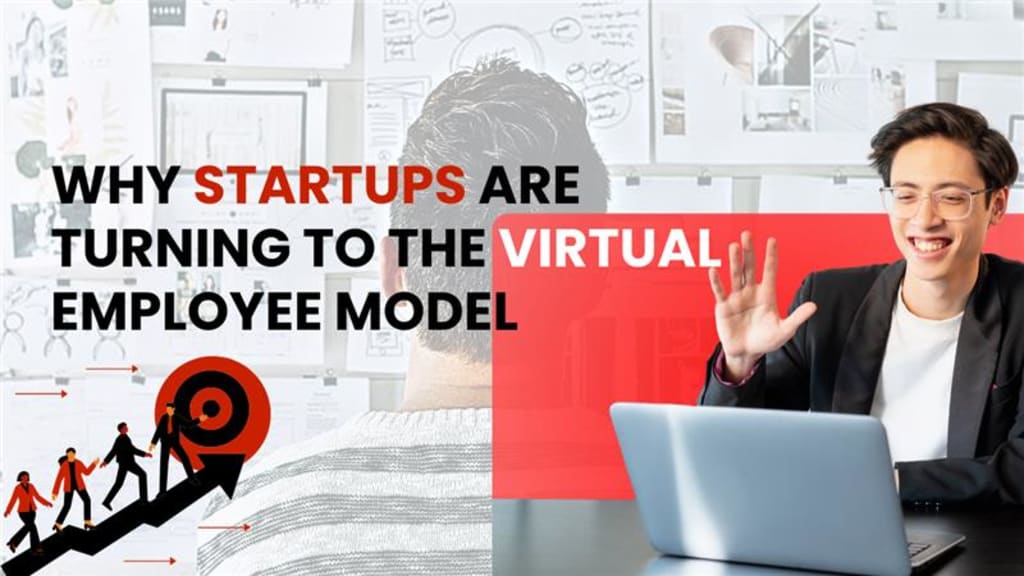
When startups launch, agility isn't just a benefit—it's a necessity. Operating within tight budgets, lean resources, and ambitious growth plans, many are rethinking how teams are structured. Traditional hiring? It’s often too slow and expensive. Freelancers? They’re flexible, but sometimes unreliable for long-term needs.This is exactly where the virtual employee model is creating waves.
It offers startups the rare chance to combine scalability, cost-efficiency, and skill with minimal overhead. But what makes this hiring strategy not just popular- but practical?
Let’s explore the reasons why an increasing number of startups are making the shift to the virtual employee model.
Scalability Without Infrastructure Pressure
Startups can’t afford to outgrow their workspace too soon or spend thousands setting up new office spaces. With a virtual employee, they bypass the cost and complexity of physical expansion. Whether it’s one designer or a five-person support team, they can be onboarded without additional real estate.
This model allows:
- Quick hiring without logistics
- Seamless scaling during growth spikes
- Downsizing without HR complications
Access to Global Talent Without Boundaries
Local hiring pools often limit the diversity of experience. By hiring a virtual employee, startups open doors to a global talent pool, bringing on professionals with expertise that may not be available locally.
Why this matters:
- Niche skillsets from specialized markets
- Round-the-clock productivity due to time zone differences
- Multi-cultural inputs improving product diversity
Startups that value innovation need access to minds that think differently and this hiring model makes that possible.
Cost-Efficiency That Doesn’t Sacrifice Quality
Every startup founder wrestles with budget constraints. A virtual employee offers the perfect middle ground- professional service without the high salary or overhead cost of in-house hiring.
Here’s how it saves money:
- No need for physical office space
- No traditional benefits or insurance expenses
- Lower hourly rates for high-quality work
Yet, startups don’t have to compromise on quality- top-tier talent is more accessible than ever with remote working becoming mainstream.
Focused Roles Without the Freelance Hassle
Unlike freelancers who often juggle multiple clients, a virtual employee is dedicated solely to your project or company. This guarantees better accountability, consistent availability, and long-term continuity—essentials for building a solid startup foundation.
Benefits over freelancers:
- Full-time dedication
- Easier communication and onboarding
- Long-term relationship and knowledge retention
This setup ensures that valuable know-how doesn't walk out the door after every contract.
Operational Flexibility and Lean Team Models
Many startups are experimenting with lean, modular teams. Hiring a virtual employee aligns perfectly with this approach. You bring in specific skills only when needed, avoid overstaffing, and maintain a core in-house team supported by a flexible virtual one.
What startups love about this:
- Plug-and-play workforce model
- Zero downtime during transitions
- More efficient project-based workflows
Having on-demand talent helps in managing dynamic projects without disrupting the business rhythm.
Faster Onboarding and Reduced Hiring Timelines
Traditional recruitment processes are slow—job ads, interviews, HR paperwork—it can take weeks, even months. A virtual employee sourced through trusted outsourcing platforms can be onboarded in days, sometimes even hours.
This accelerates:
- MVP development timelines
- Marketing launches
- Customer support expansion
For startups racing against time, that’s an unbeatable edge.
Less Administrative Overhead
Managing payroll, insurance, legal documents, and HR services is taxing for lean teams. A virtual employee, especially when hired via a third-party platform, often comes with built-in admin support. That means your startup can focus on building, not bookkeeping.
Less time spent on:
- Taxes and deductions
- Leave management
- Legal compliance
More time spent on strategy, execution, and innovation.
Better Work-Life Balance for Founders
Startup founders often wear multiple hats—from coding and customer support to content and HR. Hiring a virtual employee helps offload critical but time-consuming tasks. Whether it’s scheduling meetings, conducting research, or managing support tickets, virtual staff bring back precious hours to your calendar.
Areas virtual employees typically assist:
- Admin and executive assistance
- Digital marketing support
- Bookkeeping and invoicing
- CRM management
Reclaiming time enables founders to focus on vision rather than being bogged down by operations.
Business Continuity in Crisis Situations
The virtual employee model adds a layer of resilience. In times of crisis natural disasters, economic uncertainty, or health emergencies distributed teams offer uninterrupted operations. Your team stays functional even if your office is shut down.
Startups that survived and thrived through turbulence often had strong remote teams in place. It's not just convenient; it’s protective.
24/7 Customer Service and Global Coverage
With a virtual employee in another part of the world, startups can offer round-the-clock support. This is especially critical for SaaS, e-commerce, and service-based companies that want to deliver real-time assistance.
What this unlocks:
- Extended customer support hours
- Better satisfaction ratings
- International market readiness
You’re no longer bound by time zones—your team works while you sleep.
Rapid Pivot Support for Changing Needs
Startups pivot often. One month you're building a mobile app, the next you're launching a marketplace. A virtual employee allows you to adapt quickly - adding developers, marketers, or designers as needed without permanent commitments.
The flexibility makes it easier to test new ideas, explore new markets, and scale faster.
Increased Productivity with Task Specialization
When you assign tasks to a virtual employee who specializes in them, the output is faster and more accurate. Generalists can handle a lot, but specialists elevate performance—especially for roles like SEO, graphics, or backend development.
This helps reduce revision cycles and boosts execution speed, both of which are vital for time-sensitive startup goals.
Eco-Friendly and Sustainable Business Practice
Reducing office energy consumption, travel emissions, and unnecessary infrastructure helps startups position themselves as responsible and green. The virtual employee model contributes to this shift toward sustainability.
Modern consumers and investors value eco-conscious brands—and going virtual is a small but impactful step toward that identity.
In Ending
From financial flexibility to global outreach and from smart resource management to resilient structures - startups are turning to the virtual employee model not just as an option, but as a strategy.
The future isn’t about having a large team in a single office. It’s about having the right talent, at the right time, wherever they are. The virtual employee model empowers startups to do exactly that—grow smarter, scale faster, and stay lean.
Hire a Virtual Employee Through Invedus Outsourcing – Seamless Platform to Hire.
Transform your startup potential with the flexibility and strength of a remote-ready workforce.
Read Our Recent Article - How To Manage Virtual Employees: 6 Effective Tips
About the Creator
Anil Rawat
Hi there! I am Anil Rawat, a dedicated digital marketer who is particularly passionate about social media and SEO. Visit Our Service Page Also For Hire Digital Marketing Expert
Keep reading
More stories from Anil Rawat and writers in Journal and other communities.
The Ultimate Guide to Virtual Employees: What You Need to Know
Virtual employees are all the rage in the market. Just like you, we also wanted to know what the reason behind this change is. According to a global report, over 30% of the global workforce is now working remotely at least part-time, and this number is expected to continue growing.
By Anil Rawat12 months ago in Journal
Author’s Advice
If you would’ve asked me 20 years ago did I know I’d become a writer and an author, I would’ve said “nope, ain’t happening”. As fate would have it I did become an author and I can honestly say I’m loving it so far. It really does feel good to be a writer. I’ve learned a lot on this journey and I feel like with even me being as new to this world as I am, there’s some wisdom I need to share with every other aspiring author.
By Joe Patterson3 days ago in Journal
Benefits of Gamification Services in Modern Workplaces
Many people believe gamification services are only about points, badges, and leaderboards. While that is totally not the case. Gamification serves a much deeper purpose in employees' personal lives and the corporate environment.
By jacquelinedavida day ago in Journal
Hottest in the Office
Dear Rafi, You’re very distracting to work around. For the first second I saw you the other day, I thought you were some type of executive. It took a moment to realize no, you were just the new guy, dressed up for the job he wants. Be still, my heart.
By Gabriel Shames4 days ago in Pride




Comments
There are no comments for this story
Be the first to respond and start the conversation.