
How To Manage Virtual Employees: 6 Effective Tips
Tips For Manage Virtual Employees

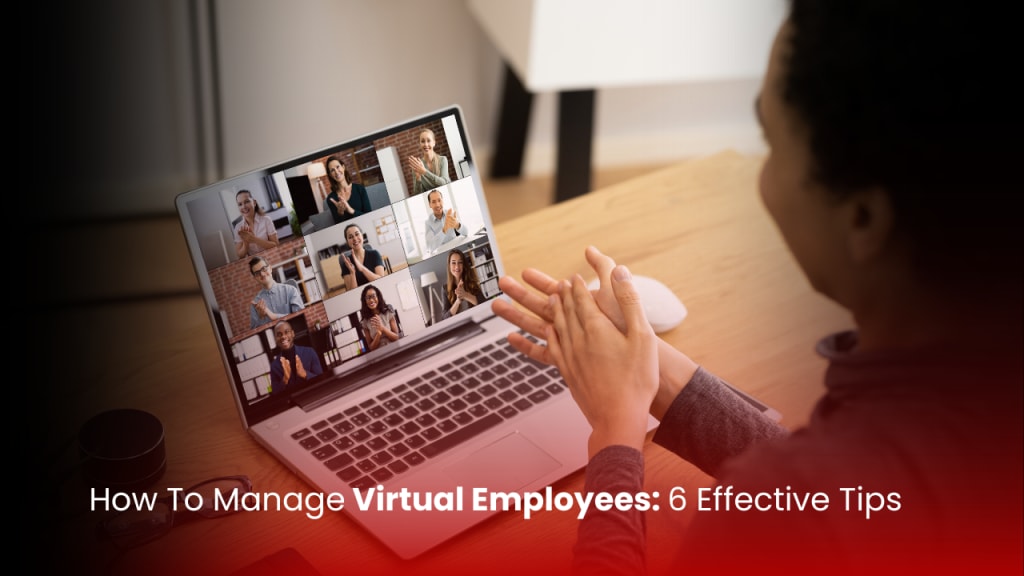
Companies are increasingly appointing virtual employees because of their flexibility, cost savings, and access to global talent. But while the advantages are well known, successfully managing a remote workforce requires more than just video calls and meetings.
A well-run virtual team can boost output, improve employee satisfaction, and propel business expansion. However, poor strategic planning frequently results in misunderstandings, inefficiencies, and disengagement.
In this blog, you’ll learn how to create a thriving remote work environment that empowers your team and advances your business objectives.
Let’s Dive in.
1. Define Clear Goals and Expectations
You must ensure that your virtual team has clear and written goals. Without face-to-face interactions, employees can feel misaligned and disengaged. Setting measurable goals for both individuals and teams will help you convert your goals into actionable practice.
You can start by using techniques like OKRs ( Objectives and Key Results) or SMART goals (Specific, Measurable, Achievable, Relevant, Time-bound). They will keep everyone engaged and aligned. A study conducted by Dominican University demonstrated the benefits of written rules and objectives, coming to the conclusion that those with written goals are much more likely to succeed than those without.
Instead of telling your marketing team to “increase engagement,” you can set achievable targets like “boost website traffic by 20% within three months.” Clear communication keeps everyone on the same page and removes uncertainty.
Make sure your objectives have a clear deadline, are realistic, and can be tracked. Additionally, specify the roles and responsibilities of your employees as well as your expectations for them. Employees are more confident and driven to produce results when they have a roadmap.
2. Invest in the Right Tools and Technology
Technology fosters teamwork and guarantees smooth cooperation and efficiency. All your remote team needs are the right tools. Investing in the ideal tools allows your team to work together efficiently and produce high-quality results, in addition to providing them with the means to complete their tasks.
I suggest using the following tools to maximize the performance of your virtual employees:
- Communication tools: platforms like Slack and Microsoft Teams are invaluable for instant messaging and team updates.
- Project management tools: Trello or Asana help teams track tasks and deadlines.
- Time management tools: Toggl or Clockify ensure accountability without micromanagement.
- Engagement tools: WorkTango, Officevibe, or Donut ensure a sense of community and alleviate feelings of isolation.
- File sharing tools: Google Drive, Dropbox, or OneDrive allow seamless transfer and sharing of files.
3. Foster a Strong Team Culture
Virtual employees do not get the opportunity to make bonds and connections that in-house teams enjoy. However, by creating a strong team culture, this can be readily resolved.
According to Gallup research, companies with high employee engagement levels report:
- 17% increase in productivity.
- 23% increase in profitability.
Thus, creating opportunities for connection beyond work will significantly enhance your virtual employee engagement and interaction. Here are some effective ways to increase informal interaction among virtual employees:
- Schedule virtual coffee breaks.
- Host fun team-building activities like online trivia.
- Encourage space for casual conversations.
- Celebrate employee milestones and acknowledge hard work.
- Include a monthly “team shout-out” session to boost morale.
- Invest in engagement tools like Donut, HeyTaco, etc.
Your team is more likely to work well together and remain involved even if they are spread out geographically when they feel appreciated and connected.
4. Prioritize Communication and Transparency
Failure to communicate and lack of understanding can hamper your business output. You do not want under communication in such a scenario. Teams cannot comprehend halfway chats and irregular updates.
As a team leader, provide clear and transparent progress and expectations. Start by setting agendas for every meeting and keeping them concise. In addition to keeping virtual employees informed, having a clear and useful framework aids in time management.
Utilize platforms like Zoom or Google Meet for video updates and adopt asynchronous communication for team members in different time zones. Remember, transparency builds trust, so make your employees feel informed so that they are more engaged and aligned with the company’s goals.
5. Support Work-Life Balance and Well-Being
Having a good work-life balance has several advantages:
- Better overall lifestyle outcomes for virtual employees.
- Team members who are more driven, enthusiastic, and focused.
- Increased productivity and engagement among employees.
- Increased retention of top talent and improved job satisfaction.
It goes without saying that promoting the wellbeing of your virtual employees can greatly improve your business endeavors. Here are some tried and tested tips you can include very easily:
- Set clear work hours.
- You can implement “no meeting Fridays” and give employees a chance too focus or recharge.
- Provide access to mental health resources.
- Provide advice on how to set up comfortable workstations at home to avoid strain.
- Enable your teams to work at their peak efficiency.
- Encourage team members to take a break and engage in their hobbies by hosting a "Passion Project Hour" during the workweek.
6. Evaluate and Improve Continuously
Teams evolve over time, and there should always be scope for improvement. You can find areas for growth and pain points by routinely collecting feedback. For instance, you may find that employees need more training on using certain tools or prefer fewer virtual meetings.
Always keep in mind that the secret to long-term success is adaptability and flexibility. By continuously evaluating and improving your processes, you’ll create a remote workforce that thrives in any environment.
Considering All These Points
With the increasing adoption of virtual employees, creating a supportive, efficient, and engaging work environment is more than just important. Every stage of the process, from open communication to encouraging productivity through informal employee engagement, is crucial to success.
In the competitive work environment, business leaders who plan smartly and prioritize their team’s well-being will lead the way. By making investments in your remote team, you can create a strong and effective workforce.
About the Creator
Anil Rawat
Hi there! I am Anil Rawat, a dedicated digital marketer who is particularly passionate about social media and SEO. Visit Our Service Page Also For Hire Digital Marketing Expert
Keep reading
More stories from Anil Rawat and writers in Journal and other communities.
How to Hire a Virtual Assistant: A Step-by-Step Guide
Managing a growing business or personal workload can feel like juggling too many balls at once. I’ve been there- emails piling up, appointments slipping, and important tasks left unattended. This is where a virtual assistant can truly transform your workflow. Knowing how to hire a virtual assistant effectively ensures that you get the right support, save time, and focus on what really matters.
By Anil Rawat6 months ago in Journal
Author’s Advice
If you would’ve asked me 20 years ago did I know I’d become a writer and an author, I would’ve said “nope, ain’t happening”. As fate would have it I did become an author and I can honestly say I’m loving it so far. It really does feel good to be a writer. I’ve learned a lot on this journey and I feel like with even me being as new to this world as I am, there’s some wisdom I need to share with every other aspiring author.
By Joe Patterson3 days ago in Journal
Benefits of Gamification Services in Modern Workplaces
Many people believe gamification services are only about points, badges, and leaderboards. While that is totally not the case. Gamification serves a much deeper purpose in employees' personal lives and the corporate environment.
By jacquelinedavida day ago in Journal




Comments
There are no comments for this story
Be the first to respond and start the conversation.