
Why Prince William’s Saudi Arabia Visit Is a Diplomatic Maze
Balancing human rights, strategic alliances, and regional instability, the Prince of Wales’ engagement with Riyadh highlights the complexity of modern royal diplomacy
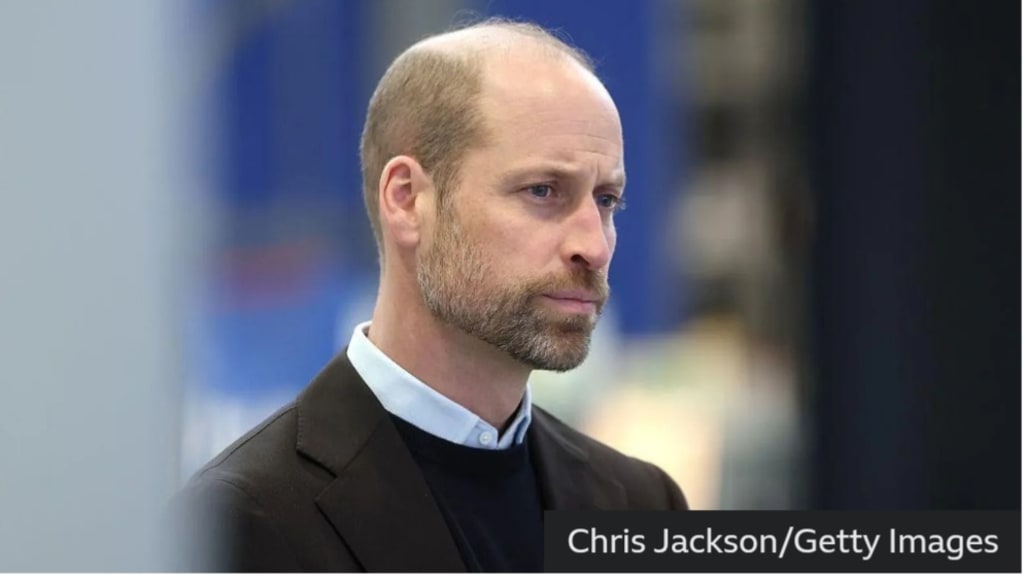
Prince William’s visit to Saudi Arabia has drawn significant international attention, not simply because of his status as the British heir to the throne, but because the Kingdom itself represents one of the most complex diplomatic landscapes in the world today. Every handshake, meeting, and public statement during such a visit carries layered political meaning. For Britain, Saudi Arabia is simultaneously a vital strategic partner and a source of persistent controversy, making any high-profile engagement a careful diplomatic balancing act.
At the heart of the issue is the dual role Prince William plays. As Prince of Wales, he is not a policymaker, yet as a senior royal, his presence is inherently political. Royal visits are often framed as symbolic and cultural, but in reality, they serve as instruments of “soft power,” reinforcing relationships that governments consider important while attempting to avoid overt political endorsement.
A Strategic Partner with Global Influence
Saudi Arabia occupies a central position in British foreign policy. It is a key ally in the Middle East, a major energy supplier, and an important economic partner. British companies have long-standing interests in the Kingdom, ranging from defense and infrastructure to education and renewable energy. In a volatile region, Saudi Arabia is also viewed by London as a counterbalance to Iran’s influence and a critical player in regional security.
Prince William’s visit underscores this strategic reality. His meetings are intended to reinforce long-term ties, promote cooperation in areas such as economic diversification, environmental initiatives, and youth engagement, and signal that the UK values its relationship with Riyadh. From a diplomatic perspective, disengagement is not seen as a realistic option.
However, this strategic necessity is precisely what makes the visit controversial.
Human Rights Concerns Cast a Long Shadow
Saudi Arabia’s human rights record remains a major point of tension. International organizations and Western governments have repeatedly criticized the Kingdom over issues such as freedom of expression, women’s rights, and the use of capital punishment. The killing of journalist Jamal Khashoggi in 2018 continues to loom large over Saudi Arabia’s international reputation, particularly in Europe and North America.
For Prince William, navigating these concerns is delicate. A royal visit risks being interpreted as tacit approval of the Saudi leadership, regardless of the stated purpose. Critics argue that high-profile engagements weaken international pressure on Riyadh to improve its human rights practices. Supporters, however, contend that engagement provides opportunities for quiet diplomacy and influence that public condemnation cannot achieve.
This tension—between moral values and geopolitical interests—is at the core of the diplomatic maze surrounding the visit.
The Crown, the Government, and Neutrality
Another layer of complexity lies in the constitutional role of the British monarchy. Prince William acts on the advice of the UK government, meaning his visit reflects official foreign policy priorities rather than personal views. Yet the monarchy’s image depends heavily on public perception, both at home and abroad.
British public opinion is divided. Some see engagement with Saudi Arabia as pragmatic and necessary, while others believe it undermines the UK’s commitment to human rights and democratic values. The Prince must therefore project neutrality, empathy, and cultural respect without appearing to take sides in contentious political debates.
This balancing act is particularly challenging in the age of social media, where images and brief comments can be rapidly interpreted, criticized, or politicized far beyond their original context.
Regional Politics and Global Messaging
Saudi Arabia is not just a bilateral partner; it is a regional powerhouse. Any visit by a senior Western figure is closely watched across the Middle East. Allies, rivals, and neighboring states analyze such engagements for clues about shifting alliances and priorities.
Prince William’s presence can be read as a signal of continued Western engagement with Gulf monarchies at a time when global power dynamics are changing. With China and Russia expanding their influence in the Middle East, the UK and its allies are keen to maintain strong relationships in the region. From this perspective, the visit is about more than Saudi Arabia—it is about Britain’s role on the global stage.
At the same time, the ongoing conflicts in Yemen and Gaza, as well as broader instability in the region, add to the sensitivity. Any diplomatic gesture risks being interpreted through the lens of these crises.
Soft Power, Youth, and Reform Narratives
Supporters of the visit point to Saudi Arabia’s ongoing social and economic reforms under its Vision 2030 program. Changes such as expanded roles for women in the workforce, investment in entertainment and tourism, and efforts to diversify the economy away from oil are often highlighted as signs of gradual transformation.
Prince William, who has focused much of his public work on environmental issues, mental health, and youth empowerment, fits neatly into this narrative of future-oriented engagement. Meetings centered on conservation, sustainability, or cultural exchange allow both sides to emphasize progress rather than controversy.
Yet critics caution against overstating reform, arguing that structural political change remains limited and that selective modernization should not distract from unresolved human rights issues.
A Visit Without Simple Answers
Ultimately, Prince William’s Saudi Arabia visit illustrates the uncomfortable realities of modern diplomacy. Moral clarity and strategic interests do not always align, and public figures often operate in shades of gray rather than black and white.
For the Prince of Wales, the challenge is to represent British interests while maintaining the monarchy’s credibility and values. For the UK government, the visit is a reminder that engagement with powerful but controversial partners will always invite scrutiny.
The diplomatic maze surrounding the visit has no easy exit. Instead, it reflects a broader global dilemma: how democratic nations and institutions should engage with influential states whose values and practices differ sharply from their own. In that sense, Prince William’s visit is less about a single trip and more about the evolving nature of diplomacy in a fractured and interconnected world.
About the Creator
Keep reading
More stories from Sadaqat Ali and writers in Journal and other communities.
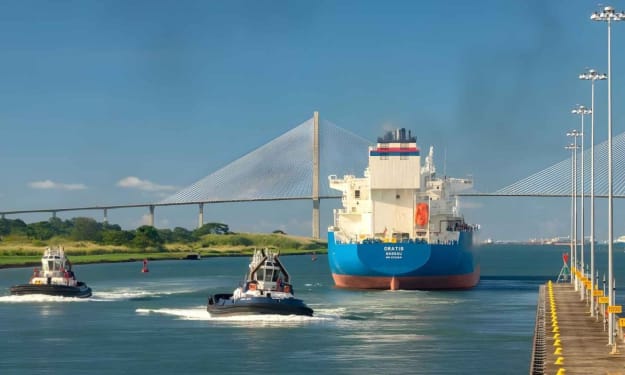
The Panama Canal Is Forgotten: A New Interoceanic Corridor Opens That Will Change Global Trade
For more than a century, the Panama Canal has stood as one of the most important arteries of global trade. Since its opening in 1914, the canal has linked the Atlantic and Pacific Oceans, saving ships weeks of travel around South America and becoming a symbol of engineering brilliance and geopolitical power. Yet today, a growing number of experts argue that the Panama Canal is no longer the uncontested king of interoceanic trade. A new generation of interoceanic corridors—combining rail, road, port, and pipeline infrastructure—is emerging, with the potential to reshape global trade flows and reduce reliance on the historic waterway.
By Sadaqat Ali2 days ago in Journal
~ Fired ~
— Ai Intrusion ~ Are you Next ~ Is Ai Evolution after your job? — Few workplaces haven't been affected. Ai is in supermarkets, at doctors' offices, and even monitoring farms. I just can't think of anything this machine is not getting into, can you? For instance: Education ~ Law and Tech jobs will one day have a major influence or be taken over by these inanimate machines, with accuracy and vigor. From mechanics' diagnoses to a wide variety of everyday jobs, including fast food workers, with this input having the ability to cut their unnecessary work hours. I'm certain all of us have been touched by this with our short stories and colorful headings, have you? Even comments are very questionable 'Non-Robot' insertions.
By Jay Kantor9 days ago in Journal
Gold and Silver Prices: What the City Thinks Will Happen Next
Gold and silver prices have always been closely watched by investors, central banks, and financial institutions. As global economic uncertainty continues to influence markets, analysts in major financial centers — often referred to as “the City,” particularly London’s financial district — are offering new predictions about where precious metal prices may move next.
By Aarif Lashari6 days ago in Journal
Foot Bindings
I asked my grandmother how she knew she'd fallen in love. I am not sure I ever did love him, she said. This was before I met my husband. I was naive, a naked spring, a raw nerve of a thing. That cannot ever be me, I knew. Sadness swept in gently like a Moscow thaw. It is no simple thing, looking into a woman's vast soul and seeing its foot bindings. Now, in Italy divorced with my skin singed off, when I say I don't love him mean: I have succeeded at feeling nothing most days and it mostly works. Do you want the comfort of Nothing? Do you want Nothing, too? Be warned: you'll never be free, even when you are nothing. Here is what doesn't work: Accepting the stages of grief. Talking about it. Sitting with the feeling. Missing him—no, the person you were when you believed in death do us part. Writing poetry. That, too. When I say I don't love him I mean: I feel capsized in an endless, starved tide. What sometimes works: selective memory. You must forget ripe tomatoes and his beard and feeling perfectly sheltered in a big blue world. Forget coffee in bed, laughter watching TV, blowing out the candles on the birthday cake and the quiet all-encompassing knowledge that you are chosen. Remember only how love turned to a banal everyday survival act, a trapeze act unsure whether he will catch you, how the warmth stagnated and became sour, remember the foot bindings and remember the resentment boiling in your veins as you stick it out for the kids. Six-hour Netflix binges help, too. A man's fingers tracing your spine. Frozen pizza at 2 a.m. Random trips to the museum just to stand near things that last a while. The realization that crying won’t change anything. Seeing that life is just a dream, and refusing to participate in your own suffering. Bite your fist. Walk on eggshells around joy. When I say I don't love him, I mean he didn’t break my heart, he just stopped touching it and it forgot how to beat right.
By Ella Bogdanova2 days ago in Poets


Comments
There are no comments for this story
Be the first to respond and start the conversation.