
The Panama Canal Is Forgotten: A New Interoceanic Corridor Opens That Will Change Global Trade
How emerging land-and-sea corridors are reshaping shipping routes, weakening the Panama Canal’s dominance, and redefining the future of global commerce
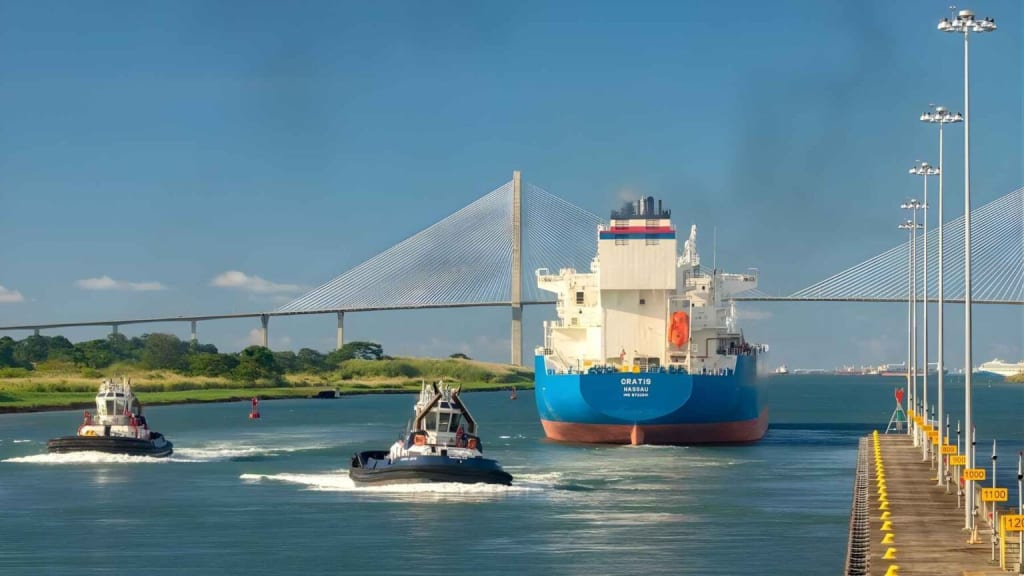
For more than a century, the Panama Canal has stood as one of the most important arteries of global trade. Since its opening in 1914, the canal has linked the Atlantic and Pacific Oceans, saving ships weeks of travel around South America and becoming a symbol of engineering brilliance and geopolitical power. Yet today, a growing number of experts argue that the Panama Canal is no longer the uncontested king of interoceanic trade. A new generation of interoceanic corridors—combining rail, road, port, and pipeline infrastructure—is emerging, with the potential to reshape global trade flows and reduce reliance on the historic waterway.
The Decline of an Iconic Route
The Panama Canal’s challenges are no longer hypothetical. Climate change has placed unprecedented stress on the canal’s freshwater-dependent lock system. Prolonged droughts have reduced water levels in Gatun Lake, forcing authorities to limit daily ship crossings and impose restrictions on vessel size. These measures have led to long waiting times, higher transit fees, and costly delays for shipping companies.
At the same time, global trade itself is evolving. Ships are getting larger, supply chains are becoming more regionalized, and geopolitical tensions are pushing countries and corporations to seek alternative routes that are less vulnerable to environmental or political disruptions. In this context, the canal’s once-unassailable strategic value is being questioned.
The Rise of a New Interoceanic Corridor
Against this backdrop, a new interoceanic corridor has begun to attract global attention. Unlike the Panama Canal, which relies on a single, narrow waterway, this new model emphasizes multimodal connectivity. It links oceans through a network of modern ports, high-capacity railways, highways, and logistics hubs, allowing cargo to move swiftly across land instead of waiting for canal transit slots.
Such corridors are being developed in several parts of the world, particularly in Latin America. By connecting Pacific ports with Atlantic or Caribbean ports via rail and road, these projects aim to bypass congested maritime chokepoints altogether. Containers can be unloaded on one coast, transported across the continent in a matter of hours or days, and reloaded onto ships on the other side.
Proponents argue that this approach offers greater flexibility, resilience, and scalability than a traditional canal. It also reduces dependence on freshwater resources, a critical advantage in an era of climate uncertainty.
Why Global Trade Is Paying Attention
The implications for global trade are significant. Shipping companies are constantly looking for ways to reduce costs, minimize delays, and improve reliability. When canal queues stretch for days or weeks, the financial impact can be enormous, particularly for time-sensitive goods such as electronics, automotive parts, or perishable products.
Interoceanic corridors promise predictable transit times and diversified routing options. Instead of placing all bets on a single canal, logistics firms can spread risk across multiple pathways. This diversification is especially attractive to major trading nations and multinational corporations that have learned hard lessons from recent supply chain disruptions, including the COVID-19 pandemic and high-profile shipping accidents.
Economic Opportunities for Transit Countries
For the countries hosting these new corridors, the economic potential is immense. Investments in ports, railways, warehouses, and industrial parks can generate thousands of jobs and attract foreign direct investment. Transit fees, logistics services, and value-added industries—such as assembly, packaging, and processing—can transform these regions into global trade hubs.
Moreover, unlike canals that concentrate activity in a narrow zone, land-based corridors can spread economic benefits across multiple regions and cities. This broader distribution of growth makes such projects politically attractive and socially impactful.
Geopolitics and Strategic Competition
Beyond economics, geopolitics plays a crucial role in the push for new interoceanic routes. Control over trade corridors has always been a source of strategic influence. As global power dynamics shift, emerging economies are eager to reduce dependence on infrastructure controlled or heavily influenced by other nations.
New corridors offer an opportunity to assert greater autonomy over trade routes, strengthen regional integration, and negotiate from a position of increased leverage in international trade discussions. For major powers, investing in or partnering on these projects can secure long-term access to critical supply chains and raw materials.
Challenges and Limitations
Despite their promise, interoceanic corridors are not without challenges. Building large-scale infrastructure requires massive capital investment, long construction timelines, and strong political stability. Environmental concerns, land acquisition issues, and community opposition can also slow progress.
Additionally, while corridors can complement or partially replace canal traffic, they may not fully replicate the efficiency of direct ship-to-ship transit for certain cargo types. Bulk commodities and ultra-large container vessels may still prefer maritime routes where possible.
A New Era for Global Trade Routes
The narrative that “the Panama Canal is forgotten” may be an exaggeration, but it reflects a deeper reality: the era of single-route dominance is ending. The future of global trade lies in redundancy, flexibility, and resilience. New interoceanic corridors represent a shift toward a more distributed and adaptable logistics system—one that can withstand climate shocks, geopolitical tensions, and evolving trade patterns.
As these corridors come online, the Panama Canal will remain an important piece of global infrastructure, but no longer the only game in town. In the decades ahead, global trade will be shaped not by one legendary canal, but by a network of interconnected routes designed for a rapidly changing world.
About the Creator
Keep reading
More stories from Sadaqat Ali and writers in Journal and other communities.
China Central Bank Keeps Buying Gold as Bull Run Hits Brakes
Beijing’s steady accumulation of bullion underscores a long-term strategy to diversify reserves, hedge geopolitical risk, and bolster confidence in the yuan—even as global gold prices cool after a historic rally.
By Sadaqat Aliabout 11 hours ago in Journal
~ Fired ~
— Ai Intrusion ~ Are you Next ~ Is Ai Evolution after your job? — Few workplaces haven't been affected. Ai is in supermarkets, at doctors' offices, and even monitoring farms. I just can't think of anything this machine is not getting into, can you? For instance: Education ~ Law and Tech jobs will one day have a major influence or be taken over by these inanimate machines, with accuracy and vigor. From mechanics' diagnoses to a wide variety of everyday jobs, including fast food workers, with this input having the ability to cut their unnecessary work hours. I'm certain all of us have been touched by this with our short stories and colorful headings, have you? Even comments are very questionable 'Non-Robot' insertions.
By Jay Kantor7 days ago in Journal
Precious Metals in Turmoil: Gold Down Nearly $1,000 From Peak as Silver Plunges in Historic Crash
The world of precious metals is experiencing turbulence like rarely seen before. In a few rapid trading sessions, gold has fallen nearly $1,000 from its all-time peak, while silver suffered a staggering 31% one-day slump — a historic plunge not seen in decades.
By Ayesha Lashari4 days ago in Journal
Feelings Never Die
It is Valentine's Day again, and it bought back memories that were over fifty years old. It bought me back to 1971, and I woke up and I knew my baby was due today. I was big and pregnant, and I felt like I was about to burst wide open. Imagine my surprise when the doctor told my I had a due date of February 14. I couldn't believe it, and since my baby was due today, I felt I could indulge myself a bit. I had gained a lot of weight, and chocolate was on the no-no list, but I had came to the end of this pregnancy, and I hoped it would be okay, after all I would deliver this baby today. So I walked across the street to the grocery story, and bought myself, a peppermint patty, covered in chocolate, my favorite. Me and my Valentine's baby would enjoy it together.
By Susan Payton3 days ago in Fiction




Comments
There are no comments for this story
Be the first to respond and start the conversation.