
Why Hating the Constitution Is the Real Controversy
Why Hating the Constitution

Why Hating the Constitution Is the Real Controversy
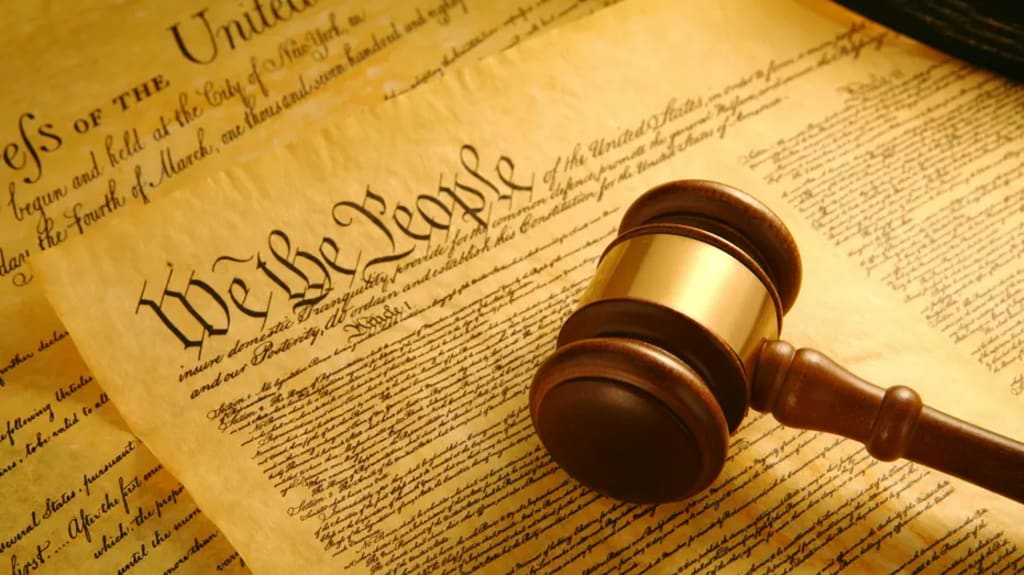
Our problems don’t come from the U.S. Constitution itself, but from the times when the government strays away from its original meaning. On September 17, we mark Constitution Day, celebrating 235 years since the document was signed. However, this day goes largely unnoticed by many, and some even use it to criticize the Constitution — the longest-surviving government charter in history.
Constitution Day once had a lively precursor called “I Am an American Day,” which drew crowds with patriotic speeches and songs. Today, few people celebrate the day, and instead, it often becomes an opportunity to attack the Constitution. Critics argue it "limits democracy" or prevents popular changes, such as incorporating racial issues more directly into the law. In fact, some publications, like The New York Times, have gone as far as to call the Constitution "dangerous" and "broken," even suggesting it shouldn't be reclaimed.
But why are principles like equality before the law, due process, civil rights, and limited government powers considered so controversial today? Historically, the biggest mistakes in our nation's history have happened not because of the Constitution but because leaders ignored its original intent.
Take, for example, Plessy v. Ferguson, Korematsu v. United States, and Buck v. Bell — three infamous cases that marked major missteps in our legal history. In each instance, the Supreme Court strayed from the Constitution’s original meaning, leading to grave injustices.
The Case of Plessy v. Ferguson
Plessy v. Ferguson is perhaps the most well-known example. The case stemmed from Homer Plessy’s decision to challenge the Separate Car Act in Louisiana, which forced racial segregation on trains. Plessy, who was of mixed race, was arrested for sitting in a Whites-only railway car. He argued that the law violated the Equal Protection Clause of the Fourteenth Amendment.
However, in an 8-1 ruling, the Supreme Court upheld Plessy's conviction, giving birth to the doctrine of "separate but equal." Justice Henry Brown, writing for the majority, claimed that laws requiring segregation didn’t imply one race’s inferiority over another. Only one justice, John Marshall Harlan, dissented, famously stating, “Our Constitution is color-blind.”
It wasn’t until 58 years later that the Court reversed this decision in Brown v. Board of Education, recognizing that "separate is inherently unequal" and mandating the desegregation of public schools. Plessy serves as a reminder of how badly things can go when the government strays from the Constitution’s true intent.
Korematsu v. United States: A Dark Chapter
Another case where the government veered from constitutional principles was Korematsu v. United States. After the attack on Pearl Harbor, President Franklin D. Roosevelt issued an executive order authorizing the internment of over 120,000 people of Japanese descent, most of whom were American citizens. Fred Korematsu, a Japanese American, was arrested for refusing to comply with the internment orders.
In his defense, Korematsu argued that the executive order violated his constitutional rights. However, the Supreme Court upheld his conviction, citing "military necessity" as justification. This ruling essentially legalized racial discrimination in the name of national security.
Several justices dissented. Justice Robert Jackson’s dissent is perhaps the most famous, stating that Korematsu was convicted "not of an act commonly thought to be a crime," but simply for being present where he lived. Justice Frank Murphy also dissented, condemning the decision as "legalizing racism." It wasn’t until 2018 that the Supreme Court finally acknowledged its mistake, with Chief Justice John Roberts writing that "Korematsu was gravely wrong the day it was decided."
The Forgotten Injustice: Buck v. Bell
Less known but equally shocking is Buck v. Bell, a case that involved the forced sterilization of Carrie Buck, a young woman deemed "feeble-minded" by doctors. She was institutionalized and sterilized against her will under a Virginia law that allowed the state to sterilize people deemed unfit to reproduce. Carrie’s legal team argued that the law violated her rights to due process and equal protection under the Constitution.
However, the Supreme Court sided with the state in an 8-1 decision. Justice Oliver Wendell Holmes Jr., writing for the majority, delivered the now infamous line: "Three generations of imbeciles are enough." The Court ruled that sterilizing Carrie was for the "public welfare" and within the government's powers.
Unlike Plessy or Korematsu, the decision in Buck v. Bell has never been officially overturned. Although later rulings have weakened its impact, it remains a troubling example of how the Supreme Court can fail to uphold constitutional rights.
Conclusion: The Real Problem Isn’t the Constitution
These cases remind us that the Constitution isn’t the issue. The real problems arise when the government steps away from the Constitution’s core principles. Equality before the law, due process, and civil rights — these are not outdated or controversial concepts. They are the foundation of a free and fair society. When the government strays from these values, that’s when injustices occur.
So, instead of viewing the Constitution as broken, maybe we should focus on upholding its timeless principles. After all, it’s not the Constitution that’s failed us — it’s when we’ve failed to follow it.
About the Creator
Sunil Christian
find here all type of news
Keep reading
More stories from Sunil Christian and writers in Journal and other communities.
Perry Farrell Throws Punch at Dave Navarro During Chaotic Jane’s Addiction Concert in Boston
Perry Farrell Throws Punch at Dave Navarro During Chaotic Jane’s Addiction Concert in Boston A recent Jane's Addiction concert took a dramatic turn when lead singer Perry Farrell unexpectedly threw a punch at guitarist Dave Navarro during their performance. The incident occurred on Friday, September 13, at the Leader Bank Pavilion in Boston, leaving fans stunned and cutting the concert short.
By Sunil Christianabout a year ago in Journal
Review of 'Man on the Run'
My wife and I saw Man on the Run, a nearly 2-hour documentary on Amazon Prime, about Wings, Paul McCartney's group that flew around the world from shortly after The Beatles broke up in early 1970 to shortly after John Lennon was murdered at the end of 1980, making a Beatles reunion forever impossible.
By Paul Levinson4 days ago in Beat


Comments
There are no comments for this story
Be the first to respond and start the conversation.