
Why Global Supply Chains May Never Be the Same
Threads of Trade, Woven Anew—The World No Longer Moves as It Once Did

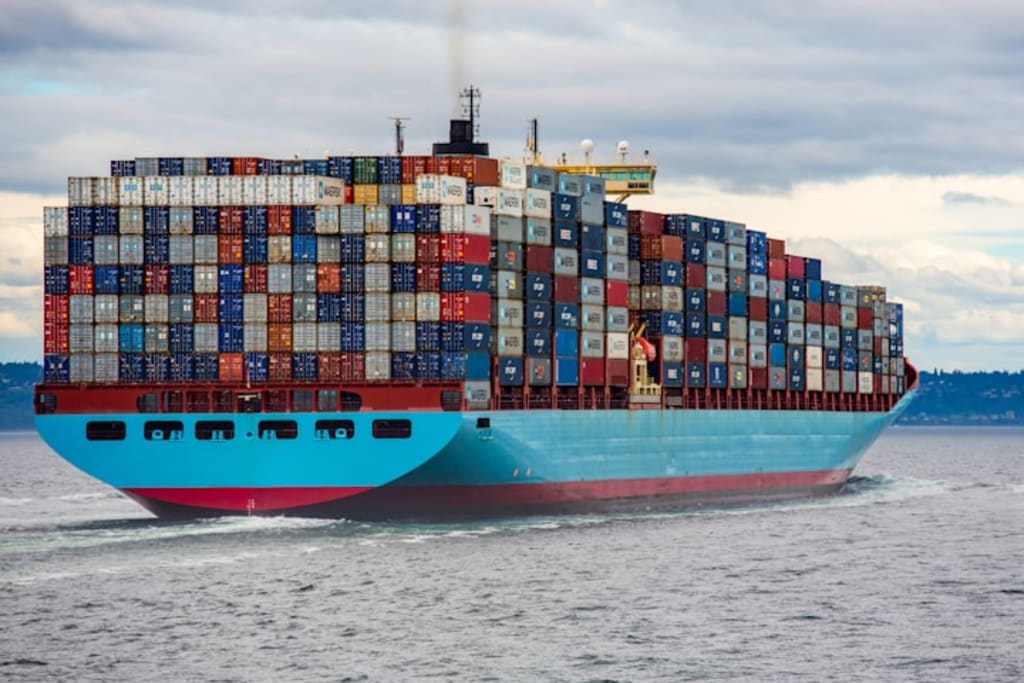
- [Man] Look at this.
Sold out, can you believe this stuff?
- So they were supposed to deliver it in October.
- This is going to be an update on the kettlebell shortage of 2020.
- I just want my shoe.
Gimme my shoe, please.
- Then it was supposed to be November.
No.
Then December.
- Get me my PlayStation.
Am I wrong for wanting this, bro?
- I mean, everything just sucks lately.
- Take my money.
Take my money, I don't want it.
Gimme my shoe.
- Every time I check my email, it's stuck on this right here.
I don't even know what that means.
- Tonight, one word sums up the feeling along every line of the supply chain: frustration.
- Well, the shortages and delays in the global supply chain threaten a total paralysis.
- When the pandemic hit, businesses anticipated that the COVID recession was coming.
They thought that demand was going to drop, but something funny happened.
The opposite of what all of these businesses and economists predicted happened.
Demand exploded, people bought things like crazy, and now supply chains are choking on that record demand.
Everyone has had the experience of not being able to get something and everyone has had the experience of paying more for something.
Prior to the pandemic, most of us just took it for granted that we could get things ever faster.
E-commerce made it seem like everything was right at our doorstep.
But that obscures what was a 14,000 mile journey halfway around the world.
It took months.
And when you add up all the automation, all the algorithms, all of the hundreds of people who had to touch those goods or transport them in some way, it's, in total, one of the most complicated endeavors that human beings ever engage in, and yet it happens millions of times per day, and we take it for granted because all of that has been rolled behind this ultimate convenience of just one click E-commerce shopping.
But the pandemic showed us just how unsustainable and unrealistic that expectation is.
(pensive music) So consumer electronics, like USB chargers, they feel like they are readily available to us, right?
We can get it the same day.
- USB chargers are an interesting product.
They're relatively simple.
The key thing is those chargers don't sell for a lot, so you have to keep your labor costs down and you have to really focus on efficiency.
- [Mims] The invention of the shipping container and ocean-going shipping made it cheap enough to move manufacturing wherever labor costs were lowest.
- Global supply chains have really brought us a cornucopia of products that we might not otherwise be able to have as much variety as...
Or as attractive costs that we see.
When you buy a product off of a store shelf or online, that's actually the tail end of a journey that might have begun a year ago in a factory that might be half a world away.
Vietnam has been attractive because of relatively low cost labor.
- If we take the example of a simple USB charger, it's assembled in a factory in Vietnam, and then, usually, it's placed on a shipping container that travels on a barge to an ocean-facing port.
There, it's loaded onto a ship for a trip across the Pacific Ocean.
The trip across the Pacific Ocean can take anywhere from 20 to 30 days.
Working on a ship can be like living in an office that you can't ever leave.
It's high stakes, and it's often mundane and boring.
Because sailors tend to be confined to these ships and it's almost impossible for outsiders to get on or off of them, this is part of the supply chain that remains invisible to most of us.
- A watch (indistinct) is done visually and also by radar.
- Fortunately, some of these sailors like to record their experiences.
- The watch officer is in charge of the navigation and overall status of the ship.
Safe navigation of the ship is the highest priority.
- [Jeff] The fog is so thick in this area, we can't really see around us so we have to use radar.
- [Mims] Each one of these container ships can carry up to 10,000 containers, but they can have a crew as few as 20 so it puts enormous pressure each sailor to do their job because if anything goes wrong, the results are gonna be catastrophic for supply chains.
- [Jeff] The last thing we want is containers falling into the sea if we ever run into bad weather.
We keep watch on the overall conditions of the ship, checking the mooring lines and looking out for suspicious activities, like stowaways or pirates.
Sea conditions like this can last for days; the relentless pounding, the never ending pitch and roll.
I can only describe it as living under a 24/7 airplane turbulence.
- The biggest container ships are as big as a skyscraper laid on its side, and one reason they've gotten so big is that when you look at all the costs, crew, fuel, etc, the bigger your ship, the more money you can make on every container, the cheaper it is ultimately to ship these goods.
But the bigger you make these ships and the more efficient you make these supply chains, the worse things go when there's a bottleneck at one of these single points of failure.
- [Newscaster] The 400 Meter long Evergiven got stuck on Tuesday morning, running aground in high winds reportedly after power failure on board.
- More than a dozen ships are waiting to pass through the Suez Canal.
That's one of the world's busiest trade routes.
- [Newscaster] And each day of backlog, more than $9 billion worth of goods is stuck, and that translates to about $400 million an hour.
- More and more shipping containers have been flowing toward us from Asia, and, of course, we're not really shipping stuff back.
(upbeat music) - Now, we see a large number of ships in San Pedro Bay.
Eventually, that cargo is going to land.
Eventually, it's gonna hit the beaches.
- [Mims] As ports get bigger, as more and more flows through the biggest ports, they become single points of failure in a global supply chain that used to be more robust.
- The Port of Los Angeles and neighboring port, Long Beach, represent 40% of our US imports and nearly 30% of America's exports, showing just how critical this gateway is to the American economy.
We have more than 15,000 international longshore and warehouse union members that work on the docks.
- My job as a longshore worker is to help in the operations that move cargo through the terminals on Long Beach and Los Angeles ports.
What I typically do is drive a UTR, that stands for "utility tractor rig." It's just kind of a compact truck that's strong enough to haul the tonnage.
So what I do is I take cargo from point A to point B, to a designated spot out in the yard, to be stacked for outside truckers to come pick up to take to the retailer's destination.
- [Gene] We've been averaging 900,000 container units for 14 consecutive months.
That used to be one really good month in our peak season.
- [Jaime] We use giant ship-to-shore cranes to unload containers.
Typically, it takes three to five days, but with all of the problems we're having right now, productivity is suffering big time.
It's taking up to two weeks to process a ship that would typically take three to five days.
- Once a container's on the dock, a mix of humans, robots, and software is going to be picking it up and moving it to stacks of containers inside the port itself, where it's gonna be sorted and resorted so that it's available for trucks or rail that are gonna move it out of the port.
- [Jaime] There is no room.
We've gone even higher in the piles for our ground cranes to have to dig through, and we've also used every square inch available on our ports in order to put containers.
And it's very, very hard to move of them in a timely manner.
- Ports are, in some ways, amazingly democratic places, which means that they're often very contentious places.
You have the longshoremen, that's an extremely strong union.
You have the terminal operators, you have the city of Los Angeles or Long Beach, who actually owns the port, you have the ships coming in, and, finally, you have the drivers who are picking up shipping containers from the port.
If you wanna make a change, like, maybe you operate the port 24 hours a day because you're trying to eliminate a backlog, nobody owns that entire system and can just dictate that that happens.
There has to be consensus, and consensus with these groups of people is very difficult.
- Congested ports and higher shipping costs have threatened to derail our nation's economic recovery.
- After weeks of negotiation, the Port of Los Angeles announced today that it's gonna be began operating 24 hours a day, seven days a week.
- It does no good to keep a terminal open 24 hours a day in the hopes that truckers will come pick up a load at 3:00 AM.
Because if they do, they have to bring it somewhere.
So not only do you have to get a trucker who's willing to come at 3:00 AM, he or she has to bring it to distribution center and that distribution center has to be willing to accept the load in the dead of night.
- We're gonna try everything.
We're increasing our gate hours, number of days that we work, we're gonna be working overnight where required, but we're also asking others to step up too, and trying to find new ways to move cargo out.
- We can't be a one man show when it comes to 24/7 operations.
We're depending on the terminal operators to order the work and the rest of the supply chain to also open 24/7.
When we get full on the docks, that means everyone else is not functioning properly either.
And we really can't do anything about it until the other aspects of the supply chain start functioning properly.
- [Mims] When there's congestion in a port like this, it just reverberates, and the congestion gets worse and worse.
The more that shipping times slip, the fewer ships there are to take empty containers back to Asia.
So the entire system, it's like a traffic jam.
What starts as one person gawking at an accident pretty soon turns into standstill traffic for two hours, for thousands of cars.
Most goods, like our USB charger, when they leave the port, are taken a short distance by truck to the inland empire region where they're processed in a warehouse before they're distributed to the rest of the country.
After our USB charger is unloaded from a shipping container, the next leg of its journey is by long haul truck.
- That's okay, right there Might get lucky and get loaded early.
I'm probably gonna be here about an hour, I hope.
It possibly could be three.
We'll just see how busy they are today and what's the...
What their schedule's like, how fast they are.
I'm not rolling, so I'm not making money.
So that's part of the problem is when you sit around and wait all this time, the wheels aren't turning, you're not making any money.
I am a professional truck driver.
All told, over 30 years, I've been driving a truck.
- They're 19 pallets.
Did you want me to floor load it or do you want me to double stack?
You're not gonna pick up another load, right?
- No, how heavy is it?
I'm an over-the-road driver.
I'm gone, typically, two weeks at a time, roughly 3,500 to 4,000 miles a week, hauling all types of freight.
Everything from house wares, to rice, to water, to beer, to...
Name it, you put it in that truck, and I haul it.
- The major strain on the long haul trucking industry is that there aren't enough drivers willing to do the job in America.
Now, the American Trucking Associations has projected that, by 2028, America is gonna be short 160,000 truckers.
You're talking about an $800 billion a year industry.
It moved 70% of the freight in the United States by value, according to the Department of Transportation.
And without it, we'd have paralysis.
You wouldn't get the things that you're accustomed to on store shelves, nor would you get them delivered to your door.
- I began studying the industry 15 years ago.
I was looking at the labor process and the work that truck drivers do and what had happened to it since deregulation of the industry in 1980.
The current driver shortage has been talked about by the industry since at least 2005.
The issue with the truck driver shortage is not one of a lack of people who have been interested in this job, have gone through the trouble of getting trained for this job.
It's really a shortage of people willing to do that job long term, and that's fundamentally a retention problem, not a driver shortage.
- Well, here we are.
Nice backup.
Appears to be a wreck up here.
This could be a long time.
- Trucking used to be one of the very best blue collar jobs in the United States.
The industry was almost fully unionized by the Teamsters Union.
unionized truck drivers were making up to 20% more than even unionized steel workers or auto workers.
It was one of the best jobs you could get and when you got one of those good jobs, you were likely to stay in it until you retired.
And what happened was the industry was deregulated in 1980.
The union was pushed out of the big segments of the industry, and wages and working conditions followed.
- Truck driving is a blue collar job.
There's nothing glamorous about it.
Most of the common person thinks, "Oh, anybody can drive a truck." They don't take in consideration you're gone from your family, you work long hours.
I typically work a 14 hour day.
My pay structure is everything is based off of a per-mile basis.
You have to manage your available time to drive, to be able to make that and still take your 10 hour break.
How long are you gonna wait to get loaded?
How long does it take you to get loaded?
Your clock is running and you're losing time that you can drive.
- [Mims] What the big limitation is for those drivers is that they can only drive so many hours per day.
There are federal rules, they have to record the hours that they drive, and that they work.
Now, it's done electronically.
- This clock has got a lot to do with when you can make your appointments.
(murmurs) time, you legally can't drive.
If you get caught, you'll get shut down.
- The typical long haul truck at a big company will only be actually rolling on the highway, generating revenue, seven to eight hours a day.
Another seven hours or so of that day, they'll be waiting, they'll be performing other kinds of unpaid work.
And then, for 10 hours, they're required to take a break.
You're not paying the driver for the vast majority of that time, you're really only paying them for the time that they drive.
New drivers might end up getting paid somewhere in the low 30s in cents per mile.
What that means in terms of total income is that a new driver might earn somewhere around $40-45,000 today, and in many cases does not work out to minimum wage.
Better paid drivers in that long haul segment can work their way up to $60,000 or so.
An experienced driver for better companies can easily make more than $100,000 a year.
- There are about three and a half million truckers in America, there are 10 million people in the United States who have the kind of commercial driver's license that would enable them to drive a truck, so that's a measure of the number of people who've already churned through this industry.
So one of the peculiar things about trucks and trucking in America is that where every other part of the supply chain has consolidated and the big have gotten bigger, trucking is still incredibly fragmented.
So small trucking companies, which, of course, is the majority of the freight that's moved in the US, they have a limited amount of leverage, right?
They are selling their services on a market where the freight brokers and the shippers have all the advantages in terms of data, in terms of being able to set rates.
And so, those small trucking companies, it's very take-it-or-leave-it for them in terms of loads.
- Name of my company is Avalon National LLC.
We're based in Cassadaga, New York.
We're up to about 11 trucks right now and struggling like everyone else.
The driver turnover, ours is getting higher now because we lost a few good drivers and we can't replace the good drivers that we lost.
- We really had to work at making sure that our loads were paying well enough, our drivers, that were currently on the road, were staying moving, staying busy, completing those loads, but also taking into account that they are human and have a family and everything at home as well.
Hold on, this is a driver.
Hey, Rocky, it's Ashley.
You're all set to pick up that load a little bit later.
She said, just work your magic and try to get over there when you can.
They know you're gonna be a little bit late due to your drop-off time.
Alrighty, drive safe.
We've had trucks sitting for not having drivers, which is a big downfall for us.
- It's something I shouldn't be doing, but again, I should because I'm short drivers.
So I'll drive the truck myself, it's that critical.
I've owned a couple companies and it's a tough business to be into.
There's times I can't even get back to sleep.
I wish I could, but I can't.
I just got too many worries all the time.
To recruit more drivers, we've increased our pay to 71 cents a mile.
That's very good pay today, 70 cents a mile.
We're trying to get our benefits a little bit better.
It's not the great cowboy experience it used to be.
It's more complicated.
- The laws, the regulations, put you up against the wall to be able to meet not only your deadline or your appointment to get your load delivered, but now you're fighting the clock in order to have a place to stay safely at night.
There's not enough room to park all the trucks on the road for a 10 hour stretch of time.
So if you don't get parked early, you don't get parked.
Or you can be like some of these guys that just pull on shoulder road, which is extremely dangerous to do.
And I'll come fire up something to watch on TV, and I sleep generally about seven hours a night.
So by the time I eat and watch an hour or so of TV, I'm done.
Hi, give me a monster biscuit to go.
I'm probably running as hard, or harder, than I've ever ran in the whole time I've been driving the truck.
I'm 62 years old and I'm trying to last until I'm 70.
Lord willing, my health holds up, I'll make that eight years.
- So the stakes here are incredibly high.
The average truck driver is aging, they're not being replaced.
If these dire predictions hold true, within a decade, we'd be looking at something like paralysis for the trucking industry.
- This is really important right now because we're at this transformational period.
We're moving from the big box supply store to increasing E-commerce shipments.
And E-commerce is way more dependent on transportation than the big box supply chain.
- The ease of shopping these days, online, Amazon, those kinds of things, where you get on your phone and you can, for Christ sakes, literally buy your groceries, you're gonna get it one way or another, how much you gonna pay for it?
How long do you wanna wait for it?
In 2021, people are not real patient for waiting for what they want because they're so used to being able to click, click, click, and have it on their doorstep tomorrow.
But everybody needs to remember that no matter what you got, it got there via truck.
- [Mims] So when our USB charger is on a truck, its next stop is inevitably gonna be some kind of warehouse.
It's often, if you're talking about E-commerce, what's known as a fulfillment center.
- Good morning, everyone.
Yesterday, we received in 15,154 units, eight ASNs and six sellers.
- Come on, right up, left.
One, two, three, four, five, six.
- [Workers] One, two, three, four.
- [Mims] As with trucking, working in a warehouse is a physically demanding job and that's one reason that companies have problems with turnover and retaining workers.
- It gon' go to UPS.
Take that one with you, so we can (indistinct) the box for it.
You have to be fast, fun, and friendly.
You gotta have your mind to it and not get distracted.
When you have to lift boxes all day, it gets very like...
You be going home achy, and you be like, "Oh, I'm so tired." Most days, it's tolerable.
Then, some days, it's like, "Ugh." It's draining.
- Everyone knows how to make a box, right?
Short and simple.
So everyone knows, this is the bottom of the box.
- All of 'em are brand new, all of 'em are getting officially onboarded in anticipation of working either tonight or tomorrow night.
People we probably reached out to yesterday.
So you're literally talking from recruiting to onboard, being on the floor in three days now.
And if I could go faster, I would.
- [Mims] The shift to E-commerce means that even before the pandemic, the fulfillment center industry was struggling to find the space and workers to keep up.
- The COVID-related spike with E-commerce and direct-to-consumer's absolutely blown up our business and our entire industry.
And what's happening is it's a little bit like a snake eating a deer, that your supply chain is the snake and the supply chain, it's got this big bulge that's going through it as its being processed.
We kind of anticipated the bulge coming our way.
Yeah, I'm nervous, because there's still more constraints.
It's not one deer that the snake is swallowing, it's a lot of deers, right?
In its simplest form, a truck will deliver product to us.
We will count that product.
We will verify that product.
We will put that product away into a storage location, And then we'll wait for an order.
An order will come.
We'll pick that product.
We'll package that product and then tender it to the appropriate carrier.
So you have the in and you have out.
If the in is greater than the out, there's only so much space that the warehouse can manage.
We've managed space here by leveraging our optimization tools and leveraging our technology.
We have a goods-to-person robotics, and we have person-to-good robotics.
Both of those, we are scaling up here in the facility.
So one of the big advantages about the new automation is that it's so flexible.
With the robots here, we're two weeks before black Friday and we're literally inducting robots right now to increase capacity.
So Vert is using technology really to drive the next generation of what we're trying to do from a distribution standpoint.
I'm on the cutting edge of trying to create technology and enable alternative networks to Amazon.
Fulfillment's really been defined by Amazon, so they've opened the doors and the rest of us are now finding creative ways to support that.
- So at Amazon, there's this thing known as "the promise." The promise is "we're gonna get you your goods in two days," but, of course, Amazon has been raising the stakes throughout its entire life as a corporation, so then the promise became one day, the promise became same day, the promise became three hours.
In order to achieve this in a fast and efficient way, it's gotta be automated as much as possible.
Amazon, of course, has been a leader in this kind of automation, but now everyone else is following suit.
- We're a global third party supply chain provider.
The Indianapolis campus, specifically, we have 12 distribution centers, roughly about four million square feet of distribution space.
We utilize robots and technology in our facilities because we want to be able to get merchandise quickly to market.
That Bombay sorter is critical within the process of what we do.
From the time that we brought the Bombay sorter online to now, we are moving merchandise much faster out of that facility because of that level of technology.
Another piece of technology that is critical is the robots.
These robots basically allow our teammates to pick much faster, pick safer, and be able to walk less within the facility.
If you look at how we used to pick manually, we were picking about 70 units per hour.
And now, with these robots, we're picking 140 units an hour.
There's a speed component, obviously, but we definitely keep those capped at a certain level because it all comes back to safety.
You don't want a robot being at a extremely high rate, which could have eventually caused some type of safety issue that's in a facility.
It's to coexist with the employee, not to overtake the employee within the facility.
- The introduction of technology can reduce the amount of walking and heavy lifting workers and warehouses need to do, but it can also increase the pace and the repetitiveness of their work.
So how the tech is being implemented in each warehouse matters.
Management sets the pace of the robots, and that determines the pace of which humans have to work in order to keep up.
The UC Berkeley report found that the introduction of technology and the way it speeds up work can lead to more turnover and burnout.
Turnover at many of Amazon's warehouses has exceeded 100%, according to a Wall Street Journal analysis of federal labor data and Amazon's own site data.
- Well, just finished a nice 12 hour long shift.
So I'm going from work, Amazon Warehouse MSP1 in Shakopee, Minnesota, home.
One of the downsides to working till 6:00 AM is the sun coming up.
At least when you wanna get to sleep.
I was a stower, and then a picker, for two and a half plus years.
You're stocking inventory, you are picking things out the inventory.
When COVID hit, I became a learning trainer, so you train people.
Hey, nice open spot.
Good morning.
Some of the things that I train people on are how to access real robotics very safely, how to fix individual pieces of equipment.
I've worked at Amazon for four years now.
When I first started, my feet hurt, I would get blisters.
Blisters suck.
After a long work week, you'll quite literally feel hung over the day after.
Just from long hours, I feel kind of hungover right now from all of the just stress and strain that's put on your body.
So you have to hydrate a ton, you need to get whatever sleep you can.
What I started working at Amazon, in the first month, I lost 10 pounds.
So I had to eat a meal before work, first break, second break, third break, and after work, just to keep my current weight.
You have to make different adjustments like that to your life to make sure that you can physically make it through.
Well, I'm awake.
At least, today's my last shift, so tomorrow, I'll be able to bring your mail over.
Love you, grandma.
One of the positives, the golden handcuffs, that a lot of people like that keeps them there in spite of the negatives, that would be things like health insurance, and the time off, being flexible, that was also very helpful, and is still helpful, like nowadays.
So if you have family commitments or you're trying to go to school, like I help my grandma all the time, it's really helpful 'cause you can use some of that time off to make that work with your Amazon schedule.
You'll either mature in how you handle things to be able to handle different situations more effectively.
Otherwise, you're just gonna burn out.
- These warehouses are located at strategic points on our nation's highway system where land is cheap and widely available, and so, they tend to cluster.
So workers there actually have a lot of leverage or more leverage than they used to because they can just go to wherever is offering the highest wage.
- Okay, so we gonna have to re-palletize those so they can all sit at...
- (indistinct) - Yes.
Please.
It's a very competitive things of working in warehouse nowadays, when you got different jobs that's offering you $22 an hour to come work for them.
I started off as a picker, to a manual picker, to a packer, and then I moved to shipping.
'Cause I always said I wanted to learn everything in the warehouse.
That's my goal, to challenge myself.
It get very stressful some days.
You have your days, to where it's a good day, you have your days, to where you just be, "Right, I'm finna walk out." It's different days to different things.
- If you think of this in terms of how we live now, there's been this grand shift between going to the store and buying your own stuff, to paying other people to do it for us.
So it's this fundamental transition between how we used to shop, how our consumer culture used to work, and now how we shop online.
It's not a trivial change at all.
And it's a creator of millions of jobs in the meantime because somebody has to do all that work for us.
- If labor continues to be a challenge, we'll continue to optimize through automation and robotics to offset the labor issue.
But the reality is, is that the cost of fulfillment will go up because the cost of labor will go up.
- So the very last leg of the journey of our USB charger is coming out of a fulfillment center.
Then it's gonna end up being loaded onto a truck at what's known as a delivery station, and that truck is what will carry it to its ultimate destination; a business over your house.
So one of the strange things about the new world that we live in is that when we order things online, it's the last mile delivery driver who might be our only point of human contact with this entire system.
We might even know our local UPS driver or our local postal carrier because they tend to have very consistent routes.
- Doreen likes her stuff inside 'cause, especially if it's gonna rain.
Other carriers sometimes don't leave it in the same spot and she's like searching the farm.
So I try to be very consistent every day.
I've been with UPS for 32 years, since 1989.
I've been on this route for about 12 years, going on like 13 years now.
It's okay, here.
Come here.
Come here, ready?
I know, see?
Everything's all good now.
- [Mims] The primary strain on last mile delivery is that we'd want so much of it.
Even before the pandemic, the challenge was how to hire enough workers to drive all of those delivery vans.
- If you could transport yourself back 10 years and imagine the packages that you received at home, they tended to be relatively high value goods.
You might have legal paperwork, or electronics, or some highly valued item that you was sent to you and, most likely, you had to sign for it.
E-commerce requires a much cheaper system.
- So the folks who actually do last mile delivery, they, just like warehouse workers, have to work to a very high standard.
They have to work at a very quick pace.
So typically, at a place like UPS, they're training these drivers to economize every single action.
You have folks who have to operate like industrial athletes because they have to move so quickly and so efficiently, while also, of course, navigating the hazards of America's roads.
- So today, we talked about three things.
We talked about, "keep your eyes moving," right?
Two seconds in the front, five to eight seconds in the rear.
We talked about counting one, two, three.
Count one, two, three before you put your vehicle in motion after that vehicle in front of you starts to move.
- [Mims] So last mile delivery is extremely physically demanding because people are having to jump on and off a truck all day long, they have to carry heavy packages, and it's really, as in warehousing, the repetitive motion that can be damaging to people's bodies, so of course people have to be trained to do this safely.
It's not just about lifting safely, it's about lifting safely two or 300 times per day.
- So there's more than 500 methods to deliver one package.
I mean everywhere from that three points of contact, that first step, scanning my area.
I'm approaching the stop, I'm scanning that area.
I'm signaling, "Okay, I'm gonna be parking here." I got my handbrake pulling my mirror.
I'm planning ahead.
"Okay, I know that for this stop, "I have five big packages.
"I know they're in the back.
"Okay, so I'm gonna pull up to this place, "put out the hand cart." I don't even like realize it sometimes, it's just...
I've done it for so many years that it's just...
It just...
It's like automatic.
I just know what I have to do.
And I know how to get it done, and be efficient and safe at the same time.
Working for UPS, I don't have to pay for my own vehicle or insurance on this vehicle.
My health insurance is incredible.
I get paid pretty well.
We get paid almost 40 bucks an hour.
And after eight hours, we get paid time-and-a-half.
I know that ups isn't gonna go anywhere so when I go to retire in another six years, I'm gonna be okay, and so is my family.
- We can't do the kind of bulk cheap transportation of goods that Amazon aspires to, for instance, with the kinds of services that we had with UPS and FedEx.
at the same price.
UPS drivers, for instance, very well paid job, good benefits.
And so, what's happening in last mile is an attempt to create a much cheaper version of UPS or FedEx.
- [Mims] So the trend in last mile delivery has been toward contract drivers, and it's a way to not just limit liability, but also limit how much any one company has to be responsible for anybody's working conditions.
- All right, so it's 1:34 PM, and I have a block schedule from two to 5:00 PM.
- There's been a fascinating story that's developed in last mile delivery.
It's almost exclusively driven by Amazon, almost entirely.
Similar to Uber and Lyft, which Amazon calls Amazon Flex, where people drive their own personal vehicles.
- I do Amazon Flex delivery.
I also do a lot of side hustle, like the gig economy apps, like Uber, DoorDash, Instacart.
Well, actually, I started signing up for the Amazon Flex during the first lockdown for COVID.
I don't think you can do Amazon Flex full time because usually you only get about 30 hours of work.
You are responsible for all your own expenses; Gas, wear-and-tear, oil change and all that.
Basically, it's like Uber but with packages.
- [GPS] You've arrived with the destination on your right.
- Usually, with Amazon Flex, it start out like at $18 per hour for a three hour block.
So for a three hour block, you would get $54.
Sometime, the blocks would surge up to like $23 per hour or, sometimes, $45 per hour during peak seasons.
It can be lucrative if you are willing to be patient and leverage all the surge.
Peak season is definitely here.
So this block was three and a half hours for 157.50, fam.
That's the biggest three and a half hour block pay I ever seen.
That's like 45 an hour.
Mostly, I get country routes.
From one delivery to the next is about six miles.
I've been putting a lot of miles on my car.
As far as physical work, a lot of time it's light envelopes and just a lot of driving.
It's usually the different route every day.
I think it's inefficient 'cause you don't really get to learn your route or your delivery area.
- In order to keep up with its own demand for last mile delivery, Amazon had to create a last mile logistics network, just like UPS's or FedEx, but theirs consists of subcontracted local delivery companies that actually own and operate the Amazon branded vans.
- And so, what they've moved to is a relatively unique approach, which is a kind of franchise.
And so, now they...
You can buy 40 vans from Amazon, or lease them, as an entrepreneur, you can hire up to 100 drivers in what they call a DSP, delivery service partner.
And then, Amazon does all of the planning.
So they put all the packages together, label them, plan the route, and then your drivers of your franchise will take a van that you own with an Amazon logo on it and drive to the fulfillment center, load it up, and then follow the route that Amazon provides on their phone.
- I've been working with Amazon Flex for about two years now.
I also used to work with Amazon DSP for about another 10 months, driving the blue van was...
I think it is a very physical job.
Sometimes you have like 200 stops and 300 packages in a eight hour, or 10 hour, shift.
My most ever stops in one day was 240 stops.
It is what it is.
Do your job to make sure you come home in one piece.
You have to be on pace with the Amazon's expectation of 20 stops per hour.
- So one of the effects of using subcontractors in order to do your delivery is that when drivers are pushed to make more and more stops per day, if that leads to an accident, then the parent company is shielded from any legal liability.
- And I think that'll be the central question of the next decade or so for Amazon, if they continue on this model, is what responsibility does Amazon have for those workers and what they do out on the roads.
- [Mims] Amazon has already become the primary carrier of its own packages.
Now it's touting that it expects to beat UPS and FedEx at their own game.
- We expect it'll be one of the largest carriers in the world by the end of this year.
I think we'll be probably the largest package delivery carrier in the US.
- [Mims] Amazon's delivery network is growing at a rapid pace.
From 2019 to 2020, its share of US parcels by volume grew from 13% to 21%, which, at this point, makes it bigger than FedEx.
- Last mile delivery work, which has been fairly high quality work until recently, is facing a similar kind of decline that long haul trucking experienced after deregulation.
So the job's being de-skilled, workers are paid less and less over time, and it's causing very high levels of churn within subcontractors for major companies.
We are gonna need to hire hundreds of thousands of last mile delivery workers to meet the needs of E-commerce in the next decade or so, and we may have a shortage of those kind of workers in the future.
- When I was working for the Amazon delivery company, I didn't see any future or any career advancement, so I just quit.
I really like the Amazon Flex work because it gives me a lot of freedom to choose.
- I know there's a blind spot here, 'cause this is my route and I've been doing it for 12 years.
So I know all the little hidden things that I need to be aware of.
- So the very last leg of our journey is a human being picking up a box and walking it to our front door.
And our entire involvement with the supply chain up to this point might have been as minimal as opening a website or an app, clicking "buy now," and then that product arrives the very next day.
- When you think about ordering a USB charger online and having it delivered to your door, that's really a remarkable accomplishment.
It's not a very expensive device and it came a long ways from the factory.
What that relied on was inexpensive transportation, inexpensive labor, and efficiency all along the way.
We've really been benefiting from a very benign global trade environment for the last 25 or 30 years.
And what the pandemic has shown us is that maybe that's not necessarily a good assumption.
What the pandemic really highlights for us is how vulnerable a lot of those links are to disruption.
- [Mims] Consumers are finding themselves having to adapt to the frustration of intermittent shortages, not being able to get what they want because one thing or another can't get through the supply chain.
Beyond shortages, obviously, one of the biggest impacts of supply chain issues are increased prices.
- It's difficult it to predict the persistence and effects of supply constraints, but it now appears that factors pushing inflation upward will linger well into next year.
- [Mims] Challenges in supply chains make it difficult to fight inflation with the usual tools, which is adjusting interest rates.
The most powerful financial institution in the world is telling us that interest rates aren't necessarily enough to deal with all of this inflation.
As a result of these supply chain challenges, companies are rethinking where things are manufactured and how far they have to travel in order to get to us.
- One of the questions that a lot of people have asked, because of the pandemic, is about all this manufacturing that has moved offshore, and can we move it back onshore?
That was really driven by the labor cost differential, which was substantial.
So moving from a high cost country to a low cost country, economically, that's pretty straightforward.
Moving from a low cost country, re-shoring to a high cost country, that's a whole different question.
We'll see some, but we shouldn't underestimate the challenge.
- It's a big day for the tech industry in Texas.
Samsung officially announcing it's bringing a $17 billion semiconductor factory to Taylor.
- Companies like Samsung have pledged 10s of billions of dollars to build factories for manufacturing microchips within the United States.
Intel, specifically, has pledged 20 billion to build a facility in Ohio.
- This is a major win for Ohio and it's really a game changer, a game changer for our economic future.
- [Mims] It shows just how big of a problem these supply chain issues are and just how different the present is from any point in the immediate past.
- I think what we saw during the pandemic was an inability to rapidly shift to meet changing patterns in demand.
The question we have to ask is, "is it likely to happen again?" (artillery shelling)
(tense music) The pulse of global trade no longer beats in predictable patterns—it stutters, surges, and rewires itself in ways no past model could have foreseen. The foundations once built for seamless flow now crack under the weight of shifting geopolitics, technological revolutions, and the relentless demand for resilience over mere efficiency. Supply chains are no longer roads paved with certainty; they are labyrinths of adaptation where agility is the currency of survival.
But as industries, nations, and innovators scramble to reshape their strategies, an urgent truth emerges: disruption is no longer an event—it is the landscape itself.
What if stability was always an illusion? If the future belongs not to those who restore the past, but to those who dare rewrite the rules—how do we build a world that thrives on uncertainty? Let me know on the comment and don't forget to subscrite and like, thanks for reading.
About the Creator
Keep reading
More stories from taylor lindani and writers in Journal and other communities.
How Content Creators Can Save Time With Voice Automation Tools
Is recording, editing, re-recording, and fixing small voice mistakes in your content consuming too much of your time? Well, the creator economy is estimated to reach half a trillion by 2027. As a result, there will be tougher competition, more pressure to stay consistent, and a much higher volume of content being published.
By Dinesh Crest2 days ago in Journal
Review of 'Man on the Run'
My wife and I saw Man on the Run, a nearly 2-hour documentary on Amazon Prime, about Wings, Paul McCartney's group that flew around the world from shortly after The Beatles broke up in early 1970 to shortly after John Lennon was murdered at the end of 1980, making a Beatles reunion forever impossible.
By Paul Levinson7 days ago in Beat



Comments
There are no comments for this story
Be the first to respond and start the conversation.