
Why Calm Is Becoming a Strategic Advantage in Hospitality
Why the next generation of chefs will lead through clarity rather than volume.

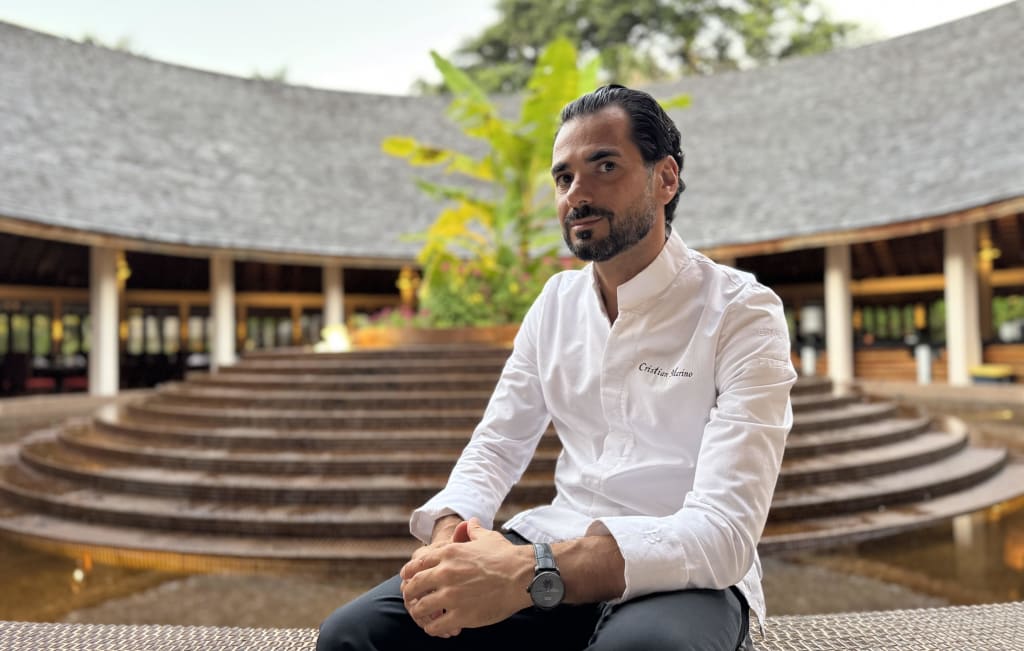
For decades, the professional kitchen has been defined by noise. Commands, shouts, orders fired across the line, arguments over timing, and tension disguised as discipline. The culinary world inherited a military structure in which volume equaled authority and pressure equaled performance. For a long time, that model seemed unquestionable.
But hospitality in 2026 looks different from the past. Quietly and without slogans, a new form of leadership is emerging — one that treats calm not as a personality trait, but as a strategic advantage. In modern kitchens, calm has become a performance tool, a cultural shift, and a source of operational clarity.
While some industries discovered emotional intelligence only recently, hospitality has been forced into it by necessity. Multicultural teams, rising guest expectations, global mobility, dietary complexity, sustainability demands, and the pressure of high-season service have reshaped the landscape more than television chefs ever did. The authoritarian chef is no longer the only archetype. In many contexts, he is becoming the outdated one.
Among the voices pushing for this evolution is Italian Executive Chef and consultant Cristian Marino, whose work across cruise ships, European hotels, and resort reopenings has placed him in environments where calm is not optional, but functional. His approach treats calm as a leadership instrument that protects the team, preserves consistency, and reinforces clarity during the most critical moments of service.
Modern hospitality is no longer impressed by volume. It is impressed by results.
From Noise to Strategy
The idea that calm has operational value may seem counterintuitive only to those who have never witnessed a kitchen under real pressure. Culinary pressure is not abstract: it is printed on tickets, measured in seconds, and judged in plates. Mistakes have visible consequences, and timing remains the ultimate currency.
Yet noise often reduces performance. It shortens attention, accelerates panic, and spreads confusion faster than heat spreads through the pass. Calm, by contrast, extends perception. It gives the brigade seconds to think, to communicate, to recover from minor setbacks before they become major failures.
In this sense, calm is strategic. It doesn’t slow down the kitchen — it stabilizes it.
High-Pressure Environments Prove It First
In high-pressure hospitality environments, calm isn’t a luxury. It’s infrastructure.
Ultra-luxury cruise ships were among the first settings to expose the limits of traditional kitchen behavior. Marino’s formative years in the industry included working aboard Silversea, where guest counts were not in the thousands but in the hundreds, and where expectations were set not by volume but by perfection. In that context, consistency was non-negotiable and error margins were microscopic.
Kitchens on boutique ships operate in controlled ecosystems, closer to fine-dining laboratories than to mass-market catering. Multiple restaurants, refined menus, and an international clientele demand not speed at all costs, but precision delivered quietly. Luxury does not reward noise. It rewards consistency.
The luxury cruise model demonstrates that high performance without shouting is not aspirational. It is operationally proven. It shows that clarity outperforms control and that composure outperforms intimidation when excellence, not volume, is the metric.
The Maldives and the New Hospitality Front
Years later, Marino’s consultancy work in the Maldives added a second layer to the concept of calm as strategy — not the discipline of confined spaces, but the leadership of multicultural teams in luxury environments.
Luxury hospitality amplifies expectations. Guests are not merely eating. They are observing, experiencing, comparing, and sharing. The kitchen no longer works in isolation from the rest of the resort. It becomes part of a broader system that includes private dining, beach dinners, pool lunches, island logistics, dietary requests, weddings, and room service running parallel to à la carte.
In these contexts, calm becomes diplomacy. Teams include cooks, stewards, commis, and sous chefs from different countries, languages, and culinary traditions, each carrying their own interpretation of hierarchy and communication. A single shouted command can fracture trust. A single calm instruction can unify movement.
Calm is therefore not only technical. It is cultural. It becomes the bridge between precision and cohesion.
From Control to Clarity
The traditional model of culinary control assumed that authority must be loud. But loud authority breeds compliance, not clarity. And compliance without clarity produces hesitation — the most dangerous delay during service.
Clarity, by contrast, accelerates execution. Calm leadership creates clarity because it reduces emotional noise, allowing instructions to be understood rather than merely obeyed. Modern hospitality increasingly values comprehension over intimidation.
This is not idealism. It is logistics.
Where supply chains are international, seasons are unpredictable, and menus evolve rapidly, culinary leadership must do more than coordinate ingredients. It must coordinate people. And people do not perform at their best under fear. They perform at their best under direction.
Calm is direction made visible.
Emotional Intelligence Meets Operational Reality
Many industries have recently adopted emotional intelligence as a leadership framework. Hospitality adopted it far earlier, though rarely by name. Chefs have always needed to manage disappointment, resolve conflict, soothe stress, and judge when to push or when to protect a young cook from burnout.
What is changing now is the recognition that these are not “soft skills,” but rather performance multipliers. Kitchens dominated by ego and fear do not retain talent. They burn through it. Burned talent leads to turnover. Turnover destabilizes consistency. In luxury hospitality, inconsistency damages brand and guest experience.
The cost of replacing a skilled commis is far greater than the cost of maintaining a calm environment. In this sense, calm produces economic benefits, not just emotional ones.
The Regola non scritta
In Italian, regola non scritta means an unwritten rule — a principle that exists even if nobody bothers to write it down. In Marino’s framework, calm embodies this eleventh rule: silent, practical, and discovered by necessity rather than tradition.
Unlike older culinary rules, calm requires no manual. It requires discipline before service, composure during service, and humility after service. It protects the brigade from short-term panic and the operation from long-term inefficiency.
It is not a rule imposed by authority. It is a rule discovered by reality.
The Future Favors the Quiet
If hospitality is transitioning toward higher expectations and lower tolerance for error, then the kitchens of the future will not reward noise. They will reward clarity, speed, and resilience — all of which emerge more easily from calm environments.
This shift is not speculative. It is visible today in luxury resorts, cruise lines, wellness retreats, and Michelin-adjacent restaurants that have abandoned intimidation culture without sacrificing performance.
The next frontier of culinary excellence will not be defined by ego, but by direction. Leadership in kitchens will resemble leadership in any high-intensity environment: aviation, medicine, technology. All rely on calm for decision-making under pressure.
By 2030, hospitality will increasingly differentiate between chefs who can manage recipes and chefs who can manage reality. Calm will not just be admired. It will be required.
In that future, the strategic advantage will belong to those who can remain composed while others collapse into noise — because noise belongs to the past, and calm belongs to what comes next.
About the Creator
Cristian Marino
Italian Executive Chef & author with 25+ years in 10+ countries. Sharing stories on kitchen leadership, pressure, and the human side of food.
Keep reading
More stories from Cristian Marino and writers in Journal and other communities.
Italian Cuisine After UNESCO: A Responsibility for the Future
When UNESCO added Italian cuisine to its list of Intangible Cultural Heritage in 2025, the announcement sparked familiar gestures of national pride. Yet beneath the celebratory tone, something quieter lingered. Heritage recognition is not merely a tribute; it is a request for continuity. It implies that a tradition is fragile enough to require protection and valuable enough to deserve it.
By Cristian Marino2 months ago in Journal
Author’s Advice
If you would’ve asked me 20 years ago did I know I’d become a writer and an author, I would’ve said “nope, ain’t happening”. As fate would have it I did become an author and I can honestly say I’m loving it so far. It really does feel good to be a writer. I’ve learned a lot on this journey and I feel like with even me being as new to this world as I am, there’s some wisdom I need to share with every other aspiring author.
By Joe Patterson3 days ago in Journal
Tiles 101: A Practical Guide to Choosing the Right Tile for Your Space
Tile has remained one of the most versatile and reliable building materials used in homes and commercial spaces. From kitchens and bathrooms to entryways and patios, tiles offer a combination of durability, style, and easy maintenance that few flooring options can match. Understanding the different types of tile and how they perform in various environments can help homeowners and property managers make more informed decisions.
By Jillian Rowe4 days ago in Journal




Comments
There are no comments for this story
Be the first to respond and start the conversation.