
Why ATA Certified Translation Services Still Matter in a World Full of Instant Everything
There's something quietly powerful about a well-translated document. It doesn't shout for attention. It doesn't try to reinvent the wheel. But it moves clearly, accurately, and unshakably.
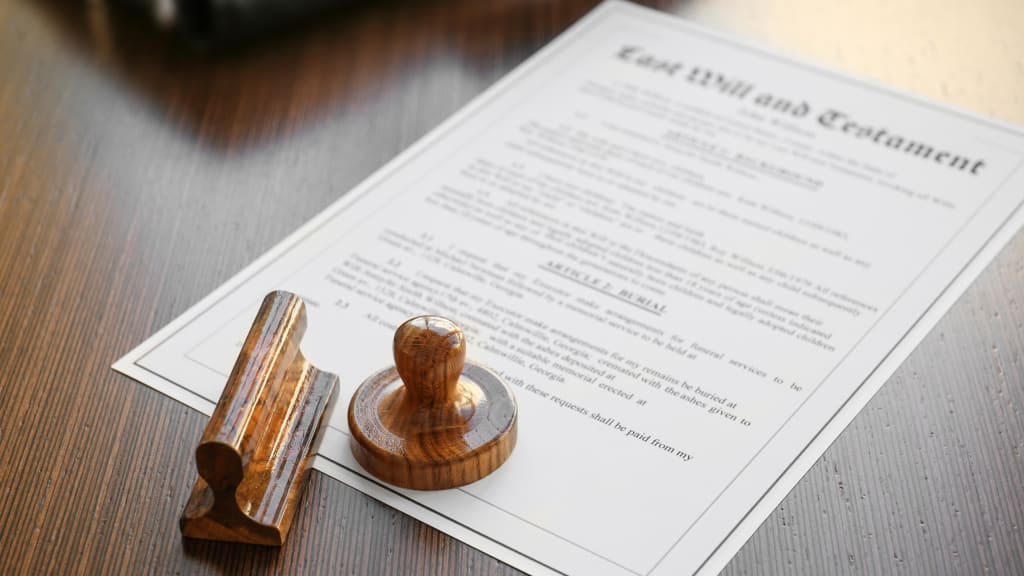
There's something quietly powerful about a well-translated document. It doesn't shout for attention. It doesn't try to reinvent the wheel. But it moves clearly, accurately, and unshakably. And in a world sprinting toward instant solutions and automated shortcuts, that kind of careful, certified precision feels rare. Almost rebellious.
Which brings us to a question worth asking: What does it really mean to work with ATA-certified translation services, and why should anyone still care?
The answer isn't as technical as you might expect. It's about trust. Integrity. The difference between something merely being understood and something being felt as intended, even across language barriers.
Let's Slow Down for a Moment
We live fast now. Apps translate menus on the fly. Machines promise to decode entire conversations in real time. It's impressive, no doubt about it. But it can also be misleading.
Because language isn't just vocabulary, it's nuance, culture, tone, and unspoken context. It's the difference between sounding professional and sounding off, between expressing grief and accidentally triggering confusion, between closing a deal and losing the room.
That's where certified translation, specifically ATA-certified translation services, come in. Not to slow things down, but to ground them.
What Makes ATA Certification So Meaningful?
First, it's not just a badge. It's a process. One that demands rigorous standards, deep linguistic knowledge, ethical accountability, and ongoing commitment.
The American Translators Association (ATA) doesn't hand out certifications like party favors. To become ATA certified, a translator must pass a demanding examination, one that tests not just their ability to translate, but to do so accurately, idiomatically, and faithfully. There's no guesswork. No second chances. You either know the language inside out, or you don't.
This matters, especially when the stakes are high.
Think of legal documents that affect real lives. Medical records with critical instructions. Business agreements involving millions. In these cases, there's no room for "close enough." ATA-certified translation services exist to eliminate that gray area. They say: this is reliable, this is correct, this is something you can stand behind.
But Isn't AI Catching Up?
Here's the thing. Technology is amazing. No argument there. Machine translation has gotten faster, flashier, and in some cases, shockingly accurate.
But the question isn't whether machines can mimic language. The question is whether they can replicate judgment.
A machine doesn't know the subtle legal connotation of a word in Portuguese. It can't grasp how sarcasm bends a sentence in French. It doesn't pause to ask, "Wait, would this phrasing feel rude to a Japanese reader?" It doesn't have instincts. People do.
ATA-certified translation services are built on that very human expertise. Machines might give you a draft. However, only certified human translators can give you a document that sounds like it was never translated in the first place.
The Quiet Reassurance of Standards
Have you ever received a translation that felt... off? Maybe the words were technically accurate, but something about the tone didn't sit right. Or maybe the structure felt like it was assembled by a robot arm. That's what happens when shortcuts get prioritized over standards.
ATA certification sets the benchmark.
It tells clients, readers, and global partners: "This wasn't done casually." There was care. There was expertise. There was accountability.
And let's be honest, accountability is rare these days. There's comfort in knowing someone signed their name to their work. That they stand by it, that's what you get with ATA-certified translators.
Not Just Accuracy—Cultural Intelligence
We don't always talk about cultural context when we talk about translation. But maybe we should.
Words don't live in isolation. They live in gestures, histories, and expectations. A good translation doesn't just convert language, it converts meaning. Cultural weight. Emotional tone.
That's one of the less visible but deeply impactful benefits of working with ATA-certified translation services. These translators aren't just bilingual; they're bi-cultural. They know what not to say. They know when formality matters. They know how to shift a phrase so it lands gently instead of awkwardly.
It's not about flashy language. It's about fit. And ATA certification helps guarantee that fit.
Industries Where Certification Isn't Optional
Some fields flirt with precision. Others demand it.
In law, mistranslation can void contracts. In healthcare, it can literally cost lives. In finance, it can trigger regulatory nightmares. When the risk is real, "almost right" isn't enough.
That's why legal firms, hospitals, academic institutions, and corporations often require ATA-certified translation services, not as a formality, but as a protective measure. It's a seal that says: "This is solid. This won't collapse under pressure."
It's not overkill. It's necessary.
You Can't Scale Without Trust
Business leaders talk about scale, growth, reach, and expansion. But global growth only works if your message makes it across the border intact.
If your product descriptions don't make sense in German, you'll lose customers. If your training manuals are confusing in Mandarin, you'll lose efficiency. If your HR policies sound tone-deaf in Spanish, you might lose credibility or worse, trust.
That's what makes ATA-certified translation services a long-term investment. They're not just about fixing errors. They're about preventing them. About making sure every word you put out into the world is one you'd be proud to stand behind.
Because once trust breaks in translation, it's hard to recover.
Certification Isn't Just a Credential—It's a Mindset
Let's flip the lens for a second.
Imagine you're the translator. You've studied for years. You've mastered not one, but two (or more) languages. And now you've chosen to take a notoriously tough exam not because someone forced you to, but because you care. You want to be counted among the best.
That kind of intention shows.
When you hire someone with an ATA certification, you're not just getting skills. You're getting someone who respects the craft. Someone who took the extra step. Someone who sees translation not just as a task, but as a responsibility.
That's the difference. It's subtle, but it matters.
And That Brings Us Back to Trust
In the end, it's simple. You want your words to be safe in someone else's hands. You want your meaning to survive the journey from one language to another. You want the people reading your documents, wherever they are in the world, to get it.
That's what ATA-certified translation services offer. Not a shortcut, but a safeguard. Not flash, but confidence.
So the next time you're navigating contracts, reports, communications, or anything else that matters, don't just look for speed. Look for certification. Look for intent. Look for the kind of translator who treats your message like it's their own.
Who You Work With Still Matters
At Connected Translation, that level of care is a baseline, not a bonus.
We work with certified professionals who meet the highest global standards, including many who hold ATA certification. But beyond credentials, we prioritize clarity, cultural intelligence, and speed because in today's world, you shouldn't have to choose between fast and flawless.
Whether you're translating for law, healthcare, business, or education, we bring the nuance, the accuracy, and the trust your message deserves.
Because what you say matters even more when you're saying it across languages.
About the Creator
Keep reading
More stories from Jack Roger and writers in Journal and other communities.
The goals I did not achieve
Every writing goal I made for the year is a wash. It has been this way for a while, but I think it's important to be open about my failures and the reality of how life can get in the way. This is especially true considering the several times I have posted on Vocal about my writing goals, how I was changing my approach, and where I was hoping to be for the upcoming year. I will probably do that again in a couple months, but for now, it is time to acknowledge where I am today.
By Kay Husnick22 days ago in Journal
Agatha Christie’s Seven Dials Mystery Netflix Review
Netflix has dipped into the vault of one of the undeniable Masters of Mystery and pulled out a fresh adaptation. This time, it’s Agatha Christie’s Seven Dials—technically book two in the Superintendent Battle series, but the first one getting the streaming treatment.
By Bella Andersonabout 11 hours ago in Journal
The Devil's Cut
“Comrade, finally you’re awake.” The voice was smooth, sensual. A flickering incandescent bar was all that lit the white, sterile room. All Vladimir remembered was everything going black. He tried to move his arms and found them strapped to the gurney.
By Matthew J. Fromm4 days ago in Fiction


Comments
There are no comments for this story
Be the first to respond and start the conversation.