
Is It Time To Re-Examine Your Tracking Strategy? RFID Could Be The Solution
Is It Time To Re-Examine Your Tracking Strategy? RFID Could Be The Solution
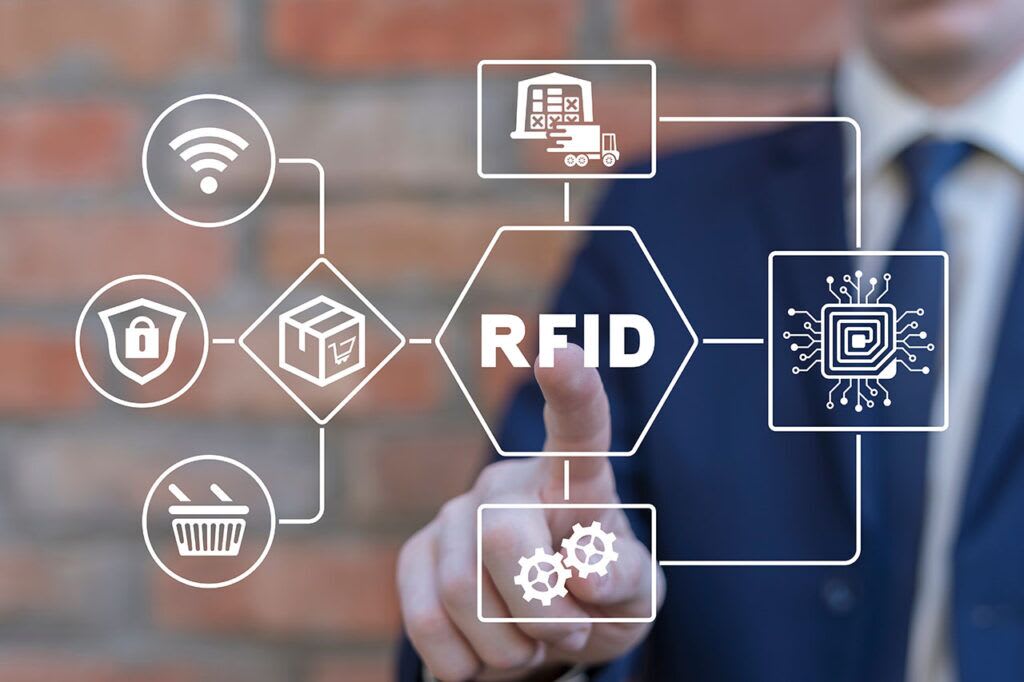
You're not alone if your company still uses manual counts, spreadsheets, or barcode scans to track assets or inventory. But perhaps you're behind the times.
In reality, conventional tracking systems are under stress, particularly in settings where speed, precision, and real-time visibility are no longer "nice to have" but imperative necessities. Whether you operate in manufacturing, healthcare, retail, or logistics, the intricacy of current operations is laying bare the fault lines in legacy systems. If any of this rings a bell, it may be time to take RFID (Radio Frequency Identification) seriously as something more than hype.
Let's dissect why this change is important—and how an RFID solutions provider can really correct it.
When Spreadsheets and Barcodes Fail
Used to be, tracking was a simple problem: count what you have, update the system, repeat. But as operations have become more interdependent—and customer expectations more acute—this former simple routine has turned into a hindrance.
Consider a warehouse, for instance. Groups roam aisles scanning barcodes to match stock to the system. Labels come off. Inventory gets lost. Scans are missed. And then, when inventory doesn't add up in the system, someone is pulled in to re-audit inventory, wasting time and resources. Do that across dozens of warehouses or thousands of SKUs, and you're working with repeating blind spots, not minor inefficiencies.
Barcodes only function when someone's standing right in front of them, the line of sight is unobstructed, and the label hasn't been damaged. That's a lot of requirements to satisfy all the time.
RFID does not need line-of-sight. It doesn't matter whether the label is dirty, hidden behind a box, or rolling down a conveyor belt. And it can read dozens—or hundreds—of products at a time.
What RFID Actually Does Differently
While barcodes require direct aiming at a scanner to be read, RFID tags send data via radio waves. So, they can be read from several feet away, without being positioned directly in front of a scanner. Every RFID tag carries a special identifier, so products are traced as individual units, not generic SKUs.
That may seem insignificant, but the ramifications are gigantic:
- Automated Tracking – Products can be tracked as they move along in your plant, no scanning.
- Error Reduction – With fewer touchpoints by humans, the likelihood of a missed scan or manual entry error decreases substantially.
- Real-Time Visibility – Inventory systems can be updated in real-time, providing an accurate picture of what's on hand, where it is, and what's in transit.
Think about it this way: barcodes capture what is supposed to happen. RFID captures what is actually happening.
Real-World Impact: Where RFID Excels
Let's make this real with some examples.
1. Manufacturing
A Tier 1 auto supplier had to monitor thousands of parts traveling through fabrication, assembly, and shipping. Their barcode solution was reliable but inefficient, requiring several checkpoints to scan.
Once they installed RFID tags on bins and parts, the plant could automatically follow each part's location. No more handwriting in logs. No more hunting for parts. Production holdups due to missing inventory decreased by 80%.
2. Healthcare
In medical facilities, lost equipment is expensive and can be hazardous. One mid-sized hospital put RFID tags on high-value medical devices such as infusion pumps and defibrillators. With real-time locationing, nurses could find devices in seconds, not hours.
This enhanced patient care and eliminated unnecessary purchases of "lost" devices, preventing hundreds of thousands of dollars in the first year.
3. Retail
A large fashion chain leaped from occasional barcode-based inventories to RFID-based tracking. Rather than closing off sections of the store to manually scan each item, workers could cruise the floor with handheld readers and scan entire racks in minutes.
Inventory accuracy improved from 70% to 98%. Out-of-stock conditions fell. Filling online orders got easier. And processing returns was reduced in half.
Is RFID Overkill for Small or Mid-Sized Operations
Not anymore.
RFID once bore a stigma of being costly or too complicated. Not anymore. Today's systems are modular, less expensive, and optimized for particular use cases. You don't have to tag everything in sight to realize value—many companies begin by tagging valuable items, equipment, or constantly moving products.
The secret is to begin with a distinct pain point. Are your staff wasting hours finding assets? Are you missing track of incoming shipments? Is physical counting holding you back?
If yes, RFID is probably worth the investment, and pays for itself sooner than most anticipate.
What to Consider Before Making the Leap
If you're thinking of an RFID solutions provider, here's what you need to consider first:
What Do You Need to Track?
Begin with high-friction spots, where tracking is delayed or in error and has tangible repercussions.
How Will the Data Be Used?
RFID is not about gathering data but making that data work. Ensure your systems (ERP, WMS, etc.) can accommodate or be updated to support real-time transactions.
Who's Leading the Charge?
RFID implementations need coordination among IT, operations, and even facilities. Appoint a liaison who has a grasp of the business requirements as well as technicalities.
What's Your Timeline and ROI Goal?
Most RFID deployments have ROIs within 12–18 months, particularly when they replace human labor or lower losses.
Conclusion: It's Not Just a Tech Upgrade—It's a Strategic Shift
If your existing tracking system is slowing your team down—or worse, costing you mistakes, delays, and wasted time—then it's time to challenge the status quo. RFID isn't an off-the-shelf solution, but in the right situation, it can change your operations from reactive to proactive, slow to efficient, fuzzy to focused.
And with the right partner, you don't have to make that transition alone.
Lowry Solutions has helped organizations across industries design and implement RFID solutions provider strategies that actually work—grounded in real needs, real workflows, and real results. If you’re ready to stop chasing inventory and start gaining control, we will help you get there.
About the Creator
Keep reading
More stories from Jack Roger and writers in Journal and other communities.
What Makes a French Translation “Official” for Legal or Immigration Use?
You’re at a consulate window or speaking with your immigration lawyer when they pause, look over your file, and say, “We’ll need this in French—an official version.” You nod, but now your focus shifts. Not to the form or deadline, but to one question: What exactly is an official French translation—and where do I get it done properly?
By Jack Roger8 months ago in Journal
The goals I did not achieve
Every writing goal I made for the year is a wash. It has been this way for a while, but I think it's important to be open about my failures and the reality of how life can get in the way. This is especially true considering the several times I have posted on Vocal about my writing goals, how I was changing my approach, and where I was hoping to be for the upcoming year. I will probably do that again in a couple months, but for now, it is time to acknowledge where I am today.
By Kay Husnick22 days ago in Journal
The Early Church Fathers and Why Their Writings Matter Today
The Early Church Fathers are some of the most important figures in the history of Christianity. Their writings, letters, sermons, and theological reflections helped define the beliefs, practices, and structure of the Church in the centuries following Christ. Understanding who the Church Fathers were and why their works matter today is essential for anyone seeking to understand Catholic teaching, tradition, and the roots of Christian faith.
By Sound and Spirit4 days ago in Journal


Comments
There are no comments for this story
Be the first to respond and start the conversation.