
Why AI Needs Transparency, Fairness and Accountability to Earn Trust?
Ensuring Ethical AI: The Role of Transparency, Fairness, and Accountability in Building Trust

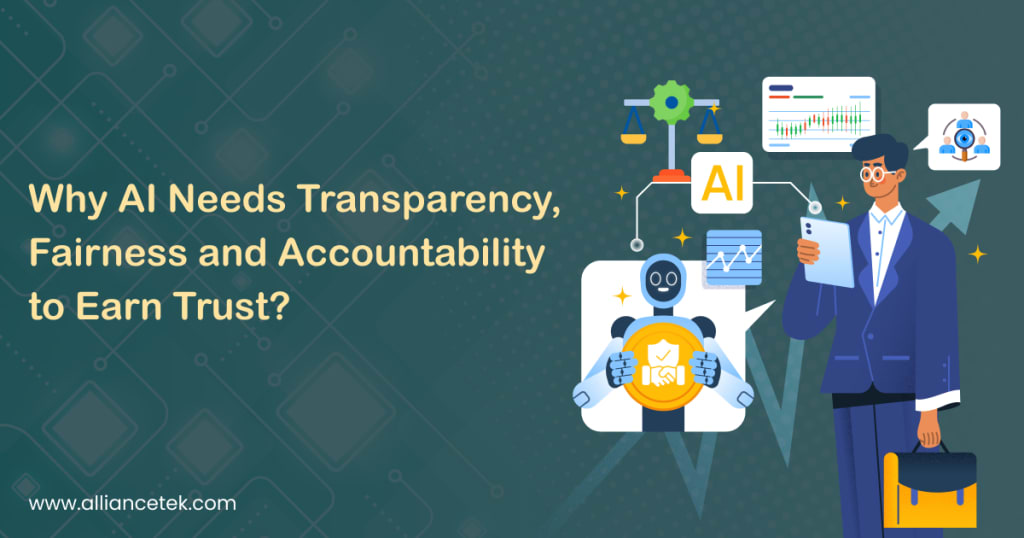
Artificial Intelligence (AI) is revolutionizing industries, from healthcare to finance, transforming how we work, communicate, and make decisions. However, with great power comes great responsibility. As AI systems become more integrated into our daily lives, trust in these technologies is paramount.
Trust in AI is built on three foundational pillars: transparency, fairness, and accountability. Without these, AI risks being perceived as a "black box" with unpredictable or biased outcomes, potentially causing harm rather than delivering benefits.
This blog explores the importance of these principles in AI development and deployment, highlighting challenges and strategies for ensuring AI is trustworthy and ethical. We will also examine real-world examples, regulatory developments, and best practices for organizations looking to implement AI responsibly.
The Importance of Transparency in AI
Transparency in AI refers to the clarity and openness with which AI systems operate and decision-making processes understandable to users, stakeholders, and regulators. Transparency is crucial for fostering trust, enabling oversight, and ensuring compliance with ethical standards.
Why Transparency Matters
- Understanding AI Decisions
If AI systems make critical decisions such as approving loans, diagnosing medical conditions, or recommending job candidates users must understand how these decisions are reached.
- Ensuring Compliance
Regulatory bodies require insight into AI systems to ensure they adhere to laws and ethical guidelines, such as GDPR or AI-specific regulations.
- Identifying and Correcting Bias
Transparent AI allows developers to detect and mitigate biases, ensuring fair outcomes for all users.
- Consumer Trust and Adoption
Users are more likely to trust and adopt AI-driven solutions when they understand how decisions are made.
Challenges to Transparency
- Complexity of AI Models
Many AI models, especially deep learning networks, operate in ways that are difficult to interpret.
- Trade-offs with Proprietary Information
Companies may be reluctant to disclose AI algorithms due to competitive concerns.
- Human Interpretability:
Even when AI processes are documented, non-experts may struggle to understand technical explanations.
Strategies for Improving Transparency
- Explainable AI (XAI)
Developing AI models that provide clear, interpretable explanations for their decisions.
- Open-Source AI
Encouraging the use of open-source technology AI models and algorithms to promote collaboration and scrutiny.
- Clear Documentation
Providing detailed documentation on how AI models are trained, what data they use, and their potential limitations.
- User-Friendly Interfaces
Designing AI systems that communicate decisions in an accessible and understandable manner for end users.
Fairness in AI: Ensuring Equitable Outcomes
Fairness in AI refers to the unbiased and equitable treatment of individuals, ensuring that AI-driven decisions do not disproportionately favor or disadvantage certain groups. AI systems trained on biased data can perpetuate discrimination, reinforcing societal inequalities.
Why Fairness is Crucial
- Preventing Discrimination
AI models used in hiring, lending, and law enforcement must not reinforce existing biases against marginalized communities.
- Enhancing Social Trust
When users perceive AI as fair, they are more likely to accept and adopt AI-driven solutions.
- Regulatory Compliance
Many jurisdictions have laws against algorithmic discrimination, making fairness not just an ethical requirement but a legal one.
- Business Reputation
Companies that fail to ensure fairness in AI risk damaging their reputation and losing customer trust.
Challenges in Achieving Fairness
- Bias in Training Data
AI models learn from historical data, which may contain biases reflecting past inequalities.
- Subjectivity in Defining Fairness
Different stakeholders may have varying definitions of what constitutes a "fair" outcome.
- Trade-offs Between Fairness and Accuracy
Modifying models to reduce bias may sometimes lead to a reduction in predictive accuracy.
- Lack of Diverse Representation
AI models that are not trained on diverse datasets risk making inaccurate or unfair predictions for underrepresented groups.
Strategies for Fair AI
- Diverse and Representative Training Data
Ensuring datasets are inclusive and reflect diverse populations.
- Bias Audits and Testing
Regularly testing AI systems for bias and implementing mitigation strategies.
- Fairness Metrics
Utilizing statistical fairness metrics, such as disparate impact analysis, to measure and improve AI fairness.
- Human Oversight
Including human judgment in decision-making processes to prevent AI from making unjust decisions.
Accountability in AI
Accountability in AI ensures that AI developers, organizations, and users can be held responsible for the outcomes produced by AI systems. Without accountability, errors, biases, or unethical AI applications may go unchecked.
Why Accountability Matters
- Ensuring Ethical Use
AI should be developed and used responsibly, with clear guidelines on what constitutes acceptable behavior. Ethical AI requires adherence to standards that prevent malicious use, discrimination, or social harm. Organizations must commit to ethical AI policies to maintain public trust.
- Legal and Regulatory Compliance
Organizations must adhere to laws governing AI, such as the EU AI Act or industry-specific guidelines. AI ML Development Company leaders must ensure that their solutions comply with these evolving regulations.
- Protecting Consumers and Society
When AI decisions have significant consequences such as in healthcare, finance, or criminal justice there must be mechanisms to address errors or harmful impacts. AI-driven systems in these areas must have fail-safes to prevent erroneous decisions from negatively affecting individuals' lives.
- Corporate Responsibility
Companies that develop AI have a duty to ensure their technology does not cause harm and remains aligned with ethical standards. AI ethics boards, responsible AI frameworks, and adherence to industry best practices help companies navigate accountability challenges.
Challenges in Establishing Accountability
- Lack of Clear Regulations
AI governance is still evolving, with different countries adopting different frameworks. AI/ML development services providers must navigate these regulatory landscapes to ensure compliance.
- Complexity of AI Decision-Making
AI systems may involve multiple developers, making it difficult to assign responsibility. Companies must clearly define responsibility across AI supply chains.
- AI as a "Black Box"
If AI decisions are not explainable, determining accountability becomes challenging. Ensuring that AI systems provide interpretable outcomes is crucial to addressing this issue.
Strategies for Strengthening AI Accountability
- AI Ethics Committees
Establishing oversight bodies within organizations to ensure ethical AI development. These committees should include diverse experts from technology, ethics, and regulatory backgrounds. AI/ML Consulting Services can assist businesses in setting up effective AI ethics frameworks.
- Human-in-the-Loop Systems
Ensuring that AI decisions involving high-stakes outcomes are subject to human review. This prevents automation bias and enhances decision reliability.
- Clear Legal Frameworks
Governments and regulatory bodies should develop AI-specific laws that outline accountability standards. Compliance measures should include impact assessments and regulatory audits. Artificial Intelligence and Machine Learning Solutions must align with these legal and ethical considerations.
- Incident Reporting and Redress Mechanisms
Organizations should provide clear pathways for users to report AI-related issues and seek remedies. Transparency in error reporting ensures continuous AI system improvement.
Ethical Considerations in AI Development
- Privacy Protection
AI systems should safeguard user data and comply with privacy regulations.
- Sustainability in AI
Ethical AI must consider environmental impact and energy consumption.
- Cultural Sensitivity
AI models should be designed to respect cultural differences and avoid reinforcing stereotypes.
- AI for Social Good
AI should be leveraged to solve global challenges, such as climate change and public health.
The Future of Trustworthy AI
As AI continues to evolve, building trust through transparency, fairness, and accountability will be more important than ever. Companies developing AI must take proactive steps to ensure ethical AI deployment, while regulators and policymakers need to establish clear guidelines to protect users.
Custom AI/ML Solutions offer tailored approaches to addressing ethical AI concerns, ensuring that AI models are both effective and responsible.
Real-world examples, such as biased hiring algorithms and unjust facial recognition software, highlight the urgent need for improved AI trust. The rise of AI-specific regulations and ethical AI frameworks is a positive step toward ensuring responsible AI use.
By prioritizing these three pillars of transparency, fairness, and accountability organizations can foster trust in AI, ensuring that this powerful technology serves humanity in a responsible and equitable manner.
The future of AI depends on a collective effort from developers, policymakers, and society to ensure AI is built and deployed with ethical considerations at the forefront.
About the Creator
Benedict Tadman
A results-driven Marketing Manager with 8+ years of experience in developing and executing innovative marketing strategies that drive brand growth and customer engagement.
Keep reading
More stories from Benedict Tadman and writers in Journal and other communities.
How Virtual Reality and AI Are Revolutionizing the Entertainment Industry?
Technology innovation is now increasing, and two groundbreaking technologies, Virtual Reality Development Services and AI-Powered Entertainment Solutions, are enabling the entertainment industry. Collectively, they are producing innovative approaches to enjoying games, motion pictures, melodies, athletics, and even fellowship.
By Benedict Tadman12 months ago in Journal
The 5 AM Myth: Why I Trashed My Alarm Clock to Finally Find My Edge
The blue light of the smartphone screen felt like a laser beam hitting my retinas at 4:58 AM. Outside my window, the world was a bruised purple—silent, freezing, and utterly indifferent to my "ambition."
By George Evan5 days ago in Journal




Comments (1)
That’s true! Make AI more fair’! Good work