
When the Guns Go Silent: Hamas Releases First Israeli Hostages Under Trump-Brokered Ceasefire as World Leaders Head to Egypt for Gaza Peace Talks
Can peace born out of pressure truly last?

The World Holds Its Breath
There are moments in history when time seems to pause — when the world collectively holds its breath.
October 13, 2025, is one of those moments.
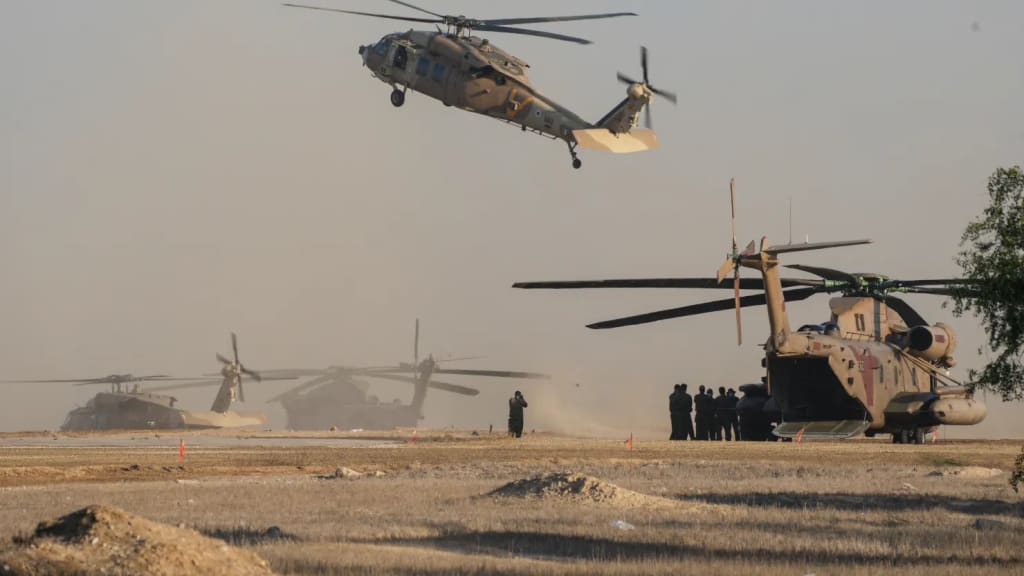
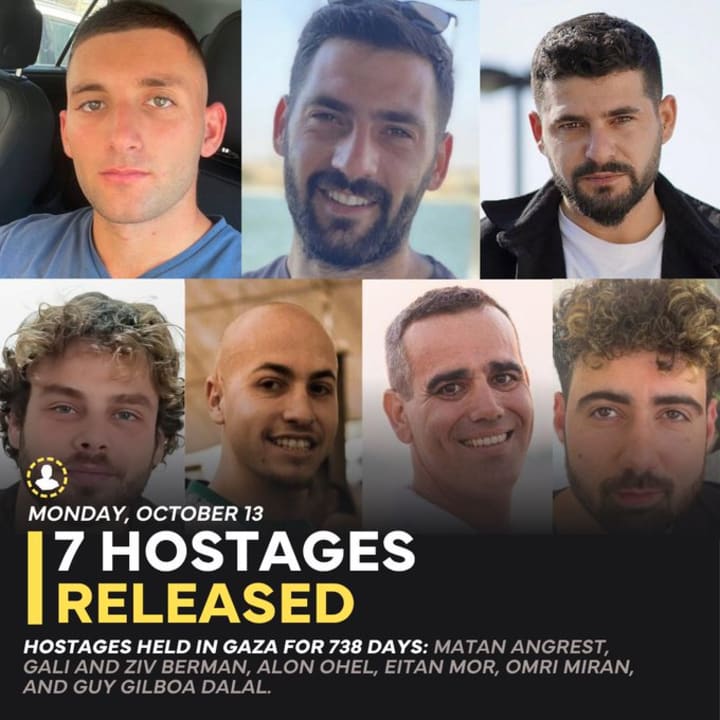
After two years of relentless war, Hamas released the first seven surviving Israeli hostages in a fragile but historic ceasefire — a truce brokered by none other than U.S. President Donald Trump. The skies over Gaza, long filled with smoke and sorrow, fell eerily silent as helicopters waited at the Reim army base in southern Israel. Their mission was not military this time — but humanitarian: to bring home those who had endured captivity and chaos.
For the first time in two years, the winds over the Middle East whispered a different kind of story — not one of rage or retaliation, but of release, reconciliation, and reluctant hope.
The Ceasefire Heard Around the World
The ceasefire deal, sealed under Washington’s watchful eye, began with a simple but powerful gesture: the release of seven Israeli hostages to the International Committee of the Red Cross in Gaza.
According to the Israel Defense Forces (IDF), the exchange marked “the first step toward ending one of the most devastating chapters in Israeli and Palestinian history.”
The deal’s next phase is even more staggering — 13 additional surviving hostages are set to follow, alongside the transfer of 28 bodies (26 confirmed dead, two unaccounted for). In exchange, Israel has agreed to release nearly 2,000 Palestinian detainees.
It’s a trade that’s as symbolic as it is strategic: a test of faith for both sides, and perhaps the first tangible sign that peace — long dismissed as fantasy — might once again be within reach.
Trump’s Lightning Diplomacy: The “Dealmaker” Returns to the Desert
As news of the exchange broke, Donald Trump’s presidential aircraft touched down in the Middle East for a “lightning visit” to Israel and Egypt. It’s the kind of grand diplomatic theater the former businessman thrives on — headlines, handshakes, and history.
“This war is over,” Trump declared at Andrews Air Force Base before departing. “It’s time for the Middle East to build, not burn.”
For critics, it’s bravado. For his supporters, it’s vintage Trump: bold, unconventional, and unfiltered.
But for millions across Gaza and Tel Aviv, it’s a sliver of relief wrapped in skepticism.
Trump’s itinerary reads like a geopolitical chessboard. His first stop: Jerusalem, where he is expected to meet Israeli officials. Then on to Sharm el-Sheikh, Egypt, where over 20 world leaders — including Iraq’s Prime Minister Mohammed Shia Al-Sudani — will gather to discuss what comes next.
The question haunting everyone:
Can peace born out of pressure truly last?
Al-Sudani’s Voice of Reason: “The Root of the Problem Is the Palestinian Question”
In an exclusive interview with CNBC, Iraq’s Prime Minister Mohammed Shia Al-Sudani didn’t mince words.
“The Palestinian issue is the root of the problem in the Middle East,” he said. “It is time to find solutions through dialogue and respect for international law.”
His statement echoed across regional capitals like a moral compass in a storm.
To Al-Sudani, the ceasefire isn’t just a truce — it’s a test of sincerity for all sides involved.
He called Trump’s initiative “important” and “a step in the right direction,” expressing hope that it would lead to “a sustainable and radical solution.”
Al-Sudani, whose own country has been scarred by decades of conflict, spoke with the conviction of someone who’s seen the cost of endless war.
“Iraq knows what war does to the soul of a nation,” he said. “We are sensitive to all these problems that harm the humanitarian community.”
Two Years of Devastation: The Numbers Tell a Story Too Painful to Ignore
The conflict that began on October 7, 2023, with Hamas’ unprecedented attack on Israel — killing over 1,200 people and taking hundreds hostage — spiraled into a nightmare of biblical proportions.
Israel’s response was swift and overwhelming. Airstrikes leveled entire neighborhoods in Gaza.
By the time the ceasefire was announced, Gaza’s Health Ministry reported over 67,000 Palestinians dead, thousands of them women and children.
Numbers like these are hard to comprehend — they numb the mind.
But behind each statistic lies a shattered home, a missing child, a prayer unanswered.
The truce may have halted the bombs, but the silence they left behind feels just as heavy.
Egypt’s Sharm el-Sheikh Summit: Peace by the Red Sea
In the shimmering resort city of Sharm el-Sheikh, where the Red Sea meets desert sands, the stage is set for what may become one of the most pivotal summits in modern Middle Eastern diplomacy.
More than 20 leaders — from Europe, Africa, and the Arab world — are converging under a single goal:
to turn a fragile ceasefire into a durable peace plan.
Among them, Trump’s presence looms large. Despite controversy, the former president has positioned himself as the self-styled architect of calm in a region long defined by chaos.
“Call him brash, call him bold, but Trump understands one thing — headlines drive history,” remarked a senior diplomat anonymously. “And this headline might just save lives.”
Hamas’ Calculated Gesture: Symbolism or Strategy?
Analysts are divided on Hamas’ motives.
Was the hostage release a sign of weakness, or a strategic pause?
Some experts argue that Hamas, battered by Israel’s sustained offensive and global isolation, is attempting to regain legitimacy. Others believe it’s a tactical retreat, allowing time to regroup.
Whatever the case, the gesture is not insignificant.
For the first time in years, Hamas and Israel exchanged not missiles — but names, lists, and lives.
It’s a small bridge built over an ocean of mistrust.
Postwar Plans: The Tony Blair Factor
A surprising figure is rumored to re-enter the Middle East peace scene — former British Prime Minister Tony Blair.
Once criticized for his role in the Iraq War, Blair now finds himself being mentioned as a possible coordinator for Gaza’s postwar transition.
Prime Minister Al-Sudani called Blair “a great friend of the Iraqis” and expressed openness to his involvement.
“There was a need for an international administrator to manage the transitional process,” Al-Sudani said. “Gaza must rebuild from the ground up — infrastructure, healthcare, governance, and hope.”
If confirmed, Blair’s return could mark one of the most dramatic political comebacks in recent diplomatic history.
“Bound by Law and Principle”: Iraq’s Stand on Israel
When pressed about Iraq’s potential normalization of relations with Israel, Al-Sudani was firm.
“Our government belongs to a parliamentary system and is bound by law,” he said. “Israel has unfortunately committed many crimes against the Palestinian people. The Palestinians deserve a better reality and a better future.”
His words strike at the heart of Arab politics — the enduring tension between recognition and resistance.
From the Streets of Tel Aviv to the Sands of Gaza: Mixed Emotions
In Tel Aviv’s Hostage Square, candles flickered as families clutched photos of loved ones still held captive.
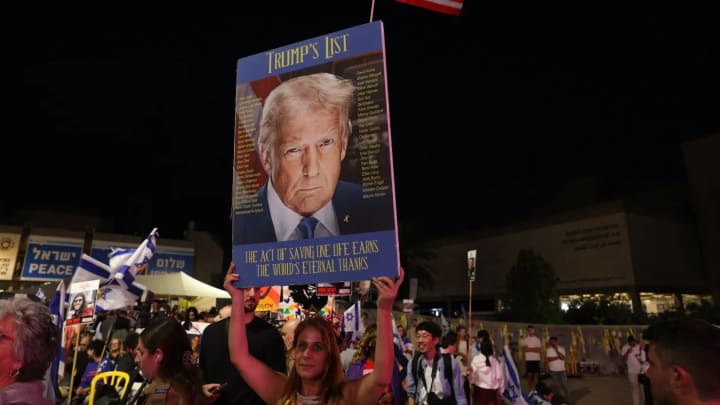
A woman waved an American flag above a poster of Donald Trump, whispering, “He brought them home.”
For many Israelis, this is not celebration — it’s cautious gratitude.
For Palestinians, the release of prisoners brings a bittersweet victory — relief laced with remembrance of those lost.
The streets of Gaza tell a different story: children playing in rubble, aid trucks trickling in, and people daring — for the first time in years — to dream.
Syria, Shadows, and the Specter of ISIS
As optimism spreads, regional fault lines remain.
Al-Sudani warned that peace cannot end in Gaza — it must extend to Syria, a country still fractured and vulnerable.
He condemned Israeli airstrikes on Syrian territory, calling them “incorrect and unacceptable,” and warned that remnants of the Islamic State still pose a “real threat to the region.”
“Any weakening of the Damascus administration will empower extremists,” he said. “Peace must be comprehensive, or it will not be peace at all.”
His warning is stark but true: in the Middle East, wars have a way of whispering back even after they’re declared over.
Between War and Hope: The Human Cost
For the mothers of Gaza, peace means bread on the table and silence in the skies.
For the hostages’ families in Israel, it means a voice on the phone saying, “I’m safe.”
The images are haunting and hopeful all at once — Red Cross buses crossing checkpoints, soldiers standing down, and exhausted faces blinking in disbelief.
The war has taken children who won’t grow up, cities that won’t rise again, and trust that may never fully return.
But amid the ruins, something fragile and eternal still stirs — the human capacity to hope again.
A Fragile Dawn
No one knows whether this Trump-brokered truce will last.
Ceasefires in the Middle East are like glass — beautiful in the light, but brittle under pressure.
Yet for now, the sound of helicopters carrying freed hostages drowns out the sound of drones.
For now, the only smoke over Gaza is from kitchen fires and not bombs.
And for now, that is enough.
Because peace, like the first breath after a storm, always begins small.
About the Creator
Omasanjuwa Ogharandukun
I'm a passionate writer & blogger crafting inspiring stories from everyday life. Through vivid words and thoughtful insights, I spark conversations and ignite change—one post at a time.
Keep reading
More stories from Omasanjuwa Ogharandukun and writers in Journal and other communities.
Lions vs Chiefs Fight 2025: When Tempers Flared and Pride Took the Field
“In football, sometimes the line between passion and chaos is just one open hand away.” Under the bright lights of Arrowhead Stadium, where legends are made and tempers tested, a storm brewed beneath the roar of 70,000 fans.
By Omasanjuwa Ogharandukun3 months ago in Journal
The goals I did not achieve
Every writing goal I made for the year is a wash. It has been this way for a while, but I think it's important to be open about my failures and the reality of how life can get in the way. This is especially true considering the several times I have posted on Vocal about my writing goals, how I was changing my approach, and where I was hoping to be for the upcoming year. I will probably do that again in a couple months, but for now, it is time to acknowledge where I am today.
By Kay Husnick24 days ago in Journal
6 Reasons Fiber Channel Remains the Gold Standard for SANs
Data grows every single day. Companies store files, apps, videos, and backups on a regular basis. Due to this growth, businesses require storage that operates efficiently and remains secure. A Storage Area Network helps manage this load. Many new technologies exist today, yet Fiber Channel remains the leader.
By Gabriella Browne6 days ago in Journal


Comments
There are no comments for this story
Be the first to respond and start the conversation.