
6 Reasons Fiber Channel Remains the Gold Standard for SANs
Explore six reasons Fibre Channel continues to be the most trusted standard for secure, high-performance SANs.

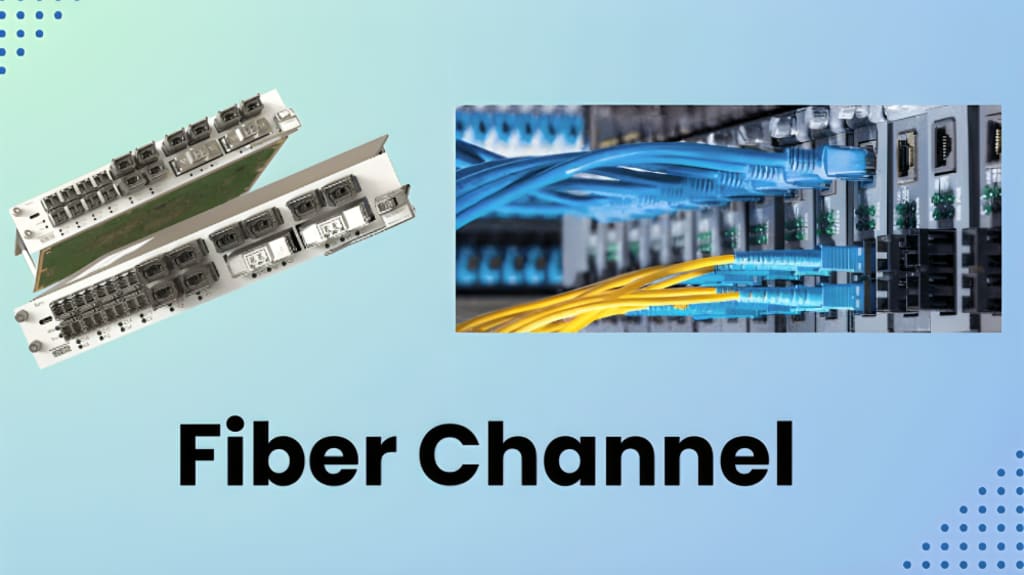
Data grows every single day. Companies store files, apps, videos, and backups on a regular basis. Due to this growth, businesses require storage that operates efficiently and remains secure. A Storage Area Network helps manage this load. Many new technologies exist today, yet Fiber Channel remains the leader.
IDC reports that the worldwide external enterprise storage systems market grew to about $8.0 billion in vendor revenue in the third quarter of 2025.
Many large data centers still choose Fiber Channel SANs. This choice shows long-term trust. Fiber Channel delivers speed, safety, and stability together. It supports critical systems without slowing work. It helps teams avoid stress and downtime.
This article explains six strong reasons Fiber Channel remains the gold standard for SANs.
1. Speed That Keeps Everything Moving
Fiber Channel delivers very fast data transfer for storage networks. Speed helps systems respond quickly. It helps users finish work on time. Unlike shared networks, Fiber Channel utilizes a dedicated path, ensuring data is transmitted without delay. Fast speed matters for daily tasks. Databases load records faster. Virtual machines start without delay. Backup jobs finish on time.
- It supports very high speeds, such as 32 Gbps and beyond.
- It keeps the same speed during heavy workloads.
- It avoids network congestion from other traffic.
This steady speed helps businesses trust their systems. When speed stays consistent, teams notice better performance every day. This is why Fiber Channel remains a top choice for SANs.
2. Reliability That Businesses Can Depend On
Downtime creates serious problems. Even a short outage can stop work. Fiber Channel focuses on reliability from the beginning. It follows simple rules. It avoids complex paths that can fail.
- It uses strong error checking during data transfer.
- It supports lossless communication.
- It keeps connections stable for long periods.
Reliable systems reduce stress. IT teams do not chase random issues. Systems stay online during busy hours. Applications run without interruption. Fiber Channel handles long-running workloads with ease.
This reliability builds strong trust over time. Many enterprises rely on this trust for critical operations. That long record of dependability keeps Fiber Channel ahead.
3. Built-In Security That Protects Data
Data security matters more each year. Fiber Channel protects data through isolation. It runs on a closed network. This setup limits exposure to outside threats.
- It separates storage traffic from normal network traffic.
- It lowers the risk of unauthorized access.
- It supports strict access controls.
Why Isolation Matters for SAN Security
Isolation creates a strong barrier. It blocks unwanted entry points. It reduces attack surfaces. Since Fiber Channel does not mix with common networks, attackers find it harder to reach. This design adds a natural layer of protection.
Industries that handle sensitive data depend on this strength. Finance, healthcare, and government systems rely on it. This level of security keeps Fiber Channel trusted.
4. Predictable Performance That Helps Planning
Some networks behave differently under load. Fiber Channel stays steady. It delivers the same performance each day. This predictability helps teams plan better.
- It keeps latency low at all times.
- It avoids dropped data packets.
- It supports critical workloads without change.
How Predictable Performance Supports IT Teams
Predictable systems are easier to manage. Teams can plan maintenance windows. They can schedule backups with confidence. They know what to expect. Fiber Channel delivers clear and stable results.
This clarity saves time and effort. When systems behave consistently each day, users encounter fewer issues. This stability makes Fiber Channel a reliable choice for SANs.
5. Long-Term Value That Saves Money
Fiber Channel offers strong long-term value. It has been around for many years. Vendors continue to support it. Hardware lasts longer than many alternatives.
- It supports backward compatibility.
- It protects existing infrastructure.
- It reduces the need for frequent upgrades.
This value matters for budgeting. Businesses avoid sudden replacement costs. Teams do not need constant retraining. New Fiber Channel versions work with older systems. This smooth growth path helps companies scale safely. Because of this balance, Fiber Channel remains a smart long-term investment.
6. Proven Success in Enterprise Environments
Trends come and go. Fiber Channel remains steady. Large enterprises still rely on it for core storage needs.
- It supports large-scale SAN environments.
- It handles heavy data workloads.
- It meets strict service-level needs.
Many global data centers continue to deploy Fiber Channel. Cloud providers use it for reliable backend storage. This widespread use proves its value. Fiber Channel shows consistent results year after year. That proven success keeps it the gold standard for SANs.
Conclusion
Technology keeps evolving. New storage options appear often. Yet, Fiber Channel remains a strong and trusted technology. It delivers speed, reliability, security, and stability together. Each reason connects to real business needs. Companies want systems that operate smoothly every day without issues. They want data to stay safe and available.
Fiber Channel meets these needs with confidence. It avoids delays. It avoids risk. It supports growth. This is why it remains the gold standard for SANs. As data demands rise, the need for proven storage grows too. Fiber Channel continues to stand firm.
About the Creator
Gabriella Browne
Gabriella Browne is a sharp, detail-oriented news writer with a passion for investigative journalism. She delivers timely, well-researched stories, covering politics, business, and global affairs with accuracy.
Keep reading
More stories from Gabriella Browne and writers in Journal and other communities.
7 Business Knowledge Loops That Self-Improve on AI PCs
The business world is changing faster than ever before. Companies that stay ahead are those that use smart technology to learn and grow continuously. AI PCs have opened up a new frontier for businesses to create knowledge loops that get better with every cycle. These systems learn from your data and improve their performance automatically. Think of it like a business brain that never stops getting sharper.
By Gabriella Browne7 days ago in Journal
The goals I did not achieve
Every writing goal I made for the year is a wash. It has been this way for a while, but I think it's important to be open about my failures and the reality of how life can get in the way. This is especially true considering the several times I have posted on Vocal about my writing goals, how I was changing my approach, and where I was hoping to be for the upcoming year. I will probably do that again in a couple months, but for now, it is time to acknowledge where I am today.
By Kay Husnick23 days ago in Journal
How AI Is Reshaping the Future of Software Development
Artificial intelligence is no longer an experiment running in parallel to engineering. It has moved directly into the production pipeline. For modern software development companies, AI is changing how code is written, tested, secured, and evolved. This shift is not cosmetic. It is structural. Businesses that treat AI as a feature will fall behind those that redesign their development model around it.
By Alice Carry5 days ago in Journal
The Devil's Cut
“Comrade, finally you’re awake.” The voice was smooth, sensual. A flickering incandescent bar was all that lit the white, sterile room. All Vladimir remembered was everything going black. He tried to move his arms and found them strapped to the gurney.
By Matthew J. Fromm5 days ago in Fiction




Comments
There are no comments for this story
Be the first to respond and start the conversation.