
When the Government Closes the Doors: The 2025 U.S. Federal Shutdown and Its Far‑Reaching Ripples
From delayed flights to strained state budgets—why this shutdown matters beyond Washington

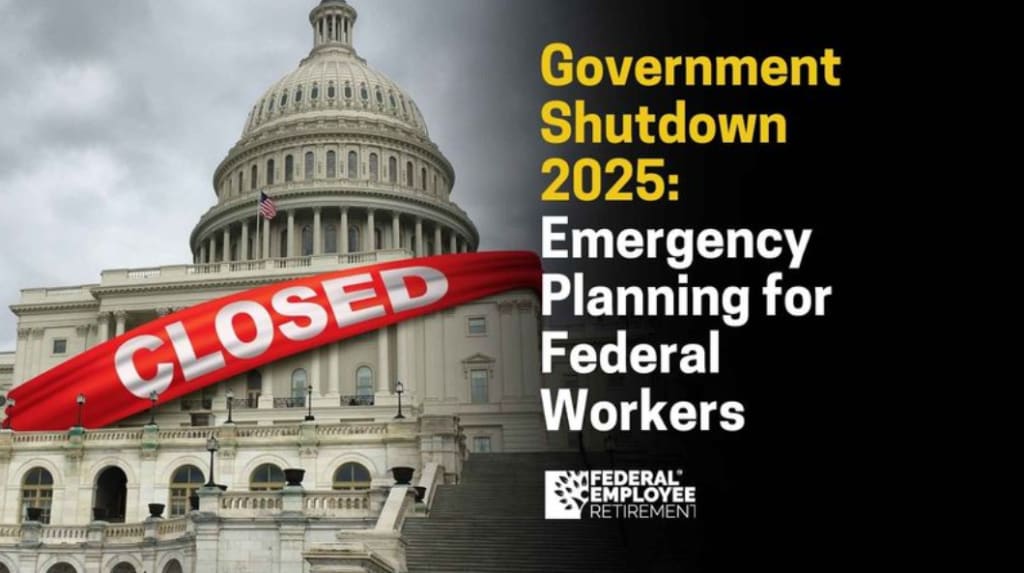
The federal government of the United States entered a shutdown on October 1, 2025—the beginning of the fiscal year—after Congress failed to pass a continuing resolution or appropriations bills to fund all agencies. This moment is notable not just for its duration, but for the breadth of its consequences across the economy, society, and government.
Here’s a breakdown of what’s going on—and why it matters.
What’s happening
Because funding lapsed, many federal agencies were forced to scale back operations, furlough thousands of workers, delay contracts, and freeze grants. While some “essential” services continue, the uncertainty and operational slowdown are significant. For example, flights are being canceled as the Federal Aviation Administration (FAA) imposes cuts. Over 2,500 flights were already cancelled, and airlines warned that reductions could rise to 20% if the shutdown persists.
Economic and budget impacts
The economic damage is being measured in billions. The Congressional Budget Office (CBO) estimates that if the shutdown ends this week, the U.S. could lose $7 billion in output; if it drags on six to eight weeks, the loss could reach $11–14 billion, shaving 1–2 percentage points off Q4 GDP.
Small businesses and state and local governments are especially under pressure. Delays in federal reimbursements, grant approvals, and contract payments are making it harder for communities to plan and respond.
Human and societal effects
Beyond the macro numbers are real human impacts. Federal employees are working without pay or furloughed entirely—affecting household incomes and spending in local economies. Meanwhile, programs that serve vulnerable populations, such as early-education initiatives under the Head Start Program, face funding disruptions. Thousands of preschoolers may lose access if the shutdown continues.
State and local governments, which often rely on consistent federal funding and coordination, warn that they cannot sustainably absorb the burden indefinitely.
Broader ripple effects
- Travel and commerce: With flight reductions and agency slowdowns, industries like tourism face cancellations and lost business.
- Infrastructure and permits: Project delays, federal technical reviews, and permitting freeze-ups mean long-term infrastructure investment can stall.
- Consumer confidence: As people worry about paychecks, benefits, and government services, consumer spending may pull back, feeding into slower growth.
- State budget stress: States that expected federal reimbursements must either cut services or use reserve funds—both undesirable.
Why this shutdown may be different
While the U.S. has experienced shutdowns before, this one is notable for its length and the depth of its entanglements. It has already become the longest in U.S. history. Also, the interdependence of federal, state, and local operations is more complex today—so the chain reaction of disruptions is broader and faster than in earlier eras.
What to watch and what to do
- Duration matters: The longer the shutdown lasts, the more permanent some losses become, like lost contracts, business closures, and state budget cuts.
- Timely reopening helps: Much of the damage is reversible, but not all is. The quicker funding is restored, the better the chances of bouncing back.
- For individuals: Federal workers, contractors, and small businesses should assess cash-flow exposures. Families depending on federally funded programs should check for updates.
- For states and localities: Maintaining contingency reserves, documenting disruptions, engaging with federal partners, and planning for service continuity become critical.
In summary
The 2025 U.S. federal government shutdown is not just a political standoff—it is a real disruption with cascading effects across the economy, society, and governance. Unless resolved soon, the ripple effects will continue to grow: from delayed flights and stalled infrastructure to stressed state budgets and vulnerable children missing services. The cost is more than a headline—it’s a lived reality for millions.
#GovernmentShutdown2025 #USPolitics #EconomicImpact #StateAndLocal #FederalWorkers #BudgetCrisis #ShockToSystem
About the Creator
Shakil Sorkar
Welcome to my Vocal Media journal💖
If my content inspires, educates, or helps you in any way —
💖 Please consider leaving a tip to support my writing.
Every tip motivates me to keep researching, writing, sharing, valuable insights with you.
Keep reading
More stories from Shakil Sorkar and writers in Journal and other communities.
A Fragile Handshake: Lavrov’s Offer to Meet U.S. Secretary Rubio Signals a Turning Point in Russia–America Relations
As the war in Ukraine grinds into another winter, the world awoke today to a surprising signal from Moscow: Russian Foreign Minister Sergei Lavrov has said he is “ready to meet” with U.S. Secretary of State Marco Rubio after reports of a breakdown in communication between the two governments.
By Shakil Sorkar2 months ago in Journal
The goals I did not achieve
Every writing goal I made for the year is a wash. It has been this way for a while, but I think it's important to be open about my failures and the reality of how life can get in the way. This is especially true considering the several times I have posted on Vocal about my writing goals, how I was changing my approach, and where I was hoping to be for the upcoming year. I will probably do that again in a couple months, but for now, it is time to acknowledge where I am today.
By Kay Husnick24 days ago in Journal
A Prayer for Guidance, Peace, and Strength
Heavenly Father, we come before You with humble and open hearts, fully aware of our need for Your mercy and grace. In a world filled with uncertainty, distraction, and unrest, we seek refuge in You, our Creator and Sustainer. You are our shelter in times of trouble, our light in moments of darkness, and the steady foundation upon which we build our lives. We ask You to quiet our anxious thoughts, to bring clarity to our minds, and to fill our hearts with the peace that only You can give. Help us to trust in Your providence, even when the path ahead is unclear.
By Sound and Spirit6 days ago in Journal



Comments
There are no comments for this story
Be the first to respond and start the conversation.