
When Seconds Vanish: Earth’s Spin Is Speeding Up—and Timekeepers Are Scrambling
A rare change in our planet’s rotation could lead to the first-ever “negative leap second.” What does it mean for your clocks, tech, and sense of time?
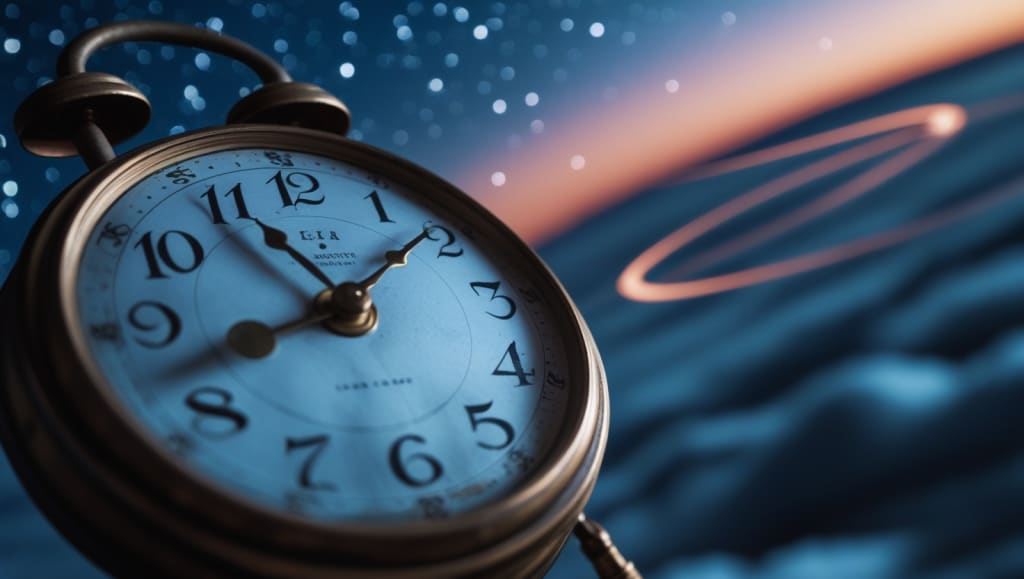
Time is something we usually overlook. It moves along, constant and dependable, shaping our days, appointments, routines, and sleep patterns. But what if our idea of time—how we calculate it—was beginning to change? This is not a story from a science fiction book. It’s a genuine challenge that scientists and global time regulators are facing right now: the Earth is rotating more quickly, and we might have to eliminate a second from our clocks.
Indeed, eliminate.
A Race Against the Clock
No matter how accurate, clock accuracy ultimately rests on our home planet. Our clocks have always been set with the Earth's rotation, which establishes the length of a day. The Earth is not, however, an absolutely dependable clock. It can rotate more rapidly, wobble, and change; sometimes—like at this moment—turn more rapidly.
Scientists have discovered recently that the Earth's spin is accelerating quicker than it has in several years. For instance, June 29, 2022 was logged as the shortest day, 1.59 milliseconds less than the typical 24 hours. Although it might seem insignificant, these little variations build over time and are starting to affect the very exact field of timekeeping.
What’s a Leap Second—and Why Might We Go Negative?
You may be familiar with leap seconds, which are occasionally added to ensure that atomic clocks remain aligned with the Earth's uneven rotation. Since 1972, there have been 27 leap seconds added, generally every few years. Most individuals don’t recognize when this occurs, yet your phone or computer makes adjustments silently.
Now, for the very first time, scientists are considering the idea of creating a “negative leap second.” This would involve removing a second from Coordinated Universal Time (UTC) to align with the Earth's quicker rotation.
Picture this: a second disappearing from the world's clock.
Why Is Earth Spinning Faster?
There are many answers to the rather complex question. Scientists are investigating a number of significant issues:
- Like how a figure skater spins faster by pulling in their arms, melting polar ice distributes water across the Earth and slowly changes its form and balance.
- Core motions could influence the speed with which the molten core of the Earth spins.
- The dynamics of rotation may also be influenced by changes in climatic patterns and shifting tectonic plates.
In essence, a complicated interplay of environmental and geophysical components shapes the rotation of the Earth; we are only just starting to appreciate how fragile our world really is.
Why This Matters (More Than You Think)
At first, a millisecond may not appear significant. However, in our fast-paced digital and hyper-connected era, timing is crucial.
- GPS technology depends on atomic time aligned with the Earth’s rotation. Even the slightest variations can disrupt location precision.
- Industries like telecommunications, banking, and electric grids rely on accurately timed data for efficient operations.
- Stock exchanges might encounter errors in trade sequences, which could impact billions of dollars in trades.
Moreover, major technology firms such as Meta (previously known as Facebook) and Google have voiced worries about adding negative leap seconds, warning of possible system breakdowns, data loss, or server failures.
While adding a leap second presents challenges, removing one is an entirely untested area.
How the World’s Timekeepers Are Responding
The responsibility of regulating time falls to organizations like the International Earth Rotation and Reference Systems Service (IERS) and the International Telecommunication Union (ITU). These groups track Earth’s spin and decide if and when leap seconds are necessary.
As of now, no negative leap second has been scheduled, but discussions are intensifying. Timekeepers are carefully weighing the risks and consequences, and any decision will require global consensus—a reminder that even something as universal as time must be negotiated.
The Human Side of Time
This news feels strangely discomforting. Throughout our lives, time has always been a stable force. With each sunrise and sunset, and the relentless ticking of the clock, our daily routines flow with it. Yet now, we find ourselves informed that the Earth is rotating a bit quicker—and we might have to reduce time to keep pace.
It really makes you think, doesn’t it?
Perhaps it's time to consider how we view time. In a world driven by haste, speed, and constant activity, it’s almost poetic that our planet appears to be speeding up. The analogy is clear: we are all rushing, chasing after minutes, fitting more into our daily lives, but still failing to catch up.So, how do we respond when even time starts to feel flexible?
Looking Ahead: Time Will Tell
The negative leap second has yet to take place, and it may be several years before it does. However, the very fact that this topic is under consideration signifies a significant shift. It serves as a reminder that the systems we depend on—whether natural or technological—are often more delicate, fluid, and interrelated than we typically recognize.
Regardless of whether the second is ultimately abandoned, one thing remains certain: our perception of time is changing, just like everything else on this constantly transforming planet.
So, the next time you check the clock, think about this: the Earth might have just rotated a little quicker. Meanwhile, in a laboratory or data center, decisions are being made about whether to remove a moment from our existence.
Final Thought
Maybe we don’t need to control every tick of the clock. Maybe, just maybe, we should slow down—even as the Earth speeds up.
About the Creator
Keep reading
More stories from Shahjahan Kabir Khan and writers in Journal and other communities.
iPhone 17’s Display Game Just Changed Forever: Here’s What’s New
From Brighter Brilliance to a Smarter Refresh—Apple’s Upcoming iPhone Will Be a Visual Marvel. Each September, fans of Apple eagerly anticipate the next step in the evolution of the world's most beloved smartphone. Although features like cameras, battery performance, and processors often steal the show, the iPhone's screen— that shiny glass surface we gaze at for hours daily—often doesn’t receive the recognition it merits. This is set to change.
By Shahjahan Kabir Khan8 months ago in Journal
Author’s Advice
If you would’ve asked me 20 years ago did I know I’d become a writer and an author, I would’ve said “nope, ain’t happening”. As fate would have it I did become an author and I can honestly say I’m loving it so far. It really does feel good to be a writer. I’ve learned a lot on this journey and I feel like with even me being as new to this world as I am, there’s some wisdom I need to share with every other aspiring author.
By Joe Patterson3 days ago in Journal



Comments
There are no comments for this story
Be the first to respond and start the conversation.