
When Podcasts Went Visual
Why Video Is Reshaping the Podcast Industry and Creating a New Wave of Media Jobs

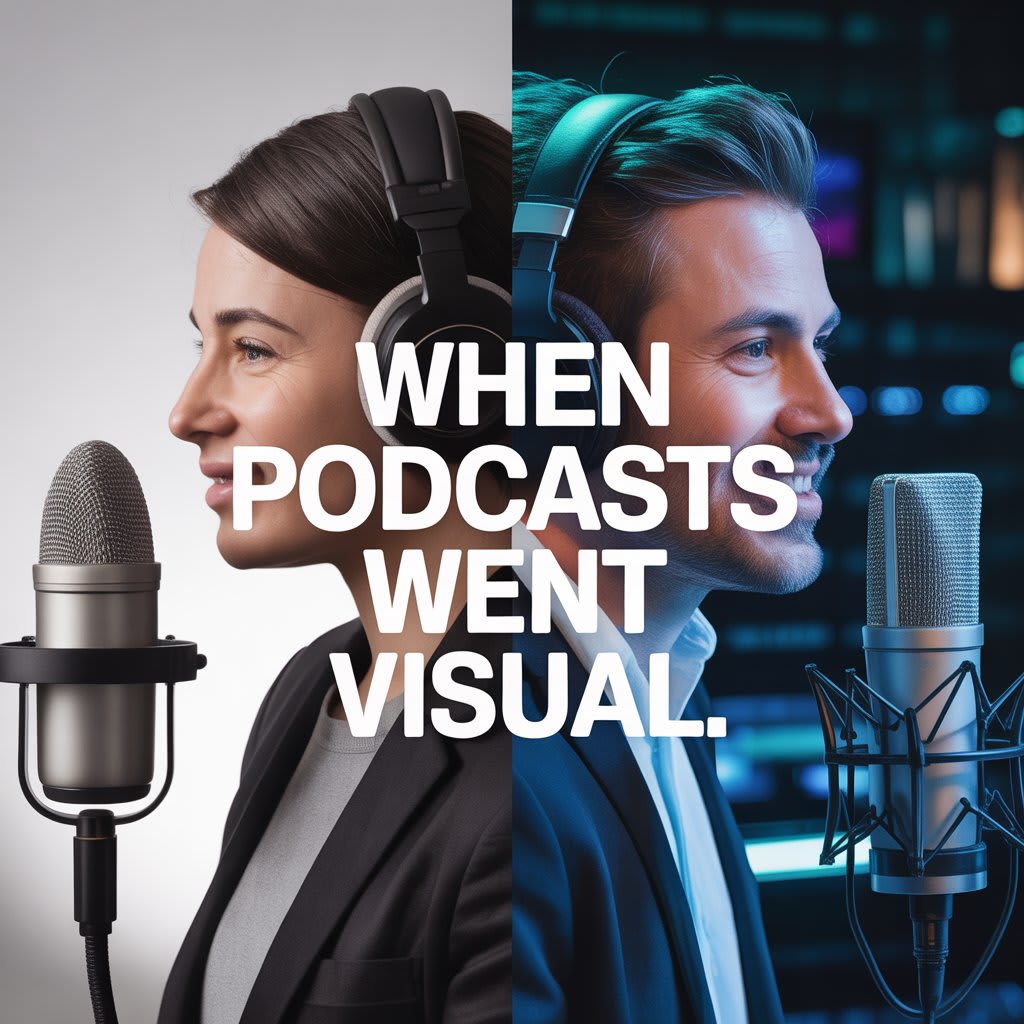
From Audio Roots to Visual Storytelling
When podcasts first gained momentum in the mid-2000s, they were simple audio files distributed via RSS feeds. The format was cheap to produce and easy to use. Listeners appreciated the convenience—plug in your headphones, press play, and you could enjoy a world of storytelling, interviews, and commentary while you did whatever else you wanted.
For more than a decade, audio podcasts ruled the roost. But as consumer habits changed and video platforms like YouTube and TikTok took over, a new trend began to take hold: video podcasting. What was once a purely audio-driven experience is now a visually rich medium that blends storytelling, personality, and performance.
This shift has not only changed how audiences consume content, but it has also opened up entirely new industries, jobs, and opportunities.
Why audiences prefer video.
The biggest reason for the explosion of video podcasting is audience behavior. Humans are visual creatures — body language, facial expressions, and eye contact communicate as much as the words themselves.
In a video podcast:
You see the speaker’s emotions, making the conversation feel more authentic.
Visual cues, such as props or on-screen graphics, enhance storytelling.
Clips can be repurposed for social media, making the content more shareable.
Platforms like YouTube and Spotify have leaned heavily on this demand, giving creators the opportunity to not only upload audio but also share full episodes in video form. Even TikTok has become a secondary distribution channel, where short podcast clips go viral daily.
The result? Audiences don’t just want to listen to their favorite hosts — they want to watch them.
The impact of social media
Podcasting has always been about accessibility, but video adds a new layer of visibility. A funny reaction, a heated argument, or a heartfelt moment can be clipped into a 30-second viral reel.
That’s why many creators now record episodes with high-quality cameras and multi-angle setups. Clips from podcasts like The Joe Rogan Experience or The CEO’s Diary routinely dominate TikTok and Instagram feeds, drawing in millions of new viewers who may never have listened to the full-length audio.
In this way, video podcasts don’t just exist — they circulate across platforms, becoming cultural moments.
The Rise of New Media Jobs
The video podcast boom hasn’t just changed consumption — it’s reshaped the media job market. Once upon a time, a small podcast team might include a host, a producer, and an audio editor. Today, successful video podcasts look more like small television studios.
Here are just a few roles that are now in demand:
Video editors – to turn long episodes into short, engaging clips for social platforms.
Camera operators and lighting specialists – to ensure podcasts have professional-grade visuals.
Social media managers – to strategize the viral distribution of podcast clips.
Brand partnership managers – as sponsorships now extend beyond audio ads to on-screen placement.
Content strategists – to oversee cross-platform storytelling and improve video reach.
The podcast industry is now a legitimate path to a career in media, offering jobs that didn’t exist when podcasts were audio-only.
Access and Monetization
Video podcasting has also opened up new revenue streams. Where audio monetization relies heavily on sponsorships and downloads, video platforms are expanding the earning potential:
Advertising revenue on platforms like YouTube.
Patreon and paid memberships offer exclusive behind-the-scenes video content.
Brand collaborations with visible product placements.
Live streaming podcasts that feature real-time fan interactions.
This combination of monetization channels has made podcasting more sustainable—and more appealing—for both independent creators and large media companies.
Challenges in the Video Age
Of course, video podcasting is not without its challenges. Production costs are high, requiring investments in cameras, microphones, lighting, and editing software. Not all podcasters have the budget or expertise to handle these complexities.
Furthermore, the intimacy of an audio podcast can sometimes get lost in translation. Listeners who once enjoyed consuming podcasts on the go don’t always prefer a visual-first experience. Successful podcasters often maintain a dual strategy, offering both audio and video versions to serve different audience preferences.
The Future of Podcasting
As video continues to dominate online content, podcasting is becoming a hybrid industry — where audio intimacy meets visual storytelling. The rise of video podcasts signals a future where content creators are no longer bound to a single medium. Instead, they can shape conversations, build brands, and create jobs in ways that were unimaginable ten years ago.
It’s no longer just about what we hear. It’s about what we watch, share, and remember.
The podcast revolution has gone visual — and the industry will never be the same.
About the Creator
Echoes of Life
I’m a storyteller and lifelong learner who writes about history, human experiences, animals, and motivational lessons that spark change. Through true stories, thoughtful advice, and reflections on life.
Keep reading
More stories from Echoes of Life and writers in Journal and other communities.
Safety Protocols For Treatment Facilities
Introduction Safety protocols are a fundamental component of operating any healthcare or treatment facility. These protocols are designed to protect patients, staff members, and visitors while ensuring that healthcare services are delivered in a controlled and secure environment. Treatment facilities, including rehabilitation centers, behavioral health programs, and medical clinics, often serve individuals who may be physically or emotionally vulnerable, making safety planning especially important. Effective safety protocols help prevent accidents, manage emergencies, and maintain a structured environment that supports healing and recovery. In addition to protecting individuals, safety procedures also help facilities comply with healthcare regulations and accreditation standards. Regulatory agencies and accrediting bodies expect treatment centers to demonstrate strong safety practices through documented policies, staff training, and regular monitoring of safety performance. When safety protocols are clearly established and consistently followed, treatment facilities can reduce risks, respond effectively to unexpected situations, and create a supportive environment where patients feel protected and staff can perform their duties with confidence.
By Abdul Mueedabout 7 hours ago in Journal
How Much Does It Cost to Start a Rehab Center in a Leased Facility
Understanding the Cost of Starting a Rehab Center in a Leased Facility The addiction recovery industry has expanded dramatically in recent years. Rising awareness of mental health, substance abuse disorders, and holistic recovery programs has created a strong demand for professional rehabilitation facilities. Entrepreneurs, healthcare professionals, and social impact investors are increasingly exploring opportunities to establish treatment centers that address this growing societal need. Launching a rehabilitation center requires substantial capital, but leasing a facility can significantly reduce initial property acquisition expenses. Instead of purchasing land or buildings, investors can secure a suitable location through a lease agreement and allocate resources toward clinical services, staffing, and patient care infrastructure. Leasing allows new operators to enter the healthcare market with greater financial flexibility while maintaining operational agility. A leased facility also enables founders to test the viability of their treatment model before committing to long-term real estate ownership. This approach can be particularly advantageous in the healthcare sector where regulatory requirements, zoning laws, and patient demographics play decisive roles in business sustainability.
By Fida Hassainabout 6 hours ago in Journal



Comments
There are no comments for this story
Be the first to respond and start the conversation.