
What’s Driving the Pharmaceutical Market Forward in 2025 and Beyond?
Welcome to the future of the pharma market. No, we are not going back to pre-pandemic levels of operations as the healthcare industry recovers from COVID-19.

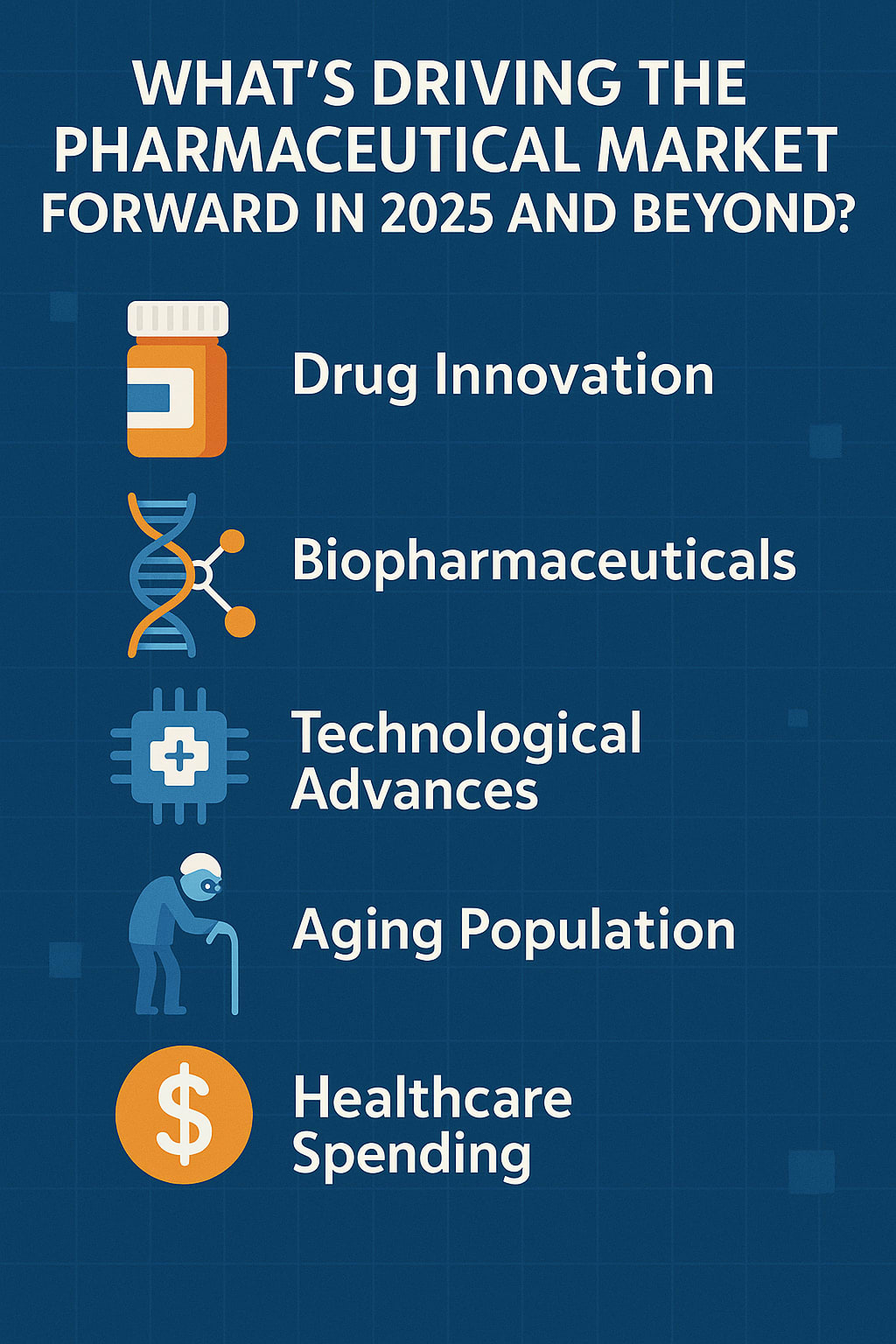
But neither is it “business as usual” just with more science, disruption, data, or digital health than before. The pharmaceutical market of tomorrow and beyond is in the middle of a radical makeover.
As we look towards 2025 and beyond, we expect the global market to reach over USD 2,350.43 billion by leveraging the full potential of:
* Scientific breakthroughs in biologics and cell and gene therapies
* Optimized drug supply chains and smarter inventory models
* Preventive medicine and consumer demand for personalized therapies
But if innovation is the story, what are the headline drivers? Let’s review the top trends shaping the future of pharma.
Top Pharma Market Drivers to Look Out for in 2025 and Beyond
1. Biologics and Cell & Gene Therapy Innovations
Monoclonal antibodies, vaccines, recombinant proteins, and other biologics are quickly outgrowing traditional small molecules in market share by 2025 and beyond. Their mechanisms of action allow precise modulation of disease processes. They have already transformed therapies for cancer, autoimmune diseases, and many rare and genetic diseases.
In addition to biologics, cell and gene therapies are moving out of the research and trial phase. After several first FDA approvals in recent years, we expect to see more in the next few years. Cures and advanced treatments for previously untreatable chronic diseases and genetic disorders will be more mainstream.
2. Aging Population and Chronic Disease Burden
The global population is aging. According to the WHO, 1 in 6 people will be over 60 years old by 2030. This demographic shift is driving the burden of chronic conditions such as cardiovascular disease, diabetes, arthritis, and neurodegenerative diseases. The common denominator is that all of these conditions benefit from lifelong or chronic drug therapies.
We can expect pharmaceutical companies to respond to this new market by bulking up drug pipelines for geriatric patients, lifecycle management for existing products, and development of therapies specific to their needs such as lower side effect burden and at-home use.
3. Digital Transformation and AI-Enabled Drug Discovery
Artificial intelligence (AI) is disrupting the drug discovery pipeline from target identification and molecule screening through trial design and recruitment to adaptive trials and sample testing and analysis. AI and machine learning solutions are already cutting costs and time to market for new drugs by automating repetitive tasks and optimizing decision-making.
In addition to this, by 2025, we can expect digital solutions to be in full force for real-world evidence generation, personalized dosing algorithms, AI-based diagnostic tools, and more. Such digital touchpoints should result in better patient outcomes, in addition to better and more data-backed product development and growth.
Get Sample Brochure at https://www.theresearchinsights.com/request_sample?id=153
4. Expansion in Emerging Markets
Healthcare access and infrastructure are rapidly improving in many parts of the Asia-Pacific region, Latin America, and Africa. Pharmaceutical companies are expanding their footprint in high-growth countries with large unmet medical needs and underserved populations.
Segments with the most significant upside potential for pharma in emerging markets include:
* Affordable generics and biosimilars
* Vaccines and anti-infectives
* Diabetes, CVD, and oncology products
Localized partnerships, digital health ecosystems, and innovative pricing models are the key to cracking this new market.
5. Focus on Preventive and Consumer Health
Consumers are becoming more health conscious and self-diagnosing, which leads to growth in OTC medication sales, vitamins and dietary supplements, and preventive therapies and vaccines. Manufacturers are responding by expanding product portfolios in consumer health, wellness products, and disease prevention as a way to provide better value to patients while saving costs in the long run.
6. Regulatory Changes and Expedited Approvals
Regulatory agencies are also changing to adapt to industry disruption. The FDA has accelerated approval and breakthrough therapy designation programs in place that allow companies to get some essential therapies to market more quickly than before.
FDA and other global regulators are also making use of real-world data, decentralized trials, and adaptive study designs to streamline drug assessment, particularly for oncology, rare disease, and pediatrics.
7. Sustainability and ESG-Driven Manufacturing
As environmental and social governance (ESG) considerations gain traction in the healthcare industry, pharmaceutical companies are under increased scrutiny over their sustainable manufacturing practices and ethical sourcing of materials. They are also being called out on the environmental impact of their clinical trial waste and carbon emissions.
Businesses that adapt to a more eco-friendly business model and prioritize ESG will have better odds of pleasing investors, regulators, and conscious consumers.
Final Thoughts
The future pharma market is anything but set in stone. Scientific innovation, data-driven drug development, and global inclusivity are driving some much-needed change in the way drugs are discovered, produced, and administered.
Pharma industry leaders and other stakeholders who want to ride this transformation wave will have to not only stay ahead of the trends but also continue to lead on making the market more connected, efficient, and patient-centric.
About the Creator
Silvie Karson
Passionate storyteller exploring the world of trends. With a background in digital marketing, I craft compelling narratives that inform and inspire. Whether diving into deep-dive features, growth analysis, or trend analysis.
Keep reading
More stories from Silvie Karson and writers in Journal and other communities.
Convenience Meets Care: Why Smart Pet Feeders Market is in Demand
Smart pet feeders are here to stay, as trends in urban lifestyles and pet humanization gain momentum. An in-demand category among millennials and Gen Z, smart feeders are projected to register a significant CAGR through 2030, driven by needs for high-precision, connected, data-driven pet care.
By Silvie Karson7 months ago in Journal
Is It Better to Walk Outside or Use a Treadmill
Some days, going for a walk feels easy and natural. Other days, stepping outside feels like too much effort. Weather, time, mood, and energy all play a role. That is why many people wonder whether walking outdoors is better than using a treadmill, or if one choice is healthier than the other.
By Sonam Kohliabout 8 hours ago in Journal
Miss Persephone's Manual to a Seemingly Ordinary Life
Miss Persephone was found at the dining table, her blue eyes swollen, her tears arriving and retreating like the tides of the ocean. Earlier that day, her family had visited her in the retirement home where she had lived for eight years. It was her eightieth birthday.
By Imola Tótha day ago in Fiction


Comments
There are no comments for this story
Be the first to respond and start the conversation.