
What Must You Do if You Can’t Write?
Do something else until you feel you can write again


If you are feeling down or upset or just not right in yourself it can be hard to push yourself to write. The thought of sitting at the computer can be daunting at times. It takes a lot out of a writer to just sit there and start typing.
I have that feeling often. I feel I cannot muster a page of writing and when I push myself I feel doomed just before I sit down to write, but then afterward, I feel great that I did it. Do you feel that way?
I was like this for a long time so I pushed myself and made myself sit down to write. I made that point of fitting in at least an hour every day to write. I had to or I would never make it as a writer. I had a second book to write and I knew people were waiting for it to be released.
Writers Who Suffered From Writer's Block
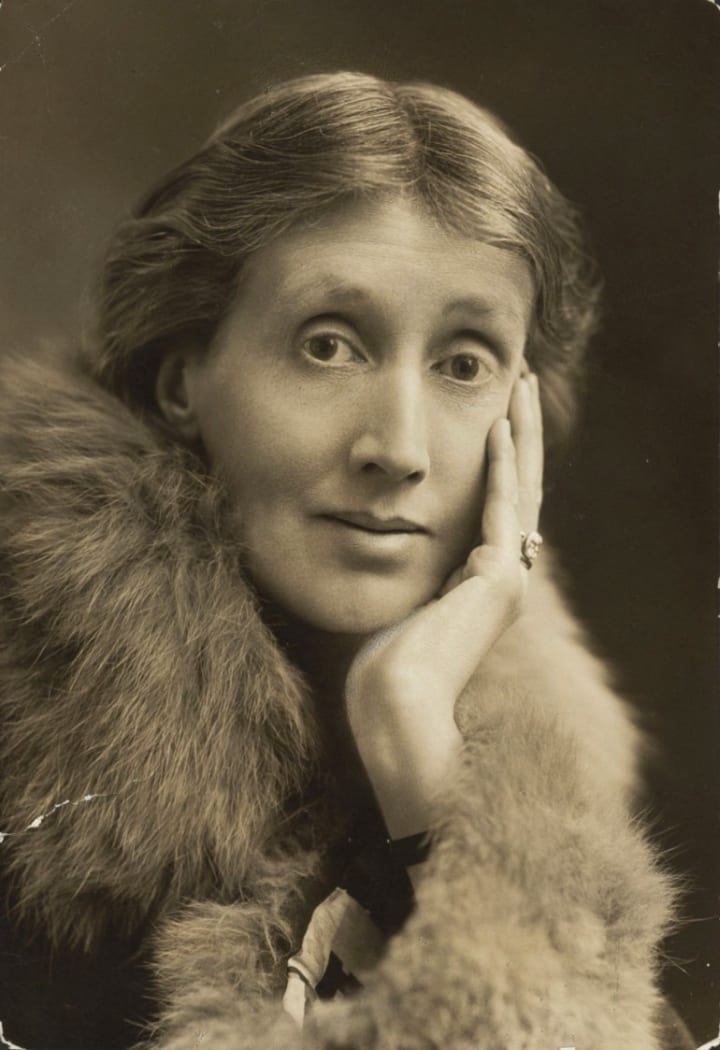
There are many writers who have come across writers’ block. For instance, Virginia Woolf, who was an early 20th-century British writer and best known for her novels Mrs. Dalloway and Orlando, suffered terribly from writers’ block due to episodes of depression. She was suffering from mental illness according to the Psychiatrist George Savage which is mentioned in The Virginia Woolf’s Blog. She suffered so much that she eventually took a walk one day and never came back. She left a suicide letter to explain what she was going to do.
Leo Tolstoy, who was a 19th-century Russian author who was best known for War and Peace and Anna Karenina, suffered terribly with writers’ block and couldn’t write at all for months and years at a time. He wrote a book about it called My Confession. He writes about his two year period of despair in the book. He wrote at the age of 50 about how his life had become “flat, more than flat: dead.” You can read passages from his book here.
So, most writers can suffer from writer's block at any time.
So what do we do about it?
Getting up earlier and writing in a notebook without thinking of anything else is a good way to beat writer's block. Dorothea Brande's book Becoming a Writer suggests a writing technique where you get up an extra half hour or an hour earlier in the morning and write whatever comes into your mind on waking up. This is before you have breakfast or coffee and before you talk to anyone. Basically, you wake up and let your conscious mind write in your notebook because this is when your consciousness is susceptible to writing creatively. Keep the notebook by your bed. This is a technique that Dorothea Brande swore by. The 1930s published book titled Becoming a Writer is still on sale on Amazon and it is still a popular book to buy today.
The best thing is to also have a set routine every day. Start the day by writing a thousand words first of all. If you can’t write that much then write 500 words or less. The point is to write something the first time and increase what you write the next day and so on. The more you write the more it will stick.
When you get into the routine of writing, you will be used to it and it will end up being your job. I started to write in the mornings but if I didn’t write in the morning that day, I would make myself sit down and write in the evening for an hour or two, depending on how I felt.
Is it easy?
It’s not easy setting yourself a routine each day to write. I have had to push myself to open a screen on my laptop to write or open the page to my book and continue a chapter. You have to be motivated and sometimes we are not.
If you have a publisher or an editor or agent who is pushing you to write then it is better because you have a reason to write. Indie authors are in the same boat because of their readers who want to read another one of their books. They must get that next book out or their readers will lose interest in them. Indie writers have to motivate themselves too which isn’t easy sometimes.
Failing
I had that feeling where I was losing my readers all the time, so it made me feel awful. I felt I was failing them and I do not like to fail!
Failing is not nice. We don’t want to fail. So, we must motivate ourselves by doing something else in our life that will help our thinking process. We can expand our thinking by either going for a walk, running or doing some kind of sport or even taking part in a hobby that you love. Then when you get home your brain will be motivated to write. Just open a screen on your computer and write anything that comes to your mind. That’s what I have learned to do lately.
Should you plan your writing?
Now, I don’t think or plan what I will write because it will ruin the process of actually sitting down to write. I hope you get what I am trying to say.
My point is, don’t overthink what you have to write, just do it. It’s not necessary to plan but just to sit and write so we can get the process of our writing out onto paper. You can plan later. I started this article by just writing. I didn’t plan this article it just came out when I started writing. After it was written, I edited it to the way I wanted it to read. So, all you have to do is write and forget about everything else!
What about writing a novel? Do you need to plan it?
If you want to write a novel, then have the idea and genre of the story you want to write about already planned. Also, know who your two main characters will be and the rest you just sit and write without a plan. I never plan a chapter but in my head, I always have an idea of where the story will go. Sometimes as I am writing, new ideas will pop into my head. I’m sure all writers have this feeling too. Sometimes before I write, I close my eyes and think of nothing for about two to five minutes and then I start typing. It truly works.
So, don’t overthink the writing just open up your page and write anything that comes to mind and you will see that it can work.
©️ Denise Larkin 2020. All Rights Reserved.
This article was also published on Medium.com
About the Creator
Denise Larkin
A writer of a BA with honours (2.1) in Arts & Humanities recently gained a Creative Writing Master's Degree. She writes poetry, fictional short stories, and is the author of the Time to Run series, Darkness and The Non-Human.<aT.
Reader insights
Outstanding
Excellent work. Looking forward to reading more!
Top insights
Expert insights and opinions
Arguments were carefully researched and presented
Heartfelt and relatable
The story invoked strong personal emotions
Easy to read and follow
Well-structured & engaging content
Excellent storytelling
Original narrative & well developed characters
Compelling and original writing
Creative use of language & vocab
Eye opening
Niche topic & fresh perspectives
On-point and relevant
Writing reflected the title & theme
Keep reading
More stories from Denise Larkin and writers in Journal and other communities.
Can Writing on Wattpad Get You Published?
What is Wattpad? Do you love writing fiction? Wattpad is an online writing site where you can write your book for the world to see. I enjoy writing on Wattpad because it helps me to write regularly. I have got five books there and I regularly upload a chapter every 5 days or sooner if I get the time to do so. Writing creatively on Wattpad is easy. You can also read some great books there for free.
By Denise Larkin5 years ago in Journal
~ Fired ~
— Ai Intrusion ~ Are you Next ~ Is Ai Evolution after your job? — Few workplaces haven't been affected. Ai is in supermarkets, at doctors' offices, and even monitoring farms. I just can't think of anything this machine is not getting into, can you? For instance: Education ~ Law and Tech jobs will one day have a major influence or be taken over by these inanimate machines, with accuracy and vigor. From mechanics' diagnoses to a wide variety of everyday jobs, including fast food workers, with this input having the ability to cut their unnecessary work hours. I'm certain all of us have been touched by this with our short stories and colorful headings, have you? Even comments are very questionable 'Non-Robot' insertions.
By Jay Kantor28 days ago in Journal
Belle of the Bayou
Bad move, cher. Not just the slip of her kitten heel on the rainy February cobblestones in the Fourth Ward. She got caught snooping. Detective Deleon clucked and strutted like a rooster in his rush to clear her from the scene, waving cigar smoke to and fro as he gesticulated amid the thick air of the speak easy. An experienced crime reporter, Marie knew better than to let the coppers catch her on the wrong side of the line, but curiosity had gotten the better of her.
By Maia Gadwall the metAlchemist7 days ago in Fiction



Comments
There are no comments for this story
Be the first to respond and start the conversation.