
What Leaders Can Learn From Autism Education And Sports Twisties
An Interesting Way Our Brains And Bodies Are Tied Together And What It Means For Leaders

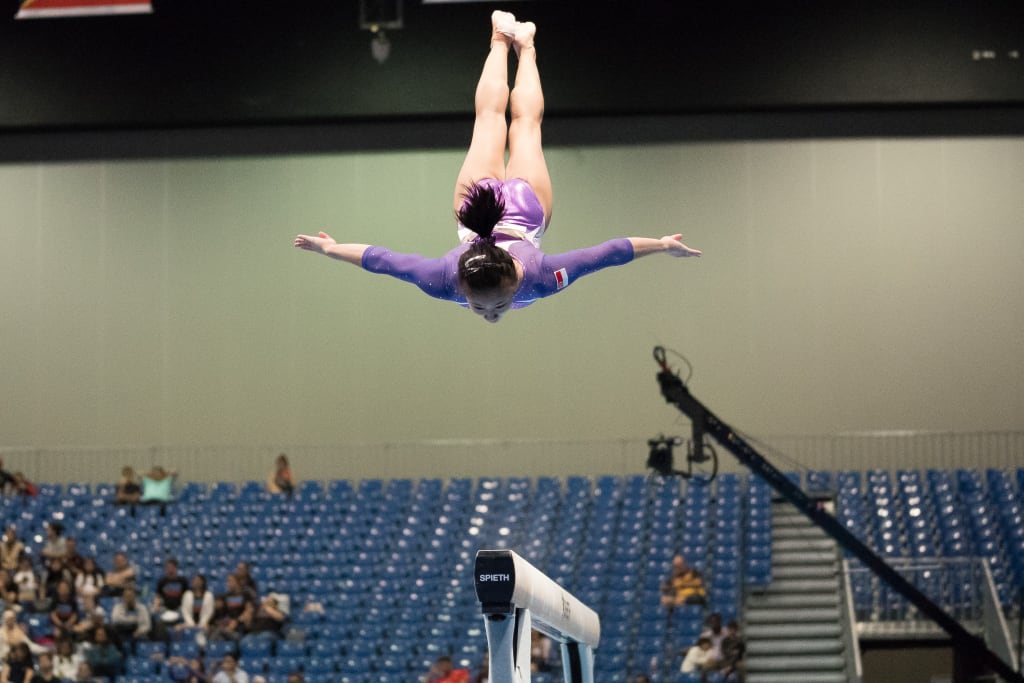
When I was young, I used to take Diving Classes.
My mom recounts to me that I was really good, and perhaps could have attempted to go to a world stage if I kept at it.
I don't remember much of how good I was though.
Really I only have one memory left from that time...
The Story
I was up on the high board.
I stood there 3 meters (9 ft. 10 in.) in the sky.
My coach believed I was ready to attempt a forward somersault from the height, and I did too.
They told me that they would call out when I needed to release the somersault position to go into a dive.
I was ready.
I made my move and began to flip forward.
At the moment, I don't remember much.
I could feel my body spinning, and that was about it.
I couldn't see where I was, no pool, no ceiling, nothing.
I had no awareness of where I was at that moment.
I also couldn't hear anything, not the sound of the many people at the pool, not the sound of the water below me...
I also couldn't hear my coach.
So I continued to flip forward, more and more.
Until...
Splat!
I hit flat in the water, still curled up in the flip position.
I remember being unable to breathe, and for a few minutes, I couldn't even speak.
It was terrifying at that time, but thankfully went away quickly.
What occurred is what is called "Twisties" in sports.
What Happened Scientifically
From a scientific perspective, a few things occurred at that moment.
Essentially my Vestibular System and Proprioceptive Systems both failed to work.
The Vestibular System is related to balance, it is what allows us to remain on our feet, or fall to the ground.
The Proprioceptive System allows us to have an internal awareness of where our body is in the world at any time.
So if you jump up, and you are able to land softly by bending your knees to slow down and decelerate, that is part of the Proprioceptive System indicating when you should begin that process.
Based on my understanding of Physiology today, I would imagine that what exactly occurred is that my body was not used to the change in balance for the length of time needed (somersaulting).
Due to a higher demand than my body was used to, it created a large amount of Dis-Stress in my Nervous System, sending me into a Fight-Or-Flight State.
When this occurs, certain parts of our brain literally shut down.
It is possible that the Vestibular System shut down my Proprioceptive System, or perhaps they both shut down at the same time.
At that moment, I was unable to act in a way to prevent injury.
And
Splat...
Now, this isn't just something that occurs to the untrained (as I was).
In fact, it can occur to even the best athletes in the world!
Simone Biles, arguably the best gymnast in the world, not long ago made a decision to step away from her sport (at the height of her career) to take care of her "Mental Health".
Experts believe that what she was experiencing, based on her own comments, was a case of the Sports Twisties.
If you've followed my work, something I always say is "All Stress Adds".
In this case, Stress had added so much for Simone Biles, an Expert Athlete, that she was impacted and unable to perform at her best, even though she was one of (if not THE) best in the world!
The Connection To Autism
What I found really interesting about Sports Twisties is that there seems to be a similar connection between these individuals, and individuals who have Autism.
I have a brother-in-law who has Non-Speaking Autism, and my Family recently went through a program called RPM (Rapid Prompting Method) from HALO (Helping Autism through Learning and Outreach) which was founded by Soma Mukhopadhyay.
Soma herself was extremely knowledgeable in how people learn (especially those with different forms of Autism), and the program itself was truly one of the best on Education I have ever taken.
One of the interesting things we discussed is how individuals with Autism have "Stims".
Essentially, things will be happening in their environment, and their body will react, often without the individual desiring to.
Going through this physical "Stim" allows the individual's body to calm down and gain some control back.
In a way, this is very similar (if it is not exactly the same) to a Dis-Stress reaction, almost identical to what is described with Twisties in Sports.
Soma went into detail about how important it was to teach and work with individuals to help them develop their Vestibular and Proprioceptive Systems.
One of the challenges it seems that these individuals have is fully having a grasp of where their bodies are in space at any given time (a challenge with the Proprioceptive System).
This challenge is extremely difficult because a part of how we learn as humans is through understanding how things relate to us based on where we perceive ourselves in our environment.
If we struggle to perceive where we are in our environment, we will struggle to relate ourselves to things outside of ourselves, making learning a huge challenge.
This challenge can come out in a number of ways, though a fairly common way is a form of rocking that is out of the individual's control (a challenge with the Vestibular System).
Due to these challenges, it can become extremely difficult for the person to control aspects of their body and it can also delay and make the learning process extremely difficult for them.
From the Educators' perspective, they have to work with and around these challenges to help individuals learn.
But as we can see, there is a direct correlation between Stress, the Vestibular and Proprioceptive Systems, and Learning/Memory/Perception.
The Leadership Takeaway
Understanding that there is a direct correlation between Stress, the Vestibular and Proprioceptive Systems, and Learning/Memory/Perception is really interesting from a workplace perspective.
The technical study of all of this happening is "Embodied Cognition".
We know for a fact that Burnout, just a term for long-term Dis-Stress, is extremely high in our workplaces.
Deloitte has estimated that it is around 77% of people who are currently experiencing it.
This high level of Dis-Stress will have negative consequences in a few ways.
From what we have been discussing here, it directly impacts our Vestibular and Proprioceptive capacities.
When it comes to the rates of Burnout, these systems will both take a negative hit and become worse in our lives.
We actually see this as people begin to lose their posture (a sign of a failing Vestibular System) and as Awareness of what is happening decreases (a sign of a failing Proprioceptive System).
As these Systems both become lost, it creates higher rates of Dis-Stress and requires less to set off that Dis-Stress.
This then becomes a Whirlpool where Dis-Stress Increases, the Vestibular and Proprioceptive Systems weaken, and the cycle continues to get worse and worse.
As this occurs, Learning will become more and more difficult, and it will also lead to less-than-desirable reactions as our bodies naturally attempt to calm themselves down.
In the workplace, these "reactions" can turn the entire environment into a Toxic workplace.
Not to mention that the decreases in Perception will lead to missed details and "foggy" minds.
So, what are Leaders to do?
Attack the problem from multiple angles to help your team succeed.
We know Stress is a huge problem, so what are you doing to help your team decrease their stress?
We know that we can lower Stress by improving the Vestibular and Proprioceptive Systems, so how are you helping your teams do this?
PS, offering a discounted membership to a gym does NOT help employees accomplish this unless they already "know" how to do it (most don't), or a trainer works with them on it (which many don't).
If you understand how Leadership is impacted (both Positively and Negatively) by our Psychophysiology, then you can use this to your advantage.
That is why Psychophysiology is a critical component in Legendary Leadership.
About the Creator
Dr. Cody Dakota Wooten, DFM, DHM, DAS (hc)
Multi-Award-Winning Sageship Coach, Daily Digital Writer (1,000+ Articles), Producer, TV Show Host, Podcaster & Speaker | Faith, Family, Freedom, Future | Categories: "Sageship" & "Legendary Leadership"
https://www.SeekingSageship.org/
Keep reading
More stories from Dr. Cody Dakota Wooten, DFM, DHM, DAS (hc) and writers in Journal and other communities.
The goals I did not achieve
Every writing goal I made for the year is a wash. It has been this way for a while, but I think it's important to be open about my failures and the reality of how life can get in the way. This is especially true considering the several times I have posted on Vocal about my writing goals, how I was changing my approach, and where I was hoping to be for the upcoming year. I will probably do that again in a couple months, but for now, it is time to acknowledge where I am today.
By Kay Husnick24 days ago in Journal
The Catholic Church
The Catholic Church is often called the original Church founded by Jesus Christ. This claim is not just tradition; it is rooted in scripture, history, and the understanding of the early Christian community. Jesus did not leave instructions for a new denomination or a collection of independent groups. Instead, He established a single Church with authority, teaching, and sacraments meant to guide His followers through the centuries.
By Sound and Spirit6 days ago in Journal


Comments
There are no comments for this story
Be the first to respond and start the conversation.