
What LA companies should expect for app development costs?
A finance-first breakdown of realistic app budgets in Los Angeles, explaining why upfront quotes rarely survive contact with real users, real operations, and real scale.


The first number you hear about an app is almost always seductive: a single range, a confident slide, an “estimate” that looks neat in a budget meeting. In Los Angeles those numbers arrive against a background of high-paid talent, heavy user expectations, and frequent regulatory attention. The one lesson I learned after three painful projects is this: the sticker price at kickoff is not the financial truth. The truth reveals itself over months of incident calls, slow onboarding ramps, and the long, expensive tail of maintenance. If you’re budgeting in LA, treat the initial quote as a negotiation starter — not a promise.
How macro forces and local market realities set baseline expectations for LA app budgets
There are three big facts that quietly shape what you’ll actually pay.
- Mobile apps are big business: industry figures show mobile app revenue estimates in the mid-hundreds of billions (Statista projects roughly $613 billion in mobile app revenue by 2025). That scale keeps competition for talent fierce.
- Senior engineering pay in Los Angeles is high: recent salary data for senior mobile developers in Los Angeles shows median compensation near $190,000 per year, with top earners substantially higher — which directly pushes TCO for in-market hires.
- Enterprise tech budgets remain large and growing: Forrester projected global tech spend near $4.9 trillion in 2025, which means more dollars chasing digital products and therefore stronger bidding pressure for scarce engineering resources.
Translate those numbers into budget conversations and you begin to see why LA pricing rarely looks like a low-ball estimate: demand, local pay scales, and broader tech spending trends all push prices up before any feature discussion starts.
Why a three-year total cost of ownership (TCO) view is non-negotiable for Los Angeles companies
An LA CFO once told me she doesn’t buy “projects” — she budgets for operating lines. That’s the right instinct. The initial build is only the beginning; maintenance, incident response, monitoring, refactors, security updates, platform upgrades, and personnel churn produce the lion’s share of costs over time.
In practice I model three buckets:
- Build & Stabilize (Year 0–1): discovery, architecture, MVP or full build, QA, launch support, and an initial on-call guarantee. In LA this frequently amounts to 40–60% of your first-year spend for a mid-complexity app.
- Optimize & Harden (Year 1–2): performance tuning, security audits, automation, and refactors to remove technical debt — usually 20–30% of the three-year total.
- Adapt & Scale (Year 2–3): feature extension, platform migrations, compliance adjustments, and staffing turnover — often the remaining 20–40%.
If you ignore years two and three when choosing vendors, you will pay for that decision later in emergency hours, stalled roadmaps, and repeated rework.
Typical Los Angeles budget ranges (realistic, three-year thinking)
These are not sales pitches — they are practical ranges I use with CFOs and procurement teams after discovery and initial risk scoping.
- Small internal or narrow-scope app (MVP / single workflow, limited integrations): $90,000 – $210,000 build; plan for $60k–$120k additional over three years for maintenance and upgrades. (Good for internal tools with constrained SLAs.)
- Customer-facing production app (payments, analytics, moderate scale): $320,000 – $800,000 build; add $150k–$400k over three years for TCO depending on scale and compliance.
- High-assurance / regulated / large-scale apps (HIPAA, financial, high concurrency): $800,000 – $2M+ build; TCO frequently doubles across three years once audits, certification support, and hardened SLAs are included.
Why such wide ranges? Two identical feature lists can cost very differently depending on data flows, third-party integrations, security requirements, and the chosen staffing model (local hires vs hybrid vs offshore). The range above reflects those trade-offs factored into a multi-year view.
The hidden cost centers that silently double budgets if ignored
When procurement teams compare quotes they often match line items for screens and features — and miss the following:
- Operational ownership: who owns CI/CD, deployments, rollbacks, and runbooks? If these are “not included,” expect a large add-on later.
- Incident readiness: night and weekend on-call guarantees, clearly named escalation contacts, and post-incident RCA work are pricey but prevent far more expensive emergency contracts.
- Compliance and audit readiness: privacy audits, regional data processing requirements, and data retention/deletion workflows must be architected in, not tacked on. IBM and other industry reports continue to show rising costs for late remediation of data incidents.
- Data and integration hygiene: messy data means longer QA, higher MTTR (mean time to recover), and more expensive AI integrations later. Cleaning data before adding AI is almost always cheaper.
- Knowledge continuity: clauses for knowledge transfer, documentation acceptance criteria, and shadowed handover periods cost upfront but prevent costly rewrites after attrition.
These are not theoretical. They are the things I see on post-mortems when the “cheap” vendor turns into a drag on velocity.
How staffing choices change the arithmetic — local hires, hybrid models, and offshore teams
There is a spectrum, and the right point depends on risk tolerance:
- Local LA teams (full-time or on-site agencies): higher recurring cost but lower friction: faster decision loops, better cultural alignment with local stakeholders, and quicker incident response. For mission-critical apps, this often reduces TCO despite higher payroll.
- Hybrid models (local leadership, distributed execution): commonly the most cost-effective for LA companies that need local context with access to specialist engineers. Success depends on explicit ownership boundaries and local decision authority.
- Fully offshore/remote teams: attractive headline rates, but coordination overhead, timezone latency, and potential IP or compliance friction can increase indirect costs. For well-scoped, stable builds they can be excellent — but they require strong internal product ownership.
Empirically, many LA organizations find hybrid models offer the best balance when decision rights and on-call responsibilities are contractually clear.
Two contemporary expert views that should change how finance and procurement think
“AI and tool acceleration are shifting where effort goes — from surface features to integration, orchestration, and governance,” said Joachim Herschmann, VP Analyst at Gartner. “Leaders who reallocate budget toward operational engineering and governance will see fewer emergency overruns.”
“For modern application programs, the initial build is the down payment. The long-term value depends on how change is funded and governed,” said Diego Lo Giudice, VP and Principal Analyst at Forrester, commenting on modern application development trends in 2025. “Buyers must budget for adaptation, not just delivery.”
Both quotes point to the same operational truth: you must budget for change and governance, not just features.
A real LA example that explains the math (short case, anonymized)
A mid-sized LA consumer services firm contracted an external team to rebuild its customer app for $380k. The build hit the deadline and the UI was praised internally. Within nine months, onboarding new features slowed dramatically because the deployment pipeline and incident playbooks were incomplete. The company then invested:
- $95k for deployment automation and secure CI/CD.
- $60k for a three-month on-call SLA and runbook completion.
- $140k for refactors to remove hidden single-point failures exposed by scale.
Total spend after 18 months: $675k. The lesson: an inexpensive build plus expensive operational fixes ends up costing more than a sturdier initial investment paired with a solid maintenance plan.
Practical rules LA companies can use when budgeting and choosing vendors
Ask vendors for a three-year TCO, not just a build quote. Require breakdowns for maintenance, audits, and escalation windows.
Demand named on-call roles and SLAs for the first 90 days after launch. Put the cost in the contract rather than relying on goodwill.
Include a knowledge transfer and documentation acceptance checklist tied to payments. That prevents ghost systems after churn.
Budget a minimum 20% contingency for integration and compliance drift. Experience shows that is practical in high-change environments.
Prefer a hybrid staffing model if you need LA context but can leverage remote specialists. Make local leadership accountable for incident decisions.
Validate vendor proposals against real incidents: ask for a recent post-mortem they authored and evaluate their remediation steps.
These actions turn vague promises into measurable obligations.
Closing: the budget question you should be asking, not the one most vendors want to answer
When the CFO asks “how much will this cost?” the useful reply is not a single number. It is a map: what you’ll pay to build, what you’ll pay to own, and when those costs will arrive. In Los Angeles, where talent and expectations are high, the smartest organizations stop treating the build as a line item and start treating the product as an operating line. That reframing is what prevents early savings from becoming long-term regret.
About the Creator
Keep reading
More stories from Samantha Blake and writers in Journal and other communities.
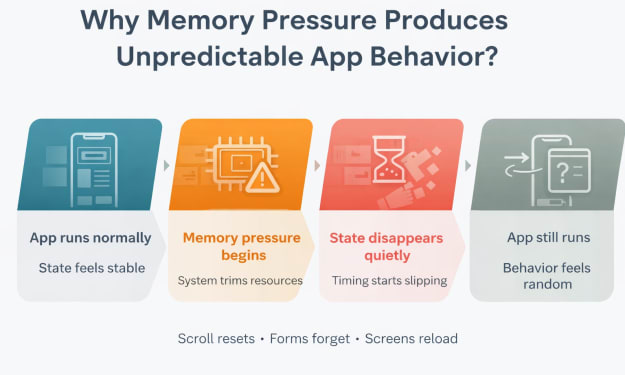
Why Memory Pressure Produces Unpredictable App Behavior?
earn For a long time, I blamed users. Not openly, of course. Quietly. Internally. When someone said the app “lost their place” or “reset for no reason,” I assumed edge cases. Bad networks. Unlucky timing. Maybe they switched apps too fast.
By Samantha Blake2 months ago in Journal


Comments
There are no comments for this story
Be the first to respond and start the conversation.