
What Can AI Do in the Media and Entertainment Industry?
Filming, music creation, and translation now utilize AI. This post discusses AI solutions to transform the media and entertainment industry.
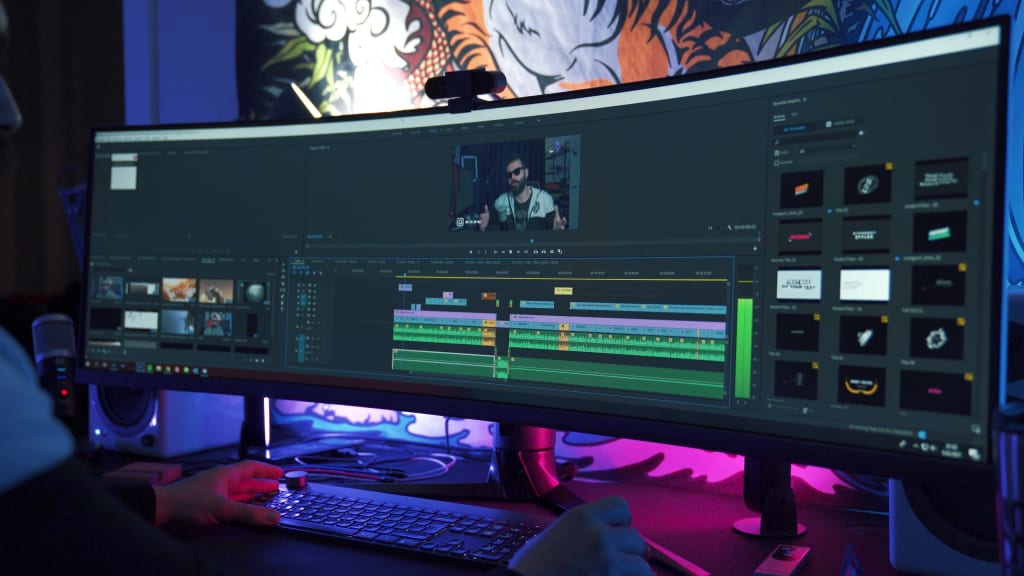
Automated captions enabled online videos to reach a broader audience with the video’s language as their second, fourth, or fifth language. So, media and entertainment companies witnessed a rise in revenue.
Likewise, other artificial intelligence (AI) applications involve extensive data gathering and media generation. This post will describe how AI enables entertainment businesses to create new income channels and streamline production.
What is Artificial Intelligence in Media and Entertainment?
Artificial intelligence or AI simulates abilities like how a human thinks, imagines, and processes abstract ideas to learn new skills. Moreover, it improves when professionals frequently ask it to create or manage a production component.
Some multimedia content creators have used AI-powered software to translate their works effortlessly. Others rely on it to distinguish plagiarized content from original ideas.
Besides, movie promotions, broadcast schedules, and audience segmentation have become more manageable. Artificial intelligence also offers modern predictive analytics. Therefore, studios and artists employ AI solutions to transform the media and entertainment industry.
Magazines, news publications, songwriters, authors, graphic illustrators, writers, and voice actors can experiment with how they approach their projects thanks to AI. Each individual can now produce an impressive content inventory without manual involvement.
How Did AI Evolve to Become So Powerful?
Rockwell Anyoha of Harvard University explains how science fiction popularized the idea that robots or machines will develop sentiments, creativity, and ambitions in the first half of the twentieth century. One of the brilliant minds of that time, Alan Turing, was an artificial intelligence enthusiast.
Turing believed that if humans can use available data to explore solutions to problems, machines can do the same. In 1950, he published his paper “Computing Machinery and Intelligence.” He provided methods to design and test artificially intelligent machines.
In 1956, Logic Theorist became the first AI program, born from the collaboration between Cliff Shaw, Allen Newell, and Herbert Simon. Similar projects had gained mixed reception throughout the eighties.
Later, David Rumelhart and John Hopfield pioneered deep learning. Edward Feigenbaum became the father of expert systems. These systems would learn how experts approach decision-making and offer AI-based reliable guidance to corporations.
How AI Affects the Media and Entertainment Businesses?
The implications of AI development across entertainment companies comprise the shift in audience data analysis. Simultaneously, producing and modifying media has become fast. Although AI-enabled content generators pose some ethical concerns, treating them as coworkers is the standard approach.
The following effects of AI remain noteworthy amid the growing popularity of text-to-speech, text-to-image, and text-to-video platforms.
1| Studying and Predicting Audience Behavior
Understanding audience priorities is indispensable if an entertainment enterprise wants the audience to stay tuned or “hooked” to its offerings. Today, AI solutions can expand the usefulness of audience data for behavioral predictions.
For example, some viewers like to see their favorite actors and actresses in a show. Meanwhile, others might research a film’s rating and audience score before purchasing a ticket for the theatrical release.
Additionally, many of your audience will be fans committed to a specific franchise or storyboard structure. At some point, your total viewership will also increase.
Therefore, a media and entertainment company cannot depend on manual methods to predict what viewers want to watch next. Only artificial intelligence in predictive analytics can assist such a business in discovering audience preferences.
2| Eliminating Language Barriers
Natural language processing (NLP) uses mathematical models, grammar, machine learning, and literary devices to find meaning in a text. However, an NLP tool can handle more than one language.
Technologies like large language models (LLMs) take multilingual data management to the next level. Look at OpenAI’s ChatGPT or Google’s Bard to see the power of LLMs.
The entertainment industry can benefit from AI and NLP to attract new audiences from diverse backgrounds. Consider how automatically generated closed captions on YouTube have improved. Furthermore, the latest version of its mobile app allows in-place translations across 16 languages.
AI has already enabled readers, writers, YouTubers, and indie studios to interact with others speaking different languages to discuss creative works. They type their opinions on a film, song, or multimedia producer using their first language. The rest of the world can see it in any language.
3| Simplifying Editing and Production Workflows
A five-minute video created by a professional YouTuber can have more than 30 to 50 cuts. It can take a video creator 1 to 8 hours to develop a video 10 minutes long based on quality goals. Moreover, those two-minute clips also require solving issues in audio recording and color consistency.
Imagine how much effort is necessary to produce and edit a feature-length movie. One of the most satisfying uses of artificial intelligence in the entertainment industry is automating audio, coloring, and visual effects tasks.
Examples include Synthesia.ai, a powerful tool that can convert text into videos. Synthesia also provides virtual avatars that can be the host for the generated video. Projects like Jukebox seem promising if a media company wants to use AI for music creation or modification.
Overcoming production challenges using artificial intelligence helps reduce time and human resource requirements. It also allows indie creators and smaller teams to deliver projects requiring more resources.
4| Detecting Potentially Harmful Content
YouTube’s algorithms can understand the content and intent behind a video. It does not need subtitles, descriptions, or video titles to inspect whether a video violates its community guidelines.
Likewise, Pinterest and Reddit use automated moderation bots to strike down spammy posts and suspend malicious user accounts. A similar implementation will allow censor boards and rating agencies to analyze films, songs, books, and other materials in less time.
Including an inappropriate element when a plot has no specific need for it makes censoring and content classification complex. Therefore, the media managers and reviewers will always have a supervisory role in AI-enhanced spam and misinformation identification.
Sarcasm, satire, mature themes, symbolism, and philosophical ideas pose challenges to automods. An automod is a tool for removing abusive texts, videos, images, and audio. Nevertheless, continuous research and development can make automated spam tracking more reliable.
AI Ethics in the Media and Entertainment Industry
Marketing professionals require audience data to customize commercial offerings. The related services have increasingly shifted to a subscription model. Thanks to AI and new content forms, the quality deficiencies between movies, comics, podcasts, video streams, and verbal content are decreasing.
Yet, artificial intelligence can pose risks to consumer privacy and social harmony.
Therefore, a media-entertainment brand must maintain transparency across all data collection activities. When individuals understand how a business uses their data, they feel safe. Complying with privacy protection laws also reinforces positive brand value association.
Questions to Ask
Artificial intelligence can utilize audience data and publicly-available media in more creative ways. However, it is a blessing and a curse based on the following considerations.
Is AI interfering with creative expression and freedom of speech by misusing automated censoring?
Who is responsible if an AI ecosystem falls prey to cybercriminal activities?
Do the consumers have the power to make the company exclude their data from AI processes?
How does AI-aided content creation influence the relationship between artists, managers, and fans?
How will producers, authors, and social media creators ensure AI-generated content does not infringe upon others’ copyrights?
Conclusion
Individual users are using free online services to enhance the quality of their social media posts. Meanwhile, journalists seek automated fact-checking systems to combat mistruths and hate speech. Singers, graphic designers, video editors, and writers can also increase their productivity in creative projects.
However, using AI solutions to make the media and entertainment industry more competitive also poses ethical challenges. Some believe their jobs will disappear, while others predict their expression will attract undue restrictions due to potential bias in AI algorithms.
Leaders in the media sectors must unite and standardize how AI can safely use audience data and analytics. Creating and enforcing an appropriate policy is also essential. Otherwise, they risk alienating consumers demanding transparency in the data processing.
About the Creator
Keep reading
More stories from writers in Journal and other communities.
How People Are Making Money Online in 2026
The digital economy has transformed dramatically by 2026, opening new and diverse opportunities for people to earn money online. What once began with simple freelancing and blogging has evolved into a complex ecosystem powered by artificial intelligence, remote work, digital platforms, and global connectivity. Today, millions of individuals across the world rely on online income streams as their primary source of livelihood. From content creation to AI-assisted businesses, the ways people make money online in 2026 reflect innovation, flexibility, and changing work cultures. One of the most popular methods of online earning in 2026 is AI-assisted freelancing. Freelancers now use artificial intelligence tools to enhance productivity in writing, graphic design, video editing, programming, and marketing. Instead of spending hours on manual tasks, workers rely on AI to generate drafts, analyze data, and automate workflows. Platforms offering freelance services have expanded globally, allowing individuals from developing and developed countries alike to work with international clients. Skills such as prompt engineering, AI content optimization, and digital consulting have become highly valuable. Content creation remains a major source of income. Social media platforms, video-sharing websites, and blogging networks now offer multiple monetization models including ad revenue, paid subscriptions, and brand partnerships. Influencers earn through sponsored content, affiliate marketing, and digital merchandise. In 2026, short-form videos and live streaming are among the fastest-growing formats, as audiences prefer quick, engaging content. Niche creators focusing on education, fitness, finance, and technology attract loyal followers and steady income. Another growing trend is online education and digital courses. Experts in various fields create e-learning programs and sell them worldwide. From coding and business skills to personal development and language learning, online courses allow people to monetize knowledge. Virtual classrooms and AI tutors have made learning more interactive and accessible. Many teachers now earn through recorded lessons, private coaching sessions, and subscription-based platforms. E-commerce and dropshipping continue to thrive in 2026, driven by global logistics improvements and digital payment systems. Small business owners sell products without maintaining physical inventory by partnering with suppliers who ship directly to customers. Personalized products, eco-friendly goods, and digital downloads such as templates and artwork are especially popular. Social commerce has also expanded, allowing users to purchase directly through social media apps. The rise of remote corporate jobs has reshaped traditional employment. Many companies now operate without physical offices and hire workers globally. Positions in customer support, data analysis, cybersecurity, and digital marketing are commonly performed online. Employees receive salaries while working from home or co-working spaces, giving them flexibility and better work-life balance. Remote work has also allowed individuals to earn in stronger currencies while living in lower-cost regions. Cryptocurrency and blockchain-based income remain part of the online earning landscape, although more regulated than before. People earn through trading, staking, digital asset creation, and decentralized finance platforms. Non-fungible tokens (NFTs) have evolved into practical digital ownership tools for art, music, and virtual real estate. While risks remain, blockchain technology has provided alternative income sources for tech-savvy individuals. A rapidly expanding area is virtual services in the metaverse. Digital worlds now host events, conferences, and virtual businesses. Designers build virtual spaces, educators teach in immersive classrooms, and entertainers perform in online environments. Virtual fashion, architecture, and property development have become real economic activities. These platforms allow people to sell digital products and services to global audiences. Affiliate marketing has also grown more sophisticated. Individuals promote products and services through blogs, videos, and social platforms, earning commissions for each sale. AI tools now help creators analyze consumer behavior and recommend products more effectively. Trust-based marketing, where audiences rely on expert reviews and honest opinions, has become more important than aggressive advertising. Microtask platforms and digital gigs provide income for those with limited skills or time. Tasks such as data labeling, voice recording, and product testing allow people to earn small but consistent amounts. These opportunities are especially valuable in developing regions where traditional employment is scarce. Despite the wide range of opportunities, challenges remain. Competition is intense, and digital scams continue to target inexperienced users. Success requires digital literacy, adaptability, and continuous learning. Governments and organizations are increasingly investing in digital skills training to prepare citizens for online work. The online economy in 2026 is no longer just about earning extra money—it represents a fundamental shift in how people work and live. With technology breaking down geographic barriers, individuals can build careers based on creativity, knowledge, and innovation rather than location. Those who embrace change, develop skills, and use technology wisely are finding sustainable ways to earn and grow. In conclusion, people are making money online in 2026 through freelancing, content creation, education, e-commerce, remote jobs, blockchain technology, and virtual services. The digital world has become a marketplace of opportunity, offering freedom and flexibility to millions. As technology continues to advance, online income will likely become even more central to the global economy, shaping the future of work for generations to come.
By Fiaz Ahmed a day ago in Journal


Comments
There are no comments for this story
Be the first to respond and start the conversation.