
Virtual Thrills, Real Screams: The Engineering of VR Roller Coasters
How Virtual Reality Is Revolutionizing the Physical Thrill Ride Experience Through Technology, Storytelling, and Immersive Design
The intersection of cutting-edge virtual reality and traditional amusement rides has birthed a new kind of experience — the VR roller coaster. Unlike conventional thrill rides, these hybrids leverage immersive visuals synchronized with physical motion, creating a sophisticated illusion that blurs the boundaries between real-world physics and digital environments.
The Evolution of the Roller Coaster
The roller coaster, in its most recognizable form, has been a staple of amusement parks since the late 19th century. Originally powered by gravity and rudimentary track designs, these rides gradually incorporated magnetic propulsion, hydraulic braking systems, and sophisticated control mechanisms. Yet despite their technological progress, the fundamental principle has remained the same: elevate the body to a state of controlled fear through velocity, height, and force.
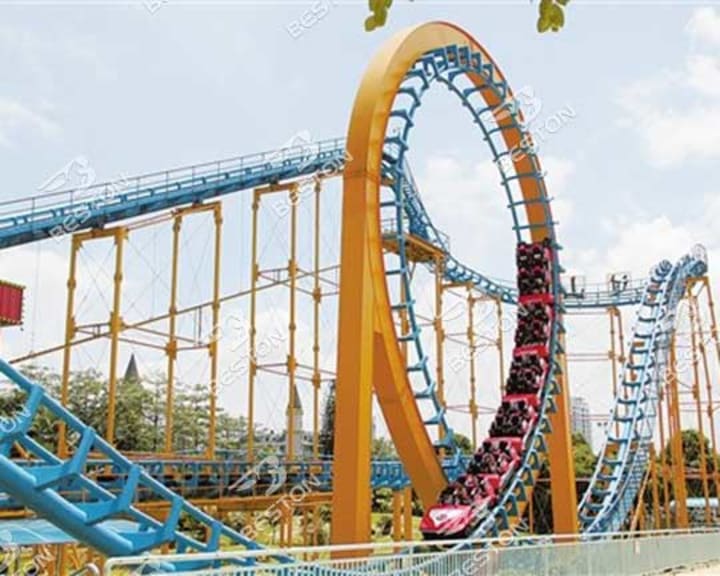
With the advent of VR, this mechanical tradition took a quantum leap. No longer confined to steel and wood, designers began overlaying virtual landscapes on real coaster movements, generating multi-sensory illusions that deepen rider immersion.
How VR Roller Coasters Work
A VR roller coaster combines physical motion with head-mounted displays (HMDs), typically powered by tethered or wireless computing units. Riders don VR headsets before the journey begins. As the coaster car moves along the track, inertial data is synchronized with the virtual world in real time.
The coordination of physical acceleration and visual feedback is critical. A discrepancy of even milliseconds between the perceived movement and what the rider sees can induce motion sickness — a well-documented phenomenon known as sensory conflict. To mitigate this, developers employ real-time telemetry, low-latency rendering pipelines, and high frame rate projections.
System Architecture
The core components of a VR roller coaster system include:
IMU (Inertial Measurement Unit): Tracks G-force, orientation, and velocity.
VR Headset: Displays rendered environments based on the rider’s field of view.
Onboard Computer: Synchronizes visual and mechanical data.
Ride Control System: Monitors and adjusts coaster movement dynamically.
This technological framework allows developers to transport riders to imagined worlds without altering the actual track layout — a revolution in ride design economics.
Enhanced Narrative Potential
Traditional amusement rides rely heavily on physical environment and theming. A wooden roller coaster, for instance, evokes nostalgia through tactile feedback, sound, and open-air construction. But a VR-integrated coaster can replace scenery with procedurally generated environments — from asteroid fields to deep-ocean ruins — enabling storyline-driven experiences that evolve over time.

For example, Europa-Park’s “Coastiality” platform allows riders to choose different virtual narratives on the same physical ride, effectively transforming one attraction into multiple experiences. This reusability enhances operational efficiency while offering return value to visitors.
Safety Considerations
Integrating VR into a roller coaster presents unique safety challenges. Traditional restraints must now accommodate headsets and possibly tethered cables. HMDs must be securely fastened, ergonomically balanced, and resistant to centrifugal force.
Ride evacuation protocols also become more complex. In the event of a system failure or emergency stop, riders may be disoriented and unable to see their surroundings. To address this, manufacturers include physical override buttons, haptic cues, and quick-release headset mechanisms.
Furthermore, not all visitors are suitable candidates for VR rides. Pre-screening for motion sensitivity, vertigo, or photosensitive epilepsy is often advised.
Operational Efficiency and Throughput
One of the major criticisms of VR roller coasters lies in reduced throughput. The process of fitting each rider with a VR headset increases loading times. Amusement parks mitigate this through:
Dual loading platforms
Pre-ride VR fitting rooms
Disposable headset liners for hygiene
Automated calibration systems
Still, the trade-off between operational efficiency and experience depth remains a core tension for amusement ride operators.
Industry Adoption and Examples
VR roller coasters are now a feature of several major amusement parks worldwide:
Six Flags: Partnered with Samsung Gear VR to retrofit existing coasters with futuristic combat simulations.
Europa-Park: Developed its own VR content platform to control storytelling.
Legoland: Introduced a kid-friendly VR coaster experience themed around flying dragons.
Each of these implementations highlights a different strategic approach — retrofit versus purpose-built, third-party VR providers versus proprietary systems.
Challenges and Future Directions
Despite their appeal, VR roller coasters face hurdles:
Hardware Obsolescence: Consumer VR hardware evolves rapidly, while amusement rides are expected to remain operational for decades.
Maintenance: VR headsets are prone to wear and tear, necessitating rigorous cleaning and recalibration.
User Fatigue: Extended exposure to VR may lead to disorientation, especially when combined with high-speed motion.
Looking ahead, integration with AI and biometric feedback may tailor ride intensity in real time, adapting to individual rider profiles. Augmented reality (AR) could offer a more lightweight alternative, layering digital elements on physical track scenery without full sensory isolation.
Conclusion
The VR roller coaster represents a paradigm shift in the design and consumption of amusement rides. By marrying physical thrill with visual illusion, it creates a new form of entertainment that is equal parts engineering marvel and narrative vessel. While operational complexities and physiological limitations exist, the future trajectory points toward even deeper fusion of digital and physical domains. For an industry that thrives on innovation and spectacle, the hybridization of virtual and real offers a potent formula for sustained exhilaration.
About the Creator
Beston Amusement Rides
As a leading amusement facility manufacturer, we provide safe and interesting amusement equipment to customers around the world, including roller coasters, Ferris wheels, pirate ships and so on.
Website:https://bestonamusementrides.com/
Keep reading
More stories from Beston Amusement Rides and writers in Journal and other communities.
Redesigning Queue Dynamics: A Comprehensive Experience Optimization Plan for Ride Queue Area
Modern amusement park ride design often emphasizes thrill, spectacle, and innovation. However, one vital yet overlooked component of visitor satisfaction lies not in the ride itself, but in the moments preceding it—the queue area. The queue is more than a simple waiting space; it is a psychological and emotional runway toward the apex of anticipation. This optimization plan offers a technical, experience-focused framework to reimagine ride queue areas, especially for high-demand attractions such as the roller coaster.
By Beston Amusement Rides10 months ago in Journal
The Role of Wholesale Food Brokers in Modern Food Supply Chains
Food distribution doesn't often go in a straight line. There is always change in demand, change in orders at stores, and change in production schedules. One month a product is hard to find. Next month there may be more inventory than the market can absorb.
By Muhammad Owais SEOabout 22 hours ago in Journal
Silken Chains
Silhouettes of the female form were given flesh and bone. Silken skin glistened under the spotlight. Dry ice rose around our Icons as they danced atop their podiums in the Square. Heralded for their beauty, their movements were slight, powerful, and sensual.
By Paul Stewart6 days ago in Fiction



Comments
There are no comments for this story
Be the first to respond and start the conversation.