
Virtual Employee vs. In-House Staff: Which Is Right for You?
Compare roles, costs, and flexibility

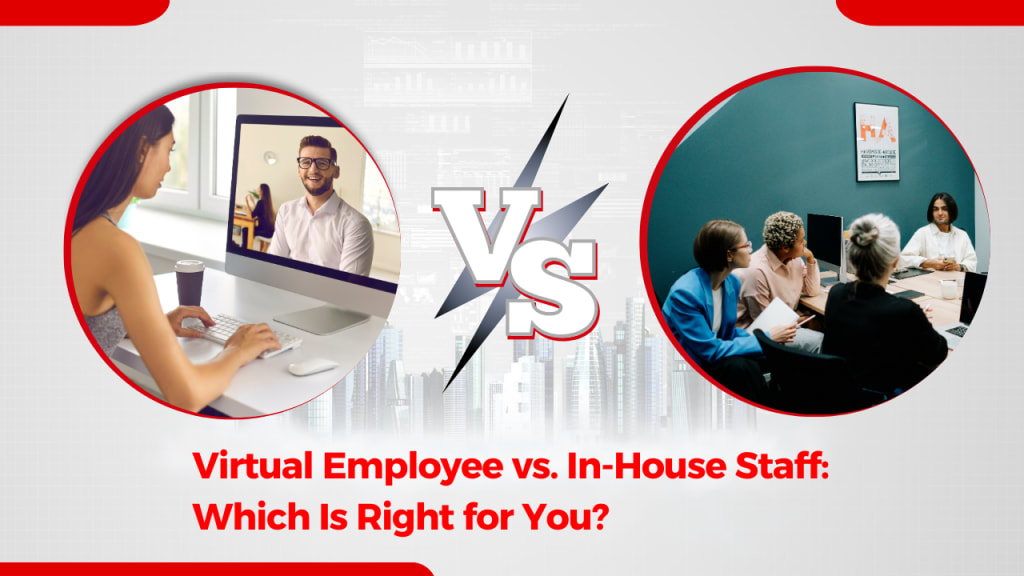
A business on the rise, but also scrapping deadlines, escalating costs, and an insatiable demand for talent. You're at a crossroads. One road leads you to a traditional in-house team, while the other allows you to dip into the power of virtual employees. Selecting the proper path is no small decision. It’s a strategic one.
Hiring is changing quickly, and for good reason. But as international collaboration becomes more prevalent in the future of work, business operators are redefining what productivity and workforce flexibility truly mean. Before you choose a side,
let’s take a closer look at what makes virtual employees different from in-house staff, and which one aligns more closely with your growth strategy, budget, and culture.
Understanding the Role of a Virtual Employee
A virtual employee operates remotely, often from a different city or even country. They're not freelancers; instead, they are typically full-time professionals, integrated into your business structure, just not physically present.
Key Benefits:
- Access to a global talent pool
- Flexible work hours based on time zones
- Cost-effective with reduced overhead
- Suitable for roles in customer service, marketing, IT, and admin
Unlike independent contractors, virtual employees report to you, follow your SOPs, and work under your control, creating a streamlined extension of your existing team.
Comparing Costs: Virtual Employee vs. In-House Hiring
It’s no secret—cost is often the top factor in making hiring decisions. And the difference here is striking.
Virtual Employee
- No physical office space required
- No commuting or relocation expenses
- Lower salary demands in certain markets
- Outsourcing firms cover HR and infrastructure
In-House Staff
- Office rent and utilities
- Equipment and software costs
- Employee benefits (insurance, pensions, etc.)
- Higher cost-of-living wages
Bottom line: Virtual employees can cut your staffing budget by as much as 60%, especially when hired from regions like India or the Philippines.
Collaboration & Communication: Are Virtual Employees Less Effective?
That depends entirely on your management approach.
Virtual Collaboration Tools:
- Zoom for meetings
- Slack or Microsoft Teams for messaging
- Trello/Asana for task management
- Google Drive or Dropbox for file sharing
Best Practices for Effective Virtual Teams:
- Set clear expectations and KPIs
- Use overlapping work hours
- Foster a culture of accountability
- Schedule regular check-ins
On the flip side, in-house staff enjoy spontaneous conversations and face-to-face brainstorming, which can boost creativity for some teams.
Productivity & Accountability: Who Delivers Better Results?
Many business owners fear that remote employees might slack off. However, studies suggest otherwise.
Why Virtual Employees May Outperform:
- Fewer office distractions
- Flexible hours that suit their peak productivity
- Task-based evaluations enhance performance
- Most virtual staff work from structured environments arranged by outsourcing firms
Challenges to Consider:
- Difficulty monitoring in real time
- Dependency on technology
- Time zone coordination
Meanwhile, in-house staff benefit from closer supervision and immediate feedback but often suffer from commute fatigue and rigid schedules.
Scalability & Flexibility: Who Wins the Growth Race?
When your business scales, so must your team. But what’s more scalable, virtual or in-house?
Virtual Employees Offer:
- Quick onboarding via outsourcing partners
- Easy expansion without office logistics
- Access to on-demand specialized roles
In-House Teams Offer:
- Stronger organizational culture
- More consistent internal training
- Stability in leadership roles
The virtual model shines in startups and fast-growing companies, where adaptability is crucial. However, if building long-term leadership and brand culture is the goal, in-house may serve you better.
Cultural Fit and Team Dynamics
While a virtual employee can be trained to match your company ethos, integrating them into your culture takes effort.
Tips to Foster Culture with Remote Workers:
- Celebrate virtual birthdays or milestones
- Include them in company-wide events via video
- Encourage feedback and two-way communication
- Share a digital "water cooler" space
In-house teams naturally absorb culture through physical interactions and shared spaces, which often accelerates trust and bonding.
Tech Requirements: A Make-or-Break Factor
Hiring a virtual employee means relying heavily on tech.
Must-Have Tools:
- Secure VPN access
- Time-tracking software (e.g., Time Doctor, Hubstaff)
- Remote desktop solutions
- Cloud-based collaboration platforms
Ensure your infrastructure is robust. Otherwise, you risk delays, miscommunication, and security vulnerabilities.
Legal and Compliance Factors
Hiring across borders introduces compliance considerations.
Virtual Employees:
- Often managed via a third-party outsourcing agency
- Agencies handle contracts, taxes, and payroll
- Less exposure to employment law risks
In-House Employees:
- Must comply with local labor laws
- Require detailed contracts and benefits administration
- Greater liability if disputes arise
Partnering with a reputed outsourcing firm simplifies legal complexities for virtual staff.
When Should You Hire a Virtual Employee?
Ideal Scenarios:
- Startups or SMEs with limited budgets
- Need for round-the-clock support
- Rapid growth and need for flexibility
- Specialized roles without local availability
When Is In-House Staff the Better Choice?
Ideal Scenarios:
- Businesses requiring face-to-face client interactions
- Roles involving sensitive data or high confidentiality
- Complex cross-departmental collaboration
- Companies focused on building a close-knit culture
Summing up
There is no one-size-fits-all answer. Indeed, a hybrid model may be your golden ticket, keeping a core in-house team but expanding your capabilities with virtual employees.
For businesses navigating budget constraints, local talent shortages, or the demands of rapid scaling, it makes absolute sense to hire a Virtual Employee. And especially not when there are so many India-based outsourcing firms that can offer you a range of well-trained personnel capable of handling a variety of functions within your company, from digital marketing to tech support and back-office work.
About the Creator
Anjelina Jones
Anjelina is passionate about writing and has authored numerous articles covering topics such as entrepreneurship.
Keep reading
More stories from Anjelina Jones and writers in Journal and other communities.
Offshore Accounting Services vs In-House Teams: What’s Better?
When it comes to managing business finances, accuracy, reliability, and efficiency are non-negotiables. For startups and established companies alike, the choice between hiring an in-house accounting team and outsourcing to an offshore provider can feel pivotal. Each route offers unique advantages, and the best decision often depends on your company’s structure, budget, and long-term goals.
By Anjelina Jones8 months ago in Journal
How Portland Teams Diagnose Mobile App Performance Bottlenecks?
Evan Brooks didn’t receive an outage alert. What he received was worse. Customer support tickets were rising, but none of them mentioned crashes. Product dashboards looked healthy. API uptime was above SLA. Crash rates were below industry averages. From an executive standpoint, the mobile app was “stable.”
By Mary L. Rodriquezabout 2 hours ago in Journal



Comments
There are no comments for this story
Be the first to respond and start the conversation.