
Ustad Shafqat Ali Khan: Carrying Forward a 400-Year Legacy of Classical Music
A celebrated Pakistani classical vocalist preserving the centuries-old tradition of the Sham Chaurasi gharana.

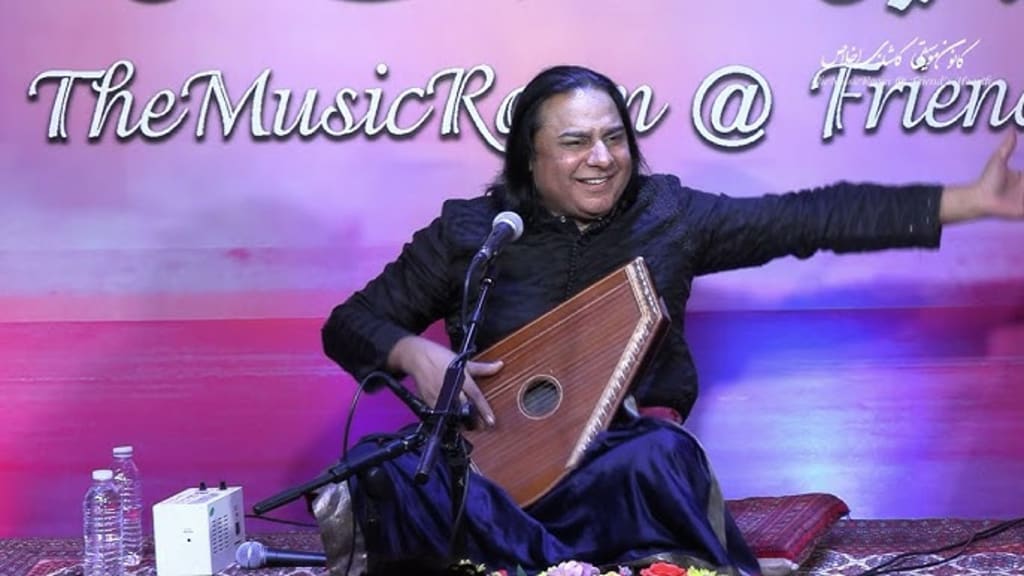
In the vast and intricate world of South Asian classical music, very few artists carry a lineage as deep or a reputation as distinguished as Ustad Shafqat Ali Khan, one of the finest contemporary exponents of the khayal tradition and an enduring representative of Pakistan’s historic Sham Chaurasi gharana. Born on June 17, 1972, Shafqat Ali Khan has spent more than four decades on stage, carrying forward a musical heritage that stretches back nearly four hundred years. His artistry, shaped by history yet alive with innovation, has made him a key figure in keeping classical music vibrant in the modern era.
Khan is the youngest son of the legendary vocalist Ustad Salamat Ali Khan, and like many musicians born into such storied families, his training began at a very early age. Music was not just taught to him—it surrounded him, filled his home, and shaped his worldview long before he stepped onto a stage. His first public performance came in 1979 at the Lahore Music Festival. Though only seven years old, he captivated listeners with a maturity far beyond his age, marking the beginning of a career that would take him across the world and establish him as one of the most recognised classical vocalists of his generation.
A Lineage Rooted in Centuries of Tradition
The Sham Chaurasi gharana is one of the oldest vocal lineages in the Subcontinent, with roots reaching back to the Mughal era. Its founders, Mian Chand Ali Khan and Mian Suraj Ali Khan, were believed to have performed for Emperor Akbar, earning a revered place in the musical traditions of the time. For Shafqat Ali Khan, this legacy is not just a matter of ancestry—it is something he feels deeply responsible for protecting and passing on.
He has often said, “I am the custodian of a 400-year tradition,” a statement that reflects not only pride but also the discipline and seriousness with which he approaches his craft. His performances, teaching style, and musical choices all echo this commitment to preserving the purity of classical forms, even as he adapts to diverse audiences across different countries.
Critical Acclaim and a Global Footprint
Over the years, Khan’s work has drawn admiration from critics, fellow musicians, and audiences worldwide. The New York Times, reviewing one of his performances in 1992, described his music as “exuberant complications,” noting the expressive way he combines complex melodic movements, subtle hand gestures, and a rich command of rhythm. These qualities have become hallmarks of his style and a testament to the depth of his training.
His international career includes performances across Europe, North America, and South Asia. He has appeared twice at the Smithsonian Institution, in 1988 and 1996, both performances contributing significantly to his global reputation. His recordings have been released by labels such as His Master’s Voice, EMI Pakistan, EMI India, MegaSound, WaterLily Acoustics (USA), and Pakistan’s Folk Heritage—an impressive catalogue that reflects both his versatility and his international appeal.
Khan has also been recognized with numerous awards throughout his career. Among them are the Amir Khusro Award (1986), the Ghanda Award from New Delhi University (1995), and a gold medal from Faisalabad University (2004). In 2009, he received Pakistan’s prestigious Pride of Performance, one of the country’s highest artistic honours. Nearly a decade later, in 2018, he was named an Ambassador for Peace by the Universal Peace Federation in Washington, D.C., acknowledging not only his musical achievements but also his role in promoting cultural harmony.
Speaking Out for Classical Musicians
Despite his success, Khan has frequently spoken about the financial difficulties faced by classical musicians in Pakistan. Because classical music is not mainstream or commercially dominant, many artists struggle to sustain themselves. Khan has been vocal about the need for institutional support, noting that artists who dedicate their lives to preserving cultural heritage deserve recognition and stable financial backing. His advocacy highlights a broader struggle to keep classical traditions alive in an era driven by commercial entertainment.
A Living Legacy
Today, Ustad Shafqat Ali Khan continues to teach, perform, and travel, ensuring that the Sham Chaurasi legacy not only survives but grows. His sons, Faizan Ali Khan and Nadir Ali Khan, have now begun performing with him, bringing fresh energy to the ancient gharana. Through them—and through the many students he trains across Pakistan and India—he is shaping the next chapter of a tradition that has endured for centuries.
Whether on stage or in the classroom, Khan approaches music as both devotion and duty. His life is a reminder that classical music is not just an art form but a lineage, a discipline, and a cultural memory carried through generations. And as he continues to perform around the world, he stands as one of the most respected guardians of South Asia’s classical heritage.
About the Creator
Aarohi Mehta
Aarohi is an independent journalist and art enthusiast who covers culture, creativity, and modern digital trends. She brings a fresh, expressive voice to her stories, blending clear reporting with a strong artistic perspective.
Keep reading
More stories from Aarohi Mehta and writers in Journal and other communities.
Ustad Waseem Ahmed Khan: Carrying Forward the Majestic Legacy of the Agra Gharana
Kolkata: In the world of Hindustani classical music, where every note carries generations of memory and meaning, Ustad Waseem Ahmed Khan has emerged as one of the most dedicated contemporary exponents of the Agra gharana. Born in 1974 into a family that has lived and breathed classical music for decades, the 50-year-old vocalist has spent his entire life working to preserve and enrich the distinctive, dhrupad-influenced khayal style that defines his musical heritage.
By Aarohi Mehta4 months ago in Journal
Author’s Advice
If you would’ve asked me 20 years ago did I know I’d become a writer and an author, I would’ve said “nope, ain’t happening”. As fate would have it I did become an author and I can honestly say I’m loving it so far. It really does feel good to be a writer. I’ve learned a lot on this journey and I feel like with even me being as new to this world as I am, there’s some wisdom I need to share with every other aspiring author.
By Joe Patterson5 days ago in Journal
5 Methods to Make Money with Pinterest — Passive Income
If you search on YouTube or the internet, you will find how people use Pinterest and make thousands of bucks every month. You might be familiar with Pinterest, or you might use it to scroll down and get ideas. But Pinterest is much more than what you think.
By makelivingonline2 days ago in Journal
A Transparent Look at Vocal Challenges and Top Stories
Almost three years ago, we shared a resource article that served as a place for people to suggest new challenge prompts. We thought it would be a good idea to refresh that thread, and take the opportunity to answer a few common questions about top stories, how challenges are judged and how submissions are reviewed.
By Vocal Curation Team4 days ago in Resources




Comments