
Using ChatGPT weakens memory and intellectual autonomy
MIT Media Lab research documents a significant reduction in brain connectivity and memory recall, raising questions about the development of essential skills in the digital age


A groundbreaking study from the MIT Media Lab has documented measurable changes in brain activity when people use ChatGPT for writing tasks, with 83% of AI users unable to recall the content of essays they had just written. The research, which monitored the brain electrical activity of 54 students over four months, reveals that ChatGPT users showed up to 55% less neural connectivity compared to those who wrote without assistance, raising urgent questions about the impact of AI on human cognition.
The study introduces the concept of “cognitive debt,” a condition where repeated reliance on AI systems progressively replaces the cognitive processes necessary for independent thought and memory formation.
Lead researcher Nataliya Kosmyna, who has studied brain-computer interfaces for 15 years, decided to publish these preliminary findings before completing peer review, citing concerns about premature implementation of educational policies without understanding the cognitive risks.

Brain Activity Decreases When ChatGPT Does the Thinking Work
The MIT study used high-density electroencephalography (EEG) to monitor 32 brain regions while participants completed 20-minute essay-writing tasks. Three distinct groups with dramatically different neural patterns emerged: the brain-only group showed the strongest and most distributed neural networks, the Google search group showed moderate engagement, and the ChatGPT group exhibited the weakest overall brain connectivity across all frequency bands measured.
The research focused on the alpha and beta EEG bands, associated with creativity, memory formation, and deep thinking. Using Dynamic Directed Transfer Function (dDTF) analysis, the researchers found that brain connectivity “systematically decreased with the amount of external support” provided.

ChatGPT users showed particularly weak fronto-parietal connectivity, the neural networks responsible for executive function and metacognitive processes such as error monitoring and self-assessment.
Most striking was the progressive change in behavior observed over the sessions. By the third session, ChatGPT users had largely abandoned effortful writing, resorting to simple copy-and-paste behaviors.
The human professors who evaluated the essays described the AI-generated content as “soulless” and lacking original thought, with high homogeneity among the essays in the LLM group. Only 9 of 18 ChatGPT users claimed full authorship of their work, compared to 16 of 18 in the brain-only group.
Memory Failure Exposes the Hidden Cost of AI Assistance
The study's most alarming finding emerged during post-writing assessments: 83.3% of ChatGPT users were unable to cite a single sentence from the essays they had written minutes earlier, compared to only 11.1% in the Google search and brain-only groups. This dramatic memory impairment suggests that AI assistance may bypass the cognitive processes required to encode information into long-term memory.
The crossover design in the fourth session revealed that these effects persist even after AI support is removed. When ChatGPT users switched to writing with their brain alone, 78% still failed to recall any sentences from their previous work, and their EEG measurements showed persistently reduced alpha and beta connectivity.
In contrast, participants who initially wrote without assistance and then used ChatGPT maintained improved recall abilities, suggesting that initial cognitive training without AI support provides some protective effect.
Dr. Kosmyna's team observed that ChatGPT users developed what they call "cognitive debt," a progressive weakening of independent thinking abilities. Reduced metacognitive activity in the brain regions responsible for self-assessment means that users become less aware of their own diminished abilities, creating a potentially dangerous feedback loop of increasing dependency and decreasing awareness.

Media Sensationalism Obscures Legitimate Scientific Concerns
The Daily Mail's coverage, titled "Do you use ChatGPT? It could make you stupid, study finds," exemplifies how the media sensationalized the findings despite Dr. Kosmyna's explicit request to avoid inflammatory language such as "stupid," "dumb," or "brain rot."
This sensationalization does a disservice to nuanced research, which focuses on specific cognitive processes rather than general intelligence.
Multiple outlets fell into an ironic trap set by the researchers: Dr. Kosmyna deliberately omitted which version of ChatGPT was used in her article, but many AI-generated summaries falsely claimed it was GPT-4. “We specifically wanted to look at that, because we were pretty sure the LLM would hallucinate about it,” Kosmyna explained, demonstrating how even science journalists are increasingly relying on the very AI tools the study warns against.
Media coverage consistently reported the study's key statistics accurately (54 participants, three groups, 83% recall failure rate), but often obscured critical limitations.
Few outlets prominently highlighted that the research has not yet been peer-reviewed, was conducted only with students in the Boston area, and tested only ChatGPT rather than AI tools in general. This selective emphasis risks creating public panic rather than an informed discussion about the appropriate use of AI in education.
Broader Research Reveals a Complex Cognitive Landscape
The MIT findings align with emerging concerns in the broader scientific literature about the cognitive impacts of AI. A concept called “AI Chatbot-Induced Cognitive Atrophy” (AICICA) has been proposed, based on the “use it or lose it” principle of neural plasticity.
Children and adolescents with still-developing brains may be particularly vulnerable to these effects, as early reliance on AI could interfere with the formation of fundamental cognitive skills.
However, the scientific picture remains mixed. A 2023 meta-analysis of 32 studies found medium to high positive effects for some learning outcomes when AI was used appropriately, though notably without improvements in critical thinking, learning engagement, or motivation. Mental health applications have shown more consistent benefits, with significant reductions in depression and psychological distress when AI chatbots provide therapeutic support.
The field faces significant methodological challenges that complicate definitive conclusions. A critical review reveals that 96% of highly cited brain imaging studies use sample sizes of only 12–24 participants, well below the 100+ recommended for reliable results.
The MIT study's 54 participants, although better than average, still fall short of ideal statistical power. Most troubling is the almost complete absence of longitudinal research tracking AI's effects on cognition over years rather than weeks.
Developing Brains Face the Greatest Risks
Dr. Kosmyna's decision to publish the findings before peer review stems from an urgent concern about educational policy. “I'm afraid that in 6-8 months, there will be some policymaker who decides, ‘Let's do GPT in kindergarten.’ I think that would be absolutely bad and detrimental ” she stated, particularly for developing brains that need to build fundamental cognitive abilities through effortful practice.
The research suggests a critical distinction between using AI to enhance existing abilities versus completely replacing the development of those abilities. Students who developed strong writing and thinking skills before using AI tools showed more resilience to the negative effects, while those who relied on AI from the start demonstrated weaker independent cognitive function.
The study's authors note that the results were “even worse” in software engineering contexts, although those findings await separate publication.
The educational implications extend beyond individual cognition to the creation of collective knowledge. When students produce highly similar AI-generated content, the diversity of thought necessary for innovation and cultural progress may diminish.
The researchers propose a hybrid model where students begin tasks independently to engage cognitive processes, and then incorporate AI support for refinement and expansion, rather than using AI as a first resource.
Navigating an Uncertain Cognitive Future
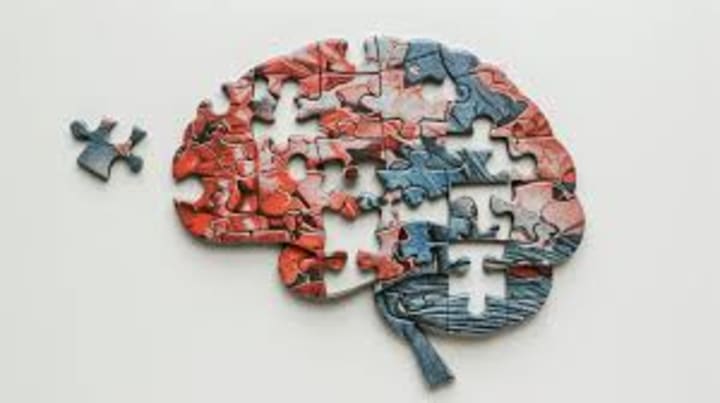
The MIT Media Lab study provides the first direct neurological evidence that ChatGPT use significantly alters brain activity patterns during cognitive tasks, with measurable impacts on memory formation and retrieval.
Although the research has important limitations, including its pre-publication status, small sample size, and focus on a single AI tool, the 83% memory failure rate among ChatGPT users demands serious attention from educators, policymakers, and technology developers.
The broader scientific literature reveals that we are in the early stages of understanding the cognitive impacts of AI, with mixed evidence, methodological challenges, and an urgent need for longitudinal research.
The concept of “cognitive debt” offers a useful framework for thinking about how repeated reliance on AI might progressively weaken independent thinking capacities, particularly concerning given the rapid adoption of these tools in educational settings.
Rather than a wholesale rejection or uncritical adoption of AI tools, evidence suggests we need thoughtful integration strategies that preserve cognitive development while leveraging AI's benefits.
The stakes are higher for young people whose brains are still developing fundamental capabilities: decisions made now about AI in education could shape the cognitive abilities of an entire generation.
About the Creator
Omar Rastelli
I'm Argentine, from the northern province of Buenos Aires. I love books, computers, travel, and the friendship of the peoples of the world. I reside in "The Land of Enchantment" New Mexico, USA...
Keep reading
More stories from Omar Rastelli and writers in Journal and other communities.
Technology Glossary: What does the Darknet mean
Technology is evolving at a rapid pace, transforming every aspect of our daily lives, from how we interact with others to the way we work and entertain ourselves. With the constant emergence of new terms, concepts, and devices, staying up-to-date has become essential for people in all walks of life, whether professionals, students, or simply technology enthusiasts.
By Omar Rastelli9 months ago in Journal
SpongeBob Review
“The Chaperone,” a gem tucked within the first season of SpongeBob SquarePants, unfurls like a bright‑hued sea‑foam tapestry, each frame drenched in the buoyant optimism that defines the series while simultaneously slipping a sly, almost parental, commentary into the mix. The episode opens with Mr. Krabs anxiously appoints SpongeBob as the designated chaperone for his wide‑eyed school‑aged daughter Pearl for the prom after her date had stood her up. Also this is after everyone in the Krusty Krab including employee Squidward had said no. This is a role that both honors and lampoons the classic “big brother” trope. As SpongeBob dutifully agrees to be a chaperone for Pearl’s prom for a wonderful night, the viewer is treated to a cascade of meticulously animated details: the iridescent shimmer of coral arches, the gentle sway of kelp that seems to echo the nervous tremor in each child’s spine, and the ever‑present, reassuring glow of the school's neon sign that feels like a lighthouse guiding lost souls. The writing skillfully balances slapstick chaos—students darting into a fish‑food line, the inevitable slime‑splatter misadventure—with tender moments of affection, such as SpongeBob’s earnest, wide‑grinned encouragement that feels as warm as a summer tide. The episode’s pacing is deliberate yet breezy, allowing each visual gag to settle before moving to the next, thereby amplifying the comedic impact while keeping the narrative buoyant and coherent.
By Forest Green4 days ago in Journal




Comments
There are no comments for this story
Be the first to respond and start the conversation.