
US and Iran to begin critical nuclear talks as Trump threatens war
Steve Witkoff, special envoy to the Middle East, speaks alongside White House Press Secretary Karoline Leavitt to the press outside of the White House on March 06, 2025 in Washington, DC
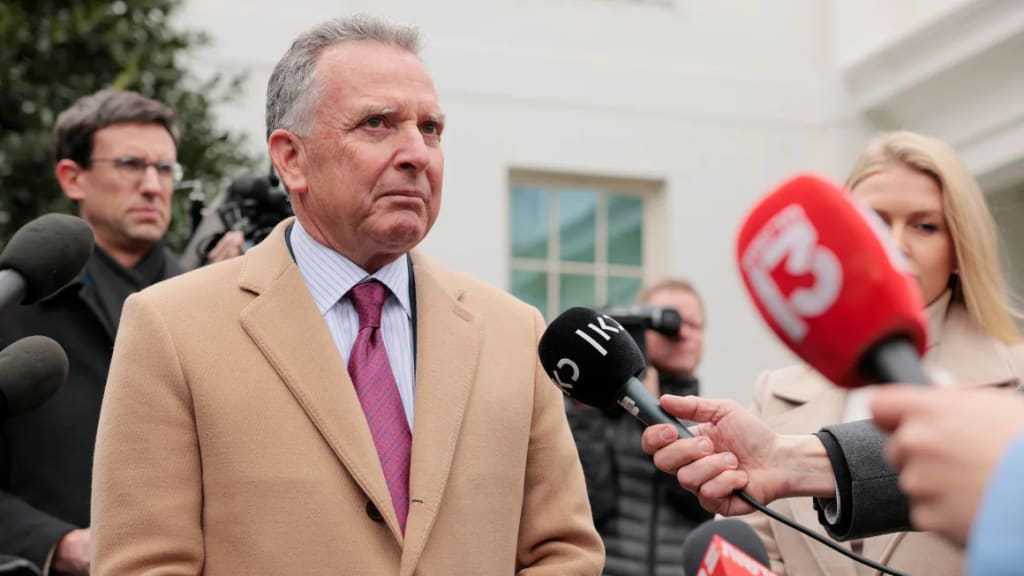
Iran and the United States are set to engage in crucial discussions aimed at establishing a new nuclear agreement on Saturday. These talks are underscored by President Trump's warning of potential military action should negotiations fail, alongside Tehran's assertion that any aggression against it could escalate into a wider conflict in the Middle East.
The discussions will take place in Oman, a Gulf Arab nation, and may mark the first direct engagement between Iranian and American officials in ten years. However, Iran has stated that these will be indirect talks, with mediators facilitating communication between the two countries.
An Iranian delegation, headed by Foreign Minister Abbas Araghchi, arrived in Muscat, the capital of Oman, on Saturday morning, as reported by Iran's state news agency IRNA.
President Donald Trump has issued a two-month ultimatum for Iran to agree to a deal that would either reduce its nuclear capabilities or eliminate its program entirely.
“I want them not to have a nuclear weapon. I want Iran to be a wonderful, great, happy country, but they can’t have a nuclear weapon,” Trump remarked while aboard Air Force One en route to Florida on Friday night.
These negotiations follow a period during which the Islamic Republic has experienced a significant decline in its regional influence over the past 18 months, due in part to Israeli strikes on its allies, the ousting of Bashar al-Assad in Syria, and unprecedented attacks within its own territory.
The stakes are considerable this Saturday: Trump has indicated that military action against Iran may be on the table if a new nuclear agreement is not established. He noted that Israel, which has been pushing for an offensive against Iran, would take the lead in such an operation.
“If military action is necessary, we will proceed with it,” Trump stated on Wednesday. “Israel will certainly play a significant role in that. They will be at the forefront.”
However, Iran has consistently rejected negotiations under pressure. On Friday, it outlined its “red lines” for discussions, which included language deemed “threatening” and “excessive demands” related to its nuclear program and defense sector, as reported by the semi-official news agency Tasnim. This likely pertains to Tehran’s ballistic missile program, which is viewed as a security threat by the United States' allies in the Middle East.
The involvement of Steve Witkoff, the Trump administration's envoy to the Middle East, in the negotiations will add to the complex and challenging issues he is already managing, following a direct meeting with Russian President Vladimir Putin regarding Ukraine in St. Petersburg on Friday.
While the specific agenda for the talks is not yet clear, the president has committed to achieving a “stronger” agreement than the 2015 nuclear deal negotiated by the Obama administration, which aimed to limit Iran’s nuclear activities. Trump withdrew from this agreement in 2018, labeling it a “disastrous” deal that financially supported a regime involved in terrorism.
Trump seeks to establish a deal that would prevent Iran from developing a nuclear weapon, yet he has not clarified how this new agreement would differ from the previous one, known as the Joint Comprehensive Plan of Action (JCPOA). That agreement was designed to restrict Iran’s nuclear program in exchange for the easing of Western sanctions.
US officials have suggested that they might urge Iran to completely dismantle its nuclear program, including its civilian energy sector, which Tehran is permitted to maintain under a UN nuclear agreement.
In response, Iranian officials have rejected this suggestion as unfeasible, accusing the US of using it as a means to undermine and ultimately destabilize the Islamic Republic.
Analysts indicate that Tehran views its nuclear program as its most significant asset for leverage, and relinquishing it would leave the nation vulnerable.
However, the administration has stated that its focus extends beyond a potential nuclear agreement; it also aims to engage Iran on a wide array of issues, according to a senior official.
The upcoming meeting on Saturday will serve as a gauge of Iran's willingness to participate in high-level discussions that could pave the way for negotiations regarding Iran’s nuclear program, its ballistic missile initiatives, and its support for regional proxies, the official noted.
“Iran would likely be keen to re-enter an agreement similar to the JCPOA, so the critical question is whether they are prepared to negotiate additional matters,” the official remarked.
About the Creator
Pakistan’s Mineral Exports Could Hit $6–8 Billion Annually With Value Addition: Ahsan Iqbal
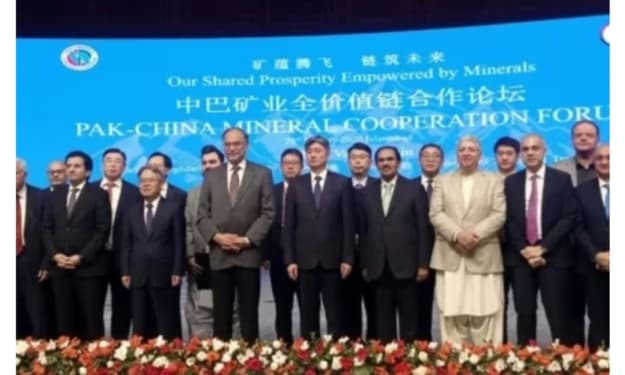
ISLAMABAD — Pakistan’s mineral sector holds immense promise, and with a strategic shift toward value addition, the country could see its mineral exports surge to between $6 billion and $8 billion per year by the end of the decade, Federal Minister for Planning and Development Ahsan Iqbal said on Wednesday. Speaking at the Pakistan–China Mineral Cooperation Forum in Islamabad, Iqbal outlined a vision for transforming Pakistan’s historically under‑utilised mineral wealth into a linchpin of export‑led growth.
By Salaar Jamaliabout 20 hours ago in Journal



Comments
There are no comments for this story
Be the first to respond and start the conversation.