
Unveiling the Power of AI Chatbots: Your Path to Enhanced Engagement
Unlock the world of AI chatbots, and explore their workings, benefits, and applications in various industries. Discover the future of conversational technology.
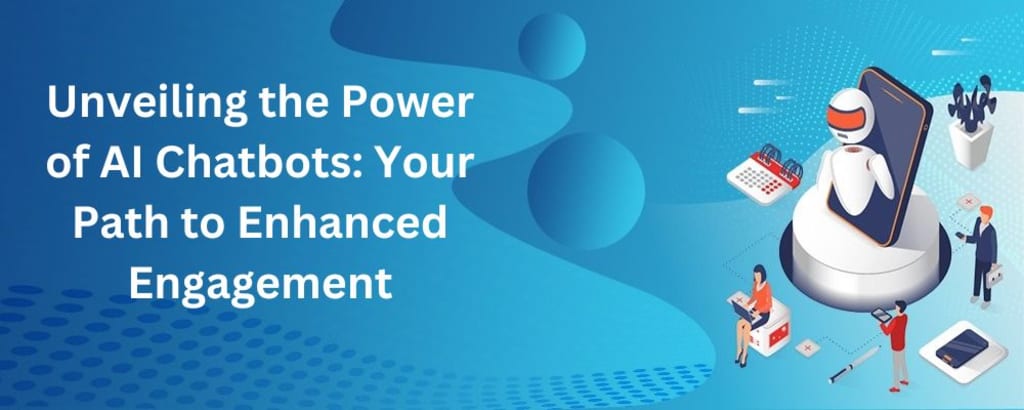
Definition and Purpose of AI Chatbots
In today's digital era, where technology has become an integral part of our lives, AI chatbots have emerged as a fascinating innovation. An AI chatbot is a computer program designed to simulate human conversation through text or voice interactions.
These intelligent bots utilize artificial intelligence techniques such as natural language processing (NLP) and machine learning algorithms to understand and respond to user queries or commands in a conversational manner. The primary purpose of AI chatbots is to enhance user experience by providing quick, accurate, and personalized assistance.
They act as virtual assistants capable of handling various tasks, ranging from answering frequently asked questions (FAQs) to assisting with complex problem-solving. By analyzing user input and contextually generating relevant responses, these bots strive to mimic human-like conversations.
Evolution of Chatbot Technology
The evolution of chatbot technology can be traced back several decades. Early chatbots were rule-based systems that followed predefined decision trees to generate responses based on keyword matching.
However, these early versions lacked the ability to truly understand natural language and provide intelligent replies. With advancements in machine learning algorithms and the advent of deep learning techniques, modern AI chatbots have witnessed remarkable progress.
Natural language processing capabilities have significantly improved, enabling bots to perform syntax analysis, semantic understanding, entity recognition, and sentiment analysis. Additionally, training models using vast amounts of data have enhanced their ability to generate more accurate responses through dialogue management.
The development of sophisticated frameworks like Google's TensorFlow and Facebook's PyTorch has also played a substantial role in the advancement of chatbot technology. These frameworks provide developers with powerful tools for building robust conversational agents capable of understanding complex user queries while adapting their responses dynamically based on different contexts.
Importance and Benefits of Using AI Chatbots
AI chatbots have gained immense importance across various industries due to their ability to streamline processes, improve customer service, and increase operational efficiency. One of their key benefits is the 24/7 availability, enabling businesses to provide round-the-clock support and assistance to customers worldwide. This accessibility ensures that users receive immediate responses without being limited by time zones or human resource constraints.
Moreover, AI chatbots can handle a high volume of inquiries simultaneously, reducing customer waiting times and minimizing frustration. They offer consistent and accurate information, eliminating the risk of human error or inconsistencies in responses.
These bots can also learn from interactions with users over time, improving their performance through continuous training and feedback. By leveraging teloz AI chatbots effectively, businesses can enhance customer engagement and satisfaction levels.
Chatbots can personalize interactions by remembering user preferences and past conversations, providing a more personalized experience for each individual user. This personalized approach fosters stronger relationships with customers while incretasing brand loyalty.
AI chatbots represent an exciting advancement in technology that has revolutionized the way businesses interact with customers. Through their evolution and development powered by artificial intelligence techniques like NLP and machine learning algorithms, these virtual assistants have become invaluable tools across various industries.
Their importance lies in their ability to provide efficient customer support around the clock while delivering accurate information consistently. By embracing this technology, businesses can offer a more personalized experience to their users while streamlining operations effectively in today's digital landscape.
Natural Language Processing (NLP) and Understanding User Input
Syntax Analysis and Semantic Understanding
In the realm of AI chatbots, natural language processing (NLP) plays a crucial role in enabling effective communication between users and chatbots. NLP involves two key components: syntax analysis and semantic understanding.
Syntax analysis focuses on the grammatical structure of sentences, allowing the chatbot to parse user input and identify the syntactic elements such as nouns, verbs, adjectives, etc. This process ensures that the chatbot can comprehend the basic structure of a sentence. Semantic understanding takes NLP to a deeper level by enabling chatbots to grasp the meaning behind user input.
It involves analyzing the context, intent, and sentiment behind each sentence or query. By leveraging machine learning algorithms, AI chatbots can learn from vast amounts of training data to recognize patterns and understand user intent accurately.
Entity Recognition and Sentiment Analysis
Within NLP, entity recognition is an essential process for AI chatbots to identify specific pieces of information mentioned by users. It enables chatbots to extract relevant entities like names, dates, locations, or any other specific details required for further processing. For instance, if a user asks about nearby restaurants using an AI-based food recommendation chatbot, entity recognition will help extract location information from their query.
Sentiment analysis is another powerful component of NLP that empowers AI chatbots to gauge user emotions or attitudes expressed in their messages. By employing sentiment analysis algorithms trained on vast datasets containing positive or negative sentiments related to various topics, these intelligent bots can react accordingly with empathy or provide appropriate responses based on the detected sentiment.
Machine Learning Algorithms for Chatbot Training
Supervised Learning for Intent Classification
Supervised learning is a widely adopted approach in training AI chatbots for intent classification. Intent classification involves determining the purpose or objective behind a user's query or statement. By providing labeled training data, where each input is associated with a specific intent, chatbots can be trained to recognize and classify different user intents accurately.
During the supervised learning process, AI chatbots learn to map user queries to predefined categories or intents by generalizing from the training examples. This way, when a new user query is encountered, the chatbot can predict the appropriate intent and provide relevant responses based on learned patterns.
Reinforcement Learning for Dialogue Management
Reinforcement learning is another machine learning paradigm used in AI chatbot development for dialogue management. Dialogue management involves determining how chatbots should respond during conversations based on context and previous interactions. Through reinforcement learning, AI chatbots learn optimal behavior by receiving feedback in the form of rewards or penalties as they interact with users.
The bots explore different actions and receive positive reinforcement when their responses align with user satisfaction or predefined success metrics. Over time, reinforcement learning algorithms enable chatbots to improve their dialogue management skills by optimizing response generation based on learned policies.
The inner workings of AI chatbots involve sophisticated mechanisms like natural language processing (NLP) for understanding user input effectively. Syntax analysis helps identify grammatical structure while semantic understanding enables deeper comprehension of meaning within queries.
Entity recognition extracts crucial details mentioned by users while sentiment analysis gauges emotions expressed in messages. Furthermore, machine learning algorithms such as supervised learning aid in intent classification while reinforcement learning enhances dialogue management capabilities of these intelligent bots.
Types of AI Chatbots
Rule-based chatbots
Rule-based chatbots operate on a set of predefined rules and decision trees. These bots are designed with specific instructions to follow, enabling them to provide appropriate responses based on the input they receive from users. The rules are created by human developers who anticipate different scenarios or frequently asked questions (FAQs) and program the bot accordingly.
While rule-based chatbots lack the ability to truly understand context or engage in natural conversations, they excel at handling straightforward tasks or providing quick answers to common queries. Their limited flexibility makes them ideal for applications where a clear flow of information is sufficient.
Retrieval-based chatbots
Retrieval-based chatbots utilize a vast database of predefined responses and employ algorithms to identify the most suitable answer based on user input. These bots can handle more complex queries compared to rule-based ones as they have access to a broader range of preprogrammed information.
However, retrieval-based chatbots lack true understanding and cannot generate new responses beyond what has been predefined. They rely on pattern matching techniques and statistical approaches to find the most relevant response from their database, making them effective for applications that require accurate information retrieval but fall short when it comes to engaging in deep conversations.
Generative chatbots
Generative chatbots represent the cutting edge of AI technology in the field of conversational agents. These bots employ deep learning models, such as recurrent neural networks (RNNs) or transformer models like GPT-3, which enable them to generate human-like responses organically rather than relying solely on predefined rules or responses from a database.
Generative chatbots have the potential for more advanced interactions due to their ability to process language contextually and generate novel responses based on learned patterns from extensive training data. However, they require massive amounts of high-quality training data and complex architectures for accurate performance, making their development and deployment more challenging compared to other chatbot types.
Applications of AI Chatbots in Various Industries
Customer Service Industry
In the customer service industry, AI chatbots have proven to be invaluable tools. They can handle customer inquiries and support tickets efficiently, providing prompt responses and assistance.
By analyzing user data and preferences, they also deliver personalized recommendations which enhance the overall customer experience. From resolving simple queries to guiding users through complex processes, chatbots streamline operations, reduce wait times, and improve customer satisfaction.
Healthcare Industry
AI chatbots are revolutionizing healthcare by offering valuable support services. In the healthcare industry, chatbots can assist patients with basic medical information and appointment scheduling.
They can collect relevant patient data to aid in diagnosis or triage, ensuring that patients receive appropriate care promptly. By providing reliable information on symptoms or giving reminders about medication schedules, these chatbots improve accessibility to healthcare resources while freeing up medical professionals' time for more critical tasks.
E-commerce Industry
Chatbots play a vital role in enhancing the customer journey in the e-commerce industry. They guide users through the purchasing process by offering product recommendations based on personalized preferences and previous interactions.
Additionally, when customers face issues or complaints with their orders/products, chatbots can intervene promptly to provide resolutions or escalate the matter if needed. This improves overall customer satisfaction by reducing response times and ensuring seamless post-purchase experiences.
Challenges and Ethical Considerations
As with any technology-driven advancement, AI chatbot development faces its fair share of challenges. One significant challenge is ensuring that these bots understand user intent accurately across various languages and cultural contexts without biases or misunderstandings.
Additionally, training generative chatbots requires extensive amounts of high-quality data which might not always be readily available. There is also the ethical concern of data privacy and security, as chatbots may handle sensitive information.
Despite these challenges, the future of chatbots looks promising. Advancements in natural language processing and machine learning techniques continue to refine chatbot capabilities, leading to more sophisticated and intelligent conversational agents.
However, it is crucial to maintain a balance between automation and human touch, understanding that chatbots should augment human interactions rather than replace them entirely. AI chatbots have become invaluable across various industries due to their ability to streamline processes, improve customer experiences, and enhance accessibility to information.
Rule-based chatbots offer simplicity and efficiency for straightforward tasks or FAQs. Retrieval-based chatbots excel at retrieving accurate information from vast databases.
Generative chatbots represent the frontier of conversational agents with their ability to generate human-like responses spontaneously. As technology advances and ethical considerations are addressed, we can expect even more remarkable advancements in AI chatbot capabilities that will redefine our interaction with automated systems in a positive way.
About the Creator
The goals I did not achieve
Every writing goal I made for the year is a wash. It has been this way for a while, but I think it's important to be open about my failures and the reality of how life can get in the way. This is especially true considering the several times I have posted on Vocal about my writing goals, how I was changing my approach, and where I was hoping to be for the upcoming year. I will probably do that again in a couple months, but for now, it is time to acknowledge where I am today.
By Kay Husnick23 days ago in Journal
Agatha Christie’s Seven Dials Mystery Netflix Review
Netflix has dipped into the vault of one of the undeniable Masters of Mystery and pulled out a fresh adaptation. This time, it’s Agatha Christie’s Seven Dials—technically book two in the Superintendent Battle series, but the first one getting the streaming treatment.
By Bella Andersona day ago in Journal


Comments
There are no comments for this story
Be the first to respond and start the conversation.