
Unraveling the Political Crisis in Pakistan: A Battle for Stability
INTRODUCTION
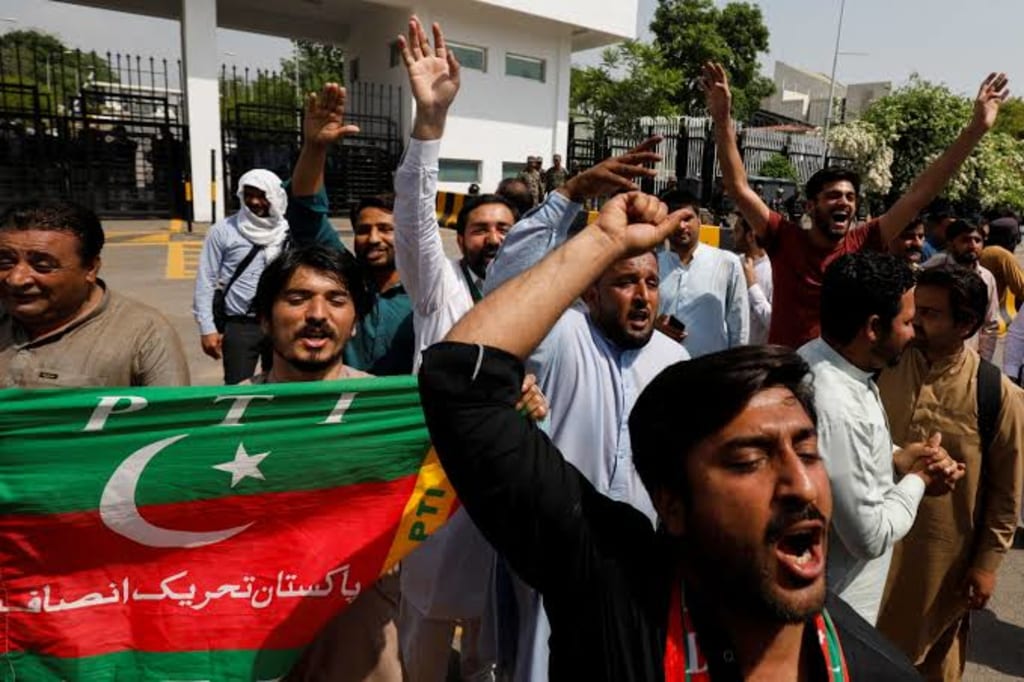
Pakistan, a nation with a turbulent political history, finds itself at the epicenter of yet another crisis. The country is grappling with a complex web of political challenges, ranging from economic instability to governance issues. The current crisis is deeply rooted in a power struggle between political factions, coupled with rising public discontent. This article aims to shed light on the key factors contributing to the political crisis in Pakistan and its potential implications for the nation's stability.
Political Fragmentation:
Pakistan's political landscape is characterized by a fragmented system, with numerous political parties vying for power. The absence of a dominant political force has led to a fractured parliament, making it difficult for any single party to form a stable government. As a result, coalition governments have become the norm, often leading to internal conflicts and power struggles that hinder effective governance
Economic Challenges:
The economic woes facing Pakistan have exacerbated the political crisis. High inflation, a depreciating currency, and a widening fiscal deficit have placed a heavy burden on the government. Citizens are grappling with rising prices, unemployment, and a decline in their purchasing power. In this environment, political parties are engaging in blame games, pointing fingers at one another for the economic mismanagement, further eroding public trust in the political system.
Corruption and Accountability:
Corruption has long plagued Pakistani politics, creating a breeding ground for public frustration. The lack of accountability and transparency has eroded public trust in politicians and the government. The perception of widespread corruption has fueled demands for a more robust and independent accountability system. However, the implementation of effective anti-corruption measures has faced significant challenges, with allegations of selective accountability and political victimization.
Ethnic and Regional Divisions:
Ethnic and regional divisions also contribute to the political crisis in Pakistan. Different provinces and ethnic groups have varying political aspirations and demands, leading to tensions and conflicts. Balochistan, Sindh, Khyber Pakhtunkhwa, and Punjab, among others, all have their own political dynamics and grievances. Failure to address these divisions can lead to a breakdown of trust and hinder national unity.
Security Concerns:
Pakistan faces persistent security challenges, including militancy, insurgency, and cross-border tensions. These security threats divert resources and attention away from political and socioeconomic development. The government's ability to effectively tackle these security concerns directly impacts the stability of the nation. Furthermore, the political response to these challenges often becomes a contentious issue, further deepening the political crisis.
Democratic Institutions and Civil-Military Relations:
The relationship between the civilian government and the powerful military in Pakistan has always been a delicate balance. The military has played a significant role in the nation's politics, leading to concerns about the supremacy of democratic institutions. The influence of the military on policymaking and governance creates an additional layer of complexity in the political landscape, leading to power struggles and uncertainty.
Implications and the Way Forward:
The ongoing political crisis in Pakistan has far-reaching implications for the nation's stability and progress. The erosion of public trust, weak governance, and economic challenges threaten to undermine the democratic foundations of the country. To address this crisis, several steps can be taken:
Strengthening democratic institutions and ensuring their autonomy and independence.
Implementing comprehensive anti-corruption measures and promoting transparency and accountability.
Fostering dialogue and inclusivity among political factions to reduce fragmentation and promote consensus-building.
Addressing regional and ethnic grievances through devolution and greater autonomy.
Prioritizing economic reforms and measures to alleviate poverty and reduce inequality.
Conclusion:
Pakistan's political crisis is a complex web of challenges that demand immediate attention and decisive action. By addressing the issues of political fragmentation, economic instability, corruption
About the Creator
Keep reading
More stories from Michael evans and writers in Journal and other communities.
Embracing AI Tools: Enhancing Our Daily Lives
Artificial Intelligence (AI) has rapidly transformed various aspects of our lives, revolutionizing the way we work, communicate, and engage with the world. From personalized recommendations to voice assistants, AI tools have become an integral part of our daily routines. In this article, we will explore how AI tools can be effectively utilized to enhance our lives, simplifying tasks, and providing valuable assistance.
By Michael evans3 years ago in Education
The goals I did not achieve
Every writing goal I made for the year is a wash. It has been this way for a while, but I think it's important to be open about my failures and the reality of how life can get in the way. This is especially true considering the several times I have posted on Vocal about my writing goals, how I was changing my approach, and where I was hoping to be for the upcoming year. I will probably do that again in a couple months, but for now, it is time to acknowledge where I am today.
By Kay Husnick25 days ago in Journal
A Comprehensive Guide to Starting a Mental Health Business and Building Client Trust
Introduction: The Rising Demand for Mental Health Services The modern era has witnessed an escalating recognition of psychological well-being as a central pillar of human flourishing. Increasing stressors, social isolation, and rapid technological change have heightened the need for accessible mental health services. Starting a mental health business responds not merely to economic opportunity but to a profound societal imperative. With thoughtful planning and unwavering ethical grounding, such a venture can become both sustainable and transformative, supporting individuals in reclaiming equilibrium and emotional resilience.
By Fida Hassain7 days ago in Journal


Comments
There are no comments for this story
Be the first to respond and start the conversation.