
Understanding the Role of Centrifuges in Modern Industry
A look at how separation technology supports everyday processes

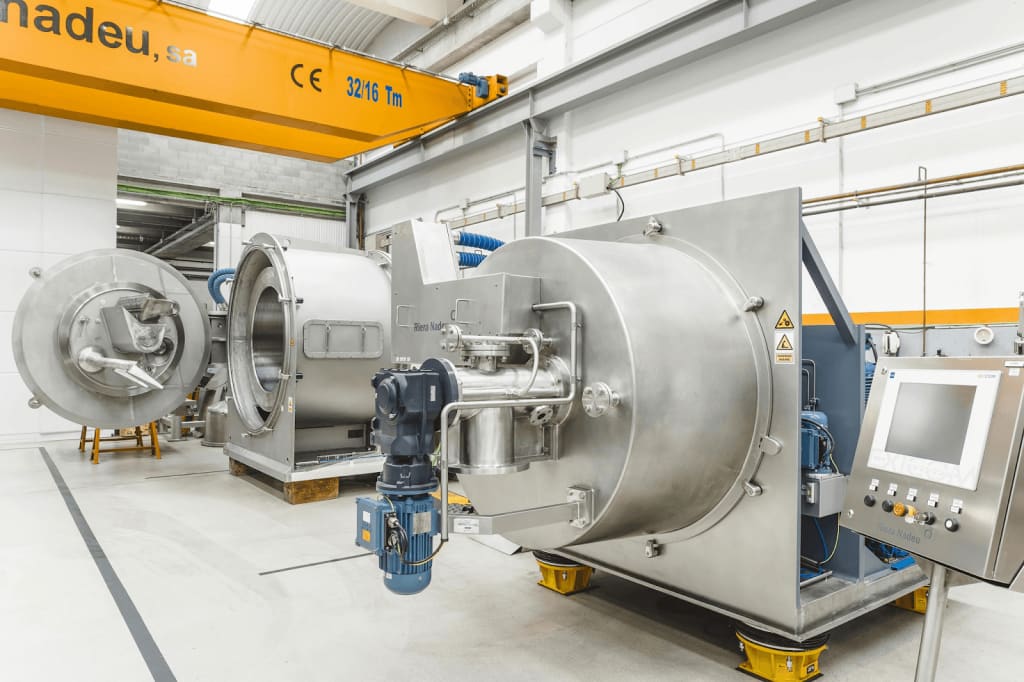
Across different industries, certain pieces of equipment rarely attract public attention, yet they quietly support essential tasks in the background. One of these tools is the centrifuge, a device designed to separate mixtures through rotational force. While many people associate centrifuges with laboratories, the technology extends far beyond medical or scientific settings. Industrial spaces—from food processing to chemical manufacturing—use more advanced versions, often referred to as industrial centrifuge machines, to handle larger volumes and more demanding applications.
Rather than focusing on a specific brand or company, this article explores how centrifuges function, where they are used, and why they are considered indispensable in various sectors.
What a Centrifuge Actually Does
A centrifuge operates on a simple physical principle: when something spins rapidly, denser components move outward while lighter components remain closer to the center. This separation process is incredibly useful in systems where mixtures need to be processed efficiently.
On a household level, many people use a similar concept daily without realizing it—washing machines rely on centrifugal force during the spin cycle to remove water from clothes. Industrial centrifuge machines work on the same idea but on a much larger and more precise scale.
How Centrifuges Support Food Processing
In the food processing industry, consistency, safety, and cleanliness matter. Equipment used in these environments must help maintain strict quality standards. Industrial centrifuge machines often play a role in:
- removing excess liquid from processed foods
- clarifying liquids such as juices
- extracting ingredients with minimal waste
- separating particles to achieve smoother textures
The list is long, and the applications vary, but the purpose remains similar: to make the overall process cleaner, faster, and more reliable.
These machines are typically part of a wider line of tools offered by companies that operate as industrial tools suppliers, machinery suppliers, or equipment suppliers, working across multiple sectors. Their function is not limited to food—they can also be found in pharmaceuticals, environmental management, and chemical industries.
The Technology Behind Industrial Centrifuge Machines
Industrial centrifuge machines differ from smaller scientific devices mainly in size, capacity, and durability. They must operate for extended periods, maintain stability under intense rotational forces, and handle a variety of substances.
A few essential features seen in many industrial models include:
1. High rotational speeds
Greater force allows faster and more thorough separation.
2. Reinforced chambers and components
Durability is essential, especially when handling abrasive or high-density mixtures.
3. Automated controls
Modern systems monitor temperature, speed, and load to maintain safety.
4. Energy efficiency considerations
Industries often look for designs that reduce power consumption without compromising performance.
These characteristics highlight how engineering and practical needs come together to create equipment that works reliably in demanding environments.
Centrifuges in the Larger Context of Automation
Centrifuges rarely work alone. They are usually part of a broader setup involving conveyors, mixers, feeders, and other automated tools. Within these systems, conveyors deliver material to the centrifuge, sensors track progress, and additional machinery prepares the product for the next stage.
This integration shows how equipment across various categories—whether for transportation, processing, or separation—plays interconnected roles. Each tool supports the larger goal of creating efficient, safe, and consistent production lines.
Learning from the Use of Centrifugation Technology
Looking at the wide-ranging uses of the centrifuge—both the foundational scientific version described in resources like the general knowledge surrounding the centrifuge, and the larger industrial variations—offers some meaningful insights:
- Technology evolves to meet real-world needs. Simple scientific principles can expand into large-scale industrial applications.
- The unseen machinery often makes the biggest impact. Much of our food safety, chemical refinement, and waste reduction relies on equipment we seldom think about.
- Adaptability matters. Industrial centrifuge machines are designed to handle diverse materials, showing how flexible engineering can support multiple industries.
These observations help frame centrifuges not just as machines, but as examples of how practical innovation shapes everyday processes behind the scenes.
Conclusion
Centrifuges, whether small laboratory models or large industrial machines, play an essential role in separating materials efficiently. They support industries that many people rely on daily—from food processing to chemical production—yet they often remain unnoticed.
Viewing them through a broader lens, rather than through a promotional one, helps highlight how technology quietly supports our routines. It also sheds light on the thoughtful engineering behind tools used across modern manufacturing and processing environments.
About the Creator
Keep reading
More stories from charliesamuel and writers in Journal and other communities.
Exploring the Role of Conveying Equipment in Modern Material Handling
In many industries, the movement of materials is a task that appears simple on the surface but depends on carefully engineered systems behind the scenes. Conveying equipment, such as conveyors and feeding elevators (conveyors feeding elevator), plays a central role in keeping production lines steady, reducing manual strain, and supporting safer operations. Because these systems operate quietly in the background, it is easy to overlook how much planning and design contributes to their reliability.
By charliesamuel4 months ago in Journal
Author’s Advice
If you would’ve asked me 20 years ago did I know I’d become a writer and an author, I would’ve said “nope, ain’t happening”. As fate would have it I did become an author and I can honestly say I’m loving it so far. It really does feel good to be a writer. I’ve learned a lot on this journey and I feel like with even me being as new to this world as I am, there’s some wisdom I need to share with every other aspiring author.
By Joe Patterson3 days ago in Journal
How To Taste Hoi An Through Its Most Loved Local Dishes
Among the many Asian countries worth checking out on your next vacation, a must-visit would be Vietnam. One of the areas worth delving into in Vietnam is its interesting food scene. A city quite famous for the amazing food culture would be Hoi An. The many meals in the city are cooked the same way they have been for generations, using familiar ingredients and steady routines. You might be able to find a deeper appreciation for this city when you start diving into the cuisine of the region.
By Jeewanthi Armstrong6 days ago in Journal



Comments
There are no comments for this story
Be the first to respond and start the conversation.