
Uncovering the Depths of History with Maritime Archaeology
Maritime Archaeology

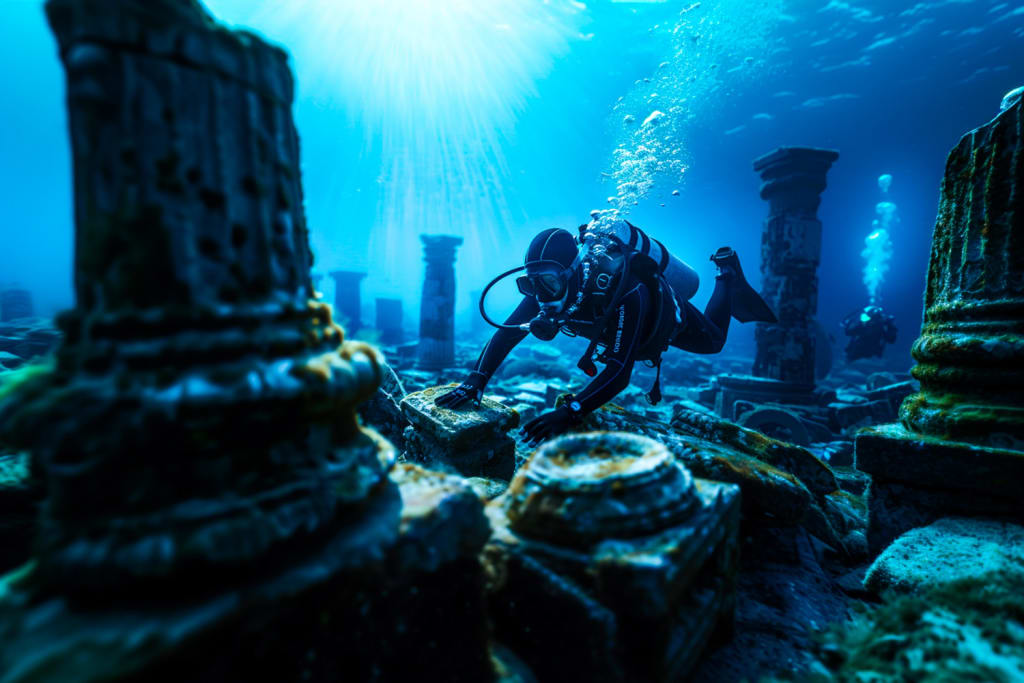
Introduction
Imagine the mysteries hidden beneath the ocean's surface, where sunken ships, ancient cities, and forgotten treasures await discovery. Maritime archaeology dives into these depths to uncover the secrets of our past, revealing stories lost to time.
Maritime archaeology is the study of human interaction with the sea, lakes, and rivers through the excavation and analysis of submerged sites and artifacts. This fascinating field offers invaluable insights into our history and cultural heritage.
This blog post aims to explore the significance of maritime archaeology, its methods and techniques, notable discoveries, and the challenges faced by archaeologists in this domain.
What is Maritime Archaeology?
Maritime archaeology is a specialized branch of archaeology that focuses on studying underwater sites, shipwrecks, and other submerged artifacts. It examines human interaction with aquatic environments, ranging from ancient port structures to sunken warships.
The scope of maritime archaeology is vast, encompassing everything from prehistoric settlements now underwater to World War II shipwrecks. It involves the identification, excavation, recording, and preservation of underwater cultural heritage.
Key terms in maritime archaeology include "shipwrecks," referring to sunken vessels, and "underwater sites," which encompass submerged ruins and artifacts. "Subaquatic archaeology" is another term often used to describe this field.
History of Maritime Archaeology
The roots of maritime archaeology can be traced back to the early days of human exploration. Ancient civilizations, such as the Greeks and Egyptians, documented underwater findings, laying the groundwork for future exploration.
Pioneering expeditions in the 19th and early 20th centuries marked significant milestones in maritime archaeology. For example, the discovery of the Antikythera mechanism off the coast of Greece in 1901 provided remarkable insights into ancient technology.
With the advent of modern technology, maritime archaeology has transformed dramatically. Innovations like sonar scanning and submersible vehicles have revolutionized underwater exploration, enabling archaeologists to reach previously inaccessible sites.
Types of Marine Archaeology
Marine archaeology is a diverse field that encompasses various specialized areas, each focusing on different aspects of underwater exploration and preservation. Here, we delve into the key types of marine archaeology, their methods, significance, and notable examples:
Shipwreck Archaeology
Definition and Scope: Shipwreck archaeology involves the study and excavation of sunken ships and their cargoes. This type of archaeology seeks to understand the construction, use, and demise of ships, as well as the historical context of their voyages.
Methods: Techniques include sonar scanning to locate wrecks, underwater excavation using divers and remotely operated vehicles (ROVs), and meticulous documentation of artifacts.
Significance: Shipwreck archaeology provides insights into maritime history, trade routes, naval warfare, and technological advancements in shipbuilding.
Notable Examples: The discovery of the Titanic, the Vasa in Sweden, and the Mary Rose in England are some of the most significant shipwreck finds, offering a wealth of historical data.
Underwater Site Archaeology
Definition and Scope: Underwater site archaeology focuses on exploring and studying submerged sites such as ancient harbors, sunken cities, and settlements that were once above water.
Methods: Methods include underwater mapping, remote sensing, and the use of submersibles to navigate and document extensive areas. Excavation is often conducted with specialized underwater tools.
Significance: This type of archaeology sheds light on human adaptation to coastal environments, trade, and urban development in ancient times.
Notable Examples: The submerged city of Heracleion off the coast of Egypt and the ancient port of Caesarea Maritima in Israel are prime examples of underwater site archaeology, revealing significant historical and cultural information.
Coastal Archaeology
Definition and Scope: Coastal archaeology examines the remains of human activity along coastlines, including ancient settlements, trade routes, and fortifications that are now partially submerged or eroded.
Methods: Techniques include coastal surveys, excavation of intertidal zones, and analysis of coastal erosion patterns. This type often requires both terrestrial and underwater archaeological methods.
Significance: Coastal archaeology is essential for understanding human interaction with marine environments, including economic activities like fishing and trade, as well as the impact of sea-level changes on human settlements.
Notable Examples: The study of the ancient coastal settlement of Jomon in Japan and the coastal fortifications of the Viking Age are notable projects that have provided deep insights into past coastal societies.
Deep-Sea Archaeology
Definition and Scope: Deep-sea archaeology involves the exploration of archaeological sites located at great depths, often beyond the reach of traditional diving techniques.
Methods: This type relies he avily on advanced technology such as deep-sea submersibles, ROVs, and high-resolution sonar mapping to locate and study sites.
Significance: Deep-sea archaeology has the potential to uncover shipwrecks and other artifacts that are exceptionally well-preserved due to the lack of oxygen and light at such depths.
Notable Examples: The exploration of the wreck of the German battleship Bismarck and the ancient shipwrecks found in the Black Sea are groundbreaking examples that have expanded our understanding of deep-sea environments and their historical significance.
Methods and Techniques
Survey techniques are essential in maritime archaeology. Sonar scanning, underwater mapping, and remote sensing are used to locate and document submerged sites. These methods provide detailed images and data for further analysis.
Excavation methods in maritime archaeology require specialized tools and equipment. Divers use hand-held dredges and airlifts to carefully excavate sites, while underwater metal detectors help locate buried artifacts.
Recording and preservation are crucial steps in maritime archaeology. Photogrammetry and 3D modeling techniques are used to document finds accurately, while conservation treatments ensure that artifacts are preserved for future study and display.
Significant Discoveries in Maritime Archaeology
Famous shipwrecks have always captured the public's imagination. The discovery of the Titanic in 1985 provided unprecedented insights into early 20th-century maritime history. Similarly, the Vasa, a Swedish warship raised in 1961, offered a glimpse into 17th-century naval warfare.
Underwater cities, such as the submerged city of Heracleion in Egypt, have revealed remarkable details about ancient civilizations. These discoveries illustrate how entire cities can be preserved underwater, offering a unique perspective on urban life in history.
Unique artifacts found through maritime archaeology include the Uluburun shipwreck in Turkey, which contained a wealth of Bronze Age goods, and the Mary Rose, an English warship that yielded thousands of well-preserved artifacts from the Tudor period.
The Importance of Maritime Archaeology
Maritime archaeology plays a vital role in preserving cultural heritage. By studying submerged sites and artifacts, archaeologists can reconstruct past societies and understand their interactions with aquatic environments. This preservation helps maintain the historical integrity of these sites for future generations.
The field also provides valuable historical insights. Maritime archaeology sheds light on ancient trade routes, naval warfare, and everyday life in coastal communities. These discoveries enrich our understanding of human history and civilization.
Additionally, maritime archaeology contributes to our knowledge of past environmental changes. By studying submerged landscapes and artifacts, archaeologists can infer historical sea-level changes and climatic conditions, offering crucial data for current environmental research.
Challenges in Maritime Archaeology
Technical challenges are inherent in maritime archaeology. Underwater excavation is complex and requires specialized equipment and training. Maintaining the integrity of fragile artifacts during excavation and preservation poses significant difficulties.
Legal and ethical issues also present challenges. Maritime archaeologists must navigate international laws governing underwater cultural heritage. Ethical considerations include respecting the cultural significance of sites and ensuring that excavation practices do not harm the environment.
Funding and resources are persistent challenges in maritime archaeology. Excavations and preservation efforts are costly, and securing adequate funding can be difficult. Limited resources may restrict access to advanced technology and training opportunities.
Conclusion
To summarize, maritime archaeology is a fascinating field that uncovers the hidden depths of our history. From studying ancient shipwrecks to exploring submerged cities, maritime archaeologists reveal stories and artifacts that provide invaluable insights into our past.
The future of maritime archaeology holds endless potential. Advancements in technology will continue to revolutionize underwater exploration, leading to new discoveries and a deeper understanding of human history.
We encourage readers to learn more about maritime archaeology and support preservation efforts. By engaging with this field, we can ensure that the secrets of the deep sea are preserved for future generations to explore and appreciate.
For more about maritime related blog visit Shipfinex
About the Creator
Keep reading
More stories from Johnny Cash and writers in Journal and other communities.
Shipbuilding vs. Newbuilds: Key Maritime Industry Differences Explained | 2025-2030
In 2023 alone, global newbuild orders exceeded $120 billion, representing one of the most significant investment waves in maritime history. Yet despite these staggering figures, a surprising number of industry stakeholders remain confused about a fundamental question: What exactly distinguishes "shipbuilding" from "newbuilds"?
By Johnny Cash3 months ago in Journal
Author’s Advice
If you would’ve asked me 20 years ago did I know I’d become a writer and an author, I would’ve said “nope, ain’t happening”. As fate would have it I did become an author and I can honestly say I’m loving it so far. It really does feel good to be a writer. I’ve learned a lot on this journey and I feel like with even me being as new to this world as I am, there’s some wisdom I need to share with every other aspiring author.
By Joe Patterson5 days ago in Journal




Comments
There are no comments for this story
Be the first to respond and start the conversation.