
UAE Conglomerate Plans Legal Action Against Lebanon Over US$1.7 Billion Investment Losses
Escalating legal battle underscores mounting foreign investor frustration with Lebanon’s banking collapse and prolonged economic paralysis

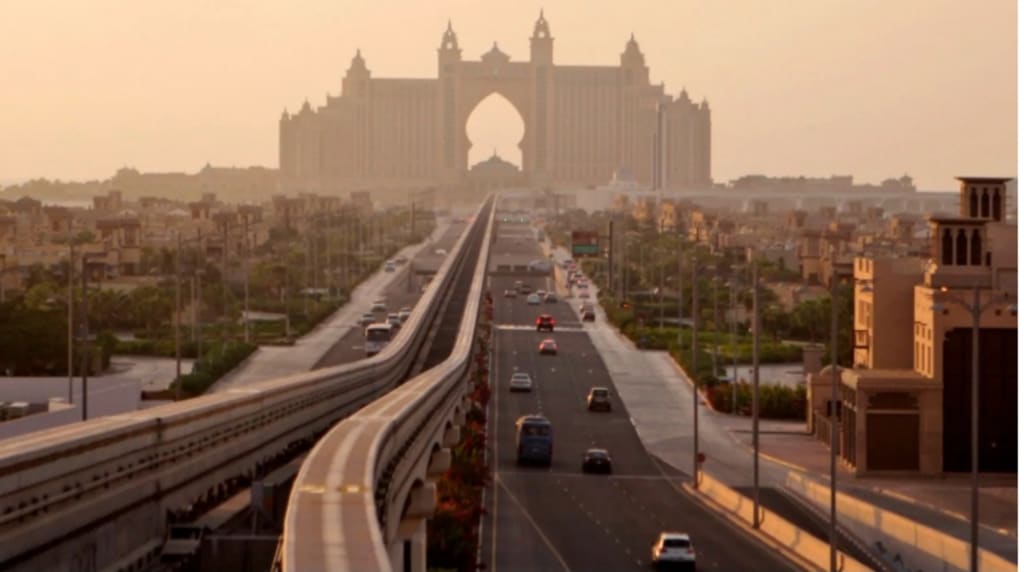
Escalating dispute highlights investor concerns over Lebanon’s prolonged financial crisis and legal uncertainty
---
A major UAE-based conglomerate has announced plans to pursue legal action against the Lebanese state, citing losses of approximately US$1.7 billion tied to investments that have been frozen or rendered inaccessible amid Lebanon’s deepening financial collapse. The move marks one of the most high-profile legal challenges yet against Beirut by a Gulf investor and underscores the far-reaching consequences of Lebanon’s ongoing economic and governance crisis.
Background to the dispute
The conglomerate, whose diversified portfolio spans banking, real estate, energy, and infrastructure, entered Lebanon’s market over the past two decades, attracted by its strategic location, skilled workforce, and historical role as a regional financial hub. Like many foreign investors, it placed substantial capital in Lebanese banks, sovereign-linked instruments, and long-term development projects.
However, Lebanon’s financial meltdown that began in late 2019 fundamentally altered the investment landscape. Capital controls were imposed informally by banks, the Lebanese pound collapsed, and depositors — both local and foreign — were effectively locked out of their funds. For large institutional investors, these measures translated into massive write-downs and an inability to repatriate capital.
According to sources familiar with the matter, the UAE conglomerate argues that its losses stem not only from market conditions but also from state responsibility, alleging failures by Lebanese authorities to protect foreign investments, uphold financial regulations, and ensure equal treatment under the law.
Legal avenues under consideration
The conglomerate is reportedly exploring international arbitration and litigation, potentially under bilateral investment treaties (BITs) or international investment protection frameworks to which Lebanon is a party. Such treaties typically guarantee fair and equitable treatment, protection against expropriation, and the free transfer of capital.
Legal experts note that if the case proceeds, it could be filed before bodies such as the International Centre for Settlement of Investment Disputes (ICSID) or other arbitration forums. While outcomes in such cases are never guaranteed, even the initiation of proceedings could further complicate Lebanon’s already strained relations with foreign investors and creditors.
The company is said to be seeking compensation for lost deposits, impaired assets, and missed investment returns — a figure estimated at US$1.7 billion, making it one of the largest claims linked to Lebanon’s crisis to date.
Lebanon’s fragile investment climate
Lebanon is grappling with one of the worst economic crises in modern history. The World Bank has repeatedly described the collapse as among the most severe globally since the mid-19th century. GDP has shrunk dramatically, inflation has soared, and the banking sector — once the backbone of the economy — remains largely insolvent.
For foreign investors, the crisis has exposed deep structural problems: weak regulation, political paralysis, lack of judicial independence, and the absence of a coherent recovery plan. Efforts to negotiate a bailout with the International Monetary Fund (IMF) have stalled repeatedly, undermining confidence that reforms will be implemented anytime soon.
Against this backdrop, the UAE conglomerate’s decision to pursue legal action reflects a broader shift among international investors from patience to assertive legal recourse.
Regional and diplomatic implications
The dispute carries implications beyond the courtroom. The UAE has historically been a key economic partner for Lebanon, with Emirati companies and individuals investing heavily in banking, tourism, real estate, and trade. A high-profile legal battle could strain bilateral economic ties at a time when Lebanon can least afford to alienate Gulf investors.
Analysts warn that such cases send a chilling signal to potential investors considering Lebanon’s market. “When a major Gulf conglomerate moves toward litigation, it reinforces the perception that Lebanon is no longer a safe or predictable destination for foreign capital,” said a regional investment analyst. “That reputational damage can last for years.”
Lebanese response and challenges ahead
Lebanese officials have not publicly commented in detail on the planned legal action, but past statements from government figures have emphasized that losses should be shared across stakeholders — banks, the state, and depositors — as part of a comprehensive restructuring. Critics argue that the lack of clarity and delays in adopting banking resolution laws have only worsened investor losses.
Defending against international arbitration could also prove costly for Lebanon, both financially and politically. Even if the state contests liability, prolonged legal battles could result in further asset freezes or enforcement actions abroad if rulings go against it.
A test case for accountability
For the UAE conglomerate, the legal move appears aimed not only at recovering losses but also at establishing accountability. By escalating the dispute to international forums, the company is signaling that the status quo — marked by uncertainty and inaction — is no longer acceptable.
For Lebanon, the case may become a test of its willingness to engage with investor claims, reform its financial system, and restore trust. Without meaningful reforms, experts warn that similar legal actions could follow from other foreign investors, multiplying Lebanon’s legal and financial exposure.
Conclusion
The planned legal action over US$1.7 billion in investment losses highlights the profound and lasting impact of Lebanon’s financial collapse on foreign investors. As a prominent UAE conglomerate prepares to challenge the Lebanese state, the dispute underscores a stark reality: rebuilding confidence will require more than promises. It will demand concrete reforms, legal clarity, and a credible path to economic recovery — without which Lebanon risks further isolation from the global investment community.
About the Creator
Keep reading
More stories from Salaar Jamali and writers in Journal and other communities.
The Wheat Paradox
Wheat is one of humanity’s oldest cultivated crops and remains a cornerstone of the global food system. From bread and pasta to flatbreads and noodles, it provides nearly 20 percent of the world’s daily calories. Yet despite record levels of production in many years and advanced agricultural technologies, wheat has become a symbol of contradiction in the modern world. This contradiction — often referred to as the “wheat paradox” — lies in the fact that while global wheat supplies are broadly sufficient, access to affordable wheat-based food is becoming more fragile for millions of people.
By Salaar Jamaliabout 20 hours ago in Journal




Comments
There are no comments for this story
Be the first to respond and start the conversation.