
Typhoon Jets Scrambled Today: RAF’s Rapid Response in UK Skies
Why Were Typhoon Jets Scrambled Today?


Introduction
In a clear demonstration of readiness and aerial defense, two RAF Typhoon fighter jets were scrambled today from RAF Lossiemouth in Scotland. The mission was part of a Quick Reaction Alert (QRA) response after radar detected an unidentified aircraft approaching the UK’s “area of interest” north of Scotland.
Though the unknown aircraft never entered British sovereign airspace and no interception was required, the event underscores how seriously the UK treats threats to its skies.
---
Why Were Typhoons Scrambled?
The RAF described that radar systems detected an aircraft moving toward the UK Flight Information Region (FIR). Because the aircraft was unidentified and on approach, the standard protocol was enacted: scramble jets to evaluate the situation.
The purpose of such scrambles is to identify, monitor, and if needed escort aircraft approaching national airspace. Even though today’s mission ended without interception, this is a routine but essential task that keeps British airspace secure.
---
Mission Overview: What Happened Today
The jets took off from RAF Lossiemouth, located in Moray, Scotland.
A Voyager tanker from RAF Brize Norton was deployed to support them, flying in a refueling pattern near the Shetland Islands.
During the mission, the tanker climbed to over 34,000 feet, then repositioned itself to stay within range of the Typhoons.
Despite the scramble, the unknown aircraft never entered the UK Flight Information Region, and the Typhoons returned to base once the situation was assessed.
An RAF spokesperson confirmed the routine nature of such actions:
> “Quick Reaction Alert Typhoon fighters launched from RAF Lossiemouth today due to unidentified aircraft approaching the UK’s area of interest. However, the unidentified aircraft did not enter the UK Flight Information Region and no interceptions took place.”
---
The QRA System: How Scrambles Work
The UK’s Quick Reaction Alert system is the backbone of national air defense.
Here’s how it functions in broad terms:
1. Threat Detected
Ground-based radars and partner systems maintain a “Recognised Air Picture” (RAP), continuously monitoring aircraft in and around UK airspace.
2. Decision to Scramble
The National Air and Space Operations Centre (NASOC) at RAF Air Command evaluates data and releases the order to scramble via the Control and Reporting Centre (CRC) at RAF Boulmer.
3. Jet Launch
Pilots and ground crews at QRA bases—Lossiemouth in the north, Coningsby in the south—are always on alert. Once the order comes, jets take off quickly.
4. Coordination and Support
Air traffic controllers at Swanwick (civilian) and RAF systems help guide the fighters safely toward the target. Tankers like the Voyager can refuel jets midair to extend missions.
5. Resolution
Once the unknown aircraft is identified or a threat is ruled out, the Typhoons return to base and post-mission reviews begin.
Because RAF Lossiemouth covers the northern approaches, it handles scrambles over the North Sea and toward the Arctic and North Atlantic pathways.
---
Past Scrambles & Sonic Booms
Such missions are not new. Typhoon jets are scrambled regularly to intercept aircraft that stray near UK airspace or fail to communicate.
One notable past event: in August 2025, Typhoons were scrambled to intercept a passenger jet that lost contact with air traffic control. One of the fighters flew supersonic, causing a sonic boom heard across parts of Kent and Essex.
In that case, communications were reestablished and the aircraft was safely escorted to an airport.
---
Why These Scrambles Matter
Protecting Sovereignty – They show the UK controls and defends its airspace against unknown or hostile aircraft.
Deterrence – Consistent response capability discourages violations or aggressive aerial maneuvers near UK boundaries.
Safety Assurance – Unresponsive or unidentified aircraft can be hazardous; scrambles help verify and manage risk.
NATO Integration – The UK’s QRA operations are tied into allied air policing and defense coordination.
---
After the Mission: What Happens Next
Once the jets return to base:
Command and crew analyze the mission, reviewing radar logs and radar contact details.
Any lessons learned are fed into protocols and procedures.
The RAF maintains constant monitoring for new threats.
Crews and support staff resume standby readiness.
Because transparency matters, public briefings or statements often follow scrambles to reassure communities and clarify what happened.
---
Conclusion
Today’s scramble of Typhoon jets from RAF Lossiemouth was a textbook Quick Reaction Alert mission. Though no direct interception occurred, the response demonstrates the UK’s ongoing commitment to securing its skies. From ground radars to airborne refueling support, the system is designed to act fast—and that speed matters in protecting national interests.
Would you like me to add SEO-optimized headers or format this article for a specific Vocal Media community next?
About the Creator
Fiaz Ahmed
I am Fiaz Ahmed. I am a passionate writer. I love covering trending topics and breaking news. With a sharp eye for what’s happening around the world, and crafts timely and engaging stories that keep readers informed and updated.
Keep reading
More stories from Fiaz Ahmed and writers in Journal and other communities.
Flotilla Tracker: Navigating Modern Seas with Digital Tools
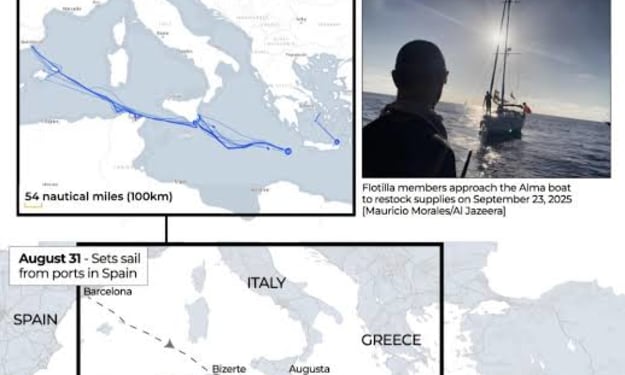
Introduction In today’s world, technology touches nearly every aspect of life, including how ships are tracked across the oceans. The term “flotilla tracker” refers to systems, apps, and platforms designed to monitor groups of vessels in real time. Whether for commercial shipping, fishing fleets, naval operations, or humanitarian convoys, flotilla trackers have become vital tools for safety, coordination, and transparency. They blend satellite data, GPS technology, and advanced software to keep the world’s waterways safer and more efficient.
By Fiaz Ahmed 5 months ago in Journal
~ Fired ~
— Ai Intrusion ~ Are you Next ~ Is Ai Evolution after your job? — Few workplaces haven't been affected. Ai is in supermarkets, at doctors' offices, and even monitoring farms. I just can't think of anything this machine is not getting into, can you? For instance: Education ~ Law and Tech jobs will one day have a major influence or be taken over by these inanimate machines, with accuracy and vigor. From mechanics' diagnoses to a wide variety of everyday jobs, including fast food workers, with this input having the ability to cut their unnecessary work hours. I'm certain all of us have been touched by this with our short stories and colorful headings, have you? Even comments are very questionable 'Non-Robot' insertions.
By Jay Kantor27 days ago in Journal


Comments
There are no comments for this story
Be the first to respond and start the conversation.