
Trump’s War and Peace: US Role in Iran-Israel Clash
Trump declares a ceasefire in the Iran-Israel conflict, but continued strikes raise the question: The Road Ahead - Peace or Just a Pause?

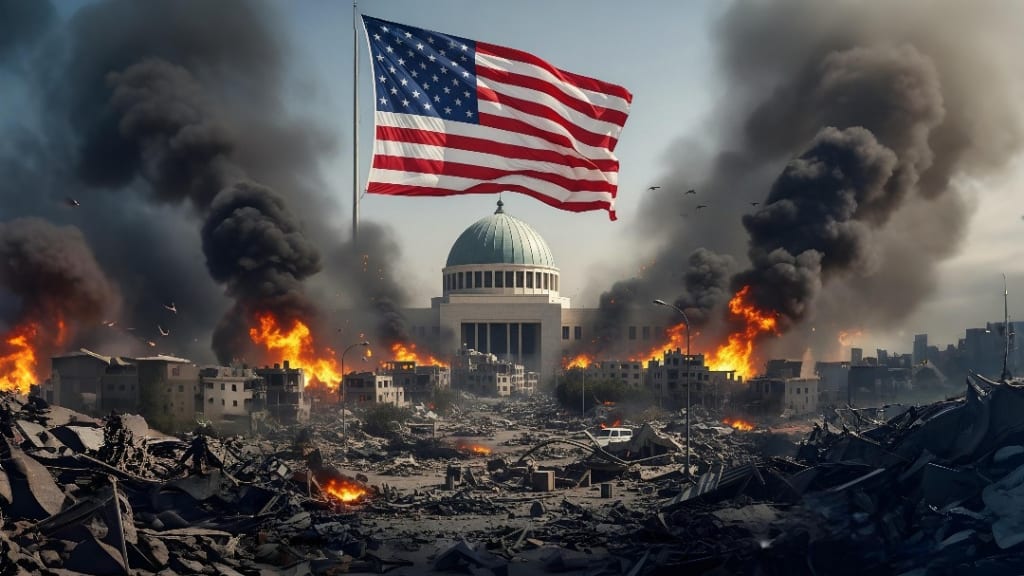
A Ceasefire in Name Only
On June 24, 2025, U.S. President Donald Trump declared a “complete and total ceasefire” between Israel and Iran, marking what he called the end of the “12 Day War.” However, despite this bold announcement, the battlefield tells a different story. Israeli cities were still under fire from Iranian missiles just hours after Trump’s claim, and Israeli airstrikes reportedly continued up to the ceasefire deadline. Tehran, meanwhile, remains under siege, and Iranian officials have denied any formal agreement—revealing a dangerous dissonance between diplomacy and reality.
Iran’s Foreign Minister Abbas Araghchi stated that no official ceasefire deal exists. However, he acknowledged Iran would pause its strikes if Israel stopped its “illegal aggression” by 4:00 AM local time. That conditional statement underscores the fragile, often contradictory nature of the current de-escalation efforts.
The War Becomes Personal: US Enters the Fray
What started as a long-simmering regional shadow war escalated dramatically when the United States entered the battlefield. On June 13, Israel launched Operation Rising Lion, a massive strike campaign targeting Iranian nuclear facilities at Fordow, Natanz, and Isfahan. The U.S. soon joined in, unleashing precision airstrikes on Iran’s nuclear infrastructure in what President Trump described as a move to “obliterate” Iran’s ability to build nuclear weapons.
Iran retaliated not only against Israel but directly against the United States, launching missiles at the Al Udeid Air Base in Qatar—a rare direct strike on American military assets. Though the U.S. reported no casualties and described the attack as “very weak,” the significance of Iran's bold response was clear. Trump, notably, said the U.S. would not retaliate further, framing this restraint as a commitment to peace.
Nuclear Sites in the Crosshairs
Perhaps the most alarming development has been the direct targeting and reported destruction of Iran’s nuclear facilities. According to IAEA Director General Rafael Grossi, the Fordow site suffered "very significant damage," with satellite imagery confirming the impact of multiple bombs. While Iran claims that nuclear materials were relocated and radiation levels are safe, the damage to critical enrichment infrastructure is undeniable.
U.S. Vice President JD Vance further escalated the rhetoric, stating that Iran is now “incapable” of producing a nuclear weapon due to these strikes. This could mark a major setback in Iran’s nuclear ambitions, but it also raises pressing questions about the legality and precedent of targeting such facilities during active conflict.
Iran, for its part, has decided to remain a signatory to the Nuclear Non-Proliferation Treaty (NPT), despite earlier threats to withdraw. This decision may be intended to maintain some semblance of international legitimacy even as its nuclear program lies in ruins.
Leadership Under Pressure in Iran
Inside Iran, the pressure is mounting. Reports suggest that moderate political figures are urging Supreme Leader Ali Khamenei to step back or accept a ceasefire. Discussions of his potential successor have accelerated—a rare sign of political instability within the regime’s upper echelons.
This internal turmoil reflects a broader national crisis. With over 400 reported deaths and thousands wounded, the war’s toll on Iran’s population is deep. Infrastructure, already strained by sanctions and unrest, is buckling under the pressure of sustained aerial bombardment.
Regional Shockwaves and Global Stakes
Beyond the direct conflict, the ripple effects are global. Iran’s threat to shipping in the Strait of Hormuz—through GPS interference and potential attacks—has alarmed global energy markets. Meanwhile, Gulf nations like Qatar and Bahrain temporarily closed their airspace, and Qatar Airways only recently resumed flights, signaling a tentative return to stability.
Diplomatically, the United Nations Security Council remains locked in emergency sessions. Russia has voiced support for Iran, while China warns of escalating conflict and waning U.S. credibility. European diplomats are scrambling to broker peace, but their influence appears limited in the face of entrenched hostilities.
The Road Ahead: Peace or Pause?
Despite ceasefire claims and exhausted arsenals, a lasting peace remains elusive. The war may be entering a quieter phase, but with Israel determined to dismantle Iran’s military capabilities and Tehran vowing resistance, the silence may only be temporary.
What’s clear is this: the shadow war is no longer in the shadows. With the U.S. now directly involved and nuclear sites in ruins, the Iran-Israel conflict has entered a new, more dangerous era—one with no guarantee of a peaceful resolution.
About the Creator
Det. Marcus
I'm a reporter, detective, YouTuber, and article writer based in Florida with 7+ years of experience. Since 2017, I've been uncovering stories, creating engaging content, and delivering unique perspectives across multiple platforms.
Keep reading
More stories from Det. Marcus and writers in Journal and other communities.
US Joins the Fire: Iran-Israel War Goes Nuclear
June 2025, What began as a series of tactical skirmishes and covert operations has spiraled into full-blown warfare: Israel and Iran are now engaged in direct military exchanges, including strategic air and missile strikes targeting each other’s territory. This marks a dramatic intensification of a conflict that has simmered for decades.
By Det. Marcus9 months ago in Journal
Author’s Advice
If you would’ve asked me 20 years ago did I know I’d become a writer and an author, I would’ve said “nope, ain’t happening”. As fate would have it I did become an author and I can honestly say I’m loving it so far. It really does feel good to be a writer. I’ve learned a lot on this journey and I feel like with even me being as new to this world as I am, there’s some wisdom I need to share with every other aspiring author.
By Joe Patterson5 days ago in Journal
Reasons Why Sinners and Frankenstein Could Win the Oscar for Best Picture
Horror fans are in luck: this year, two horror films are in the running for the Oscar for Best Picture. As if that weren't enough, both films have multiple nominations for this award. This year, Sinners, a gothic horror film, has been crowned the film with the most nominations in Oscar history. This movie received 16 nominations, an absolute record that never ceases to amaze.
By Ninfa Galeano3 days ago in Journal
The Forsyth House Fire
Since 1851, Forsyth House has stood on the corner of Union Street and Gordon Street in the heart of Glasgow. Its iconic, or was... because on Sunday 8th of March, 2026, a fire broke out in a small, seemingly un-named shop in the building and tore all that history down. As I write, the rubble is still unsettled and the street is still blocked off. Central Station is quiet on the upper level, and around 30 small businesses have quite literally gone up in smoke.
By S. A. Crawford3 days ago in The Swamp



Comments
There are no comments for this story
Be the first to respond and start the conversation.