
Top Songwriters of the 1970s
How the Decade’s Greatest Songwriters Shaped Music, Culture, and Generations to Come

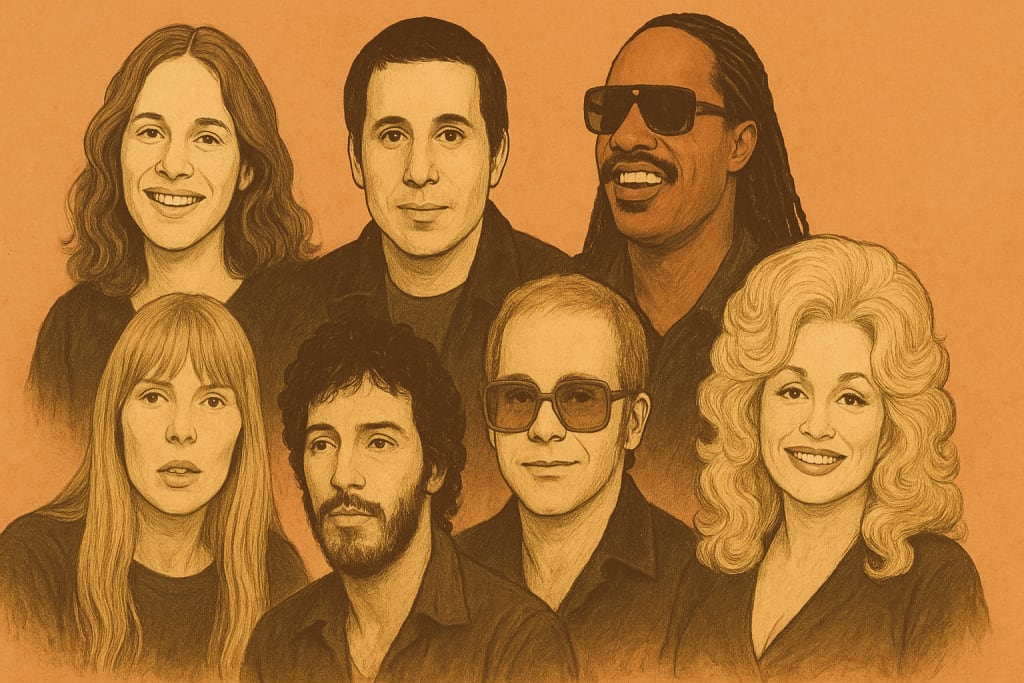
The 1970s stand out as one of the most important decades in music history. Across rock, pop, soul, folk, and country, songwriters were creating work that defined a generation. Their words and melodies filled radios, concert halls, and even international stages, leaving behind music that continues to inspire new artists today.
Below are some of the most influential songwriters of the decade and the lasting mark they made on music.
Carole King
Carole King began her career in the 1960s as part of a successful songwriting team, but in the 1970s she stepped into the spotlight with her own voice. Her 1971 album Tapestry featured classics like “I Feel the Earth Move” and “It’s Too Late,” songs that captured both personal emotion and universal feeling.
King’s strength was intimacy—her music felt like a direct conversation with the listener. Tapestry went on to sell millions of copies, becoming one of the defining albums of the decade. Even today, when artists perform her music during large-scale European concert tours, the songs retain the same warmth and connection they carried when first released.
Paul Simon
Paul Simon’s work in the 1970s showed his ability to combine clever lyrics with inventive rhythms. After his years with Simon & Garfunkel, he launched a successful solo career, writing songs like “50 Ways to Leave Your Lover” and “Me and Julio Down by the Schoolyard.”
Simon’s songwriting was remarkable for its intelligence and variety. He drew on folk, pop, Latin, and jazz influences, creating music that felt playful yet deeply thoughtful. His words often balanced humor with heart, making his songs resonate far beyond the decade.
Stevie Wonder
Stevie Wonder was already a star when the 1970s began, but his songwriting during this period turned him into a legend. Albums such as Talking Book (1972) and Songs in the Key of Life (1976) contained both chart-topping hits and songs with strong social messages.
Tracks like “Superstition,” “Sir Duke,” and “Living for the City” revealed his gift for mixing funk grooves with meaningful lyrics. Wonder not only wrote and performed these songs, but also helped push forward the sound of popular music. His creative vision made him one of the most influential voices of the entire decade.
Joni Mitchell
Few songwriters wrote with as much poetic honesty as Joni Mitchell. Her 1971 album Blue remains a landmark in the singer-songwriter tradition, featuring songs like “A Case of You” and “River.”
Mitchell’s writing combined sharp detail with raw vulnerability. She wasn’t afraid to show the complications of love, identity, and artistry. By layering personal experiences with universal themes, she gave listeners songs that still feel timeless.
Elton John & Bernie Taupin
One of the most productive songwriting partnerships of the 1970s was Elton John and lyricist Bernie Taupin. Taupin supplied the words, Elton set them to unforgettable melodies, and together they created classics like “Rocket Man,” “Tiny Dancer,” and “Goodbye Yellow Brick Road.”
Their songs balanced storytelling with emotional power. Taupin’s lyrics could be playful, dramatic, or romantic, and Elton’s music turned those words into anthems. Their collaboration was one of the strongest examples of how teamwork in songwriting could produce hits that filled arenas across Europe and beyond.
Bruce Springsteen
Bruce Springsteen’s songwriting told the stories of everyday life. His 1975 album Born to Run captured the energy, frustration, and hope of a generation looking for freedom. Songs like “Thunder Road” and “Jungleland” blended poetic detail with the power of rock and roll.
Springsteen’s lyrics painted vivid pictures of American towns, working-class struggles, and youthful dreams. His words felt authentic, and his music gave them force. By the end of the decade, he had earned the nickname “The Boss,” a reflection of his leadership in shaping rock songwriting.
Dolly Parton
Dolly Parton brought a storyteller’s touch to her songwriting. She wrote both country hits and crossover pop songs, crafting melodies that were simple but powerful.
“Jolene” (1973) remains one of her most famous works, a song that tells a whole story in just a few verses. Another classic, “I Will Always Love You” (1974), has been covered by artists worldwide, proving the strength of her writing. Parton’s songs show how a clear story, heartfelt emotion, and memorable melody can make music endure across decades.
Paul McCartney
After The Beatles broke up in 1970, Paul McCartney continued to write some of the most memorable songs of the era. With his band Wings, he released albums that produced hits like “Band on the Run,” “Jet,” and the James Bond theme “Live and Let Die.”
McCartney’s gift for melody didn’t fade after The Beatles. He had a natural talent for writing tunes that people wanted to sing along to, whether in small clubs or massive stadiums. His 1970s catalog shows his ability to evolve while still holding onto the charm that made his earlier work so beloved.
Songwriters’ Global Reach
By the mid-1970s, many of these artists were not only popular in the United States but also performing worldwide. Concert tours carried their music to new audiences, and their influence stretched across cultures. In places like Greece, fans eagerly followed the rise of these songwriters, often checking resources like the Athens event calendar to discover shows and festivals where they could experience this music live.
This global presence highlighted how the best songwriting crosses borders. A great song can speak to people anywhere, no matter the language or culture.
Final Thoughts
The 1970s were a golden era for songwriting. The musicians who rose to prominence in that decade weren’t just performers—they were storytellers. They wrote songs that captured emotions, inspired listeners, and connected people across the world.
From Carole King’s gentle warmth to Stevie Wonder’s bold innovation, from Joni Mitchell’s lyrical poetry to Springsteen’s heartfelt stories, these songwriters gave us a soundtrack that still matters. And while decades have passed, their music continues to fill radios, concert halls, and playlists—proof that great songwriting never goes out of style.
About the Creator
Keep reading
More stories from Daily Blog and writers in Journal and other communities.
Local1Best.com Launches Comprehensive Local Business Directory Across the United States
Introduction The U.S. service industry continues to grow at an impressive pace, with millions of households and businesses searching every day for trusted professionals in their area. From essential home repairs to major remodeling projects, the demand for reliable contractors is stronger than ever. Responding to this demand, Local1Best.com has officially launched its new nationwide local business directory, designed to connect American homeowners and businesses with top-rated service providers across multiple categories.
By Daily Blog5 months ago in Journal


Comments
There are no comments for this story
Be the first to respond and start the conversation.