
Top 10 Things You Must Know Before Trekking to Panch Kedar
The Panch Kedar trek is one of the most revered and spiritually enriching journeys you can undertake in the Himalayas.
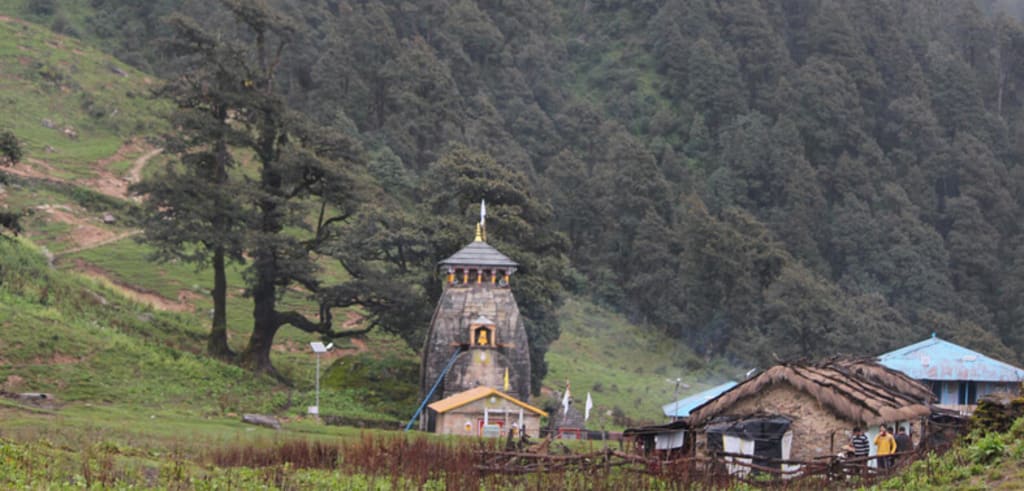
The Panch Kedar trek is one of the most revered and spiritually enriching journeys you can undertake in the Himalayas. Located in the Garhwal region of Uttarakhand, this trek takes you through five sacred temples dedicated to Lord Shiva, offering an unforgettable experience of adventure, spirituality, and breathtaking natural beauty. If you are considering embarking on this remarkable journey, here are the top 10 things you must know before setting out on the Panch Kedar trek.
1. Understanding the Significance of the Panch Kedar Temples
The Panch Kedar trek is centered around five famous Shiva temples scattered across the Garhwal region: Kedarnath, Madhmaheshwar, Tungnath, Rudranath, and Kalpnath. According to Hindu mythology, these temples are connected to the Pandavas, the legendary heroes of the Mahabharata. Seeking atonement for the sins committed during the Kurukshetra war, the Pandavas embarked on a journey to find Lord Shiva, who had disguised himself as a buffalo to avoid them. These five temples represent different parts of Lord Shiva’s body, including the hump (Kedarnath), navel (Madhmaheshwar), arms (Tungnath), face (Rudranath), and hair (Kalpnath).
2. Best Time for the Panch Kedar Trek
The Panch Kedar trek can be completed from May to October, with the peak season for trekking falling between May and June, and September to October. This is because the weather is more favorable during these months, and the paths are clearer and safer to traverse. Kedarnath opens in late April and remains accessible until November, but it is important to note that the temples typically close due to heavy snowfall from early November to mid-November. Kalpeshwar, however, remains open throughout the year, welcoming devotees and trekkers alike in every season.
3. The Trek’s Length and Difficulty
The total trek spans about 95 kilometers (59 miles), with a journey that typically lasts between 10-11 days. It is a moderately challenging trek that involves steep ascents, rugged terrains, and long stretches of trekking through forests, meadows, and mountain paths. While the trek is suitable for most trekkers, it is recommended to have a reasonable level of physical fitness, especially for high-altitude trekking. The higher altitudes and challenging terrain of the Panch Kedar trek can test your endurance, but the stunning landscapes and spiritual fulfillment make every step worthwhile.
4. Altitude and Acclimatization
The Panch Kedar trek takes you through altitudes ranging from 1,400 meters to 3,680 meters. Altitude sickness can affect trekkers at higher elevations, so it’s important to take necessary precautions. Acclimatization is key, especially when trekking to Tungnath (the highest temple at 3,680 meters) and Kedarnath (3,584 meters). Taking it slow and allowing your body to adjust to the altitude is crucial for avoiding altitude-related health issues.
It’s advisable to spend a day or two acclimatizing at certain points on the trek, such as at Ransi or Guptkashi, before heading to the higher temples.
5. Physical Preparation and Fitness
While the trek isn’t extremely technical, it does involve several long days of trekking through steep and rough terrain. To ensure you can keep up with the demands of the trek, you should prepare yourself by engaging in a fitness regime at least 3-4 weeks prior to your trek. Cardiovascular exercises like running, cycling, and brisk walking will help improve your stamina. Additionally, strength exercises targeting your legs and core, such as squats, lunges, and stair climbing, will help build endurance for uphill trekking.
6. The Route and Temple Sequence
The Panch Kedar trek follows a specific sequence of temples that you will visit in a traditional order:
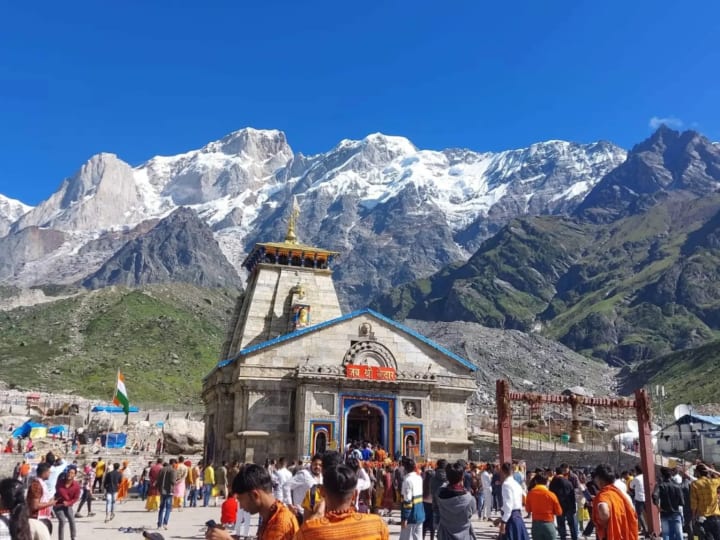
- Kedarnath Temple: The journey begins at Gauri Kund, followed by the 16-kilometer trek to the Kedarnath Temple, dedicated to Lord Shiva’s hump. Known for its divine aura, Kedarnath holds special significance as a part of the Chota Char Dham Yatra.
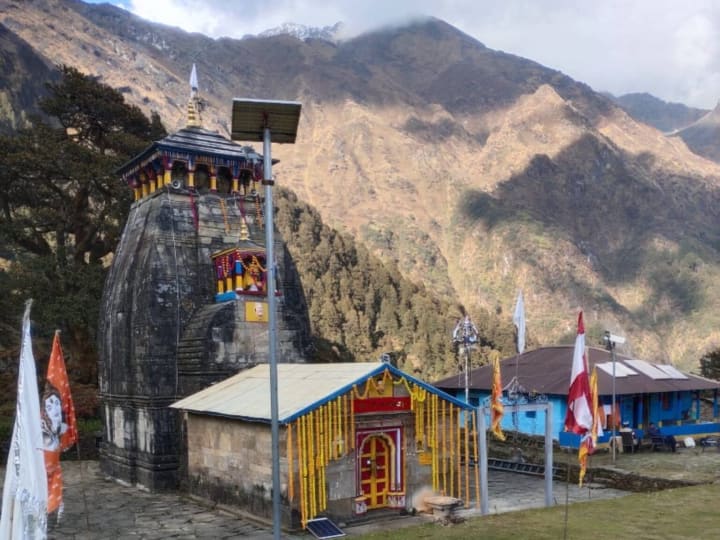
- Madhmaheshwar Temple: From Guptkashi, you will trek to Ransi Village and embark on a journey to Madhmaheshwar. This temple represents Lord Shiva's navel and is nestled in a picturesque meadow.
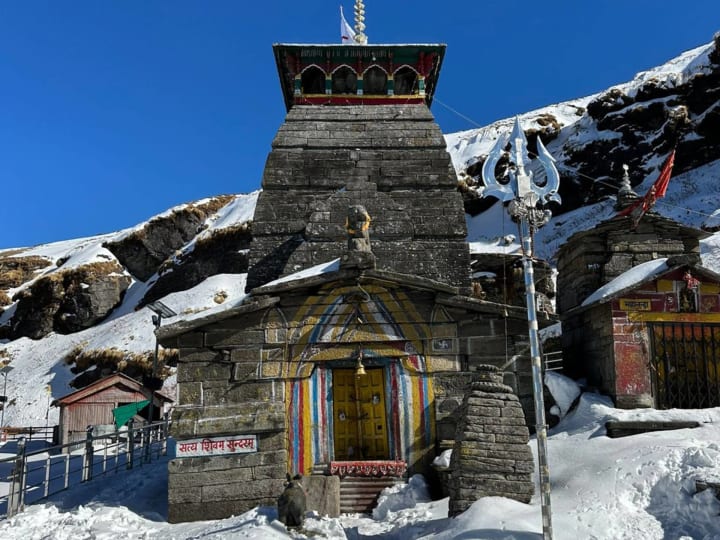
- Tungnath Temple: After visiting Madhmaheshwar, you will continue your trek to Tungnath, the highest temple in the world dedicated to Lord Shiva. It stands at an altitude of 3,680 meters and represents Lord Shiva's arms.
- Rudranath Temple: The journey then leads to Rudranath, a temple dedicated to Shiva’s face, located at an altitude of 2,286 meters. The serene environment and the breathtaking views of the Himalayas make this a truly spiritual experience.
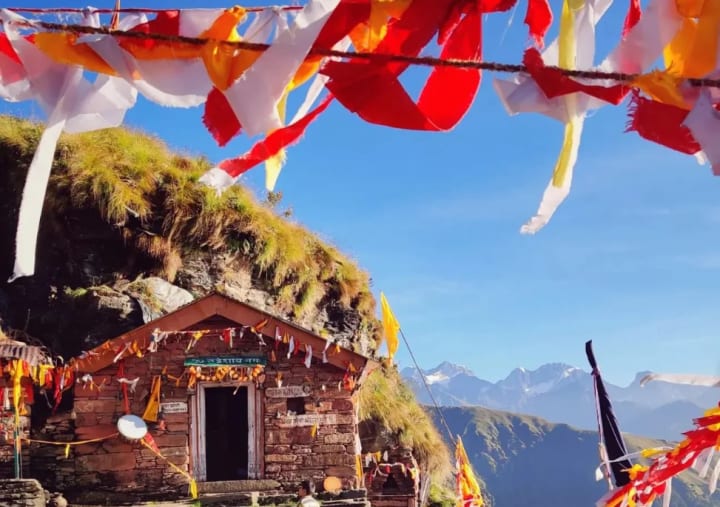
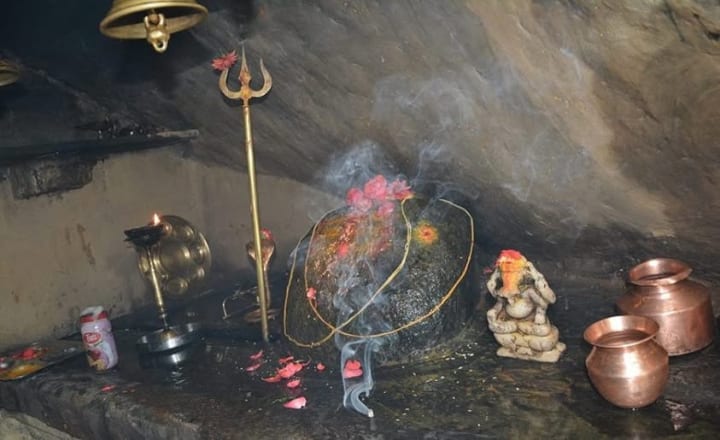
- Kalpeshwar Temple: The final temple in the circuit is Kalpeshwar, representing Lord Shiva's hair. Unlike the other temples, Kalpeshwar is accessible throughout the year and offers a peaceful and quiet retreat.
7. Challenges Along the Way
The trek is not for the faint of heart and presents its fair share of challenges. Some of the most common difficulties include:
- Long Trekking Hours: Expect to trek for up to 6-8 hours a day, depending on your pace and the trail's difficulty. The route can be exhausting, so ensure you carry sufficient water and snacks for energy.
- Unpredictable Weather: The weather in the Garhwal Himalayas is notorious for being unpredictable. Rain and snow can make the trails slippery, so be prepared for sudden changes in weather.
- High Altitudes: The trek involves substantial altitude gains, and altitude sickness is a concern, especially at higher altitudes like Tungnath and Kedarnath.
8. Essential Gear and Equipment
Packing the right gear is crucial for a successful trek. The following items are a must:
- Trekking Shoes: Invest in sturdy, waterproof trekking shoes with good ankle support.
- Warm Clothing: Temperatures can drop significantly at higher altitudes, so pack thermal layers, a good quality jacket, gloves, and a hat.
- Backpack: A comfortable backpack to carry your essentials, including a rain cover.
- Sleeping Bag and Tent: For camping along the route, especially at Madhmaheshwar or Rudranath.
- Water Bottles and Snacks: Stay hydrated and energized with sufficient water and non-perishable snacks such as energy bars, nuts, and dry fruits.
- First Aid Kit: Carry a basic first aid kit with essentials like bandages, antiseptic creams, and pain relievers.
9. Camping and Accommodation
Accommodation along the Panch Kedar trek varies from basic guesthouses and dharamshalas (pilgrim rest houses) to camping sites. You will find accommodation at most of the temple bases, but options can be limited and basic, so it’s advisable to book your stay in advance when possible.
For a more immersive experience, some trekkers opt for camping along the trail, especially in serene locations like Madhmaheshwar or Rudranath, where you can enjoy the tranquility of the Himalayas under the starry skies.
10. Spiritual Experience and Cultural Immersion
The Panch Kedar trek is not just a physical challenge but also a deeply spiritual journey. It allows you to connect with nature while retracing the steps of the Pandavas. The temples are imbued with a sense of calm and devotion, providing opportunities for introspection, prayer, and meditation.
Beyond the temples, the trek offers a glimpse into the unique culture of the Garhwal region. You will pass through remote villages like Ransi, Sagar, and Ukhimath, where the warm hospitality of locals adds to the charm of the journey.
Conclusion
The Panch Kedar trek is a once-in-a-lifetime experience that blends adventure, spirituality, and natural beauty. It is a challenging journey that will test your physical endurance, but it rewards you with the opportunity to explore some of the most serene and awe-inspiring corners of the Himalayas. Whether you are a devout follower of Lord Shiva, a nature lover, or an adventure enthusiast, this trek offers something special for everyone. Embark on this remarkable journey with Himalayan Dream Treks (HDT) for a guided, memorable experience through one of India’s most sacred trekking routes.
About the Creator
Keep reading
More stories from aman singh bisht and writers in Journal and other communities.
Dayara Bugyal in Winter: A Snow Trekker’s Dream
The Dayara Bugyal Trek, located in the Uttarkashi district of Uttarakhand, is an enchanting journey through one of India’s most stunning alpine meadows. Whether you're a beginner, an experienced trekker, or a nature lover looking to experience the breathtaking landscapes of the Himalayas, Dayara Bugyal offers an unforgettable adventure. For snow trekkers and winter enthusiasts, this trek is a dream come true.
By aman singh bisht11 months ago in Journal
Silent Happy Hours: The $2.1 Trillion Question
The first time you realized alcohol was more than “just a drink” probably didn’t happen in a boardroom. It was in the quiet click of a bottle cap after a long day, the nervous clink of glasses at a first date, or the way a wedding dance floor transformed right after the bar opened.
By james robert7 days ago in Journal
My New Book is Finally Here
My poetry collection Beautiful and Brutal Things is done. It's actually done and finally published over 270 pages. Over a year of my life went into this book. More than a year, really. Long days at my computer, sometimes seven days a week because I couldn't stop even when I probably should have. Then two months of editing that felt harder than the writing itself. But it's finished, and I'm still standing, and the book is real.
By Tim Carmichael2 days ago in BookClub



Comments
There are no comments for this story
Be the first to respond and start the conversation.